Monthly Archives: October 2007

Pornography, organized crime and the military-industrial complex (is pornography's business model threatened by new websites?)

Reverse Cowgirl

– the ever-perceptive Ms. Breslin – has posted about a Claire Hoffman piece in Conde Nast’s Portfolio.com which notes precipitous declines in revenue at commercial porn sites, occasioned by the emergency of three free-download sites, in the nature of YouTube: Megarotic (megarotic.com), YouPorn (youporn.com), and Pornotuben (pornotube.com) (note links broken due to the positive correlation between porn sites and computer viruses and the negative correlation between porn sites and computer security. Ed.)

Link to Claire Hoffman’s piece on Portfolio.com.

WNYC’s On The Media– ran an excellent piece in 2002

interview with Jonathan Coopersmith, Douglas Rushkoff, and others making the case that pornography is often the driver of new communications technologies.

For my part, I’d put porn on a plane with two other markets which have different, but no less intense, needs for innovative advantage: illicit markets, and military/law enforcement uses. More my area of knowledge – I can easily name examples:

  • There’s no end to examples of military organizations as first adapters of new technologies: two -way radio, the fax machine (during WWII – before the War Department figured out what to do with telecopiers, they used them for a while over radio – placed in vehicles in the States – sending new information to soldiers and officers who were in vehicles, driving around, making death notifications to the families of service members who had been killed) ((Personal conversations with the late Jack Fitzstephens, whose first military assignment in WW II was in “graves registration” – following behind troops, clipping dog tags, preparing bodies for burial. But not so far behind that he didn’t get shot at)).
  • As soon as there were phones, organized crime (bootleggers, gamblers) used hijacked phone lines – called “cheeseboxes” in New York – so that when authorities followed a phone line to an address – they’d find an empty apartment – with a wired connection to another phone line – sometimes appearing in another apartment or nearby building – which redirected the calls. They could shut the line down, of course – but by the time the connnections got sorted out – targets and evidence had been moved away.An NYPD source has provided me with an explanation of “Cheesebox” as the name – one of the early such setups was hidden in a closet – the wiring then hidden in what had been a shipping crate for cheese.
  • The first mobile telephone I ever saw or used was in law enforcement. (The person I had personal knowledge of using a car-based “radio telephone”was a United States Attorney General; this may be public record now, but not when I came by the information, so we’ll hold the name for the moment, it not being necessary to make the point);
  • Let’s not forget what immediate use urban illicit drug-selling organizations made of pagers and then mobile phones;
  • The first reported use (that I’m aware of) of a “silent,” vibrating pager was by Richard Helms, then DCI, who was reported in the early 1970’s as been “paged” at dinner parties by the then state-of-the-art “beeper.”
  • The FBI was using portable audio recorder hard drives before anyone thought to add “i” to “pod.” Well

before.

Sex, drugs, and espionage in the same piece. We’ll try to keep connecting these things as often as possible.

I’m not sure, though – about the extinction of porn as a business – perhaps this is a just a lull before some newer, better porn medium – with some sort of DRM – makes people willing to pay more for better.
Design for the other 90%

The show we missed at the Cooper-Hewitt, the museum with the highest ration of cool-to-anonymity in New York City. Perhaps it’s actually a secret, classified facility – an “undisclosed cultural location.” Here’s what Design for the other 90% is about:

Of the world’s total population of 6.5 billion, 5.8 billion people, or 90%, have little or no access to most of the products and services many of us take for granted; in fact, nearly half do not have regular access to food, clean water, or shelter. Design for the Other 90%

explores a growing movement among designers to design low-cost solutions for this “other 90%.” Through partnerships both local and global, individuals and organizations are finding unique ways to address the basic challenges of survival and progress faced by the world’s poor and marginalized.

Designers, engineers, students and professors, architects, and social entrepreneurs from all over the globe are devising cost-effective ways to increase access to food and water, energy, education, healthcare, revenue-generating activities, and affordable transportation for those who most need them. And an increasing number of initiatives are providing solutions for underserved populations in developed countries such as the United States.

This movement has its roots in the 1960s and 1970s, when economists and designers looked to find simple, low-cost solutions to combat poverty. More recently, designers are working directly with end users of their products, emphasizing co-creation to respond to their needs. Many of these projects employ market principles for income generation as a way out of poverty. Poor rural farmers become micro-entrepreneurs, while cottage industries emerge in more urban areas. Some designs are patented to control the quality of their important breakthroughs, while others are open source in nature to allow for easier dissemination and adaptation, locally and internationally.

Encompassing a broad set of modern social and economic concerns, these design innovations often support responsible, sustainable economic policy. They help, rather than exploit, poorer economies; minimize environmental impact; increase social inclusion; improve healthcare at all levels; and advance the quality and accessibility of education. These designers’ voices are passionate, and their points of view range widely on how best to address these important issues. Each object on display tells a story, and provides a window through which we can observe this expanding field. Design for the Other 90% demonstrates how design can be a dynamic force in saving and transforming lives, at home and around the world.

They’ve got a promising blog – which is particularly cool – we take as a sign that the Cooper-Hewitt means to keep this dialogue going notwithstanding the closing of the physical exhibit.

We’ve got the crack Popular Logistics “fixers”

trying to persuade the press office at the Cooper-Hewitt that just because we’re a blog, we’re still part of the “press” for purpooses of showing our readers some images along with further posts about Design for the other 90% . Stay tuned for more.

Dog survives fire by hiding in tub; clever maneuver demonstrates intelligence greater than the combined intelligence of U.S. Legislators

Fire. Dog hides in tub. Not for water – but to breathe air through drainpipe

.  An old firefighter’s trick, apparently.

Coverage via neatorama.  We made up the part about Congress. Our libel counsel told us not to lose any sleep over it; truth is, after all, a defense.

Original Newsday article.

Via Arbroath (to Neatorama).

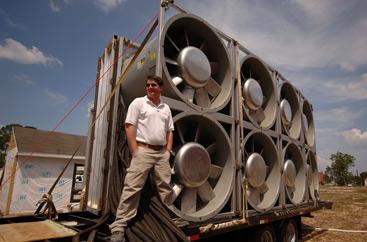
Large High Performance Outdoor Shake Table

Via Pruned: At the University of California San Diego, (UCSD) the NEES program (Network for Earthquake Engineering Simulation )

has built a very large “shake table.” From NEES/UCSD:

The UCSD LHP Outdoor Shake Table is being developed at the Field Station at Camp Elliott, a site located 15km away from the main UCSD campus. The shake table, acting in combination with equipment and facilities separately funded by the California Department of Transportation (Caltrans), which include a large laminar soil shear box and two refillable soil pits, will result in a one-of-a-kind worldwide seismic testing facility. Continue reading

Tunnel-digging as hobby

 From Pruned:


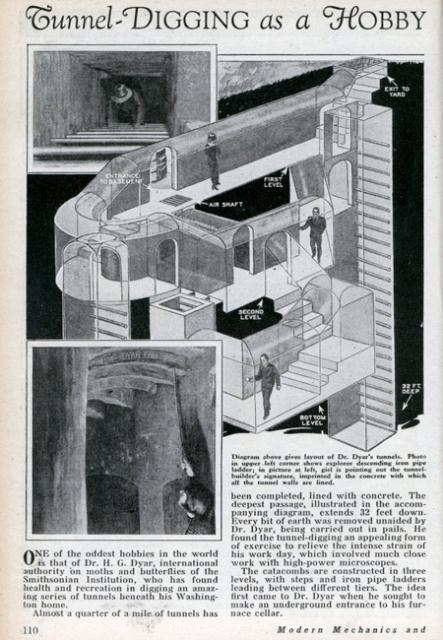
From one of the pages of Modern Mechanics and Invention, scanned and transcribed here by Modern Mechanix, we learn that “[o]ne of the oddest hobbies in the world is that of Dr. H. G. Dyar, international authority on moths and butterflies of the Smithsonian Institution, who has found health and recreation in digging an amazing series of tunnels beneath his Washington home.”

H.G. Dyar - Modern Mechanix

And he was quite the mole: digging and removing the dirt without the help of heavy machinery, “[a]lmost a quarter of a mile of tunnels has been completed, lined with concrete. The deepest passage, illustrated in the accompanying diagram, extends 32 feet down.”

In case you’re wondering: yes, Dr. H. G. Dyar is Geoff Manaugh‘s nom de plume. So watch out California, his tunneling activities will undoubtedly compromise the tectonic integrity of the San Andreas Fault.

It’s our thought that we’re going to need to encourage the hobbyists – if not, we may have to improvise uses of existing tunnels.

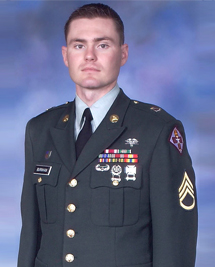
Russell Adam Burnham: U.S. Army NCO of the year

Staff Sgt. Russell Adam Burnham. Check out this Wikipedia entry – – which made it to Wikipedia’s English-language front page today. Burnham’s great-grandfather taught scouting skills to the guy who started the International Scouting Movement. Sgt. Burnham himself is an Eagle Scout. In 2004 – presumably before he became an NCO – he was soldier of the year.The first member of his family got to North America in 1617 – and there’s been a direct ancestor fighting for the United States in every war since the Revolution.

Somewhere in there – transferred to the Medical Corps – two years at Walter Reed.

Compare this to other Wasp-aristo resumes of recent vintage: no prep school, no Ivy League, no secret-handshake fraternities, jobs with investment banks.

Hats off, then, to Sgt. Burnham!

London Topological –

Here’s a 2005 piece from Building Blog called “London Topological.” Not to quibble – bu t perhaps more correctly London Infralogical – or Infra-Topo-

logical? We recommend it for the following reasons:

  1. Every piece on  Building Blog perhaps more properly, BLDG BLOG – is worth reading, whether or not you think that you care about architecture.
  2. Read a couple of pieces, and you’ll realize that of course

    you care about architecture.

  3. This particular piece has implications for anyone who thinks about (relatively) modern history
  4. and even more so for people who care about emergency planning. Although the author, Geoff Manaugh, doesn’t address those issues directly.

We’ll try to directly address the implications of underground system for emergency planners in upcoming posts.

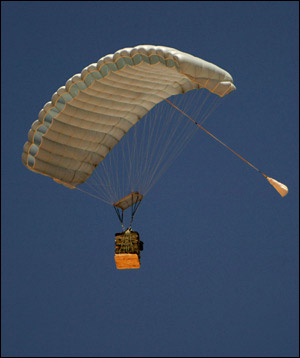
Sherpa Guided Parachute Cargo System

Sherpa – metaphorically, as in trade name of Mist Mobility Integrated Systems Technology , Inc.in Ottawa, Canada, not “Sherpa” as high-altitude Nepalese ethnic group, famous as guides on Everest and other climbs.

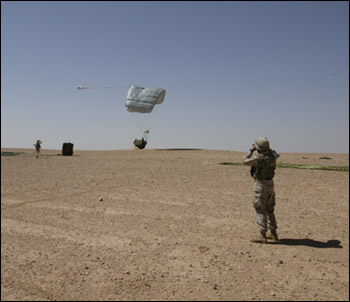
(Photos via Military.Com, credit USMC Staff Sgt. Bill Lisbon)

s-sgt-bill-lisbon-usmc-8-9-04-soldiertech_sherpa1.jpg

Military.Com has adapted articles by Maj. John M. O’Regan and Benjamin Rooney for the Army Soldier Systems Center, and Staff Sgt. Bill Lisbon for the USMC 1st Force Service Support Group for this piece about the Sherpa, which is followed by an explanatory piece by Eric Daniel (no internal link; scroll to bottom of the page.

s-sgt-bill-lisbon-usmc-8-9-04-soldiertech_sherpa2.jpg

Link to Military.Com article.

NB:  This particular system is new – and, frankly, we don’t know much about the entire subject of dropping packages by air, which (1) is a critical capability in war and in civilian disaster, (2) has risks and costs, and (3) you’d rather avoid by having the logistical situation in hand beforehand – having said all that, this system uses GPS and probably reduces the risks attendant with dropping things out of planes. There’s a reason that kids like throwing things out of high windows – and reasons they get in trouble for it. More on JPADS and airborne cargo drops as we learn it.

Whole-Plane parachutes

In 1975, Boris Popov was in a glider accident.

“As I fell, I became most angry at my inability to do something,” Popov explained. “I had time to throw a parachute. I knew they existed but they hadn’t yet been introduced to the hang gliding community.” This event led Popov to invent the whole-aircraft parachute system and to found Ballistic Recovery Systems (BRS) in 1980.

The firm claims “BRS has sold more than 25

,000 of its parachute systems and has saved more than 199 lives. In 2004, the FAA and EASA both certified a BRS parachute system for the Cessna 182 to go along with the 172 certification

. The companies’ products are sold worldwide.”

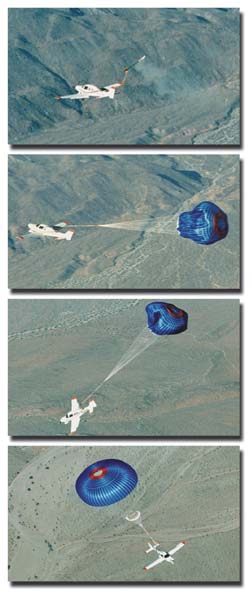
Here’s a series of stills taken by NASA of Cirrus Airframe Parachute System (CAPS):

caps_deploy.jpg

Ballistic Recovery Systems

.

What we don’t know much about is the details of dropping cargo by parachute: accuracy, limits, safety to personnel on the ground.

Frank Shorter’s advice on avoiding injuries running in the heat

From Frank Shorter’s October 12th Op-Ed, “Running Into Trouble,”

in the Times:

AT the 16-mile mark of a very hot and humid marathon at the Pan American Games in Cali, Colombia, in 1971, I looked over at my good friend and teammate Kenny Moore and noticed something. “You’ve stopped sweating,” I said, trying to sound calm. Kenny looked at his dry forearms, and then his eyes got very big. Ten minutes later he was in an ambulance, incoherent with heat stroke.

• Make salt packets available at the start of races that are dangerously hot. In this context, salt is a good thing.

• Strip down. At the expo before the Chicago race, I advised men to go shirtless and women to wear as little as possible in order to maximize the refrigeration effect of wind against sweaty skin. (Unfortunately, this time there would be no wind.) The elite runners have learned this. In Chicago, I would have gone shirtless, and explained to my sponsors later.

• Have showers and misters at every aid station. In Chicago, drinking water ran out after runners poured hundreds of thousands of cups over their heads.

•  Change the standard ambulance procedures so that only those truly in danger are transported. Doctors will tell you that dehydration can often be initially handled on the scene, but many ambulance protocols call for sufferers to be transported automatically to the hospital.

Continue reading

Alleged German terrorists apparently unable to improvise detonation mechanisms

In Suspect Denies Ties to German Bomb Plot, Souad Mekhennet and Nicholas Kulish report in the New York Times, dated 12 October, report on the case of a young GermanT man of Turkish extraction who

Atilla Selek, a young German man with Turkish parents, stands at the heart of the investigation here into the reports of a terrorist plot that shocked this nation last month. He is in Turkey, a free man for now, though he says he is under constant surveillance.

Intelligence officials say that Mr. Selek, 22, trained at a terrorist camp in Pakistan and was part of the inner circle of plotters, including the three who were arrested last month and accused of planning what the authorities say would have been a series of deadly bombings. Mr. Selek vehemently denies the accusations.

– snip –

This stood out:

German investigators are working to build a case against the three men under arrest and seven other people they say were associates in the suspected plot, which increasingly appears to have a Turkish connection. In the German federal court in Karlsruhe last week, a 15-year-old German boy of Tunisian descent testified that he had unwittingly carried the detonators from Istanbul to Germany, a security official said, speaking on the condition of anonymity because he was discussing a closed-door hearing.

The German magazine Spiegel reported that the boy had carried a package that included a pair of shoes and that the detonators had been hidden inside the soles of the shoes, to Fritz Gelowicz, one of the men in custody and a friend of Mr. Selek in Ulm. They attended the same religious centers, the Multi-Kultur-Haus and the Islamic Information Center, both of which German authorities say were sources of extreme Islamist teaching. The Multi-Kultur-Haus was closed by state authorities in December 2005.

If accurate, this group – or “cell” – didn’t have the sophistication to manage detonation by themselves. Detonation doesn’t necessarily call for sophisticated technology:

The explosive train, also called an initiation sequence or firing train, is the sequence of charges that progresses from relatively low levels of energy to initiate the final explosive material or main charge. There are low- and high-explosive trains. Low-explosive trains are as simple as a rifle cartridge, including a primer and a propellant charge. High-explosives trains can be more complex, either two-step (e.g., detonator and dynamite) or three-step (e.g., detonator, booster of primary explosive, and main charge of secondary explosive). Detonators are often made from tetryl and fulminates.  Source .

It’s not, in my view, bad news.