Monthly Archives: February 2010

Vermont Senate Voted to Shut Down Vermont Yankee

Vermont Yankee, on the Connecticut River

Vermont Yankee, on the Connecticut River

The Vermont Senate voted 26 to 4 to close Vermont Yankee.  While proponents of nuclear power claim that the plants can be run safely and economically, Entergy, the Louisiana company that operates the plant, is now known to be running Vermont Yankee AT A LOSS!

Economics is not the issue. The Vermont Senate isn’t interested in the profitability of an enterprise. What is at issue is whether Vermont Yankee can be operated safely and whether Entergy can be trusted to operate Vermont Yankee safely. By a vote of 26 to 4, the Vermont Senate answered those questions with a resounding “NO!”

An Entergy Executive responsible for Vermont Yankee testified under oath to two state panels that there were no buried pipes at Vermont Yankee that could leak tritium.  This testimony is now known to be false. The Entergy executive has been relieved of his responsibilities. (Click  here.)  According to NPR (here) “Entergy Nuclear chief executive J. Wayne Leonard did not identify the official by name. But he described the executive relieved of his duties in a way that could only apply to Vice President Jay Thayer.

State Senator Peter Shumlin, Democrat, Wyndham, asked “What’s worse, a company that won’t tell you the truth or a company’s that’s operating your aging nuclear power plant on the banks of the Connecticut River and doesn’t know that they have pipes with radioactive water running through them that are leaking? And they don’t know because they didn’t know the pipes existed. Neither is very comforting.”

Vermont State Senator Randolph Brock, Republican, St. Albans, who in the past has supported Vermont Yankee, said “If the board of directors and management of Entergy were thoroughly infiltrated by antinuclear activists, I do not think they could have done a better job of destroying their own case.”

Entergy claims that no tritium has turned up in drinking water, but that claim must be verified. The Connecticut River, which flows past Vermont Yankee, probably should be checked for Tritium.

Officials at Entergy, the Louisiana company that owns Vermont Yankee, are trying to sell Vermont Yankee, Indian Point, and three other nuclear power stations in the north-east.

It is a similar design to the Oyster Creek nuclear power station, in New Jersey, operated by Exelon, which is also known to be leaking tritium.

Michael Wald covered the story for The New York Times.  Guy Raz covered the story at NPR.

L J Furman, MBA

February 27, 2010

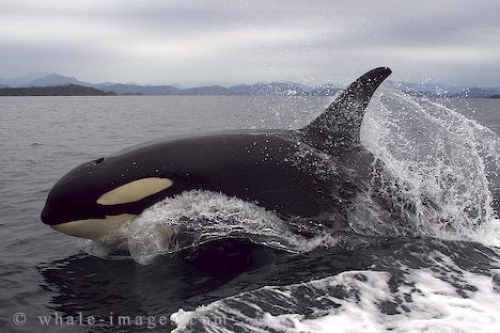
An orca in the open ocean

An Orca in the Pacific ocean near Vancouver Island, British Columbia, Canada, image courtesy of Whale-Images.com

Tilikum, an Orca, attacked and killed Dawn Brancheau, a trainer at Seaworld, Orlando, on Wednesday, Feb. 24, 2010.

As reported in Asia One, Ric O’Barry and Dave Phillips of the Earth Island Institute have called for a federal investigation into the death of Ms. Brancheau.

In their statement, O’Barry and Phillips said,

“SeaWorld allowed public and trainer contact with an orca that was a known risk, and after three deaths they’re suggesting that it actually continue…. We believe this situation warrants the immediate initiation of a federal investigation into SeaWorld’s possible negligence and violations of the Marine Mammal Protection Act….Along with sadness of this tragic event we can’t help feeling anger toward those who insist upon exhibiting these wild creatures in habitats that can drive them to violence.”

Let’s look at this from another side.

  • Orcas eat fish, as do other whales, dolphins, and humans.
  • Fish are high in mercury. (All mercury pollution comes from human industrial activities, much of it from burning coal in power plants).
  • Mercury causes brain damage.

This leads to a few questions:

  1. What is the level of mercury in the Tilikum’s brain and central nervous system?
  2. Is it causing nervous system damage?
  3. Is Tilikum “Mad as a Hatter?” Is he suffering from Minamata’s Disease?

Kyoto Box: solar cooker can boil 10 liters of water in 2 hours

The Kyoto Box, a solar cooker which retails for €15 (about $20 USD) can boil 10 liters (2.64 gallons) of water in 2 hours.

So apart from its primary uses – cooking and water purification – it can probably be pressed into service to sterilize medical instruments.

The manufacturer, Kyoto-Energy, has offices in Indonesia, South Africa, and headquarters in Kenya, which suggests local production.

According to the WHO, 1.6 million people die worldwide annually from gases produced by indoor cooking.  ((More than half of the world’s population rely on dung, wood, crop waste or coal to meet their most basic energy needs. Cooking and heating with such solid fuels on open fires or stoves without chimneys leads to indoor air pollution. This indoor smoke contains a range of health-damaging pollutants including small soot or dust particles that are able to penetrate deep into the lungs. In poorly ventilated dwellings, indoor smoke can exceed acceptable levels for small particles in outdoor air 100-fold. Exposure is particularly high among women and children, who spend the most time near the domestic hearth. Every year, indoor air pollution is responsible for the death of 1.6 million people – that’s one death every 20 seconds.  Source: WHO Fact Sheet, “Indoor Air Pollution and Health, ” dated June 2005. ))

The Kyoto Box, then, has a number of virtues:

  • no scale requirements; because they’re entirely autonomous, one or one million in use will have an effect;
  • reduction of indoor air pollution deaths; and used in scale, a reduction in outdoor

    air pollution as well;

  • reduction of water-borne diseases via water purification, and food-borne diseases via cooking;
  • lowering of energy costs;
  • where wood is used for fuel, a reduction of deforestation, with the long-term effects of mitigating flood risk and increasing the availability of lumber and tree shade


Tiger Woods & Subprime Mortgages

Tiger Woods may be a great golfer. But I wouldn’t buy a mortgage from him. Here’s why.

(click to stream audio)

Economics II: Macroeconomics and Political Economy

The way for the government to stimulate the economy and to avoid or climb out of a Depression, as John Maynard Keynes wrote, and as President Franklin Delano Roosevelt proved with the New Deal, is to invest money and resources in infrastructure, not to lower taxes or put money in the hands of private businesses. This latter tactic, which New Jersey’s new Governor, Chris Christie1 is trying, was not proven to work by President Herbert Hoover and proven not to work by President George W. Bush.

Keynes’ basic analysis rests on two evident economic phenomena. One is the different effects on the Keynsian Multiplier of government revenues collected as taxes and government revenues not collected as tax-cuts. The other is the basic response of people to a “Deep Recession” or a Depression.2

If a Recession is a series of calendar quarters in which there is a decline in GDP, a “Deep Recession3” or a Depression is characterized by a recession in which there is a general reluctance to invest in new staff or new projects on the part of businesses and individuals. A portion of any income, tax refund, or tax cut is saved. Money is hoarded. Money spent by the government is obviously, spent. The Keynsian Multiplier of money spent directly by the government is greater than money provided to businesses by tax credits because the government spends money directly, while individuals and businesses spend what they must and hoard what they can. For example, for every $1 Million the government spends purchasing goods and services, $1 Million is added to the GDP. However, for every $1 Million of taxes the government cuts, there is $1 Million the government doesn’t spend, a chunk of that $1 Million is spent, and a chunk that $1 Million is hoarded.4 When the government spends directly, particularly on domestic infrastructure, the Multiplier is, in a word, multiplied.

Obama’s tax incentive to hire people, is partially neo-classical, supply-side economics of the type favored and proven ineffective by Hoover and Bush. However, to the extent that it generates jobs, it will help the people whos jobs are created, their families, and the economy.

Robert Reich, a Keynesian economist, said5,:

“The best and fastest way for government to prime the pump is to help states and locales, which are now doing the opposite. They’re laying off teachers, police officers, social workers, health care workers, and many more who provide vital public services. And they’re increasing taxes and fees. … We need a second stimulus directed at states and locales. “

Paul Krugman6 seems to agree. The only way to avoid a Depression is for the government to spend money. Lowering taxes doesn’t work when people are reluctant to spend. However, the government must create jobs that will reduce the deficit in the future.

Wars don’t do this. As President Bush demonstrated, wars create jobs that increase the deficit and deplete the economy by destroying capital, both human and physical. Investing in local clean, sustainable energy and rearchitecting the health care system in the United States, however, are ways to use government spending today to reduce future deficits.

Local Clean Sustainable Energy

Suppose we were to install a 50 kw photovoltaic solar array and a 2,500 liter (660.4 gallon) solar hot water heater system on every school in the United States. That’s approximately 100,000 of each.7 Suppose each solar electric system costs $7.50 per watt, or $375,000, and each solar hot water heater would cost $50,000. That’s $425,000 per school, at 100,000 schools that’s $42.5 Billion. .

Because these are powered by a natural process – sunlight – rather than non-renewable fuels, and because of relatively low maintenance costs and operating costs, these systems will pay for themselves quickly and last a very long time, they will pay for themselves over and over. The return on investment is between 10% and 16% for PV Solar and 20% to 33% for Solar Hot Water. This is outlined in Table 1, below.

Solar Electric and Solar Hot Water Heaters

Solar Electric

Solar Hot Water

Cost of each

$375,000

$50,000

Total Cost

$37.5 Billion

$5.0 Billion

Years to pay for itself

6 to 10 years

3 to 5 years

Useful Life

40 years

25 years

Annual ROI

10% to 16%

20% to 33.3%

Table 1.

The ROI is higher when you factor in the external benefits of clean, renewable energy – there is no pollution, and therefore are no health effects from pollution.

One way to use the deficit to stimulate the economy in a manner that is consistent with reduced long term deficits is thru the development of clean energy resources, such as solar electric and hot water systems on the nation’s public schools.

Health Care

In July, 2007, President George W. Bush said “People have access to health care in America. After all, you just go to an emergency room.8” While Emergency Rooms are well suited for acute conditions – emergencies – such as the traumas of car accidents, gunshot wounds, and broken arms, they are ill-equipped for chronic conditions such as hypertension, diabetes, cancer. If a person with diabetes was to go to the emergency room, the emergency room staff would say “We can’t help you. Come back when you’re in a coma, or you need your leg amputated.” Similarly, while the Emergency Room can’t manage hypertension, it can treat the heart attack or stroke suffered by a person with hypertension.

Assuming Pres. Bush’s statement is accurate, then the approximately 47 million, or one out of six, or 15.46% of Americans who don’t have health insurance only have access to health care in an emergency. This means that the Health Care System can handle non-emergency health care for five out of six Americans, but is not capable of meeting the non-emergency needs of one out of six, or 15.46% of Americans. This means we need about 15.46% more doctors, nurses, medical office staff, hospital staff, medical offices, and hospitals. For every 100 medical doctors practicing today, we need 115.46. For every 100 nurses, we need 115.46.

According to the Bureau of Labor Statistics, there were about 661,000 physicians and surgeons in the US in 2008 and are about 2.6 million Registered Nurses, RN’s, today.9 If this is sufficient for the 357 Million Americans who have health insurance, then we need an addtional 102,191 physicians and surgeons, and an additonal 401,960 nurses, and they need offices, examining rooms and other infrastructure. However, we can’t just push a button and create 102,191 physicians and surgeons and 401,960 nurses out of thin air. It takes nine years to train a physician and three years to train a nurse.10

Selected Demographic Information

Americans

With Insurance

Without Insurance

Total

Americans

257 M

47 M

304 M

Medical Professionals

Have

Need

Total

Physicians & Surgeons

661,000

102,191

763,191

Nurses

2.6M

401,460

3.0 M

Table 2

Another way to use deficit spending today to stimulate the economy and invest for the future is to build the medical infrastructure for the 47 million Americans who can’t afford or are without health insurance.

Paul Krugman on Banking, Securitization, and The Canadian Model

In his recent columns in the New York Times, Paul Krugman11 has discussed the banking industry, the banking debacle, banking reform, and the Canadian model for banking regulation and banking risk management. He quotes testimony by Jamie Dimon of JP Morgan Chase and Lloyd Blankfein of Goldman Sachs. In hearings of the Financial Crisis Inquiry Commission, Dimon basically said “this was business as usual.” Blankfein, however, said “it was an act of God.” While they disagreed about the cause of what happened, they agree with the solution: “Let bankers be bankers. If the government regulates banking, the economy will crumble.” It appears that we tried this deregulatory approach, and the economy crumbled.

“Securitization” of loans, in which bad loans are bundled with good loans and sold, doesn’t limit risk, it rewards risk. In terms Tiger Woods or a Wall Street banker should be able to understand, Securitization is like sexual activity and HIV AIDS. Suppose one person has 100 relations with 10 partners, 10 with each, one of whom is infected with the HIV AIDS virus. Suppose another person has one relation with each of 100 partners, one of whom is infected with the virus that causes HIV AIDS. Clearly the first person has a higher risk of infection. However, the second person is also at risk. In the case of securitization of “toxic assets” the bankers were rewarded to have relations with as many people as possible. They didn’t minimize risk. They spread it around.

The Canadian banking model limits risky loans, limits bank leverage, and limits securitization. This is what Obama must do. He must demand and enforce regulations that require transparency in banking, regulate derivatives, eliminate incentives for bankers to make bad loans, create incentives for bankers to make good loans; to practice what might be called safe banking

. Regulations, for example, like those mandated by Glass Steagal.

Patrick Henry once said. “Give me liberty or give me death,”

Today he might add, “Entrust my money with cautious bankers.

———— Notes ————-

1Faced with high unemployment and a lack of unemployment compensation funds, NJ Gov. Christie is proposing to cut unemployment benefits, and cut the unemployment tax used to fund unemployment benefits. Beth DeFalco, “Christie proposes to cut jobless benefits,” NJ Herald, 2/25/10, http://www.njherald.com/story/news/nj-jobless-benefits, and Athena D. Merritt, “Christie proposes fix for N.J.’s insolvent unemployment fund,” Philadelphia Business Journal, 2/25/10, http://www.bizjournals.com

2Discussed at length by Riddell, Shackelford, Stamos, and Schneider, Economics, Pearson – Addison Wesley, 2008, pg 365-368.

3I’m using the term “Deep Recession” in conjunction with “Depression” because there appears to be a general reluctance on the part of bankers, journalists, pundits, and others to use the term “Depression” in discussions of the state of the economy today.

4Acharya, Viral and Ouarda Merrouche, “Precautionary Hoarding of Liquidity and Inter-Bank Markets: Evidence from the Sub-prime Crisis,” July 3, 2009, at Stern.NYU.edu, http://pages.stern.nyu.edu/~sternfin/vacharya/public_html/acharya_merrouche.pdf.

5Reich, Robert, “Obama Needs to Teach The Public How To Get Out Of The Mess We’re In, But He’s Not”, 1/29/10, http://www.huffingtonpost.com

6Paul Krugman, the Princeton University Economist, and Nobel Laureate, writes a column for the New York Times.

7According to Statemaster.com there are about 94,260 elementary and secondary schools in the US. I rounded this up to 100,000 to simplify the math. http://www.statemaster.com/graph/edu_ele_sec_tot_num_of_sch-elementary-secondary-total-number-schools.

8On July 10, 2007, “Pennsylvania Progressive” reported then President Bush said: “People have access to health care in America. After all, you just go to an emergency room.” http://pennsylvaniaprogressive.typepad.com/my_weblog/2007/07/bush-on-healthc.html

Also reported on July 11, 2007 by Dan Froomkin in the “Washington Post,” in his column “Mock The Press”. http://www.washingtonpost.com/wp-dyn/content/blog/2007/07/11/BL2007071101146_5.html

9Bureau of Labor Statistics, Occupational Outlook Handbook, 2010-11 Edition,

Physicians and Surgeons. http://www.bls.gov/oco/ocos074.htm#outlook,

Registered Nurses, http://www.bls.gov/oco/ocos083.htm

10I’m assuming a 6-year Biomedical program and a 3 year Medical Residency for physicians and surgeons and a 2 year practical nursing program with a 1 year Residency for nurses.

11Krugman’s Recent columns in the NY Times include, “Bubbles and the Banks”, 1/8/10, “Bankers Without A Clue”, 1/15/10, “March of the Peacocks”, 1/29/10, and “Good and Boring,” 2/1/10. These can be found on the Internet at http://www.nytimes.com.
Department of Homeland Security adopts NFPA standards for responders

Fire Engineering ,”

The National Fire Protection Association (NFPA) and the U.S. Department of Homeland Security (DHS) announced the adoption of 11 NFPA standards for emergency responders by DHS. The newly adopted standards will set requirements to assist federal agencies and state and local officials responsible for procuring equipment and services used by emergency responders.

– snip –

The documents adopted will provide direction and allow officials to make better procurement decisions in the following areas: professional qualifications, occupational safety and health, fire apparatus, personal protective clothing, powered rescue tools, and other equipment.

– snip –

The 11 newly adopted standards are:

* NFPA 1000, Standard for Fire Service Professional Qualifications Accreditation and Certification Systems
* NFPA 1001, Standard for Fire Fighter Professional Qualifications
* NFPA 1002, Standard for Fire Apparatus Driver/Operator Professional Qualifications
* NFPA 1006, Standard for Rescue Technician Professional Qualifications
* NFPA 1021, Standard for Fire Officer Professional Qualifications
* NFPA 1500, Standard on Fire Department Occupational Safety and Health Program

* NFPA 1582, Standard on Comprehensive Occupational Medical Program for Fire Departments
* NFPA 1901, Standard for Automotive Fire Apparatus
* NFPA 1906, Standard for Wildland Fire Apparatus
* NFPA 1912, Standard for Fire Apparatus Refurbishing
* NFPA 1936, Standard on Powered Rescue Tools

Continue reading

International Herald Tribune: Ireland rids itself of a plastic nuisance

Because plastic bags are light and compressible, they constitute only 2 percent of landfill, but since most are not biodegradable they will be there for decades.

According to the International Herald Tribune, “By ‘bagging it,’ Ireland rids itself of a plastic nuisance“by Elisabeth Rosenthal,

There is something missing from this otherwise typical bustling cityscape.

There are taxis and buses. There are hip bars and pollution. Every other person is holding a cellphone to his ear. But there are no plastic bags, the ubiquitous symbol of urban life.

In a determined attempt to deal with litter, Ireland passed a plastic bag tax in 2002 – now 22 euro cents, about 33 U.S. cents – at the register if you want one with your purchases. There was an advertising awareness campaign. Then something happened that was bigger than the sum of these parts.

Within weeks, there was a 94 percent drop in plastic bag use. Within a year, nearly everyone bought reusable cloth bags, which they now keep in the office and the back of their cars. Plastic bags became socially unacceptable – on par with wearing a fur coat or not cleaning up after your dog.

“When my roommate brings one in the flat, it annoys the hell out of me,” said Edel Egan, a photographer carrying a load of groceries in a red backpack.

Countries from China to Australia, cities from New York to San Francisco, have promulgated laws and regulations to address the problem, with decidedly mixed success. Continue reading

Sustainability and Carbon Sequestration

Abstract. By burning fossil fuels we have put 3.6 trillion tons of Carbon Dioxide, CO2 in the atmosphere1 in the last 200 years – most in the last 60. This has changed the concentration of atmospheric CO2 from 270 parts per Million, ppm, to 390 ppm, an increase of approximately 31%. This increase of atmospheric CO2 is resulting in changing precipitation and rising temperatures, from the equator to the poles.

The typical modern reductionist approach is to simplify the problem to develop a solution:

“Burning coal, oil, and natural gas puts CO2 into the atmosphere. All we need to do to solve the problem is modify the machines so they burn fossil fuel without releasing CO2 into the atmosphere. How do we do that? We should capture the carbon dioxide, and the arsenic, mercury, other heavy metals, radionucleotides, etc, and store it somewhere.”

But we need to remember that we are burning coal, oil, and natural gas for a reason: to generate heat, hot water, electricity and transportation. There are alternative energy technologies, including nuclear, solar, and wind.

Coal with Carbon Sequestration is estimated to cost $10 to $15 Billion per gigawatt, without considering the costs of mining, processing and transporting the coal, cleaning up after mining, and isolating the arsenicals, mercury, and radionucleotides released from burning coal.  Solar is estimated to cost $6.5 Billion per gigawatt – with no fuel and no wastes. Wind $2 to $3 Billion per gigawatt – with no fuel and no wastes.

We at Popular Logistics think, feel and believe that we need to replace coal with solar and wind immediately.

Continue reading

Onus of Eviction Falls Heavier on Poor Black Women, Research Shows – NYTimes.com

What’s the difference between eviction and Hurricane Katrina? Eviction and poverty are not the result of weather conditions or terrorism? Eviction is happening to many people simultaneously, and it meets FEMA Administrator Craig Fugate’s definition of a disaster as “An emergency in which the injuries or victims outnumber responders or the resources available.”

We have a housing surplus. How is that the housing market then yields such a high number of evictions? Shouldn’t rents go down in a market economy with a housing overage? Continue reading

Financial Cryptography: over 30K EU identity stolen per year

Financial Cryptography reports that

A classified Dutch government report has revealed that criminals stole 341,956 passports, identity cards, visa stickers and drivers’ licences from European government facilities since 2000.

Financial Cryptography,  citing 341,956 blank EU travel documents in criminal hands on  NRC Handelsblad (in English).

In other words, not only government intelligence services have access to false identity documents. See our earlier coverage of this issue: Hamas claims Israel assassinated commander in Dubai – Wikinews, the free news source


AP: Alabama Shooting suspect’s prior MA case may not have been thoroughly investigated

Reports of serious omissions into the 1986 shooting, ruled an accident, in which Amy Bishop is believed to have killed her brother.
  1. An eleven-day pause between the shooting and witness interviews with family members;
  2. A failure to order a ballistic reconstructions;
  3. Non-family member witnesses may have been interviewed in a cursory manner with no follow-up;
  4. There’s no indication thus far that a grand jury proceeding or coroner’s inquest was held.
This is consistent with authorities deciding at first impression that it was, in fact, an accident, and organizing the available intelligence around that assumption. Excerpts from AP coverage follow. Continue reading

Portable Armored Wall System Replaces Sandbags

Portable Armored Wall System Replaces Sandbags

February 2010

By Austin Wright

Marines in Afghanistan might soon scrap the sandbags. Instead, they’re snapping together armored walls that connect like Legos.

The Marines Corps in December spent $797,400 on 14 kits of McCurdy’s Armor, a patent-pending portable wall system. The service has already tested 25 kits.

The 6.5-foot-tall units can be assembled into bulletproof walls and forts — a process that can take less than an hour. This could save days’ worth of work digging trenches, laying sandbags and constructing outposts, according to the manufacturer, New Jersey-based Dynamic Defense Materials. “We’ve seen them used on everything from a podium to a guard tower to a long wall,” says Joe Dimond, a product specialist for the company.

The product offers protection from mortars, grenades, rockets and improvised explosive devices. It has aluminum frames that connect using steel pins, and the units can be arranged in several formations: U-shape, V-shape, J-shape or a wall.

It also has ballistic windows that open and close so service members can fire downrange. Four men can assemble one unit in less than 10 minutes without any tools or equipment, according to the company’s website.

“If you’re worried about armor-piercing rounds, you can also put on a second layer of armor,” Dimond says. “And you can add more if you’re going to be there a while.”

The product was named for Ryan S. McCurdy, a Marine who was killed in 2006 by insurgents in Iraq while pulling a wounded friend to safety.

via Portable Armored Wall System Replaces Sandbags.

New Armored Wall System Assembles Like Legos, Could Replace Sandbags in Afghanistan | Popular Science

Attention recruits. Those of you landing in Afghanistan in coming months may not have to engage in the sandbag stacking and trench digging usually associated with lowly grunt-dom. An $800,000 investment in an armored wall system known as McCurdy’s Armor could have Marines rapidly erecting 6.5-foot-tall mortar-, RPG- and bullet proof fortresses in less than an hour, saving the days it can take to fortify an area by conventional means and making forward-operating units more nimble.

Named for Ryan S. McCurdy—a Marine killed in Iraq in 2006 while hauling a wounded comrade to safety—the system is designed to offer troops increased protection and mobility when setting up outposts in hostile areas. The walls can be ferried into place in panels that are easily stackable in a truck or trailer. Once in position, four Marines can assemble a single panel in less than ten minutes without any special tools or additional equipment. The panels then snap together like bomb-proofed Legos secured with steel pins to form a blast- and bullet-proof shelter.

Related Articles

In Defense of Cyborg Athletes

Fossett Still Missing

NASA Plans to Give Data Transfer Connection Speeds in Deep Space a 50X Boost

Tags

Technology, Clay Dillow, armor, defense, marines, military, modern materials

The armor can be set up in a variety of arrangements (U-shaped, J-shaped, etc.), and in instances where troops are worried about armor piercing rounds a second layer of armor can supplement the structures. But the walls aren’t just a protective cocoon for far-flung outposts; ballistic windows offer protection while giving Marines a line of sight and the ability to fire downrange, meaning McCurdy’s Armor can be deployed as both a defensive stronghold as well as a tactical firing position.

When it’s time to pull up camp, Marines can quickly break down their ersatz stockade, stack it back in their vehicles and move on to fortify the next position without leaving a single thing behind. Just try pulling that off with sandbags.

[DDM via National Defense]

via New Armored Wall System Assembles Like Legos, Could Replace Sandbags in Afghanistan | Popular Science.

GeoRSS Metadata module – AwasuWiki

This

After installing the georss.mm Metadata Module and enabling it in the Advanced page of Awasu’s Program Options dialog, there will be two new Metadata values that you can add to the Item Pane: Elevation (georss/elev) and Point (georss/point) as depicted below (along with the geo/latitude and geo/longitude Metadata values).

image:GeoRSSItemPaneDialog.jpg

For additional help on adding columns to the Item Pane see the Channel settings help topic.

Once the GeoRSS Metadata values have been added to Awasu’s Item Pane it should look like this: Awasu's Item Pane displaying GeoRSS Metadata values

Here are a couple of sample feeds that contain GeoRSS-Simple elements:

For other ways to extend Awasu with GeoRSS support, click this link: GeoRSS

via GeoRSS Metadata module – AwasuWiki.

Marginal Revolution snow

The culture that is Japan, snow removal edition

Tyler Cowen

Robot Snowplow from Japan Eats Up Snow, Poops Out Bricks.

Japan

It has a camera and GPS. Here is a further report from Japan (remarkable detail at that link):

One protective measure against snow and ice for railroads and roadways is the “slush removal system” that hydraulically transfers collected snow that has been removed from the railroad tracks or roadways and deposits it in a river. Also, there is the “sprinkler snow melting system” that melts snow by sprinkling water on the road surface.

Here is a longer study of geothermal snow melting systems. Here is a discussion of numerous other Japanese snow treatment and disposal technologies. Here is a report from Tsuruta:

In town several additional unique ways of dealing with this snow exist. A concrete-contained stream runs under downtown sidewalks, covered by hinged, lightweight metal grates. People who have access to this “river” can shovel their snow into the running water, sending it floating to the nearby Sea of Japan. Around the nicer homes in town (luckily, including mine) pipes spray a constant stream of hot water onto snow, quickly melting it.

Still, the snow can gather, breaking the delicate branches of Japan’s carefully tended trees and plants. The solution: wooden cages and bamboo teepees, odd-looking sights.

The abundance of snow in Japan spawned a bewildering variety of shovels with distinct shapes and purposes. Most are plastic. There are wide shovels for moving large quantities of snow; there are smaller shovels for weaker shovelers; there are shovels with handles and shovels without; there are shovel-sleds designed to allow the user to push a large load of snow a long distance; there are also metal shovels for breaking up hard-packed snow.

The shovels come in a selection of neon colors: green, yellow, purple, orange, and blue — some marketer’s feeble attempt to make snow-shoveling fun. Shovels cost from five to thirty dollars. Most people own at least two different types, selected by need.

via Marginal Revolution.

Web Server on your cellphone – a new design space

Jonas Landgren on Information Technology and Emergency & Crisis Response: Web Server on your cellphone – a new design space.

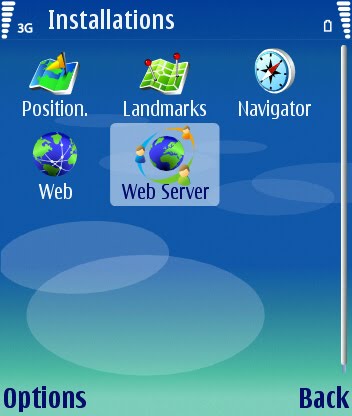
Last night, I successfully installed Nokias Mobile Web Server on my S60 cellphone. I have been aware of this service for some while but I never really took the time to install it, until now. My reaction to the experience of accessing my cellphone via my laptop web browser was significant. Like a kid on Christmas Day. The web server is a stripped down Apache server with some add-ons. The Nokia software opens up the mobile phones functionality so you can do many nice things in a remote mode. My mind goes a bit wild when, in a hands-on-fashion, I explore what it could mean that all mobile devices are connected to the internet. The range of new solutions seems endless. For emergency and crisis response, it might mean that we could design and deploy solutions that in new ways provide connectivity across a network of response actors. There is no longer a need to add yet another device such as a tabletpc just in order to provide a two-way data communication. I hope that we in a short time will be able to publish some desirable concepts that shows the possibilities for Swedish Emergency and Crisis Response. Until then … have a look at: http://mymobilesite.net/

However, what works in Sweden, an eminently sensible society, might fail in the United States, where utility companies have a spotty record in committing investment into infrastructure which doesn’t promise a rapid payback.