Entries Tagged 'Solar' ↓
May 27th, 2008 — Cogen, Energy, Geothermal, Global Warming, Marine Kinetic, Negawatts, Nuclear Power, Solar, Wind Power
Hummers: Illogical, Un-Economical, and Bad for The Environment. But They Sure Are Big!
Spencer Reiss, writing in Wired Magazine
says “Nuclear Power is The Most Climate Friendly Insdustrial Scale Form of Energy
“. Forgetting for a moment that nuclear power requires fuel, waste management, national security infrastructure, massive government subsidies, including artificial limits to liability, nuclear releases tremendous amounts of heat into the environment, and new nuclear are estimated to cost about 2 to 4 times the price of new wind facilities, without cost overruns (and cost overruns are a given with nuclear power plants) and take 10 to 12 years.
The climate friendly industrial scale forms of energy are Solar, Offshore Wind, large scale Marine Kinetic - tapping the Gulf Stream, Deep Geothermal, CoGen, and the NegaWatts available via conservation. Just as a screw can propel a ship thru the water, a screw anchored to the ocean floor will spin because of currents, and can power turbines. Marine Current Turbines, Ltd.
, based in Bristol, England has just completed the world’s first megawatt scale tidal/marine current driven power plant in the Strangford Narrows in Northern Ireland. If with wind, the sky’s literally the limit, with MCT the sea’s the limit. Geothermal exploits temperature differentials for heating and cooling. Deep Geothermal would use the earth’s heat in abandoned mines and wells to generate steam for industrial process power. Recycled Energy Development, RED
, of Westmont, Il does CoGen. RED captures industrial waste energy to produce electricity and thermal power, often without burning any additional fuel or emitting any additional pollution. For industrial partners, RED reduces energy costs substantially, increases reliability, and offers the opportunity for emissions credits. Akeena
, Evergreen Solar
, First Solar
, Sunpower
, World Water and Solar
, and Vestas Wind
are old news. Ausra
develops and deploys utility-scale solar thermal technologies to serve global electricity needs in a dependable, market competitive, environmentally responsible manner.
Wired Magazine
also published a companion piece by Matt Power that says “Pound for pound, making a Prius contributes more carbon to the atmosphere than making a Hummer” (click here
). The fallacy here is that they forget to mention that a Hummer weighs about three times more than a Prius, so to have an honest statistic you need to compare 3 pounds of Hummer to each pound of Prius. They do note that the operating efficiency of the Prius outweighs any manufacturing inefficiency. And they point out that it is better for the planet to buy a used car than a new car.
May 22nd, 2008 — Solar
Costume National reports on a new handbag with solar panels.
As the venerable Joel Johnson of Boing Boing points out, it depends on how you feel about buckles
. But it’s clear some amount of solar carried capacity makes some sense in a society in which people routinely carry things which need electricity - PDAs, phones, music devices, laptops, or some fusion of the above.
And Dr. Johnson notes that he’s “come to think that practical portable solar needs batteries to really be useful.” We agree, and we’d like to add Furman’s Rule of Most Critical Solar Applications: the most important solar installations at present are those which work and are visible, and thus serve to persuade people that solar works.
Via Joel Johnson on Boing Boing
.
May 17th, 2008 — Nuclear Power, Solar, Wind Power
Rebecca Smith reported in the Wall Street Journal
that Florida Power and Light, FPL, is considering spending $12 to $18 Billion to construct two nuclear reactors at its appropriately named Turkey Point facility in southeast Florida.
Florida Power
says “two advanced-design nuclear plants at Turkey Point that would add between 2,200 and 3,000 megawatts. If built, the units are expected to go into service in the years 2018 and 2020.”
John Dorschner writes in the Miami Herald
that FPL wants to start billing today for plants that may or may not be built and running in 10 to 12 years! “The average home electric bill in South Florida is likely to increase about $2.50 a month next year to start paying for two nuclear power plants that Florida Power & Light hopes to put in service in 10 or 12 years.” That’s like ‘buy now pay later,’ except it’s ‘pay now, buy later.’ And the plants haven’t been approved by Florida’s Public Service Commission. So it’s ‘Pay now, buy later - maybe!‘
What about Wind Power? The 7.5 MW Atlantic County Utilities Authority Wind Farm cost an estimated $12 million, approximately $1.6 per watt. (click here
)
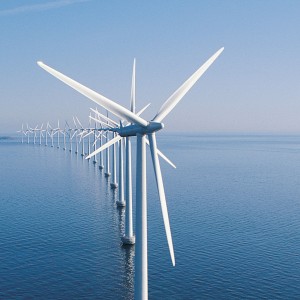
Putting the pieces of this puzzle together, FPL wants to spend $12 to $18 Billion, assuming no cost overruns, to add 2200 to 3000 mw of capacity in 2018 or 2020. If $12 Billion builds 2200 MW, then we are looking at $5.46 per watt of capacity. Similarly, if $18 Billion builds 3000 MW, we are looking at $6.00 per watt. That’s about what it costs to install commercial scale PV solar, and about four times what it costs to build land based wind farms, and twice what it costs to construct an offshore wind farm. And it takes a whole lot less than 10 or 12 years to install solar panels and build wind farms. Since there is no fuel, there is no fuel cycle, there are no fuel costs, there is no waste heat, and are no toxic or radioactive wastes with wind and solar.
Let’s ignore for a second the fact that nuclear plants present terrorists with targets, the massive subsidies that the government provides nuclear power, the national security ramifications of nuclear power, and the fact that the NRC fires whistleblowers and ignores critics – which in and of itself is a cause for concern – the regulator appears to be incompetent. Why should we spend Billions to build nuclear plants that won’t be operational for at least 10 or 12 years when we could spend a fraction to build solar and wind systems – which are available almost immediately with no pollution, no security challenges, no potential for disaster, and no need for incompetent government regulators?
|
Nuclear |
PV Solar |
PV Solar |
Wind – Offshore |
Wind – Onshore |
|
FPL Turkey Point |
NJ Residential |
NJ Commercial |
Estimated |
NJ ACMUA |
| Cost |
$12 Billion
|
$80,000 |
$20 Million
|
$24 Million
|
$12 Million
|
| Capacity |
2.2 GW
|
10 KW
|
3.5 MW |
7.5 MW
|
75 MW
|
| Cost / watt |
$5.45 |
$8.00 |
$5.71 |
$3.20 |
$1.60 |
| Fuel |
Unknown |
$Zero |
$Zero |
$Zero |
$Zero |
| Safety & Oversight |
Unknown |
$Zero |
$Zero |
$Zero |
$Zero |
| Security |
Unknown |
$Zero |
$Zero |
$Zero |
$Zero |
| Waste Management |
High |
$Zero |
$Zero |
$Zero |
$Zero |
May 16th, 2008 — Appropriate Technology, Emergency Power Systems, Solar
Solar Balloons can power remote areas and quickly provide emergency power in disasters. Joseph Cory, of Geotectura.com
, and Pini Gurfil, his research partner in the Haifa Technion
, Haifa, Israel, are developing the balloons. Helium balloons floating above the trees or tethered to the roofs of buildings, can provide more power in less space and at lower cost than roof mounted or ground mounted systems. They can also be deployed very quickly in an emergency.
Where conventional PV Solar installations are two dimensional, these are three dimensional.
Initial research, using computer models and a prototype, shows that a 10 foot diameter PV Solar balloon provides the energy of a 269 square foot PV Solar surface. The cost of the balloon is targeted at $4000. The cost of a comparable surface mounted system is estimated to $10,000.
I read about this on Pinkus Javits’ SustainabiliTank blog
, Gizmundo
, and Israel 21C
.
April 16th, 2008 — GreenTechnology, Solar
Inhabitat
reports on transparent solar panels
developed at the University of Queensland. 
From Mike Chino
’s article:
The Queensland University of Technology
recently announced that it has been working with Dyesol
to develop an innovative solar cell technology that re-envisions windows as clear, clean energy providers. Professor John Bell has said that these dye-infused solar cells would significantly reduce building energy costs, and could even generate surplus energy to be stored or sold. The development has been touted as the most promising advance in solar cell technology since the invention of the silicon cell.
Modern architecture has a love-hate relationship with windows: they contribute light and levity to interior spaces, yet they are the most frequently cited culprits for thermal energy loss. Traditional approaches to the problem have tended towards increasing insular ability
, however this new development would imbue windows with power producing capabilities, actually providing energy instead of leaking it.
Dyesol’s solar cells use an innovative technology called “artificial photosynthesis”, wherein a dye analogous to chlorophyll absorbs light to generate electricity
. The panels are composed of “an electrolyte, a layer of titania (a pigment used in white paints and tooth paste), and ruthenium dye sandwiched between glass. Light striking the dye excites electrons which are absorbed by the titania to become an electric current.”
Dye solar cells are cheaper and require less energy to manufacture than silicon cells, since they don’t require expensive raw materials. They also produce electricity more efficiently, even in instances of “shadowing”, where overcast skies and shadows from trees and other buildings can cause a loss in collected power.
These solar windows will offer an enticing new option for skyscrapers and houses looking to break the zero-energy
barrier - imagine the net power that a floor-to-ceiling glass-walled skyscraper could produce! Current cells have a rosy tint, although blue, grey and green cells are in the works. Dyesol says the panels will be commercially available over the next few years.
.
April 11th, 2008 — Economics, Solar
One of my friends recently complained that the electric bill for his business has doubled in the last 5 years – and runs to about $500,000 per year. I was stunned. Being a ‘numbers guy’, I ran the statistic backwards and realized that it’s a 15% annual growth rate. I also realized that it’s the same for me at home. My power and fuel bills, electricity, heat, and gasoline have also doubled, to about $6,000 a year, over the last few years.
I told him that just like I could install a photovoltaic solar power system on my roof that would generate all the electricity I need, he could use solar power to generate much of the electricity he needs. His response was ‘You’re may be right. But how?’ he asked.
‘Simple’, I said, ‘just put solar modules on the roof. Add an inverter to convert DC power to AC, a meter than can run backwards, and you’re in business. Just like we’re talking about for the school system.’
On top of that, the Solar Renewable Energy Certificate, or SREC, value of the power, in New Jersey, add considerably to the value of that power. The SRECs work like this. The Board of Public Utilities
tells the Electric Utilities that they have a choice. Generate power using solar, pay a fine, or buy SRECs. The SRECs today are worth MORE than the price of each kwh if generated by those old 19th and 20th Century technologies, coal, oil, and nuclear. Click here for the NJ Clean Energy Program
, click here for SREC trading and historical values
.
Bill Scott, of Akeena Solar
, says “Solar will be competitive WITHOUT INCENTIVES when electricity is at $0.21 to $0.25 per kwh.” We at Popular Logististics think may be the summer of 2009. The incentives, however, make it much better, today.
According to the Asbury Park Press
, “School District Sold on Solar
” in addition to the money they don’t spend on electricity, and any revenues they hope realize from the sale of carbon offsets, The Toms River, NJ School District expects to realize $1.25 to $1.5 million from the sale of their SRECs next year.
April 7th, 2008 — Shelter, Solar
We endorse Lawrence Furman for Manalapan Englishtown School Board.
First, a disclaimer. There are hundreds of political blogs on the Internet. Popular Logistics is not one of them. However, Larry is one of our writers and editors. We have made an exception and endorsed his candidacy.
Larry wants to put Solar Power on the schools in the Manalapan Englishtown district, and every district in the country. For his campaign web-site, click here
. He is one of five candidates vying for three positions. We have not spoken with the others, yet. The election is Tuesday, April 15, 2008.
Manalapan English Budget - Click Here
. Voting information - Click Here
. 
March 19th, 2008 — Access to Tools, Environmental Issues, Environmental Remediation, Solar, Uncategorized
[photopress:10howl2.jpg,thumb,alignleft] Kirk Johnson’s
piece in today’s Times, “A Bid to Lure Wolves With a Digital Call of the Wild”
is about
the Howlbox, a solar-powered, automated device which simulates wolf calls, and records the responses, making it possible to conduct a wolf census.
Under a research project at the University of Montana in Missoula, scientists are betting that the famous call-and-response among wolves can be used to count and keep track of the animals.
Tricked by technology, scientists say, wolves will answer what amounts to a roll call triggered by a remotely placed speaker-recorder system called Howlbox. Howlbox howls, and the wolves howl back. Spectrogram technology then allows analysis that the human ear could never achieve — how many wolves have responded, and which wolves they are.
“With audio software, we’ll be able to identify each wolf on a different frequency, so we can count wolves individually, kind of like a fingerprint,” said David Ausband, a research associate at the University of Montana Cooperative Wildlife Research Unit, where Howlbox was developed.
The devices, using off-the-shelf technology, cost about $1,300, including $300 for a solar panel. Audio recordings in the wild are nothing new, of course. Bird and amphibian researchers, in particular, have long used recordings to find or flush out critters. Howlbox’s innovations are the tools of digital analysis and programmed instructions that tell Howlbox when to howl, when to sleep because the wolves are sleeping, and how to store each day’s file on a disk.
The experiment will begin with a pilot project in which four Howlboxes will be placed in remote areas of Idaho in June. That month was chosen because it is when the packs gather with their spring-born pups in what is called a rendezvous. [photopress:19howlbox.190.jpg,thumb,alignright]
Wolf pups will howl at almost anything, scientists say. But a test here in Montana in January also showed that adult wolves can also be fooled by a good sound system.
Money is a driving force behind the research, much of which is being paid for by the Nez Perce Indian tribe in Idaho, which has deep cultural links to the western gray wolf.
Traditional tracking tools like radio collars and aerial surveillance were used extensively after wolves were reintroduced into Yellowstone National Park in the mid-1990s under the Federal Endangered Species Act. But federal protections will end later this month, and so too will the deep pockets needed for flyovers and catching and collaring.
A spokesman for the Nez Perce tribe, Curt Mack, said Howlbox might be a cost-efficient answer.
Spotted in “Counting Wolves”
at Popular Science.
The biodiversity issues aside - we’re eager to take a look at the device - which might be adaptable for other purposes: automated warning systems, locating disaster victims - especially if mounted on a portable platform, like a ‘bot of some sort.
March 15th, 2008 — Clean Energy, Energy, Nuclear Power, Solar, Wind Power
Thursday, March 6, 2008, I attended a seminar on solar and wind power at the Atlantic County Utilities Authority, ACUA
, clean energy plant, hosted by Cassandra Kling of Clean Energy Holdings
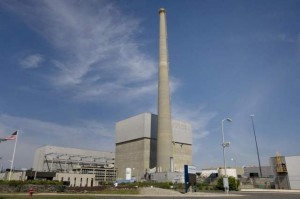
. It’s a small plant: 7.0 MW of wind and 0.5 MW of solar, it provides about 0.1% of New Jersey’s power. On the way back I drove into the Oyster Creek nuclear power plant in Ocean County, NJ, to look around and to get a visceral feel for the place. Oyster Creek provides about 10% of New Jersey’s power. (Click here for the official story
or here for NJPIRG
.)
There are armed guards outside the nuclear plant. There are watchtowers, presumably with armed sentries. They really don’t want people looking around, “getting a feel for the place”. They looked me over, looked at my driver’s license, searched my car – looked in the trunk, looked under the hood, looked in the front seat, the back seat, under the car, and then escorted me out of the complex. I felt like Arlo Guthrie in ” Alices’s Restaurant” (Click here for Arlo on YouTube
“, here for Arlo.net
) exceptin’ the fact that I wasn’t arrested.
Continue reading →
March 10th, 2008 — GreenTechnology, Solar
While at first it may seem a trivial application, it’s a good sign. It’s another sign that - despite an administration which has been at best, apathetic about solar power, the market is stil, slowly, finding price-points and product applications which can use solar power. And, individual failed products aside, there is no question that fossil fuel energy will get more expensive over time - and solar energy - however it’s gathered - will get cheaper.
According to the Boulder-based Daily Camera, gasoline-driven lawn mowers produce 80 pounds of carbo dioxide per year. (Based on the context, we believe that’s a figure for family-owned lawnmowers, rather than a figure for a mower used all day by a commercial service; Daily Camera cites the EPA as source, but doesn’t provide a footnote or direct link). Continue reading →
January 26th, 2008 — 9/11, Chernobyl, Clean Energy, Energy, Nuclear Power, September 11th Attacks, Solar, Terrorisim, Three Mile Island, Uncategorized, Wind Power, nuclear terrorism
This Letter to the Editor, written by Larry, was published in the Asbury Park Press
, Wednesday, Jan 23, 2008 (Click Here
). The full text is reproduced below.
Nuclear power too dangerous.
Nuclear power is not green or cheap. It is a security nightmare.
When you look at mining, milling and transporting nuclear fuel, nuclear power emits four to five times as much carbon dioxide as wind and solar. The fuel cycle also creates massive amounts of radioactive waste — 100,000 metric tons per plant per year. Thermal pollution from Oyster Creek kills fish, shellfish and amphibians. And radioactive wastes must be isolated from the environment for a long time.
No new nuclear power plants were built in the United States after electricity was deregulated. That’s not because of the Three Mile Island accident or the Chernobyl disaster, and not because of the protests against nuclear power or rational fears of the technology, but because of the time and expense to build new nuclear power plants. When you look at the capital costs of building nuclear plants, and add the costs of insurance, evacuation plans, security systems and government regulation, nuclear power becomes too expensive to compete.
So in 2005, the federal government mandated $125 million in tax breaks for each new nuclear power plant and provided loan guarantees of 80 percent of a plant’s cost, including overruns. Taxpayers pay for those tax breaks and loan guarantees. That does not make it cost-effective; it just shifts the burden.
Nuclear power is a security nightmare. If the Sept. 11 killers had crashed one of the hijacked planes into Oyster Creek rather than the World Trade Center or the Pentagon, much of the Jersey Shore would be like the area around Chernobyl — condemned, abandoned and uninhabitable.
If we were smart, we would move forward quickly on offshore wind, photovoltaic solar, geothermal, ocean current turbines and conservation.
Larry Furman
January 4th, 2008 — Solar, Transportation
The Swiss Firm MW Line
makes solar boats that are ferrying people around lakes and rivers in Switzerland, France, Italy, and the United Kingdom. The only backup power, apparently, is on-shore charging from the grid. They’re also the shipbuilder for the PlanetSolar
project which plans to have a solar-only craft in the water ready for a two-person, 120-day around-the-world trip in 2009. 
The New York Times reported on January 4th that
New York Water Taxi, the only operator of Queens/Manhattan and Brooklyn/Manhattan ferry service has cancelled service for the winter - largely because of fuel price increases. That notwithstanding a monthly subsidy from the real estate developers who established Schaefer’s Landing, a high-end project in Williamsburgh. A ferry powered by photovoltaic cells wouldn’t be directly affected, if at all, by petroleum price increases. Given the relatively short distances involved, on-board solar panels and batteries could be supplemented with electricity dockside. If that electricity is generated via wind (often best captured on or near water) or solar, ferry operating costs could be insulated from petroleum price fluctuations.
December 30th, 2007 — Clean Energy, Germany, Solar
Why is Vinod Khosla, co-founder of Sun Microsystems, venture capitalist, and environmentalist, critical of Dr. Hermann Scheer, economist, member of the German Parliment, and author of Germany’s clean energy program?
Is this like a Wind Power advocate from west Texas criticizing California based Solar installer because there is too much rain and cloud cover in Seattle, for solar to work effectively?
Diane Moss, above, writing on Diane’s POV
, has a comprehensive analysis of Khosla’s criticism of Scheer
.
As noted in my previous post
, Scheer says says “A Solar global economy will enable the total demand for energy and raw materials to be met. … By the systematic use of solar … all material needs of humanity can be satisfied on a permanent basis.” (For the text of the article, click here
.) And the fact is that Germany has set the standard.
Then there’s Ausra Solar
, which has some pretty hot technology and hopes to be a pioneer in what the Venture Capitalist might call “The Solar Thermal Space.” Venture Capitalists, including Kleiner, Perkins, Caulfield, and Byers
, and Khosla Ventures
, have just invested $40 Million in Ausra
. And Khosla runs Khosla Ventures. Maybe Khosla’s critical of Scheer because Scheer focuses on PhotoVoltaics, not Solar Thermal. Are Khosla’s criticisms of Scheer and Solar in Germany like Bill Gates’ criticisms of Steve Jobs and the Mac - i.e. different - and competing technology?
December 7th, 2007 — Clean Energy, Nuclear Power, Solar, Wind Power, cafe standards
Last summer’s energy bills were not good for the environment.
Yes, both houses of Congress passed energy bills “oriented toward increasing energy efficiency and boosting renewable power and biofuels.” But the House version had no Corporate Average Fuel Economy program (CAFE) car mileage mandate, thanks to the shortsightedness of Michigan Rep. John Dingell, (who believes himself to be an auto industry champion, but is killing the patient), and the Senate version had no Renewable Electricity Standard (RES) due to strong opposition from Senate Republicans. People who think about sustainable economies and environmentalists wanted both mandates in a final bill.
The final bill now includes a 35 mpg CAFE standard, an Renewable Electricity Standard of 15 percent, and 21 billion dollars of investment in the renewable energy economy.
Among other things, the 21 billion dollars will fund production tax credits for solar and wind power over a four-year period; it will fund research and development programs for renewable energy and job training programs for solar power installers; and it will fund individual tax credits for solar energy, home weatherization and purchase of fuel efficient vehicles like plug-in hybrid cars.
And 50 billion dollars in loan guarantees for new nuclear plants were dropped from the Senate version. (They were in the summer’s version.
While the Republicans like subsidizing the nuclear industry, and they like subsidizing the oil industry, they don’t like the Renewable Electricity Standard and the $21 billion tax package that will fund the bill, especially the $13.5 billion in higher taxes on oil companies. President Bush warned that he is likely to veto the bill if it passes the Senate. Sen. Pete Domenici said, “If it comes over here, we have no alternative but … war.” One sardonic environmentalist said “This war is as well thought out as the War in Iraq. Texas Sen. Kay Bailey Hutchison, who put a hold on the bill back in October, called the tax increase “discrimination against one industry.” (Please note that Hutchison received $284,000 in contributions from the oil and gas industries in 2005 and 2006, (click here
) and a total of$1.3 million as of May, 2001 (click here
).
The Republicans will fall on their swords. Then they will return as lobbyists. Truthout.
Houston Chronicle.
Washington Post.
LA Times.
November 16th, 2007 — Clean Energy, Energy, Nuclear Power, Solar, nuclear terrorism
Where do we go from here? How can we transition from fuel based energy systems to sustainable 21st Century technologies?
Where do we install various systems? How much they cost? How quickly do they pay for themselves? How might the technology evolve? And what are the logistical challenges of nuclear power? How do we manage radioactive waste? What about evacuation plans for the areas near nuclear power plants? A large percentage of the US population lives within 100 miles of the Indian Point reactor - everyone in Manhattan, Brooklyn, Queens, and The Bronx. Everyone in Northern NJ and Westchester. If nuclear power is so great, why then have no new nuclear power plants been built since the early 1980’s? Why are we so upset about Iran’s plans to build a nuclear facility? Why do nuclear plants require tremendous government subsidies?
Continue reading →