Category > Wind Power

Energy Bills - Good for the Environment and the Economy.

Larry » 07 December 2007 » In Clean Energy, Nuclear Power, Solar, Wind Power, cafe standards » No Comments

Last summer’s energy bills were not good for the environment.

Yes, both houses of Congress passed energy bills “oriented toward increasing energy efficiency and boosting renewable power and biofuels.” But the House version had no Corporate Average Fuel Economy program (CAFE) car mileage mandate, thanks to the shortsightedness of Michigan Rep. John Dingell, (who believes himself to be an auto industry champion, but is killing the patient), and the Senate version had no Renewable Electricity Standard (RES) due to strong opposition from Senate Republicans. People who think about sustainable economies and environmentalists wanted both mandates in a final bill.

The final bill now includes a 35 mpg CAFE standard, an Renewable Electricity Standard of 15 percent, and 21 billion dollars of investment in the renewable energy economy.

Among other things, the 21 billion dollars will fund production tax credits for solar and wind power over a four-year period; it will fund research and development programs for renewable energy and job training programs for solar power installers; and it will fund individual tax credits for solar energy, home weatherization and purchase of fuel efficient vehicles like plug-in hybrid cars.

And 50 billion dollars in loan guarantees for new nuclear plants were dropped from the Senate version. (They were in the summer’s version.

While the Republicans like subsidizing the nuclear industry, and they like subsidizing the oil industry, they don’t like the Renewable Electricity Standard and the $21 billion tax package that will fund the bill, especially the $13.5 billion in higher taxes on oil companies. President Bush warned that he is likely to veto the bill if it passes the Senate. Sen. Pete Domenici said, “If it comes over here, we have no alternative but … war.” One sardonic environmentalist said “This war is as well thought out as the War in Iraq. Texas Sen. Kay Bailey Hutchison, who put a hold on the bill back in October, called the tax increase “discrimination against one industry.” (Please note that Hutchison received $284,000 in contributions from the oil and gas industries in 2005 and 2006, (click here) and a total of$1.3 million as of May, 2001 (click here).

The Republicans will fall on their swords. Then they will return as lobbyists. Truthout. Houston Chronicle. Washington Post. LA Times.

Continue reading...

Texas v Massachusetts & NJ. Go Texas.

Larry » 20 November 2007 » In Clean Energy, Massachusetts, NIMBY Not In My Back Yard, New Jersey, Texas, Wind Power, mercurio » 1 Comment

Texas, with environmentalists like T. Boone Pickens (official site) is building wind turbines. Click Here. In Texas, when they find that they have wind in their backyard, they want to use it to make money. In Massachusetts and New Jersey, when someone finds wind in his backyard his neighbors say ‘Hold on there, Cowboy. What you think you’re doin? You think this is Texas or somethin?’ Just ask Mike Mercurio.

Massachusetts, with Environmentalist Liberals like Ted Kennedy, is not building wind turbines. Cape Wind is swinging like an albatross, like NJ’s Offshore Wind Farm. Maybe they are worried they’ll find Jimmy Hoffa’s body swinging from the nacelle.

I’m glad the Texans are doing something right. And I’m not proud of Kennedy or Jon Corzine. Makes me almost wish I was a Texan.

Continue reading...

Tags: , ,

Wind Power - 1976 - 2005, More Questions than Answers

Larry » 19 November 2007 » In 911 systems, Clean Energy, New Jersey, Wind Power » No Comments

Testimony before the NJ Governor’s Blue Ribbon Panel on Offshore Wind
April 14, 2005, Cape May Courthouse, 4 Moore Road, Cape May, NJ

Wind Power - 1976 and 2005 - More Questions Than Answers

Thank you for this opportunity today to share my observations regarding electricity generation technologies. I am a consultant with an academic background that includes utility economics and energy systems. I have provided consulting services to Public Service Enterprise Group at the Salem nuclear facility and at their corporate data center in Newark, NJ. I have also provided IT consulting services to Exelon / Amergen, to systems administrators of the Oyster Creek facility in an off-site location.

The first time I spoke before a body such as this was 1976, in Albany, NY, before a committee of the New York State Legislature on Energy, the Economy, and the Environment. The gist of my statement back then was “It is theoretically possible to power the New York City Subway System with wind driven turbines located in New York Harbor and off of Long Island.”

Continue reading...

Green Light on Wind Farm in Maine

Larry » 12 November 2007 » In Clean Energy, Wind Power » No Comments

UPC Partners of Newton Mass, is building the 57 MW Stetson Wind Project on Stetson Mountain in Washington County, Maine. Click Here or Here. They will be using 38 GE turbines, of 1.5 mw each, producing enough electricity to power 27,500 homes. Project cost is expected to be $100 million, about $1.75 per watt. The capital costs for new coal plants are said to be about the same, perhaps a little cheaper. However, keep in mind:

  • No Fuel Cost associated with Wind, as with coal.
  • No Possibility of a catastrophic accident in a “Wind Mine” as happens with coal.
  • Wind workers don’t get ‘Black Lung.’
  • And of course, wind alleviates global warming. Coal causes it.

When you factor in fuel costs and environmental impact wind is cheaper. How much cheaper? I will try to find out.

I would rather have a wind farm in my backyard than a coal plant or a coal mine. (I just planted plum trees and cherry trees. A wind turbine turbine would look good.)

Continue reading...

Red White and Blue - Green Power

Larry » 11 November 2007 » In GreenTechnology, NJPIRG, New Jersey, PIRG, Sierra Club, Solar, Stock Market, Wind Power » 1 Comment

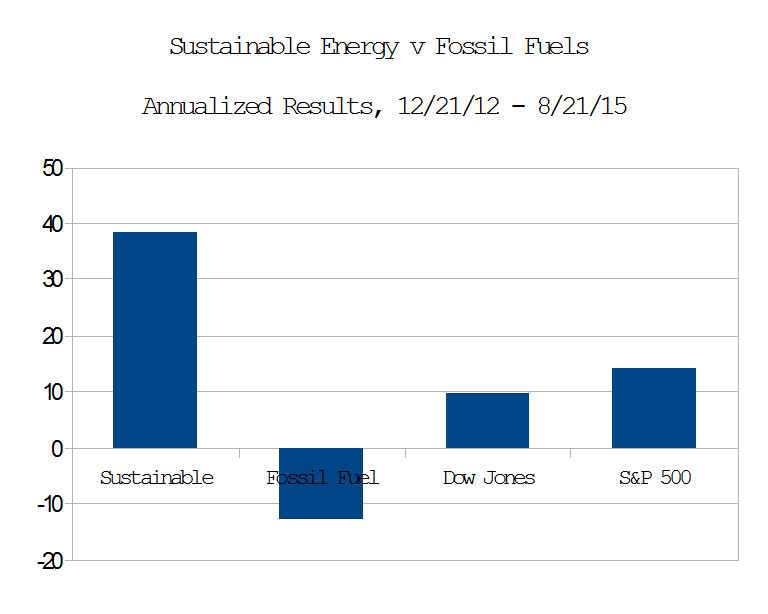
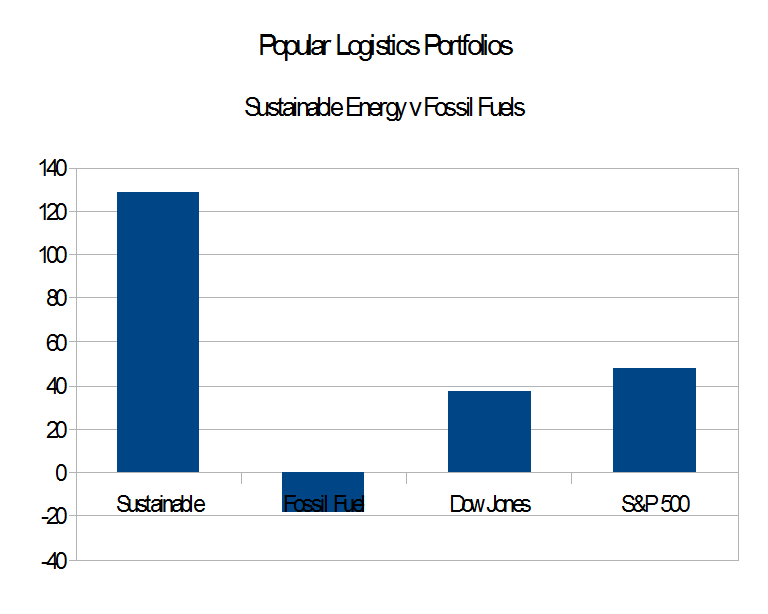
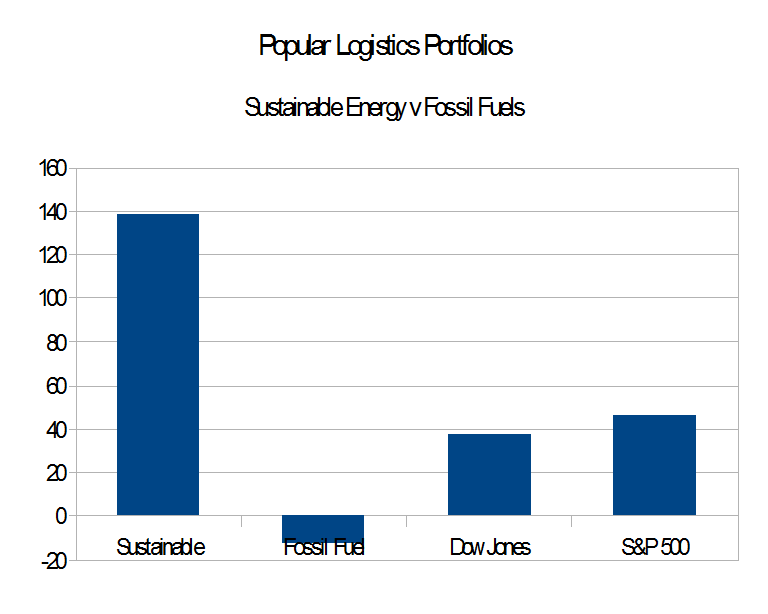
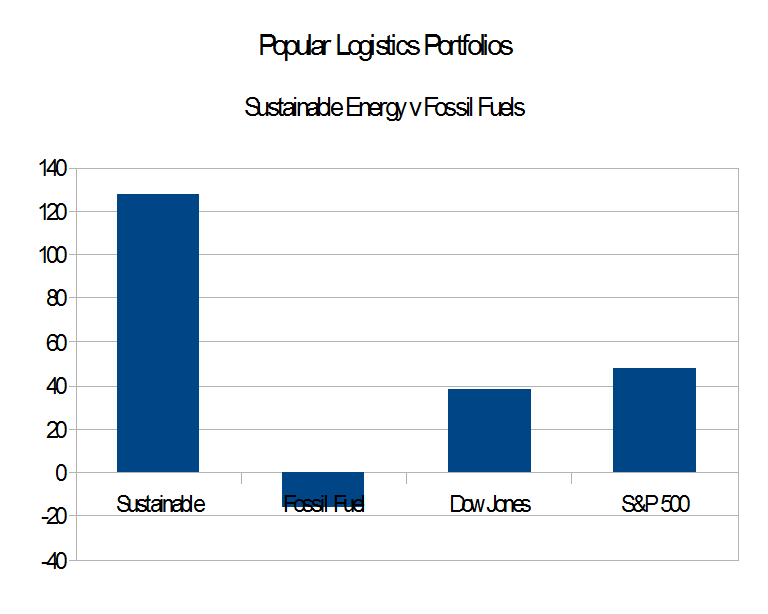
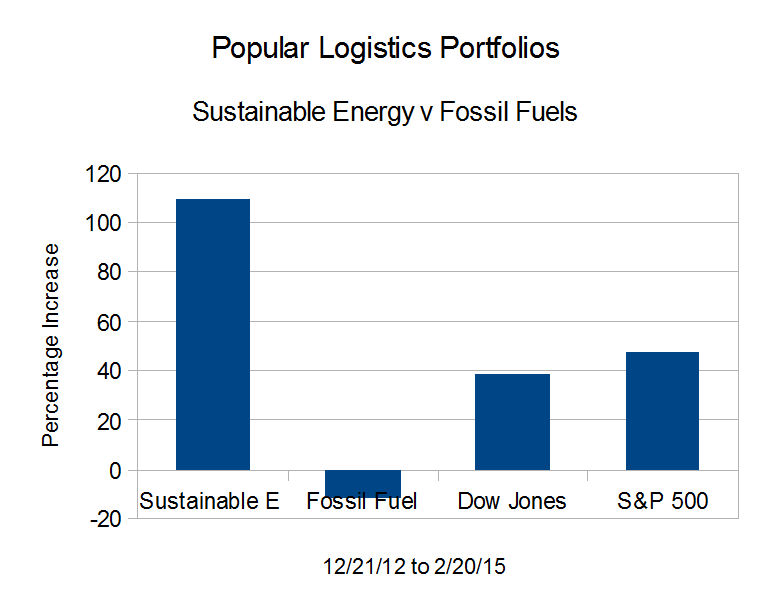
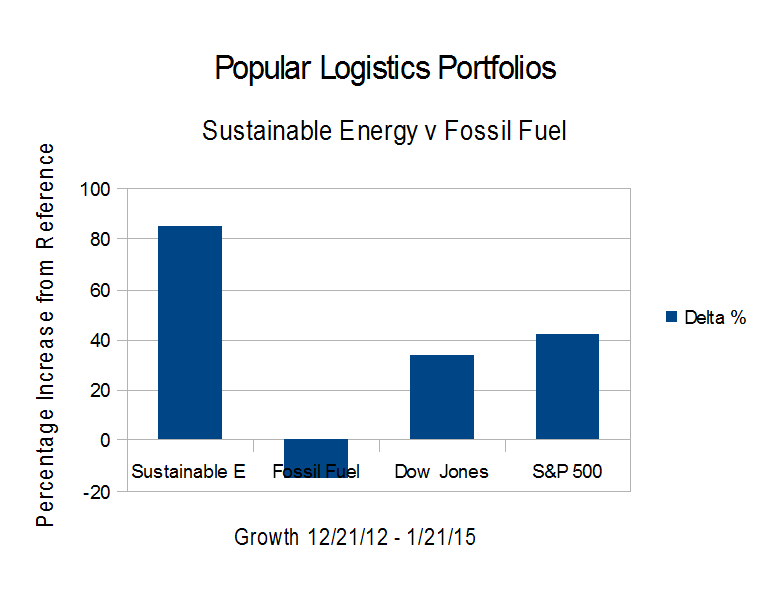
There is a tremendous market for photovoltaic modules and wind turbines. Consequently the stock price of companies that make them well are going thru the roof. (Look at Akeena, Evergreen Solar, First Solar, Sun Power, Vestas Wind, World Water and Solar. ) I think these will follow the trajectory of Apple, Compaq, Intel, Microsoft, Sun, etc, (I hope so, because I invested in them, but that’s another story.)

We could buy solar panels made in China, India, Phillipines, Germany, Spain, or - god forbid - the US. The Sierra Club, NJ PIRG, and the Steel Workers want to manufacture turbines and PV Solar mods in New Jersey, which will create 18,600 jobs over the next 10 years. Click here for local news.

The opponents whine that government investment in infrastructure is wasting Tax revenues. I believe that governments, like people, can squander their resources or invest them wisely. For example, the $2.4 Trillion we are “investing” in the war in Iraq could build and install PV Solar modules that produce 1 to 1.5 KW for every man, woman, and child in America. Building and modernizing factories, especially in the nascent clean energy sector is wise and patriotic investment.

Continue reading...

Infrastructure and Emergency Shelters

Larry » 05 November 2007 » In Citizen Response, Clean Energy, Emergency Power Systems, Energy, Shelter, Solar, Wind Power » No Comments

If every elementary school in the country had a Photovoltaic Solar system installed onthe roof, then in a ‘Katirina like event’ each school would be an emergency shelter with power. If terrorists took one out, there’d be another one a short distance away.

Solar Panels work when the sun shines. Period!

The money we are spending on the war in Iraq - currently estimated at $2.4 Trillion - would pay for for 300 gigawatts of PV Solar generating capacity - at full retail, and about 800 gigawatts of offshore wind electric capacity. (Solar is about $8.00 per watt, offshore wind is about $3.00 per watt.)

Which would make this country more secure?

Continue reading...

Wind & Solar: Clean Energy, National Security & Energy Independence

Larry » 27 October 2007 » In Clean Energy, Energy, Green household, GreenTechnology, NIMBY Not In My Back Yard, National Security, New Jersey, Nuclear Power, Solar, Wind Power » No Comments

Chez Mercurio


Mike Mercurio understands national security and knows the way to energy independence. He feels it with the cool breezes and the warm light of the sun outside his Long Beach Island, NJ home. He knows that clean energy stops global warming, enhances national security, and provides jobs.

He sees it on his electric bills – $9.50 per month – $114 per year – which reflect the clean power generated by the photovoltaic solar array on his roof. Without them the bill would be $150 in the winter, $350 in the summer - about $3,000 per year.

His neighbors can’t feel it, can’t see it, and have sued to stop him alleging that it is slightly louder than an air conditioner. What are they thinking? (Not in my backyard. Give me nuclear and give me death. Rad-Waste makes Teeth Shine.)

Photo curtesy The New York Times.
Send contributions to the Mike Mercurio Wind Power Defense Fund,
C/O X B ColdFingers, P. O. Box 202, Englishtown, NJ 07726.
100% of all contributions will be given to Mr. Mercurio to help defray his legal expenses.

Continue reading...

Jay Leno builds a garage powered by Wind Turbines.

Jon » 14 October 2007 » In GreenTechnology, Wind Power » No Comments

And, in california, you can - apparently - get 100% reimbursement for capital investment. (New York’s maximum is 70%). Here’s the coverage in Popular Mechanics, complete  with videos.

Continue reading...

“They were really controlling the whole area, turning the lights on and off at will. They would shut down one area of the city, turn it dark, attack us from there, and then switch off another one and come at us from that direction.” - Cpl. Daniel Jennings

Jon » 25 August 2007 » In Emergency Power Systems, Iraq, Logistics, Making Things Worse, Solar, Uncategorized, Wind Power » No Comments

James Glanz had yet another excellent piece in Thursday’s Times about the Iraqi electrical grid. Glanz - by himself and with co-authors - has been keeping an eye on the Iraqi electrcal power situation. We assume that if he’s doing any reporting or writing afer the sun sets, the Times has gotten him a generator. a Or at least a lot of flashlight batteries.

If I understand this correctly, this report started as coverage of a press

“briefing … intended, in part, to highlight successes in the American-financed reconstruction program here.

But it took an unexpected turn when [Karim] Wahid [the Iraqi electricity minister], a highly respected technocrat and longtime ministry official, began taking questions from Arab and Western journalists.

Because of the lack of functioning dispatch centers, Mr. Wahid said, ministry officials have been trying to control the flow of electricity from huge power plants in the south, north and west by calling local officials there and ordering them to physically flip switches.

But the officials refuse to follow those orders when the armed groups threaten their lives, he said, and the often isolated stations are abandoned at night and easily manipulated by whatever group controls the area.

This kind of manipulation can cause the entire system to collapse and bring nationwide blackouts, sometimes seriously damaging the generating plants that the United States has paid millions of dollars to repair.

Such a collapse took place just last week, the State Department reported in a recent assessment, which said the provinces’ failure to share electricity resulted in a “massive loss of power” on Aug. 14 at 5 p.m.

It added that “all Baghdad generation and 60 percent of national generation was temporarily lost.” By midnight, half the lost power had been restored, the report said.

With summer temperatures routinely exceeding 110 degrees, and demand soaring for air-conditioners and refrigerators, those blackouts deeply undermine an Iraqi government whose popular support is already weak.

In some cases, Mr. Wahid and other Iraqi officials say, insurgents cut power to the capital as part of their effort to topple the government.

But the officials said it was clear that in other cases, local militias, gangs and even some provincial military and civilian officials held on to the power simply to help their own areas.

With the manual switching system in place, there is little that the central government can do about it, Mr. Wahid said.

“We are working in this primitive way for controlling and distributing electricity,” he said.

Mr. Wahid said the country’s power plants were not designed to supply electricity to specific cities or provinces. “We have a national grid,” he said.

He cited Mosul and Baquba, in the north, and Basra, in the south, as being among the cities refusing to route electricity elsewhere. “This greatly influenced the distribution of power throughout Iraq,” Mr. Wahid complained.

At times the hoarding of power provides cities around power plants with 24 hours of uninterrupted electricity, a luxury that is unheard of in Baghdad, where residents say they generally get two to six hours of power a day.

Mr. Wahid said Baghdad was suffering mainly because the provinces were holding onto the electricity, but he said shortages of fuel and insurgents’ strikes on gas and oil pipelines also contributed to the anemic output in the capital.

Although a refusal by provincial governments to provide their full quotas to Baghdad could easily be seen as greedy when electricity is in such short supply, many citizens near the power plants regard the new reality as only fair; under Saddam Hussein, the capital enjoyed nearly 24 hours a day of power at the expense of the provinces that are now flush with electricity.

Keeping electricity for the provinces, said Mohammed al-Abbasi, a journalist in Hilla, in the south, “is a reaction against the capital, Baghdad, as power was provided to it without any cuts during the dictator’s reign.”

- snip -
The precision with which militias control electricity in the provinces became apparent in Basra on May 25 when Moktada al-Sadr’s Mahdi Army carried out a sustained attack against a small British-Iraqi base in the city center, and turned that control to tactical military advantage.

“The lights in the city were going on and off all over,” said Cpl. Daniel Jennings, 26, one of the British defenders who fought off the attack.

“They were really controlling the whole area, turning the lights on and off at will. They would shut down one area of the city, turn it dark, attack us from there, and then switch off another one and come at us from that direction.

“What they did was very well planned.”

Glanz and Stephen Carroll leave the punchline for last:

The electricity briefing began with Brig. Gen. Michael J. Walsh, commanding general of the Gulf Region Division of the Army Corps of Engineers, saying the United States had finished more than 80 percent of the projects it planned for rehabilitating the Iraqi grid.

There’s always a risk with trying to stay on message - “80 percent completion” - when everyone in the room knows the assertion is essentially false.

This seems an appropriate moment to remind ourselves of the Naval War College’s “Solar Eagle” proposal for Iraq:

The proposal was, essentially, to put a PV panel on every Iraqi roof. A copy of the report is available from The Project on Government Secrecy at the Federation of American Scientists. . The Navy “Solar Eagle” proposal is for a decentralized system. Decentralization and redundant connections are what make networks robust and resistant to attack - and reduce the need for transmission capacity, making the grid at least marginally more efficient. But - even one severed the connections between every house and the grid, each house would still be able to produce some power locally. Even without storage - probably enough to keep food from spoiling and run some fans during the hottest part of the day.

Restoring the power grid as much as possible would seem to be a critical step towards building civil society in Iraq; because of the violence, diesel fuel delivered to troops in the field - to power generators - has been estimated to cost over $300 per gallon. [See details in Noah Schachtman’s excellent coverage  of defense procurement issues, such as Iraq’s Long, Winding Supply Lines, in the DangerRoom  blog at wired.com, reporting that field commanders in Iraq had “urgently” requested solar and wind generators to protect military installations, and limit the amount of time their troops would be exposed to attack while escorting fuel convoys.

It’s hard to avoid the inference that a large-scale solar project in Iraq would be likely to have the following effects:

  1. limit the effects of violent political factions, making solar power look like one of our more successful strategies in Iraq;
  2. To the extent that we went to war in Ira for oil - a successful solar program wouldn’t be good news for proponents of the war, as it would seem to undercut the immense value of Iraq’s oil fields;
  3. After an initial spike in prices, economies of scale might substantially reduce  prices for photovoltaic (and wind-powered) systems worldwide.

In other words, unpalatable to our political leadership, despite the “urgent” requests of our military commanders in the field.

But perhaps it’s worth asking ourselves - why nor - if we’re already talking about “exit strategies” - think of implementing Solar Eagle right now.

background resources

Several chapters of Paul Baran’s work at the RAND corporation, “On Distributed Communications,” which I understand to be the earliest articulation of the notion that redundant networks could be self-repairing and therefore highly resistant to attack, are available on the RAND website as Acrobat documents. Link to a list of available publications; and here’s a short bio from RAND:

An electrical engineer by training, Paul Baran worked for Hughes Aircraft Company’s systems group before joining RAND in 1959. While working at RAND on a scheme for U.S. telecommunications infrastructure to survive a “first strike,” Baran conceived of the Internet and digital packet switching, the Internet’s underlying data communications technology. His concepts are still employed today; just the terms are different. His seminal work first appeared in a series of RAND studies published between 1960 and 1962 and then finally in the tome “On Distributed Communications,” published in 1964.

Since the early 1970s as an entrepreneur and private investor, Baran has founded or co-founded several high-tech telecommunications firms. He is currently chairman and co-founder of Com21, Inc., a Silicon Valley-based manufacturer of cable TV modems for high-speed, high-bandwidth Internet access. He is also a co-founder of the Institute for the Future. Baran holds several patents and has received numerous professional honors including an honorary doctorate from his alma mater Drexel University (BS ‘49). He has a master’s degree in engineering from UCLA.

An excellent article - really a “must-read” for people who care about these issues - and to make sense of what Irwin Redlener has called “the immense mass of interlocking details” is “Expecting the Unexpected: The Need for a Networked Terrorism and Disaster Response Strategy,” by W. David Stephenson and Eric Bonabeau, in the on-line journal Homeland Security Affairs.

Continue reading...

Mike Mercurio’s Energy Choices

Larry » 19 July 2007 » In Clean Energy, Global Warming, Green household, New Jersey, Solar, Wind Power » 1 Comment

Chez Mercurio

Meet Mike Mercurio, a friend of mine in Long Beach Island, NJ. The image shows his PV Solar installation and small wind turbine. The turbine sits 34 feet above the ground. The 6-foot blades make the tip 40 feet above the ground.

Mercurio’s wind turbine and solar panels produce power without pollution - without greenhouse gases, mercury, and radioactive wastes. And with an annual bill of $114. Click Here for Treehugger, or Here for the International Herald Tribune.

His neighbors prefer smog. They prefer the hacking cough of polution related “health effects” and other “externalities” to the gentle whirr of wind power. And electric bill of $2500 per year and $3500 per year, as opposed to his grid-connect charges of $114. What are they thinking? Are they thinking?

Mercurio is a real patriot who believes in intelligent action, not empty words. His wind turbine and photovoltaic solar panels show us how to achieve energy independence, and national security, with clean safe energy, with lower costs, with no pollution.

He should be applauded and emulated, not sued and shut down.

Continue reading...

New wind turbine spins success for winning student

Jon » 21 June 2007 » In Clean Energy, Wind Power » No Comments

From the press release of the Royal College of Art:

A revolutionary new design for personal wind turbines wins top prize at the BSI Sustainability Design Awards 2007.

2007-wind-turbine-1.jpg

Continue reading...

Solar and Wind powered street lamps

admin » 06 May 2007 » In Clean Energy, Solar, Wind Power » No Comments

duxlite-streetscene.jpgIndependently powered - no wiring; indifferent to grid failures. This technology, we’d think, would be an urban planning no-brainer. Here’s one example, from a piece by Lloyd Alter in TreeHugger:

duxlite-solar-and-wind-streetlamp.jpg

And here’s a whole street of them:

duxlite-streetscene.jpg

According to the manufacturer’s website, these photographs are of the system installed in Entebbe, Uganda.

It would seem that in the short run - it would be useful to have these in likely places of emergency assembly - school parking lots, parks, near government buildings. There’s also the question of portable configurations, which might be a good thing for FEMA to forward-cache. They don’t require generators - or fuel - and satisfy a primary objective - lighting - taking the load from emergency generators to power other things (blow dryers for ranking government officials?).

Continue reading...

Amory Lovins, An American Prometheus

Larry » 28 April 2007 » In Clean Energy, Nuclear Power, Wind Power » No Comments

Amory Lovins, of the Rocky Mountain Institute, lives in a solar powered and super-insulated home in Colorado. He coined the term “Negawatts” for energy saved via conservation and has been working for the last 30 / 35 years for sustainable and intelligent energy policy.

I met Lovins 31 years ago, in Albany, NY, in 1976. I was an energy intern for the New York Public Interest Research Group, NYPIRG, studying nuclear power, nuclear economics, and clean energy alternatives under Dr. Marvin Resnikoff at SUNY - Buffalo.

We were in Albany to testify before the New York State Legislature’s Committee on Energy, the Economy, and the Environment. And argue:

  1. Their priorities were wrong. As shown by their title, they put energy first, the economy second, and the environment came last.
  2. Rather than nuclear power, we should be looking at clean renewable energy. “Theoretically,” we argued, “we could power the New York City Subways with wind turbines positioned off-shore of Long Island.

Little has changed. However, I wouldn’t use the term “Theoretically” today. Look at the Arklow Bank wind farm, (built by GE and Airtricity) and the 11.6 gigawatt of wind power generating capacity in the United States today.

We can power our cities, towns, suburbs with solar panels on the roofs, geothermal in the basement or the backyard, and wind turbines on the mountains and off-shore. The people / nations / economies who do this first will leap far beyond those who try to play catch-up.

Continue reading...

Prometheus Revisited - Dr. Hermann Scheer

Larry » 28 April 2007 » In Global Warming, Green household, Solar, Wind Power » 1 Comment


Dr. Scheer

Dr. Hermann Scheer, on the Eurosolar page.

The mythical Prometheus was banished from Mount Olympus for giving control over fire - technology - to man. Dr. Hermann Scheer, a contemporary Prometheus, an economist, and member of the German Parliment, and board member of Eurosolar, says “A Solar global economy will enable the total demand for energy and raw materials to be met. … By the systematic use of solar … all material needs of humanity can be satisfied on a permanent basis.” (For the text of the article, click here.)

President Kennedy once said “Ich bin Ein Berliner.” To paraphrase Kennedy, “Ich bin ein Scheermench.”

President Kennedy in Berlin. Curtesy American Rhetoric . com

Continue reading...

Is Sunpower the Next Microsoft?

Larry » 24 April 2007 » In Clean Energy, Global Warming, Green household, Nuclear Power, Solar, Stock Market, Wind Power, nuclear terrorism » No Comments

Sunpower Corp, which trades using the symbol SPWR, makes photovoltaic “modules” that turn sunlight into electricity. These can be small enough to power a calculator and large enough, when linked together, to power homes, stores, warehouses and office buildings. Johnson & Johnson uses solar power at its Cordis facility in Warren, NJ. As does Whole Foods in Princeton, NJ. and Timberland in various factories around the world.

Sunpower, through its Powerlight subsidiary ‘designs, deploys, operates and maintains the largest solar power systems in the world.’ Other publicly traded solar energy companies include Akeena, Evergreen Solar, First Solar, World Water and Power. They compete with BP Solar, a subsidiary of British Petroleum, Kyocera, Nanosolar, Sanyo, Sharp. Home Depot sells BP Solar’s best panels.

Microsoft Corp, which trades using the symbol MSFT, is a software company. It writes computer programs such as Microsoft Windows, Office, Exchange, SQL Server, etc.

The question is not will Sunpower start writing software, but will Sunpower’s stock price, or that of any of their competitors, follow a tragectory like Microsoft’s. What trajectory? A $3 Thousand investment in Microsoft stock at their IPO March 1986, would be worth something like $1 Million today. Each share of stock purchased in 1986 is worth 288 shares today, after splitting 9 times. (Click Here and Here) Because Microsoft, along with Intel, Apple, Sun, Oracle, Compaq, and other companies, changed the way we work, play, learn, and, think. They shifted the paridigm.
Solar panels turn sunlight into electricity without pollution, toxic wastes, radioactive wastes, mercury, greenhouse gases. There is no fuel, so there are no fuel costs, fuel spills, etc. There are no greenhouse gases as there are with fossil fuels and no security ramifications, as with nuclear power.
And Clean Energy costs less. Solar power costs about $7 per watt not counting any tax breaks or government subsidies. Wind is $3 per watt for offshore turbines, less for land based turbines, altho the maintenance costs are higher. Nuclear is hard to price because it relies so heavily on government subisdies. When you factor in the “externalities,” the time required to build, the fuel costs, nuclear power is probably on the order of $20 to $50 per watt.

So as Otis said, ‘Sittin in the mornin’ sun. …’ I can feel the paradigm shifting.

*
In the intrests of disclosure,. I am not a licensed financial advisor and I do not currently work in the financial industry. I do, however, own stock in some of these and other companies.

Continue reading...