Monthly Archives: April 2010

Earth Day For the Future

Earth from Space, Courtesy NASA

In 100 years our descendants will not be burning coal, oil, natural gas or using nuclear fission.  They might be using terrestrial nuclear fusion.  They will be using solar, wind, geothermal, marine current hydro, tidal energy systems – clean, renewable, sustainable energy systems. No fuel: No Waste. No mines, mills, wells, spills. No arsenic, lead, mercury, selenium, thorium – no fly ash to be contained or to leak.

We have started.  California and New Jersey lead the U. S. Germany and Spain lead Europe. Boeing and Richard Branson’s Virgin Atlantic want to build aircraft that run on biodiesel.  We need to move forward in a big way – to 100% clean energy in 10 years, to retrain coal miners and oil rig operators to build and run solar arrays and wind turbines, and dig deep geothermal systems.

Reagan's Beliefs, America's Folly

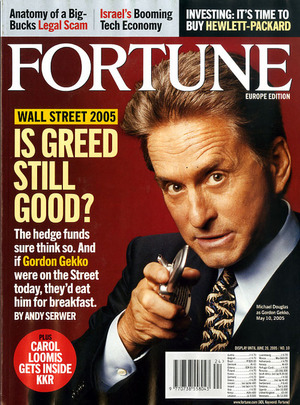
Michael Douglas as Gordon Gekko

Michael Douglas as Gordon Gekko in the film "Wall St."

Cynicism is fashionable.  But Gordon Gekko Was Wrong! Greed is Not Good!

Presidents, whether Republican or Democratic, always speak about Service, and when talking about wars,  they speak of Sacrifice, and The Ultimate Sacrifice.  Many approach their role from that perspective as well. George H. W. Bush, for example, approached politics from the traditional Conservative perspective of service. He also tried to spur volunteerism – the 1000 points of light.

But Reagan believed in Hoover’s fallacy, in the rugged individualist riding off into the sunset.  What he didn’t understand is that those iconoclastic rugged individualists ride horses descended from wild beasts tamed thousands of years ago. Their horseshoes are made by blacksmiths. Their guns are made in factories. Their boots, clothes, and other gear are made in other workshops or factories. These rugged individualist, giants as they might be, stand on the shoulders of others.

You don’t teach kids to swim by pushing them off a pier. They don’t  need flotation devices in 15 cm of water, either. What they need is someone to show them how, in waist deep water, and to say, “This is how it’s done. Why don’t you try? And don’t worry, I’ll make sure you don’t drown.”

The code of the Good Samaritan was simple: “Help when help is needed.”

Indeed, this is the common thread of 3000 years of human moral thinking, beginning with Abraham, Moses and Jesus in the West; Confucius and the Budda in the East. Continue reading

25 Dead in W. Virginia Coal Mine Accident

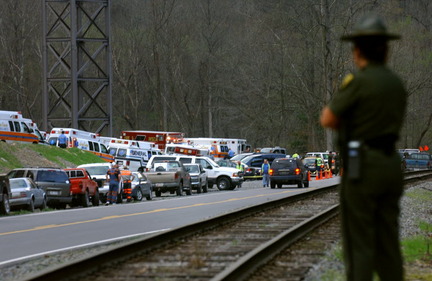
Police, Emergency, and Concerned Citizens

Police, Emergency, and Concerned Citizens

Monday, April 4, 2010, in West Virginia, at least 25 coal miners were killed and another four remain unaccounted for in a methane gas explosion in a coal mine owned by Massey Energy. As reported in the NY Times, “In the past two months, miners had been evacuated three times from the Upper Big Branch due to dangerously high methane levels, according to two miners who asked for anonymity for fear of losing their jobs. … the disaster has raised new questions about Massey’s attention to safety under the leadership of its pugnacious chief executive, Don L. Blankenship, and also why stricter federal laws, put into effect after a mining disaster in 2006, failed to prevent another tragedy.”

Is this a pattern of behavior? Does it establish a callous attitude or criminal intent?

In January, Charleston, W. Virginia, Robert F. Kennedy, Jr. debated Massey CEO Don Blankenship.

Kennedy argued again and again that the coal industry is indirectly subsidized by society. “Every single waterway in our country is contaminated with mercury,” and 70 percent of it is from coal-burning power plants, he said. (click here).  Kennedy concluded by pointing out Massey’s own reports of 12,900 violations of the federal Clean Water Act in a single year, and asked, “Is it possible to do mountaintop removal mining without violating the Clean Water Act?” (here). Blankenship shrugged and responded that complying with regulations is too expensive.

We need to do is transform the coal industry into a wind and solar industry.

Vermont Yankee – Leaks Cesium

The latest news about Vermont Yankee – The leak of Cesium-137 is not a new leak.  From VermontBiz.com (click here) or the Burlington Free Press (here).

“In a statement issued yesterday, Vermont Yankee said that recent news reports have focused less on the tritium resolution and more on the other isotopes found in the soil at the plant. Despite the recent media coverage, Vermont Yankee said the presence of Cesium-137 and other radionuclides found in the soil at the plant is not new news. During the first week of March, the company shared soil sample results with the Vermont Department of Health indicating the existence of cesium in the soil.”

What’s worse than a nuclear power plant that leaks radioactive tritium?  A nuclear power plant that leaks radioactive cesium. The good news  that it’s not a new leak. Vermont Yankee ” has not had a fuel defect that could leak Cesium-137 since 2001.” Exactly how is this reassuring?

It’s “not dangerous” according to the NRC and the people who either lied or didn’t know about the tritium leaks.

In an unscientific web-based poll (here) WPTZ a Vermont television station affiliated with NBC, 5,487 or 53% of the responders said Vermont Yankee should be shut down now (3,387 / 33%) or when it scheduled to shut down in 2012 (2,100 / 20%). The question was “Do you think Vermont Yankee should continue operations beyond its scheduled shut down in 2012?

” The question was answered affirmatively by 4,506, or 44%.

The Vermont Dept. of Health provided a summary, here of tritium contamination, here.

While nuclear power provides a tremendous amount of power from a small amount of material, it is very expensive when done right. And when done wrong we have disasters like Three Mile Island, Chernobyl, and business as usual like Vermont Yankee, Indian Point, Oyster Creek – the list of accidents is long for each operating nuclear power plant.

The economic externalities of nuclear and coal are very expensive in terms of health effects to people and the environment. As I’ve addressed elsewhere in this blog, solar, wind, and other renewable sources are safe and inexpensive, and the economic externalities are beneficial.

The only good news is that Vermont, in the spirit of Ethan Allen, is pointing the U. S. in the direction we need to go, vis a vis nuclear power.