Monthly Archives: December 2010

Steinbrenner, Infrastructure, and the Estate Tax

“Taxes,” according to Supreme Court Justice Oliver Wendell Holmes, “are the price we pay for civilized society.”
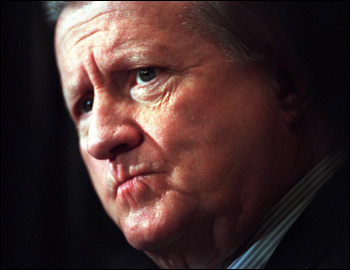
George Steinbrenner

George Steinbrenner

On July 13, 2010, George Steinbrenner suffered a massive heart attack and died. Steinbrenner was worth about $1.0 Billion when he died  (click here or here). Had Steinbrenner died in 2009, the tax on his $1.0 Billion estate would have been $450 Million.  Had he lingered until 2011, the estate tax would have been $550 million. Thanks to the Bush tax cuts, $0 went to the United States Treasury.

By many accounts the Yankees needed Steinbrenner to build up the franchise.  But think about the whole system. Steinbrenner and the Yankees, and all professional sports, would be worthless without other teams and fans. The Yankees need a stadium – which was built in part at public expense. Fans need to get to the stadium. Most of the people who live in walking distance, in Harlem and the South Bronx, can’t afford the ticket prices; a local transportation infrastructure is needed so fans with the ability to purchase tickets can get to the stadium. The NY Yankees franchise would also be worthless without other franchises, such as the NY Mets, the Boston Red Sox, the Los Angeles Dogers, etc. so a national transportation infrastructure is needed to transport players.

I would like to ask Steinbrenner’s heirs how they felt about the $1.0 Billion inheritance, the $500 million inheritance tax they avoided because Steinbrenner died in 2010, not 2009 or 2011, If they would have felt poor if they were splitting $500 million but if they feel rich because they now split $1.0 billion.

Estate Tax Chart

More

Fitness for firefighter candidates: a useful standard for other responders

The International Association of Fire Fighters (IAFF) has an excellent page explaining the what-and-why of  CPAT (Candidates Physical Aptitude Test). [NB: some seem to substitute “Ability” for aptitude, as will be evident in a quick google search.] CPAT is in widespread, if not universal, use in the United States. The IAFF is composed of actual firefighters, and represents them; they speak, to my mind, with great authority.

My very informal research suggests that active firefighters – and perhaps many firefighter candidates – can, in fact, perform CPAT easily, and are capable of shorter times, and heavier resistance (i.e. weight) than required by the test. Here’s a brief description of the test, from the IAFF website:

During the entire test the candidate must wear a 50 lb. weighted vest (simulating the weight of a fire fighters protective clothing and equipment). The eight events are:

  1. Stair Climb (climbing stairs while carrying an additional 25 lb. simulated hose pack),
  2. Ladder Raise and Extension (placing a ground ladder at the fire scene and extending the ladder to the roof or a window),
  3. Hose Drag (stretching uncharged hoselines, advancing lines),
  4. Equipment Carry (removing and carrying equipment from fire apparatus to fireground),
  5. Forcible Entry (penetrating a locked door, breaching a wall) and
  6. Search (crawling through dark unpredictable areas to search for victims)
  7. Rescue Drag (removing victim or partner from a fire building),
  8. Ceiling Pull (locating fire and checking for fire extension)

The target time for completion, as a pass-fail test, is 10 minutes, 20 seconds.

So far as I know, there’s no requirement – or classification system – for members of CERTs (Community Emergency Response Teams), the excellent FEMA program whose adoption varies widely from locality to locality. Irwin Redlener, in his must-read Americans at Risk: Why We Are Not Prepared for Megadisasters and What We Can Do, argues that individual fitness (and fitness across a community, or larger population) is one of the essential steps to reduce to disaster risk and mitigate outcomes.

So why not use CPAT as a factor in assessing the readiness of civilian responders? Make it part of the voluntary training of CERTs,  3 Steps Teams, or, for that matter, part of the high-school physical education requirement. From the pool of volunteers that can manage the test, we’ll probably know who is able to handle the more physically demanding aspects of disaster response, inspire others to become more fit, and who might be inclined to get more training – NASAR (National Association for Search and Rescue) courses, and the like.

It doesn’t require much to know that Americans, on the whole, could be much fitter, and we’d benefit from that, individually, collectively, in many ways, including increased general public health (and its corollary, decreased health care costs).  Perhaps it’s time to set standards and goals for civilian responders as well as paid and regular (e.g. volunteer firefighters, who are professional in one sense, but unpaid for the most part). And perhaps CPAT is one way to start that.

http://www.randomhouse.com/kvpa/redlener/add to

Oyster Creek To Close in 2019

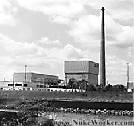
Oyster Creek

Oyster Creek, courtesy of Nukeworker.com

Chicago, Illinois based Exelon Corporation recently announced that it will close the Oyster Creek nuclear power plant in 2019. (NY Times, NJ.com AP). Oyster Creek, in Lacey, New Jersey, is the nation’s oldest operating nuclear power plant. It’s roughly 75 miles south of New York City and 60 miles east of Philadelphia. Exelon was recently granted a 20-year extension on its operating license by the Nuclear Regulatory Commission despite the wishes of local environmentalists, environmental groups, and people concerned about evacuations in the event of an emergency, and public concerns from the NJ Department of Environmental Protection.

The plant uses a single pass cooling system which sucks in 500 Billion gallons of cool water each year (click here) from Barnegat Bay, heats it 20 to 30 degrees, and returns the heated water to the bay. This kills billions of adult and juvenile fish, clams, crabs, and shrimp, and hundreds of billions, if not  trillions of hatchlings, less than a centimeter in length. This has had a negative effect – possibly a disastrous effect – on the fish and wildlife populations of Barnegat Bay during the 40 year operating life of the plant to date. The NJ DEP demanded that Exelon retrofit the plant with cooling towers.

Exelon claims the cooling towers would cost $600 million, roughly $1.00 per watt for the 610 megawatt reactor. Other estimates for the cooling towers range from $200 million to $800 million. Exelon decided to close the plant rather than spend the money on the cooling towers and other maintenance.  This is a gain for current Exelon shareholders as they defer a hundreds of millions on capital improvments, and corresponding hundreds of millions of liabilities, while they collect revenues and realize profits from the sale of electricity for the next nine years.

Continue reading

Health Care for all Americans

President Obama, 2010

President Obama

President Obama thinks that every American should have access to health care. Judge Henry E. Hudson in Virginia, however, ruled that compelling people to buy health insurance is unconstitutional. (NY Times, New York Magazine, CNN)

President Obama is obviously correct. President Bush and Senator McCain might actually agree. Pres. ush, who appointed Judge Hudson to the Federal District Court, said in Cleveland, Ohio, July, 10, 2007, (1, 2), “People have access to health care in America. After all, you just go to an emergency room.” Sen. McCain repeated this during his 2008 campaign for the Presidency (click here). While this implies a form of universal health care, Pres. Bush and Sen. McCain, miss the nuance that emergency rooms are not primary care facilities (click here). Emergency rooms are designed for EMERGENCIES. They are not equipped to handle primary care (click here).  (This is a ‘nuance’ big enough for an aircraft carrier to sail thru.)

Judge Hudson, however, may have a point. While it’s one thing to mandate that everyone have access to health care, it’s another to mandate that everyone patronize a set of investor owned or privately held enterprises.  It’s like saying that every child must go to school, and must also go to a private school.

But if both Pres. Obama and Judge Hudson are right, is there a common ground?

Let’s look first at the uninsured. Continue reading

The Furman Paradox & The Cornick Postulate

The Furman Paradox: “You want to be ahead of the curve, but not too far ahead. When the word on the street is sell, and you understand something others don’t, it may be time to buy. And remember, it’s a systems phenomenon, look for the feedback.”

The Cornick Postulate: “There are things that seem too good to be true, and yet are true – love, a child, sunset. These cannot be bought and sold; these are non-transactional phenomena.”