Category Archives: Connecting the Dots

Remembering Harriet Tubman

With thanks to Kate Clifford Lawson, author of Bound For The Promised Land: Harriet Tubman, Portrait of an American Hero, and the related website, HarrietTubmanBiography.com, we note that this year, the Jewish new year coincides with the anniversary of Tubman’s first escape from slavery. We’d like to point out some of her accomplishments which we suspect are not common knowledge:

  • Not content with securing her own freedom, she made thirteen trips into the South to rescue imprisoned family members, each time placing herself in harm’s way;
  • Made other trips, unnumbered, helping others enslaved escape;
  • Gathered intelligence for the Union Army;
  • Was the first woman to lead Union forces in an attack on Confederate forces.
  • And all this with a childhood head injury inflicted by a slave overseer leaving her suffering chronic head pain, seizures, and difficulty sleeping.

Disenfranchised as a woman, an African-American, a slave, burdened by disability, Harriet Tubman nonetheless redefined herself, repeatedly risking her life to save others, and perhaps helping to redeem our country from the moral taint of slavery. Our words here can do nothing to add to those accomplishments; but it is within our reach to honor her memory.

In that spirit, regardless of calendar or faith, please accept our wishes for a just, peaceful and prosperous year to come.

Texas May Make Basic Health Care for Women A Rare Commodity.

Adenocarcinoma found via Pap test. Pap “stain” is what provides the color (and thereby the coloration and visibility) in this slide.

There’s a proposal pending in Texas which would effectively decertify Planned Parenthood as a Medicaid provider. Andrea Grimes, an investigative reporter who writes about reproductive and women’s health issues at RHRealityCheck, made inquiries as to the actual availability of health care to women on Medicaid in the Austin area.

Grimes used as her criterion the Pap smear, which should be a routine test for adult women (at intervals of three years for those at least risk, more frequently if other risk indicators are present). Among other things, a Pap smear can be the first indication of cancer. In other words, it’s a basic service. A provider of women’s health services who isn’t providing Pap smears isn’t providing basic, necessary services. So the criterion is a reasonable proxy.

While widely available provider lists suggest wide availability a total of 181 medical providers within a thirty-mile radius from one ZIP code in Austin. One potentially barred Planned Parenthood clinic which Grimes reports as “busy” is located within the ZIP boundaries.  Grimes confirmed that, in fact, only thirteen of the 181 providers accepted Medicaid and performed Pap smears. That’s 7.2%.

Grimes has done  a very elegant piece of investigative reporting, but we wish to stress that she’s demonstrated two problems:

  1. the controversy about Planned Parenthood, in the first place, suggests a level of political discourse in which life-or-death decisions are made with reckless disregard for the ground truth;
  2. the prospect of a radical reduction of basic health services to women – also a life-or-death issue. It seems akin to making transportation arrangements – for a group without a lot of political voice – without as much counting the life boats or verifying that they are seaworthy.

Here’s an excerpt from Ms. Grimes’ piece, Without Planned Parenthood, What’s Left for Texas Women? Not Much.

Of the 13 providers that could actually see a Medicaid Women’s Health Program patient, the thirteenth is a forty minute drive from East Austin. And that’s with no traffic. And if you live in Austin, you know there’s no such thing as no traffic. By public transportation it would take over two hours to get to that clinic. And that’s with a half mile walk at the end. Excluding Planned Parenthood from the Women’s Health Program absolutely reduces access to quality care. Full stop. Already, the state has demonstrated that the systems it says it has in place to support women without Planned Parenthood don’t work. Trying to get low-income, quality reproductive health care in Texas, in a major metropolitan area like Austin, without Planned Parenthood is like trying to get a pap smear at a colonoscopy clinic. And I know because I actually tried.

What If … Gore had been President?

In the XB Cold Fingers song, “Sunbathing In Siberia,” (Listen / Try or Buy / Lyrics ) Al Gore I wrote,

“If Gore had been awarded the White House
he’d chain us to Kyoto, don’t ya see.
There’d be solar panels on the rooftops,
wind power, clean power, almost free.”

While the song is a tongue-in-cheek look at energy, climate change, and the election of 2000; what if Gore had been the 43rd President?

In this series of posts, I’ll explore this scenario in terms of what it would have meant for the Supreme Court, foreign policy and defense.

  • Who would Gore have appointed to the Supreme Court?
  • How would they have decided Citizens United and Florence v Burlington?
  • What about September 11 – would the 19 terrorists have been able to hijack 4 planes and crash two into the World Trade Center and one into the Pentagon?
  • If so, would we have gone to war in Iraq and Afghanistan?
  • If not, would we have gone to war in Iraq anyway?
  • And what about Iran? Israel? The Arab Spring?
  • And the economy here in the United States?

This next post in the series looks at the Supreme Court. Stay tuned.

Slashdot: new camo paint also protects against heat

New Face Paint Protects Soldiers Against Bomb Blasts

Posted by samzenpus on Monday August 27, @02:26PM

from the not-in-the-face dept.

Zothecula writes "For millennia, face paint has helped soldiers avoid being seen by enemy forces. Recently, however, a team of scientists from the University of Southern Mississippi announced that a new type of face paint may soon also be able to protect against the heat of bomb blasts and other explosions. Additionally, a clear version of the paint could be used by civilian firefighters."

via Slashdot: News for nerds, stuff that matters.

Ecuador offers Wikileaks founder indefinite asylum

Julian Assange, the founder of Wikileaks, has been offered asylum indefinitely in the Ecuadorian embassy in London:

CARACAS, Venezuela — The government of Ecuador is prepared to allow Julian Assange, the founder of WikiLeaks, to remain in its embassy in London indefinitely under a type of humanitarian protection, a government official said in Quito on Wednesday night. Mr. Assange has been holed up in the embassy for two months seeking asylum.

Amid an escalating confrontation with Britain over Mr. Assange, Ecuadorean officials said they would announce the decision of the country’s president, Rafael Correa, on Thursday. The official said that the British government had made it clear it would not allow Mr. Assange to leave the country to travel to Ecuador, so even with a grant of asylum or similar protection, he would probably remain stuck in the embassy.

From Ecuador to Let Julian Assange Stay in Its London Embassy, by  William Neuman and Maggie Ayala at NYTimes.com

We’re not sure – not having reviewed the Wikileaks document set – that we’ve reached an opinion of the damage done by Mr. Assange; on the one hand, we believe the adage that, in political matters, “sunlight is the best disinfectant.” But governments do have legitimate needs,  particularly in the short term, to keep confidences, and especially to protect sources and methods. But we have a sense that the rules are being bent in Mr. Assange’s case: the sudden appearance of accusations of sex crimes committed in Sweden, and now reports that Britain threatened Ecuador with essentially using force to invade its embassy, effectively discarding several centuries of diplomatic law and custom. Those diplomatic practices are part of what allows us to keep lines of communication, direct and indirect, between nations, and have the potential of keeping open the possibility of non-violent resolution even when at the edge of the abyss.

Earlier Wednesday, Ecuador’s foreign minister, Ricardo Patiño, said that the British authorities had threatened to barge into the country’s embassy in London if officials did not hand over Mr. Assange. “Today we have received from the United Kingdom an explicit threat in writing that they could assault our embassy in London if Ecuador does not hand over Julian Assange,” Mr. Patiño said at a news conference in Quito, adding defiantly, “We are not a British colony.”

Also from Ecuador to Let Julian Assange Stay in Its London Embassy, by  William Neuman and Maggie Ayala at NYTimes.com


Assessing the Threat of Cyberwar

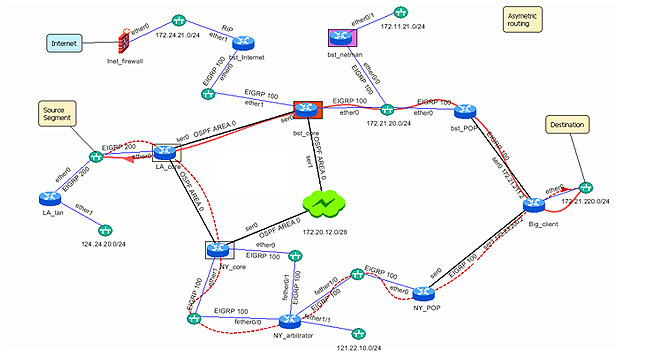
Sample Map

Bob Garfield began the segment, Assessing the True Threat of Cyberwar, on the WNYC radio show On the Media, on Friday, August 10, 2012,

Last year when a water pump in Springfield, Illinois burned out, a water district employee noticed that the system had been accessed remotely from somewhere inside Russia. Two days later, a memo leaked from the Illinois Intelligence Fusion Center, made up of state police, members of the FBI and the Department of Homeland Security, blamed the pump failure on Russian hackers. It looked to be the first example on American soil of the worst case scenario in cyber warfare, that a hacker could wreak havoc in the physical world.

Continue reading

Buggy-Whips, Railroads & Oil: Systems Thinking on Fuel

West Texas PumpjackAt the 6th Annual Babson Energy Conference, “Energy, Environment, & Entrepreneurship: Challenging Assumptions, Changing Perceptions”, here, held March 30, 2012, Cimbria Badenhausen, (LinkedIn), an alum of the Marlboro College MBA in Managing for Sustainability, asked Tahmid Mizan, Senior Planning Advisor of Exxon Mobil, “Are you an ENERGY company or a PETROLEUM company?”

Mr. Mizan, of Exxon, didn’t answer the question.

Henry Ford, when asked why he doesn’t use focus groups, is believed to have said, “If I asked people what they wanted, they’d tell me faster horses.” (HBR) Continue reading

The Second Amendment – Revisited

What does the Second Amendment mean in the context of the Aurora Massacre? Columbine? Virginia Tech? Rep. Giffords Town Meeting? The assassination attempt on President Reagan? The assassination attempts on President Ford? The assassinations of President John Kennedy, Robert Kennedy and Martin Luther King Jr? And conditions in other countries, Syria? Iraq? Iran?

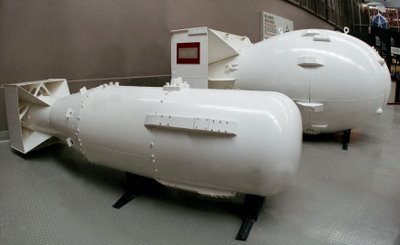
Fat Man and Little Boy“A well-regulated Militia, being necessary to the security of a free State, the right of the people to keep and bear Arms shall not be infringed.”

US Constitution, Bill of Rights, Amendment 2.

Does this give each of us the right to our own nuclear warheads and other weapons of mass destruction? If not, what right does it convey? Continue reading

Gasoline Consumption Calculator – from http://www.verbrauchsrechner.de (via LibreOffice)

Gasoline Consumption Calculator is a free LibreOffice template for use in calculating  vehicles’ mileage per gallon, as well as other ways to calculate cost:

Project Description


How does it work?
Input:
  • Date
  • Start km
  • Target km
  • Liter tanked
  • Price for Gasoline


Output (automatic):

  • Mileage
  • Consumption per 100 km
  • Price per km

We assume with this data, one could also factor in price, cost of insurance, garaging the car,  and repairs, (and in New City, the disguised over the course of time Gasoline Consumption Calculator

Colorado movie theater attack: first reports

Mark Memmott. an NPR journalist who is one of the hosts of the NPR blog “The Two-Way,”  and his colleagues at NPR have done an outstanding job reporting this story. We’ll be checking back with NPR and other sources; it’s our hope to provide some context for these events, and what inferences and implications should be made and understood given the relative sophistication of the attack (we’ll explain why we think, in relative terms, this incident shows some signs of planning and sophistication) and the relatively low frequency of attacks in theaters, movie theaters,restaurants,  arenas – places where the are large numbers of relatively relaxed people.

In other words, a target-rich environment.

Some of what’s known at present :

  • At least 14 people are dead, police say.
  • 50 or so were reportedly injured.
  • One suspect is in custody.
  • The suspect has told police that there are explosives at his restaurant.
  • Some witness accounts report smoke bombs being used by the gunman, and at least one witness reported the use of tear gas.

from Mark Memmott, Real-Life Horror: Many Killed, Dozens Wounded At Colorado Movie Theater, on The Two-Way blog, a  project of National Public Radio (NPR).

Aside from the horror which the survivors, victims and their families must wrestle for the rest of their lives; there are law-enforcement and societal challenges. The theater and the mall in which it is located has become a crime scene. Law enforcement must get the victims and the survivors out of the theater; they must get the wounded to hospitals. Law enforcement must also interview the witnesses. The largest, most flexible government-owned space is a local public school.

Should we harden schools for use in emergencies? If so, we must install emergency generators on each of the 93,000 K-12 public schools in the USA. If so, should those generating systems be a mix of solar, wind, hydro, and battery systems or should they be diesel. Diesel generators are cheaper but diesel fuel costs money. Solar, wind, hydro and battery systems are more expensive but use no fuel, and can be used all the time. If we use hybrid or electric school buses, then can we use the bus batteries to power the schools during a power failure?

suicide among veterans

BBC


Lopate


infographic (with Garry)


From the National Institutes of Health:

Suicide is a major, preventable public health problem. In 2007, it was the tenth leading cause of death in the U.S., accounting for 34,598 deaths.1 The overall rate was 11.3 suicide deaths per 100,000 people.1 An estimated 11 attempted suicides occur per every suicide death.1

Suicidal behavior is complex. Some risk factors vary with age, gender, or ethnic group and may occur in combination or change over time.

If you are in a crisis and need help right away:

Call this toll-free number, available 24 hours a day, every day: 1-800-273-TALK (8255). You will reach the National Suicide Prevention Lifeline, a service available to anyone. You may call for yourself or for someone you care about. All calls are confidential.

What are the risk factors for suicide?

Research shows that risk factors for suicide include:

  • depression and other mental disorders, or a substance-abuse disorder (often in combination with other mental disorders). More than 90 percent of people who die by suicide have these risk factors.2
  • prior suicide attempt
  • family history of mental disorder or substance abuse
  • family history of suicide
  • family violence, including physical or sexual abuse
  • firearms in the home,3 the method used in more than half of suicides
  • incarceration
  • exposure to the suicidal behavior of others, such as family members, peers, or media figures.2

However, suicide and suicidal behavior are not normal responses to stress; many people have these risk factors, but are not suicidal. Research also shows that the risk for suicide is associated with changes in brain chemicals called neurotransmitters, including serotonin. Decreased levels of serotonin have been found in people with depression, impulsive disorders, and a history of suicide attempts, and in the brains of suicide victims. 4

Are women or men at higher risk?

  • Suicide was the seventh leading cause of death for males and the fifteenth leading cause of death for females in 2007.1
  • Almost four times as many males as females die by suicide.1
  • Firearms, suffocation, and poison are by far the most common methods of suicide, overall. However, men and women differ in the method used, as shown below.1
Suicide by: Males (%) Females (%)
Firearms 56 30
Suffocation 24 21
Poisoning 13 40

Is suicide common among children and young people?

In 2007, suicide was the third leading cause of death for young people ages 15 to 24.1 Of every 100,000 young people in each age group, the following number died by suicide:1

  • Children ages 10 to 14 — 0.9 per 100,000
  • Adolescents ages 15 to 19 — 6.9 per 100,000
  • Young adults ages 20 to 24 — 12.7 per 100,000

As in the general population, young people were much more likely to use firearms, suffocation, and poisoning than other methods of suicide, overall. However, while adolescents and young adults were more likely to use firearms than suffocation, children were dramatically more likely to use suffocation.1

There were also gender differences in suicide among young people, as follows:

  • Nearly five times as many males as females ages 15 to 19 died by suicide.1
  • Just under six times as many males as females ages 20 to 24 died by suicide.1

Are older adults at risk?

Older Americans are disproportionately likely to die by suicide.

  • Of every 100,000 people ages 65 and older, 14.3 died by suicide in 2007. This figure is higher than the national average of 11.3 suicides per 100,000 people in the general population. 1
  • Non-Hispanic white men age 85 or older had an even higher rate, with 47 suicide deaths per 100,000.1

Are Some Ethnic Groups or Races at Higher Risk?

Of every 100,000 people in each of the following ethnic/racial groups below, the following number died by suicide in 2007.1

  • Highest rates:
    • American Indian and Alaska Natives — 14.3 per 100,000
    • Non-Hispanic Whites — 13.5 per 100,000
  • Lowest rates:
    • Hispanics — 6.0 per 100,000
    • Non-Hispanic Blacks — 5.1 per 100,000
    • Asian and Pacific Islanders — 6.2 per 100,000

What are some risk factors for nonfatal suicide attempts?

  • As noted, an estimated 11 nonfatal suicide attempts occur per every suicide death. Men and the elderly are more likely to have fatal attempts than are women and youth.1
  • Risk factors for nonfatal suicide attempts by adults include depression and other mental disorders, alcohol and other substance abuse and separation or divorce.5,6
  • Risk factors for attempted suicide by youth include depression, alcohol or other drug-use disorder, physical or sexual abuse, and disruptive behavior.6,7
  • Most suicide attempts are expressions of extreme distress, not harmless bids for attention. A person who appears suicidal should not be left alone and needs immediate mental-health treatment.

What can be done to prevent suicide?

Research helps determine which factors can be modified to help prevent suicide and which interventions are appropriate for specific groups of people. Before being put into practice, prevention programs should be tested through research to determine their safety and effectiveness.8 For example, because research has shown that mental and substance-abuse disorders are major risk factors for suicide, many programs also focus on treating these disorders as well as addressing suicide risk directly.

Studies showed that a type of psychotherapy called cognitive therapy reduced the rate of repeated suicide attempts by 50 percent during a year of follow-up. A previous suicide attempt is among the strongest predictors of subsequent suicide, and cognitive therapy helps suicide attempters consider alternative actions when thoughts of self-harm arise.9

Specific kinds of psychotherapy may be helpful for specific groups of people. For example, a treatment called dialectical behavior therapy reduced suicide attempts by half, compared with other kinds of therapy, in people with borderline personality disorder (a serious disorder of emotion regulation).10

The medication clozapine is approved by the Food and Drug Administration for suicide prevention in people with schizophrenia.11 Other promising medications and psychosocial treatments for suicidal people are being tested.

Since research shows that older adults and women who die by suicide are likely to have seen a primary care provider in the year before death, improving primary-care providers’ ability to recognize and treat risk factors may help prevent suicide among these groups.12 Improving outreach to men at risk is a major challenge in need of investigation.

from NIMH · Suicide in the U.S.: Statistics and Prevention

XXX

Apple & Blackberry – Yesterday, Today, & Tomorrow

Blackberry 850 - 2-way messagingBack in 1999, I was walking down a hall to the data center of a US Navy base in Virginia, when I noticed a sign that said “Cell Phones Prohibited. Deadly Force Is Authorized in this Area.” Fortunately my cellphone didn’t ring.

One of my colleagues had an Apple Newton. Just as the Osborne and Kaypro led to the Compaq and the laptops, PDAs running the Newton operating system and PDAs from Go Computers led to the Palm Pilot, and ultimately to the iPod, iPhone, and iPad, but that’s another story.

Research In Motion had just introduced the Blackberry 850 handheld. My colleagues in the financial industry had them. I understood the potential and wanted one. That too is another story.


Continue reading

Cyberwar: USA & Israel v Iran, China v USA, Russia v The World

Iranian Pres. Achmadinejad at Natanz

Iranian Pres. Achmadinejad at Natanz.

Focusing on “Operation Olympic Games,” the US efforts behind the Flame and Stuxnet cyber attacks, Mischa Glenny, in “A Weapon We Can’t Control,” an op-ed in the NY Times, 6/24/12, says the U.S. has “fired the starting gun in a new arms race … cyberweaponry.” However, Mr. Glenny ignores efforts by hackers in China and from the former Soviet Union.

Continue reading