Category Archives: Connecting the Dots

Telegraph Op-Ed urges Obama to build thorium reactors

TweetFollow LJF97 on Twitter An op-ed article in the Telegraph, UK, last year urged President  Obama “to marshal America’s vast scientific and strategic resources behind a new Manhattan Project” and by so doing we could “reasonably hope to reinvent the global energy landscape and sketch an end to our dependence on fossil fuels within three to five years.”  The article suggests we invent and commercialize nuclear reactors designed around radioactive decay of thorium.

The article concludes with the assertion that renewables can’t meet our needs. But that’s asserting a belief, not reporting scientifically observable data or a scientifically disprovable hypothesis. And the better question in that regard is not: “Can renewable and sustainable energy meet our needs?”

But: “How can renewable and sustainable energy meet our needs?”

Continue reading

Why Cape Wind Still Matters


Follow LJF97 on Twitter On May 25, 1961 President John Kennedy said, “I believe that this nation should commit itself to achieving the goal, before this decade is out, of landing a man on the moon and returning him safely to the earth.” (Kennedy library and NASA)

Ten years ago, before Sept. 11, Jim Gordon and his team set out to build a small wind farm on the waters on which the young President, his wife, brothers, sisters, nieces and nephews sailed. Size is relative. It’s small compared to a large coal or nuclear power complex. The wind farm will be composed of 130 turbines and produce up to 430 megawatts of power (here).

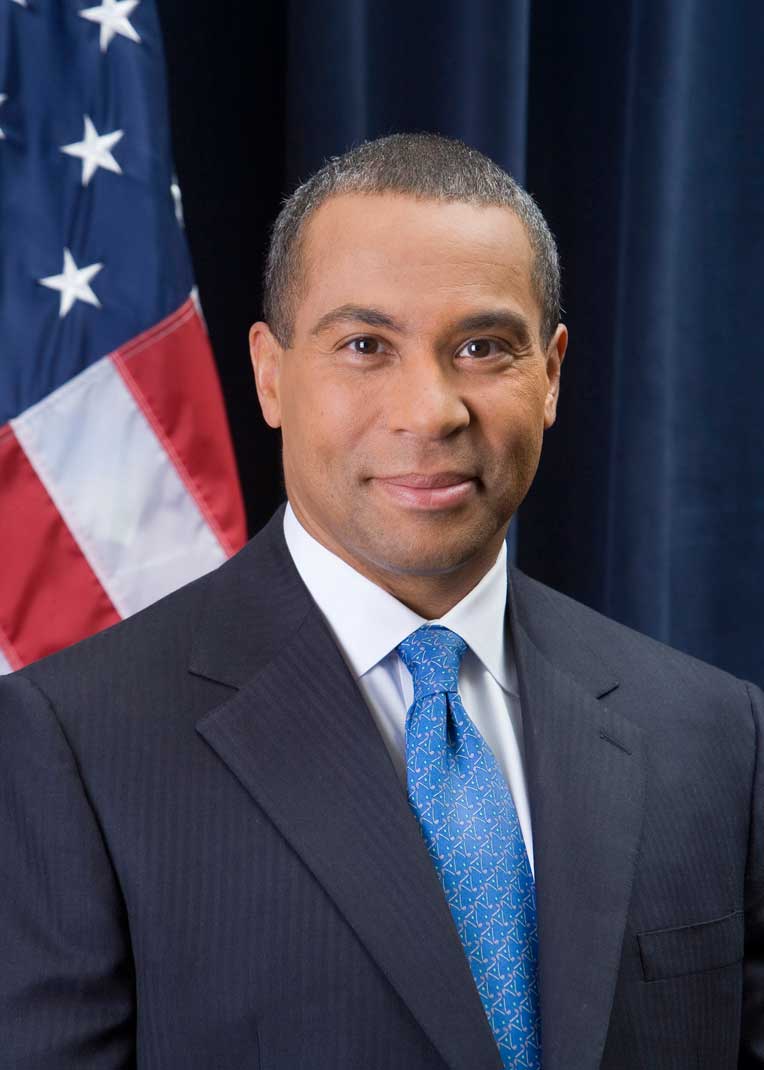
Former Mass. Gov. Deval PatrickIn 2010 Jim Gordon and Cape Wind, LLC, finally, got their permits to build the wind farm. For a variety of reasons it took longer for Cape Wind, LLC to get the permits to build the wind farm than it took this nation to land a man on the moon and bring him home safely.  Had the wind farm been built by the winter of 2004, Cape Wind would have provided power during the bitter January of ’04, the heat wave of ’05, and every day, especially the coldest days of winter and the hottest days of summer – when the winds are strongest and New Englander’s electricity needs are highest.


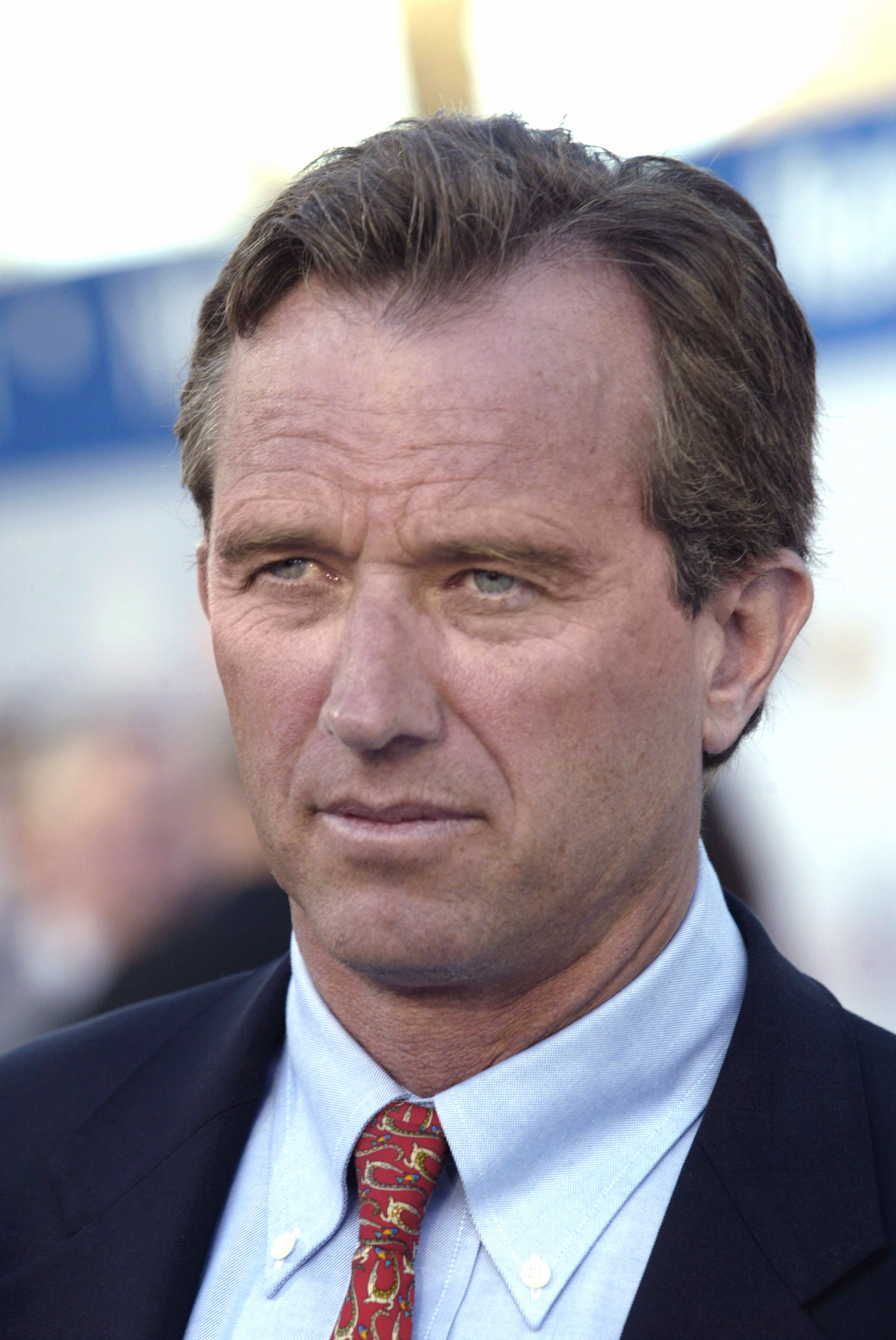
Robert F. Kennedy, Jr.

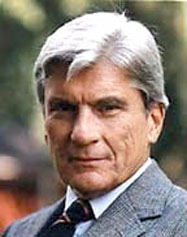
Virginia Senator John Warner

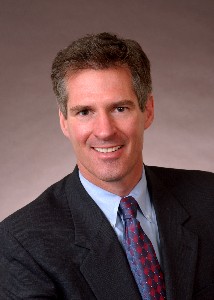
Mass. Senator Scott Brown

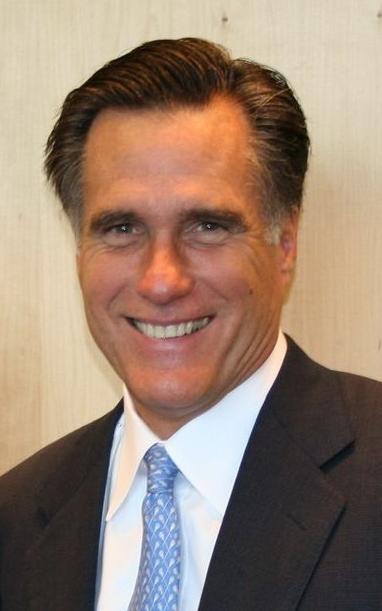
Former Mass. Gov. Willard Mitt Romney

It’s also clear, from reading Cape Wind, by Wendy Williams and Robert Whitcomb, that the alliance to “Save Our Sound,” created an anti-wind rogue’s gallery, a bipartisan coalition of moneyed special interests which led Senator Edward M. Kennedy, D-MA, Governor Willard Mitt Romney, R-MA, Senator Ted Stevens, R-AK, Representative Dan Young, R-AK, Sen. Trent Lott, R-MS, Sen. John Warner, R-VA, and very wealthy residents of Cape Cod, including Bill Koch, the late Richard Egan, Rachel “Bunny” Lambert Mellon (Sen. Warner’s ex-mother-in-law), professional environmentalist Robert F Kennedy, Jr. to obstruct the regulatory and the legislative processes and which slowed the development of Cape Wind and offshore wind farms off of the mid-Atlantic and elsewhere.

For them to oppose this project or say “I favor wind power, as long as it’s somewhere else,” was and remains cynical. Given that we have combat troops in Iraq, Afghanistan, and Libya, that Alan Greenspan, Chairman of the Federal Reserve from 1987 to 2006 described the mission in Iraq as a war for oil, was unpatriotic, perhaps traitorous.

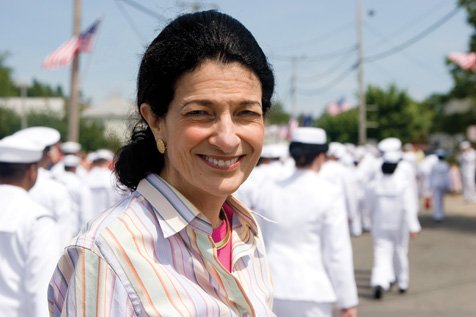
Senator Olympia Snowe

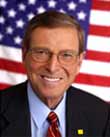
Senator DomeniciYet another bipartisan coalition rose up to challenge them and support Cape Wind: Ted Roosevelt, IV, who lives on the Cape, Rep. Jim Bass, R-NH, Sen. Olympia Snowe, R-ME, Sen. John McCain, R-AZ, Sen. Jeff Bingaman, D-NM, Sen. Pete Domenici, R-NM, Matt Patrick, Massachusetts, Gov. Deval Patrick,  Greenpeace, unions, Fox News’ Sean Hannity. What these politicians have in common is an understanding of the values of energy independence and renewable energy.

Popular Logistics is a policy blog, not a politics blog. However, it’s worth noting that several political campaigns were won in Massachusetts by Democrats who supported Cape Wind, including Matt Patrick, the 5-term Democratic Representative of the 3rd District of Barnstable, Cape Cod, and Deval Patrick who started his 2006 Gubenatorial campaign in front of the Hull, MA, wind turbine.

Mitt Romney, who signed Ted Kennedy’s health care plan into law in the Commonwealth of Massachusetts, (also known as Obamacare 1.0) appears to be running for President in 2012. He lost in the 2008 Primary to John McCain. Mr. Romney signed on to the Kennedy-Koch-Egan-Mellon anti-Cape Wind jihad. Americans favor wind power. Will they support Romney in 2012?

Scott “Mitt-Lite” Brown, said (here) “While I support the concept of wind power as an alternative source of energy, Nantucket Sound is a national treasure.”  Massachusetts voters favor Cape Wind 70 to 30. Will they support Brown in his re-election campaign in 2012?  The Statue of Liberty is a “National Treasure,” as is the Constitution.  I last visited Cape Cod when I was 7. Nantucket Sound is not a “National Treasure.” Getting America off coal, oil, natural gas, and nuclear power, moving to clean, renewable, sustainable energy means our children and grandchildren will enjoy our national treasures.

In their book Williams and Whitcomb suggest that Senator Kennedy may have realized that he had made a bad decision in opposing Cape Wind, but that for a variety of reasons he refused to back down. They may be right. While I think Kennedy was wrong, I can’t speak to whether he came to that understanding. As I noted on this blog, back in August, 2009, (here) President Obama said of Ted Kennedy,”His ideas and ideals are stamped on scores of laws and reflected in millions of lives: in seniors who know new dignity; in families who know new opportunity; in children who know education’s promise; and in all who can pursue their dream in an America that is more equal and more just, including myself.

Obama said “More equal and more just,” but he didn’t say “perfect.” America is not perfect. It is nation of men and women governed by the rule of law. The laws are not perfect, and neither are the men and women who make, enforce and interpret the laws.

Our energy policy is electricity flows when people flip a switch. Most of that electricity comes from burning fossil fuels and harnessing nuclear fission. We can pretend that the carbon we are pumping into the oceans and the atmosphere will have no effect, that we have unlimited supplies of fossil fuels, and uranium, that all the waste from coal mining, processing, transporting, and burning, and all the radiation leaks from nuclear plants (and radioactive waste from coal) are trivial or routine. Or we can get real. The choice is between coal, oil, methane, and nuclear, or wind, solar, tidal, and geothermal. I choose wind, solar, tidal and geothermal; for myself, for my backyard, not just for people who are my equal in the eyes of the law, whether they have more or less money than me.

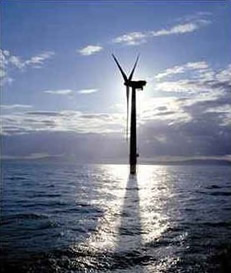
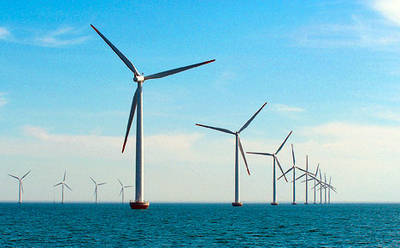
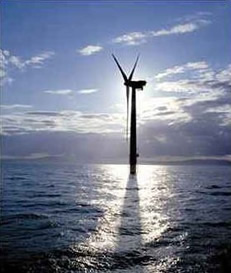
Offshore wind farm. monopoles are about 100 m.

Index to the series that explores Offshore Wind and Politics:

  1. Cape Wind, Leadership and Vision, here.
  2. Why Cape Wind Still Matters, here.
  3. Ted Roosevelt, IV, on Cape Wind (coming soon).

Cape Wind, Leadership and Vision

Jim Gordon


Follow LJF97 on Twitter

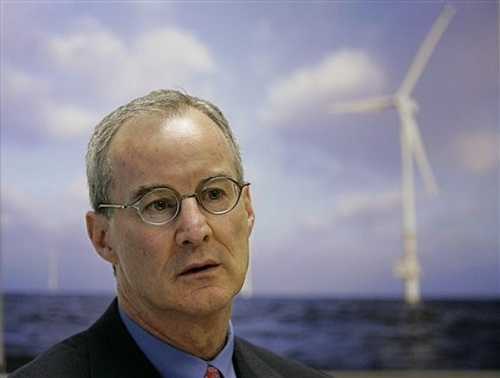
On Friday, March 25,2011, Cape Wind LLC‘s CEO Jim Gordon spoke at Columbia University about the long delayed project. When he started the project, back in 2001, the Europeans were 10 years ahead of us. Today the Europeans are 20 years ahead of us, and the Chinese too are years ahead of us.

Mr. Gordon quoted Theodore Roosevelt, IV, as saying, “I live on the Cape. If we don’t do this, in 50 years the Cape will be under water.” Cape Cod’s highest point is about 300 feet above sea level so Mr. Roosevelt was exaggerating.  His home may wind up under water, but at least some of the Cape will be one or more islands. Speaking of islands, Nantucket, which in 2006 had the highest median property values in Massachusetts, rises some 30 feet above sea level. If sea level rises 30 feet, Nantucket will get washed away.

Mr. Gordon said, “Cape Cod has the most polluted air in New England. When you harness the wind you get clean electricity: No arsenic, lead, mercury, thorium, uranium, or zinc or carbon dioxide like you get from burning coal. No barges of oil that can spill. No radioactive waste like you get from nuclear power. Last year we read about the coal mine disaster in West Virginia. Then the Deepwater Horizon. Now we’re reading about the disaster in Japan.  With wind there is no possibility of a disaster, Zero.”

And, he added, “Fossil fuels are a finite resource. New England has neither coal, oil, or natural gas – but there is a tremendous amount of wind. When you factor in the costs of storms and sea level rise – you would think it’s a no-brainer.” The question is not “Can wind power provide base line capacity?” But “How can wind power provide base line capacity.”

Mr. Gordon told how during a trade mission to China, one of his engineers was grilled about wind power, offshore wind, engineering, costs, and siting. After the end of the grilling his hosts said “we read Cape Wind, by Wendy Williams and Robert Whitcomb. We would never allow that here.” In 2009 China built a 100 mw wind farm off the coast of Shanghai – completed the project quickly. By the end of 2010 they had 41.8 gigawatts of nameplate capacity wind power – enough for about 45 million Americans (wikipedia). Continue reading

Cracks in the Fuselage

Southwest 812 on the ground after the emergency landing.

on the ground after an emergency landing 4/1/11.


Follow LJF97 on Twitter What Conservatives and the Tea Party get right, and what they miss.

Anyone who looks closely at “Business as Usual” inside the Beltway or at local government can find waste and corruption. So it’s easy for conservatives, members of the Tea Party, liberals and progressives to rail against and rally around fighting waste, corruption, and abuse of power.

While liberals and progressives tend to focus on government corruption and the abuse of power, conservatives and the Tea Party tend to focus on what they see as waste in government. They advocate a laissez faire model of government – that government is best which governs least. It is difficult to argue against this. The United States is founded on freedom of expression and free enterprise. American citizens, residents, and guests are free to do what they want, as long as those actions don’t infringe on the rights of others.

However, this lack of infringment on the rights of others is a reasonable and restrictive qualifier which opens the door to regulations and enforcement. Simply put, just as we are free to pursue happiness, we are justified in establishing police forces to protect us from others whos pursuit of happiness infringes on our rights. Self-regulation is ineffective: a fox guarding a henhouse is going to eat chicken. Similarly, regulation without enforcement is pointless. Enforcement consisting of a slap on the wrist, a wink, and a martini sets up a positive feedback loop that reinforces the action rather than a negative feedback mechanism that changes the behavior. Continue reading

21 Century Energy or Business As Usual?

NY Times Special (Business As Usual) Energy Section

Clifford Krauss’ “Can We Do Without the Mideast?”
sets the tone for the “Special Energy Section” in the NY Times, March 31, 2011. “The path to independence – or at least an end to dependence on the Mideast – could well be dirty, expensive and politically explosive.” Is this an April Fool’s Day joke? The path to sustainable energy requires vision and hard work. a solar array on every roof and insulation in every wall and every attic. It will be better for the economy, better for the environment, and better for ourselves, our children, and our grandchildren. Continue reading

Sustainable Investing

To paraphrase Warren Buffett and Charlie Munger, “Buying a good company at a good price is a good idea. Buying a great company at a bargain price is better.” But to note this in light of L’ Affaire Sokol – Lubrizol, “Buying a great company at a good price when a stick-picker on my staff just bought it for his account is a really stupid idea.  And making excuses is even stupider.” (See this article by Joe Nocera at the NYTimes.)

Buffett claims to practice “Value Investing” as defined by Ben Graham, Phil Fisher, Ken Fisher, Joel Greenblatt, Bruce Greenwald, and others. I see “Sustainable investing” as a subset of “Value Investing.” Value Investing seeks to find companies that are currently undervalued by “Mr. and Ms. Market” but that are really effective at delivering Shareholder value. Sustainable Investing would seek to find companies that are currently undervalued but that are really good at delivering Stakeholder value. Continue reading

Nuclear Power and Cocaine

Asking a nuclear engineering professor “Is radiation bad?” is like asking Charlie Sheen “Is cocaine bad?”

On “Morning Edition” today, 3/30/11, Renee Montagne did just that when she interviewed Professor Peter Caracappa, a member of the faculty of the nuclear engineering department of RPI (Interview / nuclear engineering at RPI). As is typically the case, what was left out of the conversation could have been more interesting than what was in the conversation. My questions for Professor Caracappa are below: Continue reading

Nuclear Power: What Future?

Smoke from Fukushima Dai-ichi

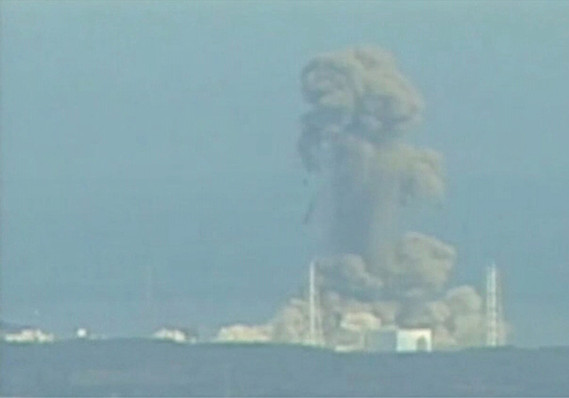
Smoke from nuclear plant. (C) Reuters

The men and women who design, build, and work at nuclear power plants are bright, dedicated people who work hard so that when we flip a switch the power flows, so we can use our computers, watch our tvs, refrigerate our food, microwave our dinners and our popcorn, heat, cool, and vacuum our homes, and jam on our electric pianos and electric guitars when we want to. The drive, dedication and service of the engineers at Fukushima is heroic.

Under normal conditions, nuclear power emits less pollutants than coal, and the waste from nuclear power is regulated. The wastes from coal are not.

Yet, radioactive materials are an intrinsic property of nuclear power; consequently meltdown and disaster are inherent dangers. The disasters at Fukushima Dai-ichi, Fukushima Diaini, and Onagawa, while not predictable, were not unexpected. We’ve seen Chernobyl in ’86, Three Mile Island in ’79. We’ve had fires at Brown’s Ferry. We have had, and continue to have leaks of radioactive material at Oyster Creek, Indian Point, Vermont Yankee, the Hanford Nuclear Reservation and every other nuclear facility in the United States, Japan, France, and I am sure, the rest of the world.

And we learned what? To ‘harden’ the plants? To spare no expense in a fanatical devotion to safety and maintenance?

No. To cut corners and to defer maintenance. To extend to 60 years the life of plants designed to last 40 years.

Continue reading

Is Fukushima Dai-ichi Worse than Chernobyl?

Nicole Polozzi, as "Snooki"

Are there differences between Fukushima Dai-ichi and Chernobyl?

And is Fukushima worse than Chernobyl?

A teenager might say “Du-uh!”

My friends from Brooklyn might ask “Is the Pope Catholic?”

Even “Snooki” and “The Situation” might ask “Are you stoopid or what?”

But the people at CNN, ProPublica and the NY Times are asking nuclear power industry experts. That’s like asking Charlie Sheen if cocaine is bad, or asking Lindsay Lohan if she really stole that necklace. They should be asking people like Amory Lovins at the Rocky Mountain Institute, Roger Saillant at Case Western’s Fowler Center for Sustainable Value, Jeremy Grantham at GMO, Cary Krosinsky at Columbia University CERC, anyone connected with academic programs in Sustainability, such as at Marlboro College, the Presidio, Bainbridge, ecological economics, systems dynamics, etc.

So for the record – here are six real differences (as opposed to the nonsense at Pro Publica here and here) and two major points of congruence.

Continue reading

Egypt, Wisconsin – It's the Economy, Stupid

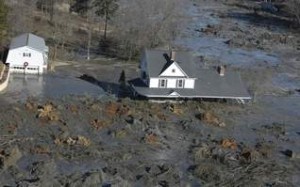
Image of the James home

The James home, Knoxville Biz.

Wisconsin Governor Scott Walker is trying to stimulate the economy by eliminating corporate income taxes and regulations on businesses and cutting taxes on wealthy people (click here or here). These kinds of activities do stimulate GDP.  Here’s how.

Wealthy people, like Lindsay Lohan, Brittney Spears, Mel Gibson, and Charlie Sheen have people, including paparazzi and media people following them around.  That costs money. They do things in a spectacular way,  and when they do stupid things in a spectacular way they have lawyers get them out of trouble. Economists call this “multipliers.” The lawyers, paparazzi and media folks need to eat, sleep, rent hotel rooms, etc. And they don’t camp out and chow down on toast, water, and dried fruits and nuts. Celebrities often require high powered consultants from the sex and pharmaceuticals industries.  When they trigger rapid increases in the entropy of hotel rooms, by “trashing” them, carpenters, electricians, decorators, architects and others need be hired to restore the room – all this costs money, and stimulates GDP.

When regulations are lax or eliminated businesses regulate themselves.  This stimulates GDP.  Consider the recent GDP stimulus of Wall Street, when those now-legendary credit default swaps raised real estate values (until they crashed). Similarly, when industries are releived of the burden of environmental regulations, they create products which increase GDP and pollution which is not counted in GDP.  When the pollution is cleaned up, at taxpayer expense, the GDP again increases. We see this dramatically in Tennessee, at the site of the Kingston Steam Plant. When a flood released 1.2 billion gallons of toxic coal ash sludge from the coal-fired power plant, December, 22, 2008, the cleanup costs were added to the bills of the people who buy power from the TVA.
Continue reading

Bernie Madoff, Richard Feynman, and The Financial Crisis

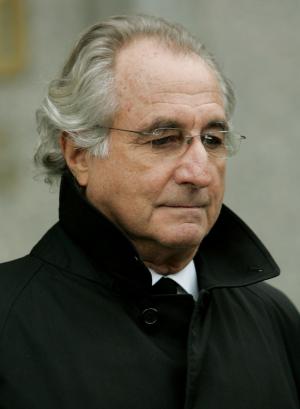
Bernie Madoff

Bernie Madoff - In Prison

Interviewed in prison, Bernie Madoff asserted that banks and hedge funds were “complicit” in his elaborate fraud. Diana Henriques, writing in the NY Times, 2/15/11, (here) said “Madoff described as ‘willful blindness’ their failure to examine discrepancies between his regulatory filings and other information,” Quoting Madoff, “They had to know. But the attitude was sort of, ‘If you’re doing something wrong, we don’t want to know.’

Look at this in the context of the the Financial Crisis. The bi-partisan committee on the financial crisis, FiscalCommission.Gov,  released its findings on Thursday, 27, January, 2011.  The Commission, I think, got this one right. The financial crisis could have been avoided.  This thirty-year economic experiment in de-regulation, which started under President Reagan, has proven that self-regulation doesn’t work; the government must regulate the financial industry. The foxes can’t guard the henhouse. Continue reading

Cats, Mice, and Sustainable Energy

Tweet

Follow LJF97 on Twitter

“Join me in setting a new goal:  By 2035, 80 percent of America’s electricity will come from clean energy sources.”  – President Barack Obama, State of the Union, January 25, 2011.

When a mouse makes noise, only other mice and local cats take notice. When a lion roars, however, everyone notices; other lions, elephants, zebras, gazelles, smaller cats, mice ….

New Jersey is one of 27 states, which, like the District of Columbia, have a Renewable Portfolio Standard, or RPS, mandating that by a certain date, a specific target of a renewable energy capacity will be deployed. An additional five states have non-binding goals. (This are listed by the U. S. Dept. of Energy at Energy Efficiency and Renewable Energy.)

In New Jersey the RPS is 22.5%, about 1.6 gigawatts (GW), by 2021. New Jersey today, in January, 2011, has about 300 megawatts of renewable energy capacity.  I am confident that New Jersey will meet, and possibly exceed its RPS goal. We started with 9.0 kilowatts (KW) of photovoltaic solar in 2001. We were up to 211 megawatts (MW), by the end of September, 2010, and we added an additional 24 MW in December, 2010. Even when you factor in 30 MW of biomass, 8 mw of wind power, and 1.5 mw of fuel cells, this is less than 20% of the goal of 1.6 gw. (This is shown at the NJ Clean Energy Program Renewable Energy Technologies page.) However paradigm shifts are systems phenomena. They occur at exponential rates.  We went from 9.0 kw in 2001 to 211 mw in mid-2010, to 360 mw  by the end of 2010.  In December, 2010, we added an additional 10% – moving from 236 mw to 260 mw.  We are hitting the handle of the hockey stick.

California’s RPS is 33% by 2030. In Texas, the RPS calls for 5,880 MW by 2015. California , New Jersey and Texas are the roaring mice in domestic US clean energy policy. And a cat – the lion in the Oval Office – the President of the United States – has listened to the mice in California, New Jersey, and Texas. Last night he roared.

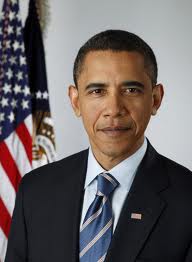
President Obama, Courtesy of the White House.

Courtesy of the White House.

In his “State of the Union” address, January 25, 2011, President Obama set a lofty goal: “80% clean electric generation by 2035.” While I think we can do better – 100% clean renewable sustainable energy by 2025 – Obama’s goal is specific, measurable, achievable, realistic, and time-bound. It’s SMART. It’s also wise.

As a President should, Obama is thinking, and thinking long term.  We at Popular Logistics wish him success because success for a President means a better future for the nation.

Two observations.

  1. There is no such thing as “Clean Coal.” Even if we capture and sequester all the carbon dioxide produced from burning coal, which is expensive, there are still impurities, such as arsenic, lead, mercury, uranium, zinc in coal. And mining and processing coal is a very dirty business.
  2. Nuclear is heavily regulated. We exercise tighter control over the wastes. In practice, nuclear power is arguably cleaner than coal. But in reality, things happen.

One question is “Can we achieve Obama’s Clean Electricity Goal?” But a better question is “How can we achieve this goal? ” My back of the envelope response is:

  • 100 gigawatts offshore wind,
  • 100 gigawatts land based wind,
  • 50 gigagwatts solar,
  • 75 gigawatts stored micro-hydro or biofuel, for when the sun isn’t shining and the wind isn’t blowing.

And as Amory Lovins, of the Rocky Mountain Institute, says, “The cheapest unit of energy is the ‘Negawatt’ – the energy you don’t have to buy.”  How much can we reduce our energy requirements? How much can we gain by conservation?

Solar Energy Saves Money, Could Provide Free Electricity and CASH to Municipalities & Schools in New Jersey

1.5 MW Solar Array, Rutgers University, Livingston Campus

1.5 MW Solar Array, Rutgers University, Livingston Campus

New Jersey taxpayers could net $36.9 million per year, $369 million over 10 years, with the installation of 152.5 megawatts (MW) of photovoltaic (PV) solar electricity systems on public schools, community colleges, and each of the public universities in the state.

The systems would pay for themselves within the first 8 years. At 2010 values of electricity and Solar Renewable Energy Certificates (SRECs), these systems would generate electricity worth approximately $300 Million and SRECs worth $1.2 Billion over the first 10 years, approximately $369 Million in excess of the cost of the systems, and provide virtually free electricity over the remainder of their 35 to 40 year lifespan.

Widespread deployment of solar energy increases the resilience of the electric grid, strengthens national security and can enhance local emergency response capabilities.

These are the conclusions of a feasibility study by Lawrence J. Furman, principal of Furman Consulting Group, LLC during the course of his studies for an MBA in Managing for Sustainability at Marlboro College Graduate School.

Continue reading

Steinbrenner, Infrastructure, and the Estate Tax

“Taxes,” according to Supreme Court Justice Oliver Wendell Holmes, “are the price we pay for civilized society.”

George Steinbrenner

George Steinbrenner

On July 13, 2010, George Steinbrenner suffered a massive heart attack and died. Steinbrenner was worth about $1.0 Billion when he died  (click here or here). Had Steinbrenner died in 2009, the tax on his $1.0 Billion estate would have been $450 Million.  Had he lingered until 2011, the estate tax would have been $550 million. Thanks to the Bush tax cuts, $0 went to the United States Treasury.

By many accounts the Yankees needed Steinbrenner to build up the franchise.  But think about the whole system. Steinbrenner and the Yankees, and all professional sports, would be worthless without other teams and fans. The Yankees need a stadium – which was built in part at public expense. Fans need to get to the stadium. Most of the people who live in walking distance, in Harlem and the South Bronx, can’t afford the ticket prices; a local transportation infrastructure is needed so fans with the ability to purchase tickets can get to the stadium. The NY Yankees franchise would also be worthless without other franchises, such as the NY Mets, the Boston Red Sox, the Los Angeles Dogers, etc. so a national transportation infrastructure is needed to transport players.

I would like to ask Steinbrenner’s heirs how they felt about the $1.0 Billion inheritance, the $500 million inheritance tax they avoided because Steinbrenner died in 2010, not 2009 or 2011, If they would have felt poor if they were splitting $500 million but if they feel rich because they now split $1.0 billion.

Estate Tax Chart

More

Oyster Creek To Close in 2019

Oyster Creek

Oyster Creek, courtesy of Nukeworker.com

Chicago, Illinois based Exelon Corporation recently announced that it will close the Oyster Creek nuclear power plant in 2019. (NY Times, NJ.com AP). Oyster Creek, in Lacey, New Jersey, is the nation’s oldest operating nuclear power plant. It’s roughly 75 miles south of New York City and 60 miles east of Philadelphia. Exelon was recently granted a 20-year extension on its operating license by the Nuclear Regulatory Commission despite the wishes of local environmentalists, environmental groups, and people concerned about evacuations in the event of an emergency, and public concerns from the NJ Department of Environmental Protection.

The plant uses a single pass cooling system which sucks in 500 Billion gallons of cool water each year (click here) from Barnegat Bay, heats it 20 to 30 degrees, and returns the heated water to the bay. This kills billions of adult and juvenile fish, clams, crabs, and shrimp, and hundreds of billions, if not  trillions of hatchlings, less than a centimeter in length. This has had a negative effect – possibly a disastrous effect – on the fish and wildlife populations of Barnegat Bay during the 40 year operating life of the plant to date. The NJ DEP demanded that Exelon retrofit the plant with cooling towers.

Exelon claims the cooling towers would cost $600 million, roughly $1.00 per watt for the 610 megawatt reactor. Other estimates for the cooling towers range from $200 million to $800 million. Exelon decided to close the plant rather than spend the money on the cooling towers and other maintenance.  This is a gain for current Exelon shareholders as they defer a hundreds of millions on capital improvments, and corresponding hundreds of millions of liabilities, while they collect revenues and realize profits from the sale of electricity for the next nine years.

Continue reading