Category Archives: Connecting the Dots

Wall Street and Climate Change

At Deutsch Bank, one of the world’s largest banks, there are some very bright people who understand that climate change is problem. An Internet search on “Deutsche Bank Climate Change” brings up links to Deutsche Bank Climate Change Advisors, which features a carbon counter,  showing the tons of Carbon Dioxide in the atmosphere, 3.6659 trillion metric tons.  Before the start of the “Industrial Revolution” there were approximately 2.5 trillion metric tons.  The question for the scientists is “What are the effects of shifting all this carbon from under the ground into the atmosphere?” For the citizens and policy makers, “Is this good or bad, and if bad, what should we do?”

What should Obama do? What is Celebrity Investor and Adviser to Presidents Warren Buffett doing?

Continue reading

Crisis (Mis) Management and the Gulf Oil Spill


What BP and the Government Could Have Done and Should Be Doing (updated 10/7/10)

The handling of the Deepwater Horizon catastrophe is a textbook study of how not to manage a crisis. The government and the Obama Administration seems to have understated the problem and ceded responsibility to BP, which seems to have acted to protect the Macondo oil field rather than the Gulf of Mexico and the Gulf Coast.

Continue reading

Gulf Oil Emergency Phone Numbers.

* Report oiled shoreline or request volunteer information: (866) 448-5816
* Submit alternative response technology, services or products: (281) 366-5511
* Submit your vessel for the Vessel of Opportunity Program: (281) 366-5511
* Submit a claim for damages: (800) 440-0858
* Report oiled wildlife: (866) 557-1401
* Medical support hotline:  (888) 623-0287

Earth Day For the Future

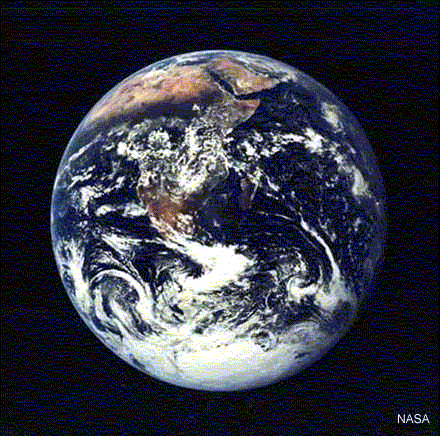
Earth from Space, Courtesy NASA

In 100 years our descendants will not be burning coal, oil, natural gas or using nuclear fission.  They might be using terrestrial nuclear fusion.  They will be using solar, wind, geothermal, marine current hydro, tidal energy systems – clean, renewable, sustainable energy systems. No fuel: No Waste. No mines, mills, wells, spills. No arsenic, lead, mercury, selenium, thorium – no fly ash to be contained or to leak.

We have started.  California and New Jersey lead the U. S. Germany and Spain lead Europe. Boeing and Richard Branson’s Virgin Atlantic want to build aircraft that run on biodiesel.  We need to move forward in a big way – to 100% clean energy in 10 years, to retrain coal miners and oil rig operators to build and run solar arrays and wind turbines, and dig deep geothermal systems.

Reagan's Beliefs, America's Folly

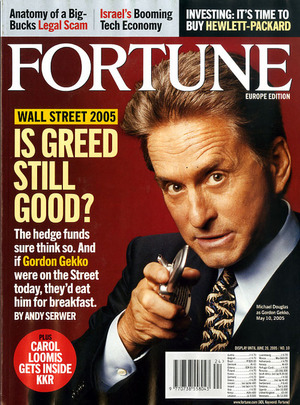
Michael Douglas as Gordon Gekko

Michael Douglas as Gordon Gekko in the film "Wall St."

Cynicism is fashionable.  But Gordon Gekko Was Wrong! Greed is Not Good!

Presidents, whether Republican or Democratic, always speak about Service, and when talking about wars,  they speak of Sacrifice, and The Ultimate Sacrifice.  Many approach their role from that perspective as well. George H. W. Bush, for example, approached politics from the traditional Conservative perspective of service. He also tried to spur volunteerism – the 1000 points of light.

But Reagan believed in Hoover’s fallacy, in the rugged individualist riding off into the sunset.  What he didn’t understand is that those iconoclastic rugged individualists ride horses descended from wild beasts tamed thousands of years ago. Their horseshoes are made by blacksmiths. Their guns are made in factories. Their boots, clothes, and other gear are made in other workshops or factories. These rugged individualist, giants as they might be, stand on the shoulders of others.

You don’t teach kids to swim by pushing them off a pier. They don’t  need flotation devices in 15 cm of water, either. What they need is someone to show them how, in waist deep water, and to say, “This is how it’s done. Why don’t you try? And don’t worry, I’ll make sure you don’t drown.”

The code of the Good Samaritan was simple: “Help when help is needed.”

Indeed, this is the common thread of 3000 years of human moral thinking, beginning with Abraham, Moses and Jesus in the West; Confucius and the Budda in the East. Continue reading

Web Server on your cellphone – a new design space

Jonas Landgren on Information Technology and Emergency & Crisis Response: Web Server on your cellphone – a new design space.

Last night, I successfully installed Nokias Mobile Web Server on my S60 cellphone. I have been aware of this service for some while but I never really took the time to install it, until now. My reaction to the experience of accessing my cellphone via my laptop web browser was significant. Like a kid on Christmas Day. The web server is a stripped down Apache server with some add-ons. The Nokia software opens up the mobile phones functionality so you can do many nice things in a remote mode. My mind goes a bit wild when, in a hands-on-fashion, I explore what it could mean that all mobile devices are connected to the internet. The range of new solutions seems endless. For emergency and crisis response, it might mean that we could design and deploy solutions that in new ways provide connectivity across a network of response actors. There is no longer a need to add yet another device such as a tabletpc just in order to provide a two-way data communication. I hope that we in a short time will be able to publish some desirable concepts that shows the possibilities for Swedish Emergency and Crisis Response. Until then … have a look at: http://mymobilesite.net/

However, what works in Sweden, an eminently sensible society, might fail in the United States, where utility companies have a spotty record in committing investment into infrastructure which doesn’t promise a rapid payback.

Toyota Recall: Instructions and Observations

2009 Corolla Sedan

2009 Corolla Sedan

If your car is accelerating out of control, whether it’s a Toyota, a BMW, or any car,

  1. Put your foot on the brake – and press the brake with a steady pressure.
  2. Put the car in Neutral. (Just like manual tranmissions, automatic transmissions have a “Neutral” setting. You shouldn’t drive if you don’t know this.)
  3. Turn on the Hazard lights.
  4. Pull over.
  5. and Above All,Don’t Panic.

Putting the car in “Neutral” disengages the transmission from the accelerator, assuming there isn’t a transmission problem. Don’t turn off the engine: you will lose the ability to brake and steer. Don’t put the car in “Park.” It will slam to a halt, throw you and your passengers against the steering wheel or the windshield, damage the engine, and you will be rear-ended by the jackass tailgating you.

It also works regardless of what is causing the problem – and it might not be because of sticky accelerators. Writing in the LA Times, Jan 30, Ralph Vartabedian and Ken Benslinger, note that:

The pedal maker denies that its products are at fault. Some independent safety experts also are skeptical of Toyota’s explations. ‘We know this recall is a red herring,’ one says.

Federal vehicle safety records reviewed by The /LA/ Times also cast doubt on Toyota’s claims that sticky gas pedals were a significant factor in the growing reports of runaway vehicles. Of more than 2,000 motorist complaints of sudden acceleration in Toyota and Lexus vehicles over the last decade, just 5% blamed a sticking gas pedal, the analysis found.

Continue reading

Barack Obama, a Systems Thinker in the White House

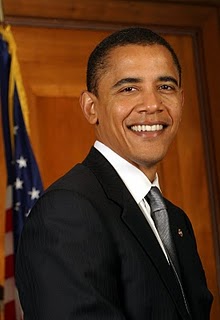
President Barack Obama.

President Barack Obama.

In his State of the Union Address <video, transcript Englsh, en español>, President Obama said “The best anti-poverty program is a world classeducation

.” He described a positive, or reinforcing, feedback loop. Education enables people to accomplish more, earn more, and better educate their children, who also accomplish more and earn more. It is one of the most important differences between the populations of New Jersey and West Virginia. This is described in detail in Thinking in Systems, by Donella Meadows<link>, (C) 2008, published by Chelsea Green<link>, ISBN 978-1-60358-055-7.

The President also asked for a better health care plan. I can answer that in five words: “Single Payer; Medicare For All” <linkjust approved by the California Senate. Medicare works for my octogenarian father. Health Insurance Care doesn’t work for a 20-something friend of mine. He just graduated from college. He has no job and therefore no medical insurance. If he was a full-time student he’d be covered on his parents’ insurance. A simple reform would cover recent graduates until they find a job that pays a living wage and provides health insurance benefits. Another would be by expanding Medicare to cover all citizens. This is much easier said than done. Our medical care system cannot adequately care for approximately 50 million people – one out of six. This can’t be changed overnight – we need to train more doctors and nurses, and build more hospitals, but it must be changed.

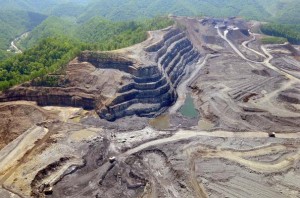
Image showing mountain strip mined for coal.

Mountain strip mined for coal. Chris Dorst, Charleston, WV Gazette.

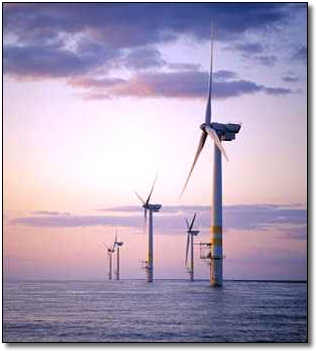
Energy is another set of systems problems. No one who has seen a once pristine valley after strip mining or “mountain-top removal”  uses the term “Clean Coal.” Countries like Denmark, Ireland, Israel, Japan, and Sweden built their economies with education not extraction of natural resources. As the President alluded to, conservation and clean, renewable energy technologies – solar, wind, geothermal, hydro – can be implemented faster, at a lower cost, and with fewer negative economic externalities than traditional fuel intensive resource based technologies like fossil fuel and nuclear power. This suggests another of the differences between New Jersey and West Virginia – the “Blessings of Education” versus the “Resource Curse” <link> from which economies built on extraction of natural resources suffer.

Arklow at Sunset

Arklow Bank Wind Park, off Arklow Bay, Ireland. Image courtesy Oneworld.net, UK.

The President needs economic advisors who start think in terms of ecological economics <link1 / link2>, of metrics like the Genuine Progress Indicator, GPI <link>, rather than Gross Domestic Product, GDP <link>. Simply put, ecological economics is neoclassical economics with a better understanding of the long term and of costs. Spending one dollar – or one trillion dollars – to clean up a mess is not as good as allocating those resources to build factories, houses, libraries, museums – the infrastructure, culture, and community of a nation.

God, Keynes, and Clean Energy

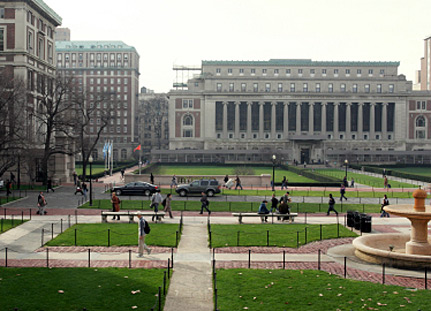
Columbia University

Columbia University

NY. Jan. 25. Mark Fulton, “Climate Change Strategist” Deutsche BankAsset Management, spoke at Cary Krosinsky’s class in Sustainable Investing at the CERC, the Center for Environmental Research and Conservation, Earth Institute, Columbia University.

Krosinsky, Vice President of Trucost, recently co-edited and wrote the book Sustainable Investing: The Art of Long Term Performance with Nick Robins of HSBC. He is an Advisory Board member of the Association of Climate Change Officers (ACCO) and founder director of InvestorWatch. Trucost has built and maintains the world’s largest database of carbon emissions and other environmental impacts as generated by the world’s largest public and private companies. Their data and expertise is used by leading global fund managers and asset owners to manage carbon risk. Continue reading

Obama and The People Fight Terrorism

President Barack Obama

In response to the Christmas Day attempted terror attack, President Obama’s actions and former Vice President Cheney’s comments highlight the differences between the two administrations: The Bush Administration was famous for not being “Reality Based” (NY Times). The Obama Administration investigates first, thinks, and ACTS(Reuters), while accepting responsibility for any failures.  “Ultimately, the buck stops with me,” Obama said. “As president, I have a solemn responsibility to protect our nation and our people.” (CS Monitor)

On 12/29/9, President Obama said it was a systemic failure (Christian Science Monitor). On 1/3/10, he said the attack was planned in Yemen (NY Times). We also know he approved US counter-terror strikes in Yemen, which occurred on 12/24/09 (NPRNYTimes) and which killed Al Queda Terrorists. Continue reading

Copenhagen, India, China, the US, and GAIA

I’m beginning to think that Copenhagen was what it had to be, what it could only be. It fulfilled its Buddha-nature. Thus, I don’t consider it a failure. Nor do I consider it a success. It was what it was, what it could have been, what it had to be:

A gathering of emissaries from the 64 corners of the earth.

Courtesy of NASA

Earth From Space, Copyright NASA

Isaac Asimov observed in Foundation (ISBN: 978-0553293357) that “diplomacy, is the art of speaking for a long time without saying anything.” Most of the diplomats in Copenhagen had multiple agendas. Unfortunately for billions of the world’s poorest, the public agendas of sustainability and the abstract “Gaia Hypothesis” were distant fourth and fifth behind the private agendas of power, money, and influence.

The inconvenient truth is that much of Bangla Desh, California, Louisiana, Southern Florida will disappear, submerged, like the mythical Atlantis. China will continue to build 2 coal plants per week. And people will die.

But disregarding this notion, a Chinese diplomat Continue reading

Jim Edwards: FDA Has Only 2 Inspectors Watching Drug Factories in China

Jim Edwards reported Friday on BNet that the FDA has all of rwo inspectors in China. From FDA Has Only 2 Inspectors Watching Drug Factories in China.

But the fact that the FDA has just two people to cover a territory 3.7 million square miles in size raises questions about how often those factories and labs will be inspected to make sure the drugs they are producing are safe for Western — or indeed any — patients. An FDA spokesperson said in a statement to BNET:

We have two inspectors for medical products. I must emphasize that in addition to those two in-country inspectors, many U.S.-based FDA inspectors continue to make short-term trips to China to perform inspections.

BNET noted a year ago that Pfizer

alone — the world’s largest drug company — is expanding in China faster than the FDA can possibly visit its facilities. Pfizer’s goal (prior to the merger with Wyeth) was to be in 137 Chinese cities. At the time, the LA Times reported that the FDA had 12 people in China. Which would mean that to inspect Pfizer’s facilities the FDA would have to inspect one site every 2.7 days, and take no vacations or weekends. Here’s the FDA’s historic rate of Chinese inspection for all companies, from 2002-2007, according to the GAO:

The lowest rate of inspections in these 10 countries was in China, for which FDA inspected 80 of its estimated 714 establishments, or fewer than 14 establishments per year, on average.

We don’t know – but hope that Edwards follows up on –

  1. do these two work together or alone:
  2. do either speak Chinese?
  3. If so, what dialects?
  4. What integrity controls does the FDA have in place?By the same token, what personnel protection does the FDA have in place?

Some of Edwards’ other excellent reporting on these issues:

Myth and Science on Global Warming

Seven Answers to Climate Contrarian Nonsense

This article presents and debunks myths about climate change.

Evidence for human interference with Earth’s climate continues to accumulate

By John Rennie, Scientific American, November 30, 2009

“On November 18, U.S. Sen. James R. Inhofe (R–Okla.) took the floor of the Senate and proclaimed 2009 to be “The Year of the Skeptic.” Had the senator’s speech marked a new commitment to dispassionate, rational inquiry, a respect for scientific thought and a well-grounded doubt in ghosts, astrology, creationism and homeopathy, it might have been cause for cheer. But Inhofe had a more narrow definition of skeptic in mind: he meant “standing up and exposing … the costs and the hysteria behind global warming alarmism.”

Continue reading

Jobs, National Security, Energy, Environment, Economy

Architecting a Clean, Secure, Sustainable, Non-Carbon and Non-Nuclear Energy Future

Middelgrunden, Denmark, near Copenhagen

Middelgrunden, Denmark, near Copenhagen

  • 100 Gigawatts offshore wind. $300 Billion.
  • 100 GW land based wind. $200 Billion.
  • 50 GW solar. $325 Billion.
  • 250 GW Clean, renewable, sustainable Energy.  $825 Billion.
  • Save the World: Priceless Continue reading

Coal Miner Deaths

In China, 407 Coal Miners Died THIS YEAR

. 104 Died THIS WEEKEND in the Xinxing coal mine – described by Chinese authorities as a SAFE

mine. 528 miners were underground at the time of the explosion – in which 19.7% of the miners were killed! China Mine Disaster Continue reading