Category Archives: Economics

"Beyond Fuel" at the Space Coast Green Living Festival

Space Coast Green Living Festival

Green Living Festival

Follow LJF97 on Twitter Tweet I am presenting “Beyond Fuel: From Consuming Natural Resources to Harnessing Natural Processes,” a discussion of the hidden costs, or “economic externalities,” of nuclear power, coal, and oil, and the non-obvious benefits of wind, solar, marine hydro and efficiency at the Space Coast Green Living Festival, Cocoa Beach, Florida, Sept 17, 2011.

The festival  is sponsored by the Cocoa Beach Surfrider Foundation and the Sierra Club Turtle Coast Group. It will be at the Cocoa Beach Courtyard by Marriott.

Continue reading

Mitt Romney: "Corporations are People"

Mitt Romney  Follow LJF97 on Twitter Tweet On the campaign trail in Iowa, Mitt Romney said, “Corporations are people.” (NY Times, Washington Post)

An argument can be made that Mr. Romney meant that corporations are composed of people, that they magnify the abilities of individuals. However, Ayn Rand might suggest that the candidate made a collectivist statement. Mr. Romney could also have meant that corporate profits eventually wind up in the pockets of investors like himself and Warren Buffett, and their heirs, like his children and Paris Hilton. However, that may be a nuance that may be lost in the political debate.

It could also be that Mr. Romney meant exactly what he said.

But what is closer to the truth, I think, is that corporations are legal mechanisms by which people use to limit their liability and to develop and protect their wealth.

In my courses at the Marlboro MBA in Managing for Sustainability, we discuss corporations as a “nexus of contracts.” That’s not really a definition of a person that a flesh and blood person, a person whos DNA is DNA would use.

People, that is flesh-and-blood-based people, DNA-based people can own corporations. Corporations can own other corporations. But neither people nor corporations can own people.

In “The Divine Right of Capital,” Marjorie Kelly (Amazon, EcoBooks) clearly describes why corporations ought not be considered “persons.”

But that’s not the only issue I have with Mr. Romney’s statements in Iowa.
Mr. Romney also said, “Social Security, Medicare, and Medicaid account for about half of Federal Spending.” This seems to be factually incorrect. According to the Congressional Budget Office summarized on  Wikipedia, Social Security, Medicare, and Medicaid account for 43% of total federal spending, in fiscal year 2010. (Note that total defense spending is greater than the 20% reported in the figure because certain programs and agencies, such as the CIA, the NSA, and other defense and intelligence agencies are funded, in part, out of the “Discretionary” category.)

While $1.491 Trillion, 43%, is $350 Billion less than 50% of the budget of FY 2010, you could argue that Mr. Romney was exaggerating for effect, something politicians do. However, I imagine if we were to raise taxes to 50% on the wealthiest 1% of Americans, people with over, say, $50 Million, Mitt Romney has $284 Million, and say, “It’s only about 43%,” he would at the very least question our understanding of mathematics.

Mr. Romney also said, “You can raise taxes, that’s not the approach I would make.”

That is the approach I would take. As noted here, taxes are “The price we pay for civilization.” They are revenues raised by the people in governments to pay for the things they understand must be paid for; things like education, infrastructure, security. I would raise taxes on people making more than $250,000 per year. And raise them significantly on people, making more than $1,000,000 per year, whether they make their money as actively as salary, or passively as dividends, capital gains, or distributions from trust funds.

I make less.  A lot less. My expenses – my health insurance, the costs of food, fuel, etc., are going up.  My income, however, is going down. In “real” terms, as inflation is going up, and in actual numbers, as the bonus I used to be given have shrunk or been eliminated because of, it has been said, “the economic conditions faced by the firm.”

The government Lincoln defined as “Of the people, by the people, and for the people” needs money to pay its obligations. It needs money to build infrastructure. And as has been noted, Keynesian economic theory suggests that in an economic conditions such as we face only the government can be willing to act to create jobs. The government can only really raise money by borrowing it or by raising taxes. We should be developing government programs to shift the energy paradigm to clean, renewable, sustainable energy. It will create 2.4 Million jobs, directly cut unemployment from about 9.1% to about 7.3%, indirectly cut unemployment by another 1.0 to 2.0% and generally stimulate the economy in a terrific manner. (Click here).

As we have noted before, and will doubtless do again, Popular Logistics is a POLICY blog, not a POLITICS blog. However, we  do think about politics, at least occasionally.  And it appears to this blogger that Mr. Romney just lost the election. Whether he has lost to Mr. Obama or to one of the other Republicans remains to be seen.


 

Socialists v Stalinists

John Boehner, Eric Cantor, & a friend Follow LJF97 on Twitter Tweet The Washington Post reported, here, that John Boehner, Eric Cantor, Paul Ryan, and the “Young Guns,” their Republican comrades in the House of Representatives, PLANNED as far back as January, 2009 to use the debt ceiling to create a political crisis. It seems to have worked. The Republicans held fast, Obama and the Democrats blinked. The rating agency Standard & Poors, S&P, downgraded their rating of the credit-worthiness of the United States of America, President Obama’s core supporters seem to be abandoning him. And the stock markets are plummeting – the Dow Jones Industrial Average dropped 1000 points in 3 days.

Allowing US debt to be downgraded – forcing it to be downgraded – will cause a rise in interest rates, an increase in unemployment and bankruptcies. Altho a rise in interest rates will benefit bondholders. This is not the fiscal policy I expect from the party that claims to be fiscal conservatives. Altho, as noted, it does benefit bondholders.

The government should be creating jobs.  Our elected representatives should be guiding the ship of state to a prosperous and sustainable future, not selling it short.

The NY Times reports, here, that S&P’s downgrade will spur the Republicans to demand more cuts in government spending, which will put more people out of work, furthor erode the economy. The only hope for the country is for Obama to realize that there is nothing he can do to win the love and admiration of the right wing, to ignore them and look to the center and to his base, and do what is good for the country, regardless of what Bachmann, Boehner, Cantor,  Ryan and the Young Guns, and Grover Norquist want.

Continue reading

Taxes – The Price We Pay For Civilization

“Taxes are the price we pay for civilization.” – Oliver Wendell Holmes.

Neil Armstrong on the surface of the moon

Your Tax Dollars At Work, Courtesy NASA

Follow LJF97 on Twitter Tweet Taxes fund Medicare and Medicaid so the poor and the elderly can see a physician and get treatment when they are sick. Taxes fund education for our children and our neighbors children so they can grow up to be doctors, lawyers, engineers, architects,  accountants, teachers, plumbers, electricians, carpenters, builders, actors, etc., so we can buy things that work properly, travel safely, enjoy life, so we can, in a word, thrive.  Taxes fund police, fire-fighting, defense, judicial and other services so we can be secure in our homes and our persons, so the innocent do not go to prison, so the guilty pay their debts to society, and so we, when we do foolish things, can compensate those we accidentally harm. Continue reading

The Crash of 2011

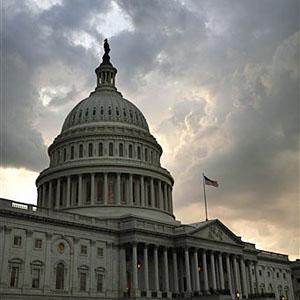
US Capitol Follow LJF97 on Twitter  Tweet I thought the market would crash in the wake of the Earthquake / Tsunami / Nuclear Meltdowns at Fukushima. It didn’t. However, something much less serious may be bringing the market – and the economy – to it’s knees. Politics. The Voice of America reported here that Standard & Poors downgraded US debt from AAA to AA+. Click here for the S&P’s Special Report and here for the full report.

S&P’s analysts wrote:

The downgrade reflects our opinion that the fiscal consolidation plan that Congress and the Administration recently agreed to falls short of what, in our view, would be necessary to stabilize the government’s medium-term debt dynamics.

John BoehnerIt is clear that the emphasis on cutting government spending, eliminating government jobs, eliminating benefits to unemployed citizens, rather than raising revenues and developing infrastructure is not in the long term or short term interests of the United States. As the 512 point drop in the Dow Jones Average, and the downgrade of US debt indicate, Republicans and the Tea Party should be careful for what they wish for – they just might get it.



In the discussions over the debt ceiling, John Boehner said something to the effect that if a family or a business is borrowing too much it simply must tighten it’s belt. Continue reading

Exxon Profits: $10,700,000,000 for the Quarter

Follow LJF97 on Twitter
Tweet

The Associated Press via the Sacramento Bee reported that “Exxon Mobil Corp. earned $10.7 billion … its highest quarterly profit since the third quarter of 2008…. However, Exxon officials noted that sluggish business investment, lower consumer spending and high debt would continue to weigh on the economy.”

Let’s do some math – Exxon earned $10.7 Billion this past quarter. Yet Exxon and other big oil companies receives $2 Billion to $3 Billion per year in tax subsidies. If divided equally, then Exxon would get $400 to $600 million per year, $100 to $150 Million per quarter. The subsidies amount to 0.93% to 1.4% of Exxon’s profits of $10.7 Billion this quarter, and 0.108% to 0.16$ of Exxon’s annual revenues of $370 Billion for the year ended 12/31/10 (Google Finance). This is equivalent to giving someone earning $50,000 per year a gift of $54 to $81.

A lot of people need help: American college students need help paying tuition, Americans on Medicare and Medicaid need help paying their medical bills, and Americans on Unemployment need help paying for food, people trying to design and build a renewable sustainable energy infrastructure. But we are helping oil companies.Why?

Let’s look again at the numbers. For the year ending Dec. 31, 2010, Exxon’s Gross Revenues were $383 Billion. Gross Profits were $107 Billion, and Income Before Taxes were $53 Billion. Profit was 27.9% of Gross Revenues.  Income before Taxes was 13.8% of Gross Revenues.

Exxon 12/31/10
Total Revenues $383 B
Gross Profit $107 B
Income before Taxes $53 B
Gross Profit / Revenues 27.94%
Income BT / Revenues 13.84%
Period  Income  Nominal Tax
 Year ending 12/31/2010  $53 Billion  $18.55 B
 Quarter ending 6/30/2011  10.7 Billion  $3.745 B

And according to Valeri Vasquez, at the Center for American Progress, here, Exxon’s tax rate is 17.6%. The nominal corporate rate is 35%.  With profits of $53 Billion last year, rather than receiving subsidies. Exxon should have paid $18.55 Billion in taxes last years. With profits of $10.7 Billion last quarter, Exxon should have paid $3.745 Billion.

Continue reading

Debt, Catastrophe, and Foreign Entanglements

Follow LJF97 on Twitter
Tweet
A young father of our country. The battle raging today between Democrats and Republicans will not solve  the nation’s debt problems, nor avert a financial catastrophe in the future. The politicians do not appear to have a handle on a comprehensive solution to our financial woes. I’m not certain that I do, either, but I feel an obligation as a citizen and a stakeholder in our nation’s present and future to present my ideas and add to the debate.

The issues, as I see them, revolve around the debt ceiling, government obligations, the economy, consumer debt and what George Washington might consider foreign entanglements of the kind he warned us against in his farewell address. The solutions must benefit the American taxpayers today and in the future. Here are the issues and some ideas toward resolution. Continue reading

Roughing It

Interior of Pilatus PC 12.  Follow LJF97 on Twitter  Tweet A s they struggle to pay their bills, forced to work, the wealthy cope as only they can. By sending their children to summer camp in private jets. In  “To Reach Simple Life of Summer Camp, Lining Up for Private Jets” Christine Haughney, in the New York Times,  July 24, 2011, wrote:

 “A turboprop Pilatus PC-12 carrying Melissa T., her daughter, her daughter’s friend and a pile of lacrosse equipment took off for their home in Connecticut, following the girls’ three-week stay at Camp All-Star in nearby Kents Hill, Me. Shortly after, a Cessna Citation Excel arrived, and a mother, a father and their 13-year-old daughter emerged carrying a pink sleeping bag and two large duffel bags, all headed to Camp Vega in Fayette. … as the economy limps along, more of the nation’s wealthier families are cutting out the car ride and chartering planes to fly to summer camps. One private jet broker, Todd Rome of Blue Star Jets, BlueStarJets.com, said his summer-camp business had jumped 30 percent over the last year.”

A quick check on the Camp All Star web site’s “Dates & Rates” page suggests that 3 weeks will cost about $4500.  Trips, horseback riding and hockey are extra. Getting there on a private jet, would add $6,318 to  $15,240 per party, $2,106 to $5,080 per camper for a camper, his or her mom, and a friend.  As I tell people, it’s the trip, not only the destination.

Tell me again, Mr. Boehner, why the wealthy can’t afford to pay taxes?

Beechcraft 350, exteriorI did some checking. Went to Blue Star‘s website, priced a charter for three (3) from Allaire Airport in Monmouth County, New Jersey to Augsta State in Maine. I was surprised at how affordable it is. Blue Star offered 5 alternatives, all turboprops:

  • A Ratheon Super King BE 350, a 9-passenger aircraft, $6,318, which is $2,106 per passenger,
  • The BE-C90, a 6 passenger turboprop, $11,270, or $3,757 per passenger,
  • The BE-100, an 8 passenger turboprop: $12,151 for the trip, $4,050 per passenger.
  • The BE 200, in a 9-passenger configuration, for $13,043, $4,348 per passenger, and
  • The BE-200 in an 8-passenger configuration: $15,240, $5,080 per passenger.

These data are summarized in the table below.

Plane Trip Per Passenger, 3 passengers Per Passenger If Full
Ratheon Super King BE 3509 Passenger Turboprop $6,318 $2,106 per person. $702 per person for 9.
BE-C90, 6 passenger Turboprop $11,270 $3,757 per person. $1,878 per person for 6.
BE-100, 8 passenger Turboprop $12,151 $4,050 per person. $1,519 per person for 8.
BE-200 9 Passenger Turboprop $13,043 $4,348 per person. $1,630 per person for 9.
BE-200 8 Passenger Turboprop $15,240 $5,080 per person. $1,905 per person for 8.

I don’t know if the airline serves food, drinks, or offers in-flight movies. But caviar is only $115 per oz (Russian Sevruga, Caviar Express, Glendale, CA).

Clean Energy, Good Jobs, and a Vibrant Economy … But


Earth from Space, courtesy NASA (our tax dollars at work)

courtesy NASA (our tax dollars at work)

Follow LJF97 on Twitter  Tweet  It sounds too good to be true:

*   100 gigawatts of offshore wind, $300 Billion,
*   100 gw of landbased wind, $200 Billion,
*   75 gw of solar, $300 Billion,
*   75 gw of geothermal, $200 Billion.
*   200 gigawatt equivalents of efficiency – $200 Billion.
*   100 & Clean, Renewable, Sustaianble Energy: 1.2 Trillion.
*   2.7 Million New Jobs and a Healthy Economy: Priceless!

This is happening, slowly, inexorably, by the “invisible hand of the market.” But it will happen faster if the “invisible mind of the community” acts. This means the government!

Continue reading

Do you Really Want a Balanced Budget Amendment?

Tweet Follow LJF97 on Twitter

Copyright (C) 2011, Dale A. Johnson. All Rights Reserved.

The rainbow in the grey skies is magical and alluring. But take a look at history before suggesting that the USA should operate under the limitations of a balanced budget. A good place to start is by searching on milestone wars that made or saved this country. Try a search such as “US Revolutionary War debt,” “US Civil War debt,” or “US WW2 debt.”

Then try to decide if the US Constitution had such an amendment from day one would we:

  • Be a British colony?
  • Have slaves?
  • Speak German?

Would we have climbed out of the Great Depression without Roosevelt applying Keynes’ ideas on government projects?

The idea of sending America’s youth into battle without proper equipment and financial support is powerful motivator for me. I was in the Air Force during a budget battle and we literally could not fly our fighters because Congress did not approve enough money for fuel while they argued about the overdue budget! Thankfully that was peace time.

Copyright (C) 2011, Dale A. Johnson. All Rights Reserved.

Let’s take a look at the financial meltdowns this country has encountered and the effects that a Balanced Budget amendment would have had. Take a look at just two, the Great Depression and the 2008 meltdown. The government did not do all the right things to prevent or solve these problems. The solutions (i.e. the recovery) required combination of forces including government spending, Wall Street and Main Street.

Search on “US Depression debt” and read current events to see the impact of such economic events on the deficit. Thank you Uncle Sam for pitching in to take away the pain and suffering that literally millions of Americans faced during these crashes. I am glad you had a credit card to use to save us!

The metaphorical Atlas – is he the government or the taxpayers? Ours is an experiment in government of the people, by the people, for the people.” Is there a difference?

I probably should stop here but …
Continue reading

Ask Obama – Internet Town Hall

What would I #AskObama (on Twitter or in person)?

1: #AskObama Economists think in terms of resources. How do we change the conversation to think in terms of processes, systems, interactions?

2: #AskObama Neoclassical Economics: Resources & Wastes. Ecological Economics: Systems: Stocks, Flows, Processes. Burn Coal: Fuel ergo Waste. Solar: No fuel ergo no waste.

3: #AskObama Ecological Economics: “Like neoclassical but a better understanding of time and costs.” Marlboro MBA Managing for Sustainability.

At 2pm EDT, July 6, 2011, President Obama will participate in the first Twitter town hall at the White House to discuss the economy and jobs with Americans across the country. The entire event will be streamed live at WhiteHouse.gov. Right now, thousands of people are talking about the event and asking questions on Twitter, using the #AskObama hashtag.  Take a moment to join the conversation and ask your own question.

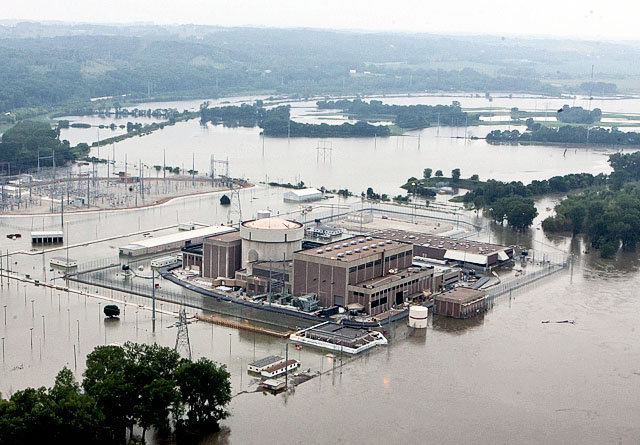
Fort Calhoun Nuclear Plant – Update


in the Missouri River

Follow LJF97 on Twitter  Tweet The flooded Fort Calhoun nuclear power plant is not exactly like the nuclear plants at Fukushima Daichi and Fukushima Diana. There are three main differences: First of all, there’s one plant, not 12. The difference of scale is tremendous. Secondly, it was offline – shut down for refueling – when flooded. Meaning, we got lucky, really lucky.  Finally, it was hit by the gradually increasing pressures of rising floodwaters, not by an earthquake, a tsunami, and aftershocks. This is huge!

Steve Everly, at the Kansas City Star, reported that David Lochbaum of the Union of Concerned Scientists was “Reassured.” (here). I spoke to Mr. Lochbaum about the flooded plant on June, 29, 2011.

Most of the releases of radioactive material, generally tritium and tritiated water, occur when plants are online.  Because the plant was offline, very little radioactive material has been released into the biosphere as a result of the flooding.  While it is easy to filter heavy metals, it is very expensive to isolate tritiated water from water.

The damages due to the flooding are likely to be in the ballpark of $1,000,000 per day in lost revenue – $23 Million since June 6 – because the plant produces power worth about $1,000,000 per day. The buildings that have been damaged are collateral buildings, not the reactor itself. Those buildings would be less expensive to repair than the reactor.

At 35 years old, the plant is near the end of its design life. While we can engineer plants that are as safe as the NRC requires, new wind, solar, geothermal, hydro, and efficiency cost less than new nuclear or coal with carbon sequestration. Safety, security, and waste management are not the challenges with sustainable technologies that they present with nuclear and coal. Therefore, it seems logical to consider that once it is decommissioned, the plant will be replaced with wind, solar, geothermal, hydro, and efficiency.

Continue reading

GDP or GPI? – My metric is better than yours.

Simon Kuznets at Wharton

As any freshman economics student should know, the Gross Domestic Product, GDP, is a measure of spending, derived from the Gross National Product, GNP, defined by Simon Kuznets during the Depression (click here for econlib).  GDP is, at best, an indirect measure of wealth.  The Genuine Progress Indicator, GPI, defined by Think Progress in 1995, measures genuine progress.

Consider the case of Joeseph Q. Bloggs, MBA, J.D., Esq., an investment banker. Bloggs has a J.D. from Harvard or Yale, an undergrad degree from Princeton, Dartmouth, Cornell, or another ivy league school, and a high school diploma from the Citadel or an acclaimed private school. As with his colleagues on Wall Street, he is self-proclaimed “Master of the Universe.” He leaves work one night after negotiating a highly leveraged hostile takeover, buys a Lamborghini, and rents the time of an expensive “friend.”  He buys her an expensive outfit, and takes her to dinner at an the Four Seasons, or a similar expensive restaurant.  He has a few drinks before dinner, a bottle of wine with dinner, and a glass or two of port after dinner.  On the way to the Hamptons, he crashes his Lamborghini into a Ferrari driven by another lawyer / banker / actor / “Master of the Universe.”

Continue reading

Brookings, SAP, NRG, and the City of New York on our Energy Future

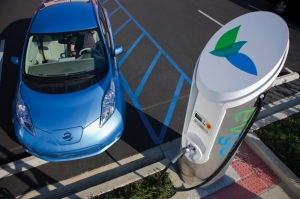
NRG Energy charging station.

NRG Energy

Follow LJF97 on Twitter  Tweet Will moving to the new energy future – deploying Solar, Wind and other sustainable alternatives create 2.7 Million New Jobs?

At “How Cities and Companies Can Work Together to Operate in the New Energy-Constrained Economy” a panel discussion (press release), Bruce Katz, Vice President and Director of the Metropolitan Policy Program, Brookings Institution, said “2.7 million new jobs” will be created in moving to the clean energy / low carbon economy.

Mr. Katz also noted that two out of three Americans – 200 million people – live in the 100 biggest metropolitan areas, and those 200 million people are responsible for 75% of our GDP. High carbon energy is no longer cheap. The people in those metropolitan areas, and elsewhere, therefore, must act. Continue reading

Indian Point 1 – A Zombie Nuclear Power Plant

Follow LJF97 on Twitter Tweet

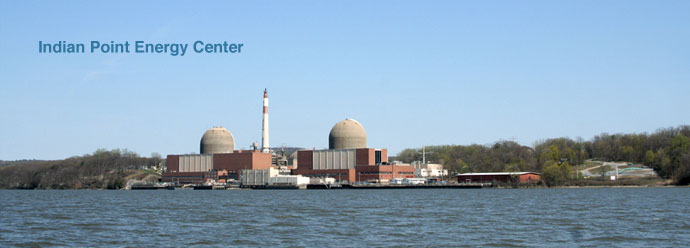
Bucolic?  Pastoral? Looks that way, but looks can be deceiving.  First of all, there’s Indian Point 1. Then there’s the water issue.  Other issues are waste and national security.

Operating Modalities, Copyright, (c), 2011 L. J. Furman

Indian Point 1

  • Brought online in August, 1962.
  • Shutdown in October, 1974.
  • Spent fuel is stored on site.
  • Scheduled to be closed in 2026.
  • Operated 13 years.
  • “Zombie” 52 years.

Talk about externalities! “Zombie” since ’74 and scheduled as such for another 25 years, total of 52 years. NRC.  What does it cost to maintain and manage as a “zombie?” And who pays? The owners or the taxpayers?  And did the plant produce so much power in the 12 years of operation that it will make a profit after 52 years of being managed and serviced?

Indian Point 2

  • Rated Thermal Power: 3216 MW
  • Net Electrical Rating: 1032 MW
  • Water Requirements: 840,000 gallons per minute

Indian Point 3

  • Rated Thermal Power: 3188 MW
  • Net Electrical Rating: 1051MW
  • Water Requirements: 840,000 gallons per minute

(source: Entergy / Indian Point website)

Summary – Indian Point is a 2.083 GW complex. Replacing it with new nuclear would cost about $12 to $18 billion, plus the cost of fuel, security, and the costs of interest during the 8 to 10 years of construction. Replacing it with solar would require about 2 million PV solar panels, at a cost of $8 to $12 billion, or 570 wind turbines at a cost of $4 to $6 billion. 2.0 gw of wind and solar do not require 1,680,000 gallons per minute of cooling water, or even 1.0 gallons per minute. Solar and wind do not require fuel and do not produce waste. Nor do they present national security challenges.

Energy Alternatives

  • 2 Gigawatts
  • Modality                  Nuclear         Solar              Wind
  • Cost (billions)       $12 to $18   $8 to $12     $4 to $6
  • Fuel                           Yes                  No                   No
  • Waste                        Yes                  No                   No
  • Security Hole        Huge               No                   No