Department of Homeland Security adopts NFPA standards for responders

Fire Engineering ,”

The National Fire Protection Association (NFPA) and the U.S. Department of Homeland Security (DHS) announced the adoption of 11 NFPA standards for emergency responders by DHS. The newly adopted standards will set requirements to assist federal agencies and state and local officials responsible for procuring equipment and services used by emergency responders.

– snip –

The documents adopted will provide direction and allow officials to make better procurement decisions in the following areas: professional qualifications, occupational safety and health, fire apparatus, personal protective clothing, powered rescue tools, and other equipment.

– snip –

The 11 newly adopted standards are:

* NFPA 1000, Standard for Fire Service Professional Qualifications Accreditation and Certification Systems
* NFPA 1001, Standard for Fire Fighter Professional Qualifications
* NFPA 1002, Standard for Fire Apparatus Driver/Operator Professional Qualifications
* NFPA 1006, Standard for Rescue Technician Professional Qualifications
* NFPA 1021, Standard for Fire Officer Professional Qualifications
* NFPA 1500, Standard on Fire Department Occupational Safety and Health Program

* NFPA 1582, Standard on Comprehensive Occupational Medical Program for Fire Departments
* NFPA 1901, Standard for Automotive Fire Apparatus
* NFPA 1906, Standard for Wildland Fire Apparatus
* NFPA 1912, Standard for Fire Apparatus Refurbishing
* NFPA 1936, Standard on Powered Rescue Tools

Continue reading

International Herald Tribune: Ireland rids itself of a plastic nuisance

Because plastic bags are light and compressible, they constitute only 2 percent of landfill, but since most are not biodegradable they will be there for decades.

According to the International Herald Tribune, “By ‘bagging it,’ Ireland rids itself of a plastic nuisance“by Elisabeth Rosenthal,

There is something missing from this otherwise typical bustling cityscape.

There are taxis and buses. There are hip bars and pollution. Every other person is holding a cellphone to his ear. But there are no plastic bags, the ubiquitous symbol of urban life.

In a determined attempt to deal with litter, Ireland passed a plastic bag tax in 2002 – now 22 euro cents, about 33 U.S. cents – at the register if you want one with your purchases. There was an advertising awareness campaign. Then something happened that was bigger than the sum of these parts.

Within weeks, there was a 94 percent drop in plastic bag use. Within a year, nearly everyone bought reusable cloth bags, which they now keep in the office and the back of their cars. Plastic bags became socially unacceptable – on par with wearing a fur coat or not cleaning up after your dog.

“When my roommate brings one in the flat, it annoys the hell out of me,” said Edel Egan, a photographer carrying a load of groceries in a red backpack.

Countries from China to Australia, cities from New York to San Francisco, have promulgated laws and regulations to address the problem, with decidedly mixed success. Continue reading

Sustainability and Carbon Sequestration

Abstract. By burning fossil fuels we have put 3.6 trillion tons of Carbon Dioxide, CO2 in the atmosphere1 in the last 200 years – most in the last 60. This has changed the concentration of atmospheric CO2 from 270 parts per Million, ppm, to 390 ppm, an increase of approximately 31%. This increase of atmospheric CO2 is resulting in changing precipitation and rising temperatures, from the equator to the poles.

The typical modern reductionist approach is to simplify the problem to develop a solution:

“Burning coal, oil, and natural gas puts CO2 into the atmosphere. All we need to do to solve the problem is modify the machines so they burn fossil fuel without releasing CO2 into the atmosphere. How do we do that? We should capture the carbon dioxide, and the arsenic, mercury, other heavy metals, radionucleotides, etc, and store it somewhere.”

But we need to remember that we are burning coal, oil, and natural gas for a reason: to generate heat, hot water, electricity and transportation. There are alternative energy technologies, including nuclear, solar, and wind.

Coal with Carbon Sequestration is estimated to cost $10 to $15 Billion per gigawatt, without considering the costs of mining, processing and transporting the coal, cleaning up after mining, and isolating the arsenicals, mercury, and radionucleotides released from burning coal.  Solar is estimated to cost $6.5 Billion per gigawatt – with no fuel and no wastes. Wind $2 to $3 Billion per gigawatt – with no fuel and no wastes.

We at Popular Logistics think, feel and believe that we need to replace coal with solar and wind immediately.

Continue reading

Onus of Eviction Falls Heavier on Poor Black Women, Research Shows – NYTimes.com

What’s the difference between eviction and Hurricane Katrina? Eviction and poverty are not the result of weather conditions or terrorism? Eviction is happening to many people simultaneously, and it meets FEMA Administrator Craig Fugate’s definition of a disaster as “An emergency in which the injuries or victims outnumber responders or the resources available.”

We have a housing surplus. How is that the housing market then yields such a high number of evictions? Shouldn’t rents go down in a market economy with a housing overage? Continue reading

Financial Cryptography: over 30K EU identity stolen per year

Financial Cryptography reports that

A classified Dutch government report has revealed that criminals stole 341,956 passports, identity cards, visa stickers and drivers’ licences from European government facilities since 2000.

Financial Cryptography,  citing 341,956 blank EU travel documents in criminal hands on  NRC Handelsblad (in English).

In other words, not only government intelligence services have access to false identity documents. See our earlier coverage of this issue: Hamas claims Israel assassinated commander in Dubai – Wikinews, the free news source


AP: Alabama Shooting suspect’s prior MA case may not have been thoroughly investigated

Reports of serious omissions into the 1986 shooting, ruled an accident, in which Amy Bishop is believed to have killed her brother.
  1. An eleven-day pause between the shooting and witness interviews with family members;
  2. A failure to order a ballistic reconstructions;
  3. Non-family member witnesses may have been interviewed in a cursory manner with no follow-up;
  4. There’s no indication thus far that a grand jury proceeding or coroner’s inquest was held.
This is consistent with authorities deciding at first impression that it was, in fact, an accident, and organizing the available intelligence around that assumption. Excerpts from AP coverage follow. Continue reading

Portable Armored Wall System Replaces Sandbags

Portable Armored Wall System Replaces Sandbags

February 2010

By Austin Wright

Marines in Afghanistan might soon scrap the sandbags. Instead, they’re snapping together armored walls that connect like Legos.

The Marines Corps in December spent $797,400 on 14 kits of McCurdy’s Armor, a patent-pending portable wall system. The service has already tested 25 kits.

The 6.5-foot-tall units can be assembled into bulletproof walls and forts — a process that can take less than an hour. This could save days’ worth of work digging trenches, laying sandbags and constructing outposts, according to the manufacturer, New Jersey-based Dynamic Defense Materials. “We’ve seen them used on everything from a podium to a guard tower to a long wall,” says Joe Dimond, a product specialist for the company.

The product offers protection from mortars, grenades, rockets and improvised explosive devices. It has aluminum frames that connect using steel pins, and the units can be arranged in several formations: U-shape, V-shape, J-shape or a wall.

It also has ballistic windows that open and close so service members can fire downrange. Four men can assemble one unit in less than 10 minutes without any tools or equipment, according to the company’s website.

“If you’re worried about armor-piercing rounds, you can also put on a second layer of armor,” Dimond says. “And you can add more if you’re going to be there a while.”

The product was named for Ryan S. McCurdy, a Marine who was killed in 2006 by insurgents in Iraq while pulling a wounded friend to safety.

via Portable Armored Wall System Replaces Sandbags.

New Armored Wall System Assembles Like Legos, Could Replace Sandbags in Afghanistan | Popular Science

Attention recruits. Those of you landing in Afghanistan in coming months may not have to engage in the sandbag stacking and trench digging usually associated with lowly grunt-dom. An $800,000 investment in an armored wall system known as McCurdy’s Armor could have Marines rapidly erecting 6.5-foot-tall mortar-, RPG- and bullet proof fortresses in less than an hour, saving the days it can take to fortify an area by conventional means and making forward-operating units more nimble.

Named for Ryan S. McCurdy—a Marine killed in Iraq in 2006 while hauling a wounded comrade to safety—the system is designed to offer troops increased protection and mobility when setting up outposts in hostile areas. The walls can be ferried into place in panels that are easily stackable in a truck or trailer. Once in position, four Marines can assemble a single panel in less than ten minutes without any special tools or additional equipment. The panels then snap together like bomb-proofed Legos secured with steel pins to form a blast- and bullet-proof shelter.

Related Articles

In Defense of Cyborg Athletes

Fossett Still Missing

NASA Plans to Give Data Transfer Connection Speeds in Deep Space a 50X Boost

Tags

Technology, Clay Dillow, armor, defense, marines, military, modern materials

The armor can be set up in a variety of arrangements (U-shaped, J-shaped, etc.), and in instances where troops are worried about armor piercing rounds a second layer of armor can supplement the structures. But the walls aren’t just a protective cocoon for far-flung outposts; ballistic windows offer protection while giving Marines a line of sight and the ability to fire downrange, meaning McCurdy’s Armor can be deployed as both a defensive stronghold as well as a tactical firing position.

When it’s time to pull up camp, Marines can quickly break down their ersatz stockade, stack it back in their vehicles and move on to fortify the next position without leaving a single thing behind. Just try pulling that off with sandbags.

[DDM via National Defense]

via New Armored Wall System Assembles Like Legos, Could Replace Sandbags in Afghanistan | Popular Science.

GeoRSS Metadata module – AwasuWiki

This

After installing the georss.mm Metadata Module and enabling it in the Advanced page of Awasu’s Program Options dialog, there will be two new Metadata values that you can add to the Item Pane: Elevation (georss/elev) and Point (georss/point) as depicted below (along with the geo/latitude and geo/longitude Metadata values).

image:GeoRSSItemPaneDialog.jpg

For additional help on adding columns to the Item Pane see the Channel settings help topic.

Once the GeoRSS Metadata values have been added to Awasu’s Item Pane it should look like this: Awasu's Item Pane displaying GeoRSS Metadata values

Here are a couple of sample feeds that contain GeoRSS-Simple elements:

For other ways to extend Awasu with GeoRSS support, click this link: GeoRSS

via GeoRSS Metadata module – AwasuWiki.

Marginal Revolution snow

The culture that is Japan, snow removal edition

Tyler Cowen

Robot Snowplow from Japan Eats Up Snow, Poops Out Bricks.

Japan

It has a camera and GPS. Here is a further report from Japan (remarkable detail at that link):

One protective measure against snow and ice for railroads and roadways is the “slush removal system” that hydraulically transfers collected snow that has been removed from the railroad tracks or roadways and deposits it in a river. Also, there is the “sprinkler snow melting system” that melts snow by sprinkling water on the road surface.

Here is a longer study of geothermal snow melting systems. Here is a discussion of numerous other Japanese snow treatment and disposal technologies. Here is a report from Tsuruta:

In town several additional unique ways of dealing with this snow exist. A concrete-contained stream runs under downtown sidewalks, covered by hinged, lightweight metal grates. People who have access to this “river” can shovel their snow into the running water, sending it floating to the nearby Sea of Japan. Around the nicer homes in town (luckily, including mine) pipes spray a constant stream of hot water onto snow, quickly melting it.

Still, the snow can gather, breaking the delicate branches of Japan’s carefully tended trees and plants. The solution: wooden cages and bamboo teepees, odd-looking sights.

The abundance of snow in Japan spawned a bewildering variety of shovels with distinct shapes and purposes. Most are plastic. There are wide shovels for moving large quantities of snow; there are smaller shovels for weaker shovelers; there are shovels with handles and shovels without; there are shovel-sleds designed to allow the user to push a large load of snow a long distance; there are also metal shovels for breaking up hard-packed snow.

The shovels come in a selection of neon colors: green, yellow, purple, orange, and blue — some marketer’s feeble attempt to make snow-shoveling fun. Shovels cost from five to thirty dollars. Most people own at least two different types, selected by need.

via Marginal Revolution.

Web Server on your cellphone – a new design space

Jonas Landgren on Information Technology and Emergency & Crisis Response: Web Server on your cellphone – a new design space.

Last night, I successfully installed Nokias Mobile Web Server on my S60 cellphone. I have been aware of this service for some while but I never really took the time to install it, until now. My reaction to the experience of accessing my cellphone via my laptop web browser was significant. Like a kid on Christmas Day. The web server is a stripped down Apache server with some add-ons. The Nokia software opens up the mobile phones functionality so you can do many nice things in a remote mode. My mind goes a bit wild when, in a hands-on-fashion, I explore what it could mean that all mobile devices are connected to the internet. The range of new solutions seems endless. For emergency and crisis response, it might mean that we could design and deploy solutions that in new ways provide connectivity across a network of response actors. There is no longer a need to add yet another device such as a tabletpc just in order to provide a two-way data communication. I hope that we in a short time will be able to publish some desirable concepts that shows the possibilities for Swedish Emergency and Crisis Response. Until then … have a look at: http://mymobilesite.net/

However, what works in Sweden, an eminently sensible society, might fail in the United States, where utility companies have a spotty record in committing investment into infrastructure which doesn’t promise a rapid payback.

Hamas claims Israel assassinated commander in Dubai – Wikinews, the free news source

Via WikiNews:

Hamas claims Israel assassinated commander in Dubai

A senior Hamas commander was “assassinated in Dubai” by Israel on January 20, according to the Palestinan group. Mahmoud al-Mabhouh, the 50-year-old founder of the Izz ad-Din al-Qassam Brigades, according to a statement, “died a martyr on 20 January, in suspicious circumstances”. No further details were given. Hamas has stated that it will “retaliate for this Zionist crime at the appropriate moment”, and is calling for a joint enquiry into the death.

[We] will avenge the blood shed by the martyr

—Hamas statement

Mabhouh, exiled to Syria since 1989, was behind the abduction and murder that year of two Israeli soldiers, Avi Sasportas and Ilan Sadon, and founded the paramilitary wing of Hamas named after a Syrian religious leader who waged war against the British in the 1930s. Mabhouh also masterminded several other attacks, to the point that Israeli authorities demolished his home in the Gaza strip. Mabhouh spent several periods in Israeli custody. After his most recent release, “he spent his life being hounded by the Zionist occupier until he succeeded in leaving the Gaza Strip”, according to Hamas.

This is not the first alleged killing by Israel of Hamas members. In 2004, the founder of Hamas was killed in an Israeli gunship attack, and, later that year, a senior Hamas member was assassinated when two missiles hit his car.

via WikiNews:

Hamas claims Israel assassinated commander in Dubai – Wikinews, the free news source.

However, Robert F. Worth reported in this Times piece, United Arab Emirates: Suspects in an Official’s Death

Dubai’s police chief said Monday that an 11-person team of trained killers with European passports carried out the mysterious assassination of a senior Hamas official last month in a Dubai hotel. The chief, Lt. Gen. Dahi Khalfan al-Tamim, provided names and photographs of the suspects, along with a detailed account of how they tracked the Hamas official, Mahmoud al-Mabhouh, and suffocated him within minutes of his arrival on Jan. 19 at Al Bustan Rotana hotel, near the international airport. The suspects, who disguised themselves with wigs and fake beards, left Dubai immediately after the killing on separate airlines, the chief said. He also said that two Palestinian suspects in the case were arrested in Jordan and extradited to Dubai, where they are now in custody. Mr. Mabhouh played a role in the kidnapping and killing of two Israeli soldiers in 1989. Hamas has accused Israel of his killing, and has vowed to retaliate.

[Bold/red emphasis added].

If, in fact, the “two Palestinian suspects” are, in fact, Palestinian, and were, in fact, participants in the killing, this would seem very much at odds with the public record of Israeli intelligence operations. Who are they, and what is their alleged involvement? We have no knowledge of the still-new Palestinian legal system, but any international extradition which takes place in less than a month seems, based on experience and knowledge of extraditions between other countries and within the United States, quite rapid.

See also

Robert Mackey’s excellent post,  Assassins of Hamas Official Caught on Tape, Dubai Says, which was posted this morning on The Lede. Mr. Mackey makes the case that this is consistent in practice with an Israeli operation. He quotes Irish and British officials denying that the assassins’ Irish and British identity documents were false.

The BBC, in Dubai Hamas killing suspects’ passports ‘faked, reports not only Irish and British officials denying the legitimacy of the documents, but also French and German officials. The suspects used false documents from four countries: 6 British, 3 Irish, one German, and one French. BBC: Pictures of ’11 Europeans’ sought for Hamas killing.The eleven photographs certainly seem to be of people of European origin. The quotation marks around ’11 Europeans’ seem more sensibly to be modifying “European” more than “11.”

If the Israeli government is not responsible for this, its intelligence services probably appreciate the assumption that it is, for purposes of elevating its reputation and deterrence.

The strongest evidence that this was an Israeli operation seems to be that it was done competently. .


Todd Woody/Green Inc. Blog: Samsung Enters Solar Deal in California

Seth Woody reports from the Green Inc. blog at the Times

Samsung, the Japanese conglomerate best known to Americans for its televisions and cellphones, is jumping into the American solar business.

Pacific Gas and Electric, the California utility serving much of the northern and central parts of the state, asked regulators last week to approve a series of 25-year contracts [pdf] for 130 megawatts’ worth of photovoltaic power plants to be built by Solar Project Solutions, a joint venture between Samsung America and ENCO Utility Services, a former subsidiary of the utility company Edison International.

Samsung’s first commercial solar plant in South Korea. Photo via Green Inc. blog at NYTimes.com

The deal is the latest of a spate of such agreements signed by California utilities as they take advantage of the increasing attractiveness of photovoltaic power as the price of solar modules falls and new competitors enter the market.

Unlike large solar thermal power plants that use mirrors to heat liquids to generate steam to run electricity-generating turbines, photovoltaic farms can be built relatively quickly near cities and existing transmission lines.

Todd Woody,–  Samsung Enters Solar Deal in California,

on the Green Inc. Blog (NYTimes.com)

Mr. Woody’s point about photovoltaic systems is well-taken: here’s another photovoltaic application, the Marine Corps’ recently announced GREENS system:

A year ago, U.S. Marines operating in the Arabian Desert only viewed the sun as the source of the region’s relentless heat. Recently, the Office of Naval Research (ONR) Advanced Power Generation Future Naval Capabilities program introduced technology that allows the Marines to harness some of that sunshine to help power their field equipment.

Fueled by the sun, the Ground Renewable Expeditionary ENergy System (GREENS) is a 300-watt, photovoltaic/battery system that provides continuous power to Marines in the field. ONR began exploring the GREENS idea in fall 2008 in response to a Marine Corps requirement from Iraq for an expeditionary renewable power system.

“It’s vitally important to have power in the battlefield especially these days in an irregular warfare environment,” said Marine Col. Thomas Williams, a senior officer at ONR.

Via Solar Daily.

Link to Solar Energy Powers Marines on Battlefield – media release from the Public Affairs/Corporate Communications Office, Office of Naval Research


Cassie Rodenberg at Popular Mechanics: Solar-Powered Circuits Breakthrough – Solar-Powered Circuits Charge by Sunlight in Real-Time

Solar power’s incremental steps forward keep coming faster and faster, and not on a single vector: large arrays to power the grid, specific installations where wiring is inefficient or impractical, and for small devices. Cassie Rodenberg, writing at PopularMechanics.com, writes about another step forward with solar power for relatively small devices. From Solar-Powered Circuits Breakthrough – Solar-Powered Circuits Charge by Sunlight in Real-Time:

Researchers at the University of Pennsylvania unveiled the world’s first solar-powered circuit in a January edition of ACS Nano. The technology shows particular promise for touchscreen devices, which could use the circuits as a direct source for sun-power. Not to be confused with solar cells, which convert sunlight energy to electricity and store it for later, this breakthrough involves circuits—electrical devices that provide paths for electricity to flow. This means that sunlight absorbed by the device can immediately use the energy to power the device.

Here’s how the circuit works: Electrons, here known as surface plasmons, oscillate on tiny molecules called nanoparticles. These plasmons act as a ‘super lenses,’ which gather all solar light hitting the circuit. Once the light’s collected, the particles pose as electrodes to ferry away the electricity for a device to use.

Currently, though, researchers can only produce and harness small amounts of energy from the photovoltaic circuits, nowhere near enough to power consumer electronics. But scientists are sure power production will only increase in the future with creative methods like stacking circuits to absorb and focus more light energy.

Self-charging photovoltaic circuitry might be used in display screen pixels or painted on the outside of iPads and smartphones to scavenge sunlight and charge the devices, according to Dawn Bonnell, a researcher on the project. It also could potentially offer just the right power solution for small robotic devices or help computers operate on light alone.

Cassie Rodenberg, Solar-Powered Circuits Breakthrough – Solar-Powered Circuits Charge by Sunlight in Real-Time, at PopularMechanics.com

Tritium Leaks Trouble Nominees for Panel – NYTimes.com

MATTHEW L. WALD, writing on the Green Inc. blog at the Times, reports

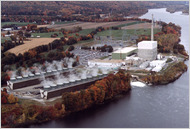
WASHINGTON — Tritium leaks like the one that threatens the future of the Vermont Yankee nuclear plant are undermining confidence in other reactors around the country, three experts nominated by President Obama to join the Nuclear Regulatory Commission said Tuesday at their confirmation hearing.

The leaks by themselves do not appear to have had any impact on public health, one of the three, William D. Magwood IV, told the Senate Environment and Public Works Committee. “The point is not that it’s not hurting anyone,” he said. “The point is it’s showing you don’t have your act together.”

via Tritium Leaks Trouble Nominees for Panel – NYTimes.com.