James Vlahos on the search for Steve Fossett

The December 2007/January 2008 issue of National Geographic Adventure has an excellent piece by James Vlahos about the SAR (S

earch And Rescue) effort following Steve Fossett’s disappearance. “The Vanishing” appears on page 68 of the print edition – but not at all on National Geographic Adventure‘s on-line counterpart. Vlahos makes some interesting points about the human factors issues that are likely to have led to Fossett’s death, and suggests that decentralized – and perhaps somewhat uncoordinated – efforts – may have overlooked some portions of the area in which Fossett was most likely to have crashed. This is worth a read – especially if you’re not familiar with the large area/small target search problem.

The National Geographic Adventure websitedoes have a great piece on survival skills by Laurence Gonzalez . About which more shortly.

AllMed Hi-Viz Rescue Vest – excellent!

I’ve been using the AllMedHi-Viz Rescue Vest for a few weeks. Happy to recommend it – worth every penny – although for CERT and other purposes I’d like to see a lower bulk price. For the record, we weren’t given a review sample – and regard this as money well spent. And I intend to assemble a bulk purchase soon. Here are some images.

It’s great – I’ve worn it every time I’ve been to the park with Lucy and Zoe before dawn, and my guess is that it exceeds ANSI Class III visibility requirements. (AllMed doesn’t make the claim – and for the moment, I’m saying again – it’s a guess). We’ll try to measure visibility soon.

And it has the feel of something well-made and well-designed – very sturdy but not at all uncomfortable.

And it’s got enough pockets that, by itself, it could function as a go-bag or jump bag with the “A” gear – the absolute essentials. We’re going to figure out how much we can stuff in the pockets.

Responders should, of course, add ID – name, units, etc. – but I’d urge anyone doing it to use Reflexite letters – what makes this vest unique is the combination

of conspicuity and load carrying ability – i.e., pockets – don’t make it any less reflective if at all possible.

Product page here .

Professor writes Op-Ed opposing mine safety bill, neglects to disclose his patronage by mine-owning interests

This must be one of those “absent-minded” professors we’re always hearing about. Because he’s apparently not one of the “treehugging liberal elite,” either.

Celeste Monforton points out that Professor Rick Honaker of the University of Kentucky recently wrote an Op-Ed – but didn’t disclose that his professorship, and his department, take money from mining interests – and made broad and extravagant claims regarding the introduction of H.R. 2768:

In “New Mining Bill Premature,” printed in the Lexington Herald-Leader, Professor Rick Honaker says it is incomprehensible” that Congress is attempting to place new safety requirements on coal operators. * He claims new mandates will “serve no useful purpose” and will “only undermine the efforts of those trying to implement” the 2006 MINER Act. That’s some tough criticism.

On closer look, I notice that neither the op-ed itself nor the professor’s byline mentions his university department’s financial connection to mining industry—an industry that also strongly opposes HR 2768. These ties include a large financial endowment established by the mining industry, called the Mining Engineering Foundation. The Foundation was created in 1983 with a $1 million endowment, which included a hefty donation of $500,000 from Mr. Catesby Clay, president of Kentucky River Coal.** Interest from the fund now provides financial support to school’s mining engineering department.

– snip –

In Dr. Honaker’s case, his byline states:

“Rick Honaker is the Mining Foundation Distinguished Professor and chairman of the University of Kentucky department of mining engineering.”

I’ve since learned that Dr. Honaker’s distinguished professorship is affiliated with the Mining Engineering Foundation, (not the Mining Foundation.) This led me to the information about the group’s financial support of Professor Honaker’s department.

– snip –

Notes:

*In the posted version of Rick Honaker PhD’s op-ed, the yellow highlighted phrases are mine (for emphasis.)

**Mr. Clay was recently honored

by the Kentucky Coal Association.

Celeste Monforton’s post at The Pump Handle.

It’s disturbing that the Lexington Herald-Leader couldn’t (or wouldn’t) figure this out for itself – it’s axiomatic that readers are entitled to know who’s speaking – or on whose behalf a speaker works.

If Professor Honaker ever testifies under oath, and makes, or has made, a practice of this omission, he’s laid an elegant foundation for some interesting cross-examination. To quote the noted trial lawyer David Lewis, “Bias is never collateral.”

Let’s suppose for a moment that Honaker is right about the legislation in question. But now, having concealed his financial ties, he’s made a permanant and public record of misleading by omission. If he’s an honest scholar, he’s unfairly damaged his own reputation.

"Moflow" water pack from Polarpak via Boing Boing Gadgets

From Boing Boing Gadgets:

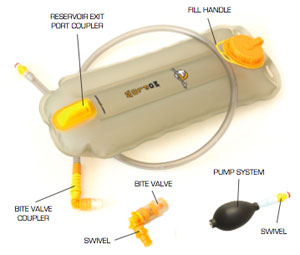
The “Moflow” water pack from Polarpak looks like a traditional back-mounted water carrier, but the inclusion of an air pump adds two useful features: you don’t have to suck on a hose to get a sip of water, as biting on the tip gives you a blast of pressurized liquid; the air pressure in the reservoir helps keep the water from sloshing around. You can add a shower head attachment as well for a little backwoods rinse down.It looks like a wonderful addition to the standard design, but I’d worry that the little hand pump, which isn’t integrated into the system, would be easily lost.

It’s selling at a suggested $32, but you’ll still need to purchase a backpack with a standard hydration pack slot.

polarpak_moflow.jpg

Product Page [PolarPak.com]

From Joel Johnson  at Boing Boing Gadgets .

The existence of a “standard hydration pack slot” is, in our view, a very helpful innovation, and we’d like to know who came up with it. We hope to start reviewing light packs with these slots as candidates for g0-bags/jump bags – and the presence hydration slot should count for a lot.

Everson resigns as President of the Red Cross

Philip Rucker of the Washington Post reports that Mark Everson, late of the IRS, more recently head of the American Red Cross, has resigned. He’d only been with the Red Cross since May of this year. From Rucker’s piece :

American Red Cross president and chief executive Mark W. Everson resigned today because he engaged in a personal relationship with an employee.

Everson, who previously was commissioner of the Internal Revenue Service, took over the Red Cross on May 29 as the federally chartered disaster-relief agency struggled to restore a reputation damaged by its response to Hurricane Katrina. He oversaw a broad restructuring plan for the $3.4 billion organization.

Everson’s resignation is effective immediately. He was engaged in a personal relationship with a subordinate female employee, agency spokeswoman Suzy C. DeFrancis said. A senior executive at the Red Cross informed the board of directors about the affair about 10 days ago and the board asked Everson to resign, DeFrancis said.

The Red Cross is unique and holds a particular public trust – it has a charter established by Congress, FCC-allocated radio frequencies – the unauthorized use of which is a crime – it’s quasi-governmental.

Adultery is not, I think, generally an issue of public concern – but with a subordinate, and when it’s against the rules – asking for Eveson’s resignation seems wise action by the Red Cross board. It’s safe to say that the Red Cross has great potential; this sort of conduct, at minimum, is a distraction from critical work.

Trent Stamp points out that “this makes at least 4 ARC presidents who have been forced out in the last 6 years.” (Link to post)

Stamp is the president of Charity Navigator – a well-regarded promoter of good practices and transparency among nonprofits. In July Stamp called Everson on appointing a longtime aide as the Red Cross ombudsman.

(There’s nothing inherently wrong with bringing subordinates and colleagues with you to a new employer – in fact, it’s often useful, where people have existing trust and working relationships. But not as an ombudsman, inspector general, or outside monitor. And it’s disturbing that Everson couldn’t have done those sums himself).

While Rucker of WaPo says that the Red Cross board learned of this ten days ago – looks like the decision may have been made today – we found this release  dated today –  announcing that Everson would preside over the 12/3 Florence Nightingale awards ceremony. Suggesting that the board’s decision happened after the Nightingale announcement.

Perhaps not  – we’ve also found an earlier version on the Red Cross website dated November 20th.

(Update – RETRACTION) Unconfirmed/incomplete report of Levinson release

UPDATE, 11/27/07: we’ve determined  – much to our embarassment – that we were suckered by trackback spam into concluding this was a new report. In fact, it linked, eventually, to a May 2007 post on abcnews.com 

This is one of the more insidious permutations of spam – polluting the stream of information about critical issues. Our apologies to our readers. Eds. 

The Janine Swainston blog has a report dated November 21, 2007 (two days ago) headed

Report: Iran May Release Former FBI Agent Soon

The entire text of the blog post is:

Friends of the former FBI agent believed to be in custody in Iran, Robert Levinson, say he could be released as early as today based on what they describe as two unconfirmed reports from Tehran. “We have received a call that he is free, and we have people at airports in Frankfurt and Dubai where we have been told he could show up,” one of. . .

The “more” link leads to an ABC News post dated May 1, 2007.

There’s no direct contact information on this blog – but we’re trying to run down this report – which, if true, would be the best Thanksgiving ever for a bunch of my favorite people – not least Bobby Levinson. (If this post finds its way to Mr. Levinson – he should be reminded that he owes me at least one dinner).

Gasoline tanker overturns, melts highway overpass, causing collapse

This is the first of what we hope will be a group of articles about the costs of transporting liquid petroleum products (heating oil, gasoline, jet fuel, etc.). We’re going to start with this incident because the reporters and multimedia staff of SFGate.com ((SFGate.com is, we gather, the on-line presence of the San Francisco Chronicle)). did such an excellent job of explaining how this particular incident happened on April 29, 2007. Their multi-media illustration of the events – “How the Crash Happened” can be found here

.

Here’s an excerpt from Demian Bulwa and Peter Fimrite’s piece ((written with assistance fromCarolyn Jones, Michael Cabanatuan, Rick DelVecchio and John Wildermuth, )) published the same day

The single-vehicle crash occurred on the lower roadway when the tanker, loaded with 8,600 gallons of unleaded gasoline and heading from a refinery in Benicia to a gas station on Hegenberger Road in Oakland, hit a guardrail at 3:41 a.m.

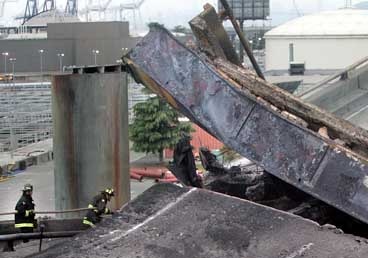
Engineers said the green steel frame of the I-580 overpass and the bolts holding the frame together began to melt and bend in the intense heat

— and that movement pulled the roadbed off its supports.

California Highway Patrol spokesman Trent Cross said the driver of the tanker, James Mosqueda, 51, of Woodland (Yolo County), was traveling too fast in a 50 mph zone when his truck overturned and burst into flames.

mark-costantini-sf-chronicle-ba_freewaycollapse_201.jpg

Photograph by Mark Costantini/San Francisco Chronicle. More images here.

Mosqueda, an employee of Sabek Transportation in San Francisco for 10 months, got out of the truck on his own after it overturned and hailed a taxi that took him to Kaiser Hospital in Oakland, witnesses and police said.

He has been transferred to the burn unit at St. Francis Hospital in San Francisco, where his father said he was “doing OK” this afternoon, having sustained burns on his face, neck and hands. The family expected Mosqueda to remain hospitalalized two or three more days.

– snip –

Oakland firefighters, the first public safety workers on the scene, arrived with two engines at 3:55 a.m., Capt. Cedric Price said.

“We didn’t know it was a tanker truck that was involved. As soon as that was established we immediately upgraded to a large scale incident response team and added two more engines and two trucks,” Price said.

Firefighters immediately noticed the upper connector ramp was buckling and seven minutes after they arrived — at 4:02 a.m.– it collapsed, Price said. Now there were no more structures threatened, the firefighters’ approach shifted.

“With no structures or lives in jeopardy and with 8,000 gallons of flammable fuel involved, you’re basically better off letting it burn itself out,” said Price.

Firefighters used only water to control the blaze, which took about two hours, he said. Had there been lives at risk, firefighters would have used foam to fight the blaze, but it would have run off into the nearby Bay water, polluting it.

“That this didn’t happen on a weekday morning might have been the only beauty of it,” said Price.

With the help of protective gear and breathing devices, firefighter exposure to the fumes was minimal, according to Price. A total of 29 Oakland Fire Department personnel were on scene as well as one engine from Emeryville. A smaller crew of Oakland firefighters remained there through the early evening to watch for potential dangers.

“Tanker fire destroys part of MacArthur Maze | 2 freeways closed near Bay Bridge”

We’re trying to learn how many of these incidents there are a year – and how many people get hurt. Apart from the risk to life – the risk to structures seems so great that we’d want to encourage great caution in transporting any form of petroleum fuel.

And take this sort of risk into account when we decide how much of it we’re going to use.

Drainspotting.com – visible art covering underground systems

Drainspotting.com is a terrific collection of manhole covers – and a few other pieces of imagery embedded in sidewalks. The following images from DrainSpotting were taken by Edward MacGregor Since one of the most important things we can do in preparing our own communities is to know what’s underneath them, knowledge of what covers the openings seems a good starting point. At this writing, I’m several thousand feet away from an underground, unmarked

series of pipes which carry, among other things, jet fuel. (One backhoe miscalculation and one cigarette away from what we suspect would be a memorable incident).

Go-Bags – several lists and thoughtful comments from Jim McDonald

has an interesting and practical post about go-bags – it’s an annotation and exegesis of lists he’s posted on his Emergency Kits page. Here’s McDonald’s explanation of his “Urban Bag”:

Urban bag

If you’re just going away for a little while, or you only need to get home from the office, and you’re in a built-up area, this has the supplies you need. If you can grab nothing else, grab this one. If you only have ten seconds, grab this one.

(Along with what’s in your pockets. I assume some pocket change, subway tokens, a pocket knife, ID, and so on.)

Continue reading

Mountain Hardwear Stimulus Jacket: waterproof, breathable and REFLECTIVE

Mountain Hardwear now has on offer the Stimulus jacket

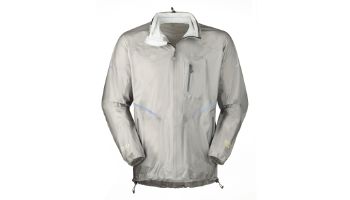
.Mountain Hardwear Stimulus Jacket

Which is waterproof, breathable, and has some stretch – but what’s novel is that it’s reflective. 

And is available, therefore, only in a color that Mountain Hardwear calls “Stainless Steel.”

I’ve had a couple of Mountain Hardwear’s pieces – one jacket and a hat. They’re both among the best clothing I’ve ever had. jacket had single defect:  it allowed me to lose it. The hat was, I believe, stolen by one of my children – high praise, indeed.

We’re going to see if we can take a look at one of these – Mountain Hardwear’s website doesn’t provide specs on the reflectivity – but if it meets ANSI Class II or III it might be an  ideal option for clothing emergency responders.

Sgt. Brad Gaskins – diagnosed with PTSD, charged with desertion

A soldier who deserted en route to Iraq would be charged with desertion. And – one’s position on the war notwithstanding – it’s understandable. Military discipline depends on compliance with lawful orders.

Let’s take a different case: soldier goes to Iraq, not once but twice, serves honorably, and after the second tour is hospitalized and diagnosed  with PTSD. After being discharged from hospital, he’s told that continued medical care in the United States “would delay any chance he had at obtaining a medical release” – and that he should, therefore, return to Iraq with his unit.

We assume that a soldier with a physical injury wouldn’t be rotated back to combat. Shouldn’t this soldier – having already served twice and having suffered this way – be in a better position than the soldier who deserts before serving in combat? The Army apparently thinks otherwise.

From the AP’s November 14th piece by William Kates

:

A soldier who served two combat tours in Iraq was arrested Wednesday for leaving the Army without permission more than a year ago to seek treatment for post traumatic stress disorder.

At a news conference hours before his arrest, Sgt. Brad Gaskins said he left the base in August 2006 because the Army wasn’t providing effective treatment after he was diagnosed with PTSD and severe depression.

“They just don’t have the resources to handle it, but that’s not my fault,” Gaskins said.

Tod Ensign, an attorney with Citizen Soldier, a GI rights group that is representing Gaskins, said the case is part of a “coming tsunami” of mental health problems involving Iraq and Afghanistan vets.

Last month, the Veterans Administration said more than 100,000 soldiers were being treated for mental health problems, and half of those specifically for PTSD.

Gaskins, 25, of East Orange, N.J., was taken into custody at a Watertown cafe by civilian police officers from Fort Drum and two local police officers, Ensign said. The lawyer said he had been on the phone with military prosecutors working out the details of Gaskins’ surrender when the soldier was arrested.

Fort Drum spokesman Ben Abel said after a soldier is AWOL for more than 30 days he becomes classified as a deserter and a federal arrest warrant is issued. He said he was unaware of the specifics of Gaskins’ case and declined to comment on it.

An eight-year Army veteran, Gaskins served two tours in Iraq and a peacekeeping tour in Kosovo. He said his mental health began deteriorating during his second tour in Iraq, which began in June 2005, when his job was to conduct road searches and locate improvised explosive devices.

He said after returning to Fort Drum in February 2006, he began suffering flashbacks and nightmares, headaches, sleeplessness, weight loss and mood swings that took him from depression to irrational rages. Military doctors sent him to the Samaritan Medical Center in Watertown, where he spent two weeks and was diagnosed with PTSD. When he later asked his commanders about returning to Samaritan, they told him it would delay any chance he had at obtaining a medical release, Gaskins said.

At the time, the Fort Drum mental health facility had a staff of a dozen caring for approximately 17,000 troops, Ensign said.

Gaskins said that because he had been unable to get proper help, he requested a two-week leave and went home to New Jersey, where he has been living since.

The base has expanded its mental health facility staff to 31 in the past year, with plans to add another 17 staffers, Abel said. “Is there a need for more — yes,” he said.

Gaskins said he hasn’t been able to get a job because of his PTSD, and that he and his wife have separated. He said he has only supervised visitation rights with his two children.

See also:

“Sergeant Fled Army, but Not the War in His Head,” by Fernanda Santos, in The  New York Times. 

The Conjecturer ยป Land of the High Flags: Afghanistan When the Going Was Good, by Rosanne Klass

I’m sorry I hadn’t learned of The Conjecturer until today. A blog – on initial reading – mostly about public affairs and political science by Joshua Foust and Dan Allen. I was moved by an excerpt from, and Foust’s review of, Rosanne Klass’s Land of the High Flags: Afghanistan When the Going Was Good.

From Klass:

What was lost could never be truly restored. The land had been depopulated, its people were dead, fled, or enslaved… The scholars were gone, the artists were gone, the poets, the heroes, the kings were gone, the land was stripped of life, the fields were ruined and barren. My horrors die with me, yours with you, but such horrors as these are ineffaceable, and heal, when they heal, like an amputation.

From Foust’s post:

What comes out the strongest, perhaps unintentionally, is grief. As the above passage indicates, Afghanistan has a particularly tragic past, an almost continuous record of horrendous loss and catastrophic destruction over the history of Man—what’s worse, such devastation was wrought by the hand of Man, and not Nature. It is the story of a land eternally torn back and forth by its more powerful neighbors (except for the brief, glorious Moghul empire), even if the first three-quarters of the 20th century were particularly calm.

Equally strong in Ms. Klass’ book, however, is the overwhelming sensation of beauty. Afghanistan is, she says, the face of the world—it’s people are of all colors and ethnicities (though, of course, Gul Baz Khan is worthy of particular merit). The landscape is unforgiving and painstakingly beautiful; at one point her endless commentaries upon the “glittering crystal landscape” of the mountains outside Jalalabad after a snowstorm prompt her husband to harshly rebuke her in recognition of the very real danger they were in of plummeting off a cliff to their deaths. Her description of the Buddhas of Bamiyan are of a similar ilk, as were the recordings of her trips into Paghman, Laghman, the Hazarajat, Charikar, and Bagram. Even in desolation, Afghanistan is a land of haunting beauty.

Foust is also a regular contributor to Registan

, which “covers Eurasian politics and news, seeking to draw more attention to issues and news rarely covered in much depth, if at all, by Western media. Our focus is primarily on the former Soviet Republics of Central Asia and the Caucasus, with an eye to domestic politics, relations with with rest of the world, and foreign policy as well as the occasional report on pop culture.”

From The Conjecturer.

Aren't "secret" and "blimp" contradictory concepts?

Airship World – recently added to our link list – appears to have video of a new classified airship under development at Lockheed Martin’s Skunkworks.

Link to the post at Airship World.

The Popular Logistics Aviation  Research Team, world-reknowned for its fear of heights, knows little about this – but suspects that for energy-efficiency and other reasons – this technology deserves a renaissance.

Hurricane Katrina’s Carbon Footprint on U.S. Gulf Coast Forests — Chambers et al. 318 (5853): 1107 — Science

Jeffrey Q. Chambers is the lead author in an article in Science, dated 16 November, reporting findings that Katrina destroyed or seriously damaged

320 million large trees totaling 105 teragrams of carbon, representing 50 to 140% of the net annual U.S. forest tree carbon sink. Changes in disturbance regimes from increased storm activity expected under a warming climate will reduce forest biomass stocks, increase ecosystem respiration, and may represent an important positive feedback mechanism to elevated atmospheric carbon dioxide.

Link to Science abstract of“Hurricane Katrina’s Carbon Footprint on U.S. Gulf Coast Forests” — Chambers et al. 318 (5853): 1107; subscription required for full text. 

Thomas H. Maugh II and Karen Kaplan’s coverage in the Los Angeles Times is excellent. Please read to the bottom of this excerpt – they’ve gone far enough to identify what, to my mind, is the most frightening detail in the story. The lost trees are already being replaced by invasive species; the implications are (1) we can’t just let it grow back (2) the longer we wait to reforest, the harder it will be.

The death of the trees from wind damage and soaking in saltwater will ultimately release about 367 million tons of carbon dioxide as they decompose — about the same amount that is absorbed by all U.S. forests in a year, according to the study published in the journal Science.

Considered on the vast scale of global climate change, Katrina’s impact is small. But as a one-time event, its infusion of carbon is significant, exceeding an entire season’s worth of emissions from U.S. forest fires.

“This is a one-shot massive hit to these systems, where you see this enormous impact,” said Jason Neff, an assistant professor of geoscience at the University of Colorado at Boulder, who was not involved in the study.

Most of the lost trees in the Gulf region stood 70 to 100 feet tall, and others will not grow back for decades, if ever, experts said.

Hurricane Katrina, which made landfall in August 2005 with winds that reached 125 mph, damaged 5 million acres of forests, 80% of them in Mississippi, according to the U.S. Forest Service. By comparison, the 1980 eruption in Washington of Mt. St. Helens wiped out 150,000 acres of forest.

“In some areas of southeast Louisiana and southeast Mississippi, it was 100% damage,” said Wayne Hagan, founder of Timberland Management Services of Louisiana in Clinton. “I had one landowner on 2,000 acres who had basically $4 million worth of trees on his place. One hundred percent of the trees were blown over and broken down. That’s basically what the hurricane did.”

Biologist Jeffrey Q. Chambers of Tulane University and his colleagues said the deforested land, once covered with native species such as longleaf pine, oak and cypress, is being taken over by invasive species that are changing the ecology of the area. One of the most prolific, the Chinese tallow, oozes a milky, toxic sap that creates an inhospitable environment for insects, birds and small animals.

"Presidential" – What Does it Mean?

Rule of Law? Rule of Man? Or Law of the Jungle?

You can take the pulse of a society by it’s infrastructure: it’s roads, schools, hospitals, courts, and leadership.

You can measure a society’s wealth. But the wealthy are a privileged class. Even in communist China, there are people who push around resources. They don’t use the term wealthy, at least not yet. But what else would you call it?

Looking at politicians, in office and running for office – ask yourself why are they there? Are they dictators, dupes, or democrats? Are they akin to gangsters taking what they can at gunpoint? Are they helping their friends at the expense of everyone else? Or are they building schools and hospitals (because children of the ghettos can grow up to be doctors, lawyers, scientists, engineers and accountants).

Will they help everyone to a bigger slice of the pie by the ‘trickle-up theory’ making the pie bigger? Or will they help their friends to a bigger slice of the pie by making your slice of the pie smaller? Is this character a ‘yes-man’ or one who would surround himself or herself with yes-men? Does he/she value dissent? How does he/she react to criticism? Does he/she make decisions based on facts or make up the “facts” based on decisions?