Author Archives: L J Furman, MBA

About L J Furman, MBA

Analyst here and Director of Information Technology with an MBA in Managing for Sustainability.

GDP or GPI? – My metric is better than yours.

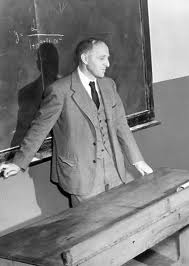
Simon Kuznets at Wharton

As any freshman economics student should know, the Gross Domestic Product, GDP, is a measure of spending, derived from the Gross National Product, GNP, defined by Simon Kuznets during the Depression (click here for econlib).  GDP is, at best, an indirect measure of wealth.  The Genuine Progress Indicator, GPI, defined by Think Progress in 1995, measures genuine progress.

Consider the case of Joeseph Q. Bloggs, MBA, J.D., Esq., an investment banker. Bloggs has a J.D. from Harvard or Yale, an undergrad degree from Princeton, Dartmouth, Cornell, or another ivy league school, and a high school diploma from the Citadel or an acclaimed private school. As with his colleagues on Wall Street, he is self-proclaimed “Master of the Universe.” He leaves work one night after negotiating a highly leveraged hostile takeover, buys a Lamborghini, and rents the time of an expensive “friend.”  He buys her an expensive outfit, and takes her to dinner at an the Four Seasons, or a similar expensive restaurant.  He has a few drinks before dinner, a bottle of wine with dinner, and a glass or two of port after dinner.  On the way to the Hamptons, he crashes his Lamborghini into a Ferrari driven by another lawyer / banker / actor / “Master of the Universe.”

Continue reading

Brookings, SAP, NRG, and the City of New York on our Energy Future

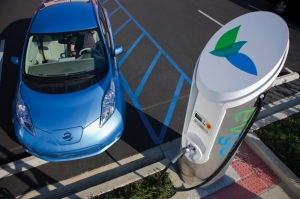
NRG Energy charging station.

NRG Energy

Follow LJF97 on Twitter  Tweet Will moving to the new energy future – deploying Solar, Wind and other sustainable alternatives create 2.7 Million New Jobs?

At “How Cities and Companies Can Work Together to Operate in the New Energy-Constrained Economy” a panel discussion (press release), Bruce Katz, Vice President and Director of the Metropolitan Policy Program, Brookings Institution, said “2.7 million new jobs” will be created in moving to the clean energy / low carbon economy.

Mr. Katz also noted that two out of three Americans – 200 million people – live in the 100 biggest metropolitan areas, and those 200 million people are responsible for 75% of our GDP. High carbon energy is no longer cheap. The people in those metropolitan areas, and elsewhere, therefore, must act. Continue reading

Indian Point 1 – A Zombie Nuclear Power Plant

Follow LJF97 on Twitter Tweet

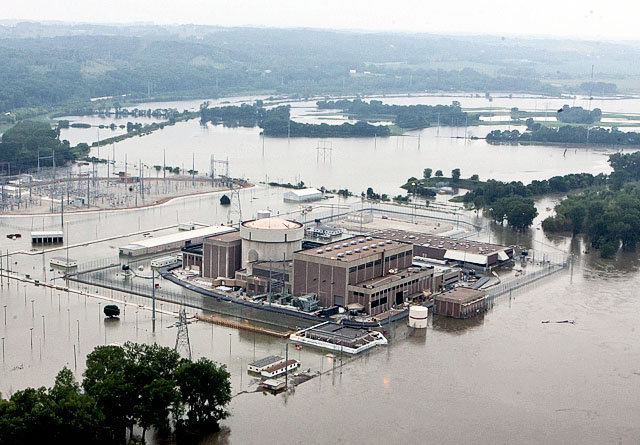
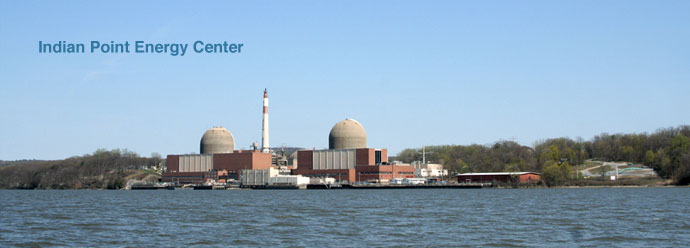
Bucolic?  Pastoral? Looks that way, but looks can be deceiving.  First of all, there’s Indian Point 1. Then there’s the water issue.  Other issues are waste and national security.

Operating Modalities, Copyright, (c), 2011 L. J. Furman

Indian Point 1

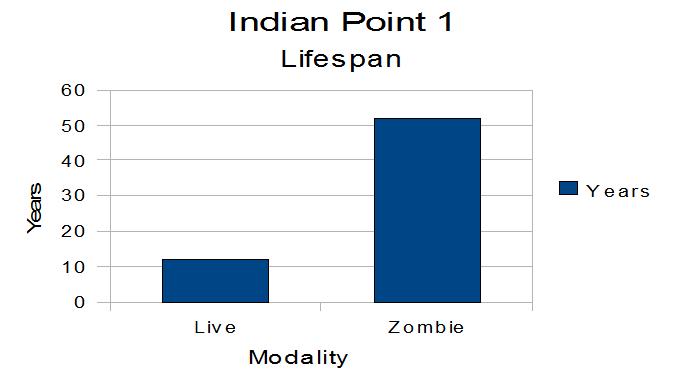
  • Brought online in August, 1962.
  • Shutdown in October, 1974.
  • Spent fuel is stored on site.
  • Scheduled to be closed in 2026.
  • Operated 13 years.
  • “Zombie” 52 years.

Talk about externalities! “Zombie” since ’74 and scheduled as such for another 25 years, total of 52 years. NRC.  What does it cost to maintain and manage as a “zombie?” And who pays? The owners or the taxpayers?  And did the plant produce so much power in the 12 years of operation that it will make a profit after 52 years of being managed and serviced?

Indian Point 2

  • Rated Thermal Power: 3216 MW
  • Net Electrical Rating: 1032 MW
  • Water Requirements: 840,000 gallons per minute

Indian Point 3

  • Rated Thermal Power: 3188 MW
  • Net Electrical Rating: 1051MW
  • Water Requirements: 840,000 gallons per minute

(source: Entergy / Indian Point website)

Summary – Indian Point is a 2.083 GW complex. Replacing it with new nuclear would cost about $12 to $18 billion, plus the cost of fuel, security, and the costs of interest during the 8 to 10 years of construction. Replacing it with solar would require about 2 million PV solar panels, at a cost of $8 to $12 billion, or 570 wind turbines at a cost of $4 to $6 billion. 2.0 gw of wind and solar do not require 1,680,000 gallons per minute of cooling water, or even 1.0 gallons per minute. Solar and wind do not require fuel and do not produce waste. Nor do they present national security challenges.

Energy Alternatives

  • 2 Gigawatts
  • Modality                  Nuclear         Solar              Wind
  • Cost (billions)       $12 to $18   $8 to $12     $4 to $6
  • Fuel                           Yes                  No                   No
  • Waste                        Yes                  No                   No
  • Security Hole        Huge               No                   No

Nuclear Power and Russian Roulette

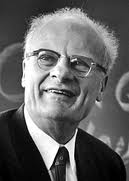
Follow LJF97 on Twitter Tweet After Chernobyl, Hans Bethe, pictured at left, said “the Chernobyl disaster tells us about the deficiencies of the Soviet political and administrative system rather than about problems with nuclear power” (PBS).  Dr. Bethe is right.  Managing nuclear power and our energy infrastructure is not limited to physics and engineering. It also involves economics, human ecology, national security and systems dynamics. It is logical to conclude that because the Chernobyl disaster was a hydrogen explosion in a badly designed nuclear power plant brought about by Soviet style mis-management, nuclear technology can be implemented safely. However, the data from Three Mile Island and Fukushima suggest that nuclear power, when implemented safely, is too expensive to compete with alternatives (hence the industry needs loan guarantees here in the USA). We need to think about energy in the context of Systems Dynamics, as discussed in “Thinking in Systems,” by Dr. Donella Meadows, also pictured at left, of MIT, Dartmouth, and the Sustainability Institute.

Similar arguments have been advanced after Fukushima. “As long as we don’t build them near earthquake faults, especially earthquake faults near oceans …” While the probability of an accident is low (altho business as usual does raise some concerns) the probability of an accident that occurs being catastrophic is very high!

Looking at Indian Point, which is on an earthquake fault, and thinking about systems, Chernobyl, Three Mile Island, and Fukushima …

The area within a 50 mile radius of Indian Point includes New York City, Westchester, Rockland, and Nassau counties of New York, western Connecticut, and northern New Jersey. About 20 million people live there. Entergy says it’s “Safe, Secure, and Vital.” Others – who live near the plant – say it’s not safe, not secure, not vital, and Should Be Closed!

Continue reading

Would Ayn Rand be Concerned about Climate Change? You Betcha!

TweetFollow LJF97 on Twitter On Ayn Rand, Objectivism, and Climate Change

Ayn  Rand would not “believe” in climate change.  She would try to objectively determine whether the theory correctly modeled the data. While it is legitimate to question both the conclusions of scientists and the methodologies by which data are gathered, denying objective validity of the data, which people who call themselves “Objectivists” are doing with respect to climate science, is well, in a word, anti-Objectivist, at least as described  by Ayn Rand in 1962.

“The essence of my philosophy” she said, is:

  1. Metaphysics Objective Reality
  2. Epistemology Reason
  3. Ethics Self-interest
  4. Politics Capitalism

“Translated into simple language, ” she continued, “it would read:

  1. “Nature, to be commanded, must be obeyed” or “Wishing won’t make it so.”
  2. “You can’t eat your cake and have it, too.”
  3. “Man is an end in himself.”
  4. “Give me liberty or give me death.” Continue reading

Keynes, Reluctance to hire, & 21ST Century Energy

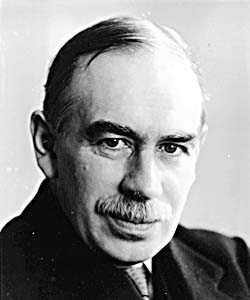
John Maynard Keynes, in black and white, because some ideas are.

in black and white, because some ideas are.

Tweet Follow LJF97 on Twitter   During the Great Depression the Classical Economists said “Unemployment is voluntary. Business owners will not voluntarily keep the means of production idle.”  While he had been a student of classical economics, John Maynard Keynes observed that the data didn’t fit the theory. And, he reasoned, if the observable data don’t fit the theory, the theory must be flawed.   “Business owners are risk averse,” he saw. “A employee needs to be productive, needs to make widgets. But if no one is buying widgets, then contrary to classical theory, factory owners will fire workers and keep capital idle rather than hire workers to create excess inventory. That’s just common sense.”

We see this today.

When unemployment was low, for example in the United States during the tech boom of the 1990’s, people acted on the premise that “There is so much work that we could hire and good people and train them.”  Today hiring managers seem to be acting on the premise that “There are so many people looking for work that they can wait for the perfect candidate.” Perfection being unattainable, jobs go unfilled. This is ok, in this context, because

  • “Budgets are tight.”
  • “The future is uncertain.”
  • “Money not spent on a new hire can be saved or used to pay down debt.”

Keynes also observed that the government is an employer that does not need to worry about going out of business. Building infrastructure is government employment that is investment for the future. These observations are as valid today as they were 80 years ago.

Continue reading

Apple v Microsoft, 2011.

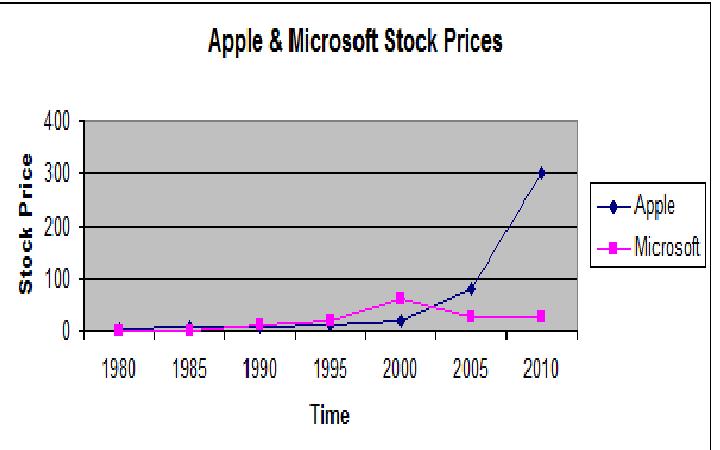
Graph of Apple and Microsoft, stock price, 1980 to 2010At a seminar on June 9, 2011, on securing the mobile worker, Apple‘s representative said  “We truly did not understand what we built.” That’s a direct quote. He went on to say “Here’s how they use it at GE, and Hyatt, and in the pharmaceutical industry.” A few minutes later he said “When users tell us what they can’t do, what they need to do, we listen, so tell us what you need.” At seminars on Microsoft‘s products, their consultants describe their software by saying “This is what we built, this is what it does, and here are our best practices – this is how you should use our software.”

This  is it. Apple’s “We truly did not understand what we built,” versus Microsoft’s “This is what we built, this is what it does, and here are our best practices – this is how you should use our software.” These statements define the corporate cultures.

Apple, at $325 per share, is a $300 billion company. With earnings of 21 per share, it has a price earnings  ratio of 15.8. It has no debt.  It is down slightly from it’s high of around $350 per share, reached a few weeks ago. There are 46,000 employees. Net income of 5.99 Billion on $24.67 Billion.  Microsoft, at $24 per share, is a $200 billion company. With earnings of $2.92 per share it has a P/E of 9.44. There are 89,000 employees, $16.4 billion revenue and $5.2 billion net income.

Microsoft’s income per dollar of revenue is higher – but they don’t make hardware. Revenue per employee at Microsoft is $184,000. Revenue per Employee at Apple is $536,000.  Income per Employee at Microsoft is $58,000. Income per Employee at Apple is $130,000.

These data are summarized below,

Employees Net Income Revenues Inc / Emp Rev / Emp
(Millions) (Millions)
Apple 46,000 $5,990 $24,670 $130,217 $536,304
Microsoft 89,000 $5,200 $16,400 $58,427 $184,270


When I last looked at Apple and Microsoft, October 30, 2010, here,  Apple was 305.24 per share, with an EPS, of $15.15 and a P/E of 20.147. It’s market capitalization was $279.59 Billion. Microsoft was $26.28, with an EPS of 2.11, P/E ratio of 12.48 and market capitalization of $227.42 Billion, $52 Billion less than that of Apple.  Today Apple’s market capitalization is up 25% to $300 billion and Microsoft’s market capitalization is down about 12% to $200 billion. Apple’s market capitalization is $100 billion higher than Microsoft’s.  Apple’s all time high stock price was a few weeks ago, and I expect it will bounce back and keep climbing as long as they keep selling hardware and software that shifts the paradigm. Microsoft’s was in 1999.  I don’t expect Microsoft to go out of business, but it’s days of shifting the paradigm and tremendous growth are gone.

The iPad (Apple site, here) is a paradigm shifting device.  It has a dual core A5 processor, 16, 32, or 64 GB of flash memory, and no moving parts (other than electrons, which are hard to keep still).  Treated properly, it should last for 10 or 20 years.  It adds a layer of durability and obsolescence resistance to personal electronics.  It puts us on the road from “disposable” consumer electronics back to durable, sustainable consumer electronics  (click here).

And it’s selling by the millions. Apple has sold 200 million iOS devices – iPhones, iPads, iPods Touch, that’s one for two out of three Americans. It’s sold 25 Million iPads, 14 million in 2010 and 11 million in the first half of 2011. The sales projections from Wall Street are tremendous, (Florin at UnWired, Schonfeld at Tech CrunchElmer-DeWitt at Fortune). People buy multiple devices, e.g., iPhone and iPad or iPod Touch and iPad.  These are driving sales of music, apps – by the billions –  and the Mac. Microsoft is buying SKYPE, which is a great company with a great product but it doesn’t know how to make money. Apple is going up, both in terms of market capitalization and earnings. Microsoft is going nowhere.

Continue reading

Renewable Energy & Efficiency Expo + Policy Forum

Taken from the web site:

The Sustainable Energy Coalition, in cooperation with Members of the U.S. House and Senate Renewable Energy & Energy Efficiency Caucuses, invites you to the 14th annual Congressional Renewable Energy & Energy Efficiency EXPO + Policy Forum. This year’s EXPO will bring together more than 50 businesses, sustainable energy industry trade associations, government agencies, and energy policy research organizations (see list below) to showcase the status and near-term potential of renewable energy and energy efficiency technologies. Members of the U.S. Congress, Obama administration, and exhibiting organizations will give presentations on the role sustainable energy technologies can play in stimulating the economy, strengthening national security, protecting the environment, and saving consumers money. Click here for video and other details from last year’s EXPO.

This event is free and open to the public. No RSVP required.

Agenda

More details:

Continue reading

NegaWatts Save MegaBucks

Tweet
Follow LJF97 on Twitter

The Newark Star Ledger reported (here and here) that Public Service Electric and Gas, PSE&G, a subsidiary of Public Service Enterprise Group, PSEG, is installing a  2,700-ton chiller the University of Medicine and Dentristy of New Jersey, UMDNJ. This an $11.4 million investment in negawatts. The Star Ledger reported that UMDNJ will save $1.3 million per year on energy costs.What’s the payback? An $11.4 million investment will save $1.3 million per year. That means the system will pay for itself within 9 years, assuming the price of energy remains constant.  I think it’s a much more reasonable to assume that the price of energy will go up, so the payback will be higher and the system will pay for itself sooner.

The system will work long after it is paid for. It will save $13 Million over the next 10 years and $26 Million over the next 20 years – assuming electricity costs are constant.  Assuming electricity costs increase an average of 5% per year, this will save $16.35 Million over the next 10 years, and $42.99 over the next 20 years.

  • Projected Savings of $11.4 Million investment.
  • After 1 Year: $1.3 Million, a return on investment of 11.4% in one year.
  • After 5 Years: Save $7.18 Million, for a total ROI of 63%, assuming a 5% annual increases in cost of energy.
  • After 10 Years:  Save $16.35 M; total ROI of 143.4%).
  • After 15 Years: Save $28.05 M; total ROI of (246%)
  • After 20 Years: Save $42.99 M; total ROI of 377%).

We have Governor Corzine to thank. as well as Governors Whitman, McGreevey, Codey, and Christie.

Continue reading

Earth Day, 2011, Where Are We?

Earth, from space, courtesy of the American taxpayer

Earth from Space, courtesy of the American taxpayer. Reto Stöckli, Nazmi El Saleous, and Marit Jentoft-Nilsen, NASA GSFC

Tweet
Follow LJF97 on Twitter
Earth Day, 2010, I looked to the future on Popular Logistics. In 2009, I wrote about water pollution and agricultural waste in the Chesapeake. Today I am looking at the present and recent past. While a comprehensive look at where we are can be found on the web pages of the World Watch Institute, the New York Times, and the World Factbook of the Central Intelligence Agency, I want to make a few points.

Our energy policy is “when you flip a switch, the juice gotta flow.” It ain’t magic. It’s engineering and classical physics, with an understanding of radioactive fission and decay and a profound lack of long term thinking. It ain’t magic, but it might as well be. But we really need to base our energy policy on an understanding of ecological economics and sustainability.

We’ve had a few problems with nuclear power and fossil fuel in the last few years. Yet, there’s some light on the horizon.

Continue reading

Telegraph Op-Ed urges Obama to build thorium reactors

TweetFollow LJF97 on Twitter An op-ed article in the Telegraph, UK, last year urged President  Obama “to marshal America’s vast scientific and strategic resources behind a new Manhattan Project” and by so doing we could “reasonably hope to reinvent the global energy landscape and sketch an end to our dependence on fossil fuels within three to five years.”  The article suggests we invent and commercialize nuclear reactors designed around radioactive decay of thorium.

The article concludes with the assertion that renewables can’t meet our needs. But that’s asserting a belief, not reporting scientifically observable data or a scientifically disprovable hypothesis. And the better question in that regard is not: “Can renewable and sustainable energy meet our needs?”

But: “How can renewable and sustainable energy meet our needs?”

Continue reading

President's Remarks on Fiscal Responsibilty

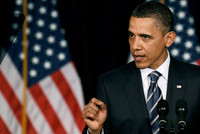
President Obama Follow LJF97 on Twitter President Obama’s speech on Fiscal Policy was summarized by Hans Nichols and Roger Runningen on Bloomberg.com here.”

“President Barack Obama vowed to cut $4 trillion in cumulative deficits within 12 years through a combination of spending cuts and tax increases, setting the stage for a fight with congressional Republicans over the nation’s priorities.

“In presenting his long-term plan for closing the federal budget shortfall, Obama set a target of reducing the annual U.S. deficit to 2.5 percent of gross domestic product by 2015, compared with 10.9 percent of GDP projected for this year. He reiterated his support for overhauling the tax code to lower rates while closing loopholes and ending some breaks to increase revenue.

“We have to live within our means, reduce our deficit, and get back on a path that will allow us to pay down our debt,” Obama said in a speech today at George Washington University in the capital. “And we have to do it in a way that protects the recovery.”

The full text can be found at Whitehouse.gov.

Extract of Remarks by the President on Fiscal Policy, George Washington University, April 13, 2011.

“One vision has been championed by Republicans in the House of Representatives and embraced by several of their party’s presidential candidates.  It’s a plan that aims to reduce our deficit by $4 trillion over the next ten years, and one that addresses the challenge of Medicare and Medicaid in the years after that.

“Those are both worthy goals for us to achieve.  But the way this plan achieves those goals would lead to a fundamentally different America than the one we’ve known throughout most of our history.

“A 70% cut to clean energy.  A 25% cut in education.  A 30% cut in transportation.  Cuts in college Pell Grants that will grow to more than $1,000 per year.  That’s what they’re proposing.  These aren’t the kind of cuts you make when you’re trying to get rid of some waste or find extra savings in the budget.  These aren’t the kind of cuts that Republicans and Democrats on the Fiscal Commission proposed.  These are the kind of cuts that tell us we can’t afford the America we believe in.  And they paint a vision of our future that’s deeply pessimistic.

“It’s a vision that says if our roads crumble and our bridges collapse, we can’t afford to fix them.  If there are bright young Americans who have the drive and the will but not the money to go to college, we can’t afford to send them.  Go to China and you’ll see businesses opening research labs and solar facilities.  South Korean children are outpacing our kids in math and science.  Brazil is investing billions in new infrastructure and can run half their cars not on high-priced gasoline, but biofuels.  And yet, we are presented with a vision that says the United States of America – the greatest nation on Earth – can’t afford any of this.

“This is a vision that says up to 50 million Americans have to lose their health insurance in order for us to reduce the deficit.  And who are those 50 million Americans?  Many are someone’s grandparents who wouldn’t be able afford nursing home care without Medicaid.  Many are poor children.  Some are middle-class families who have children with autism or Down’s syndrome.  Some are kids with disabilities so severe that they require 24-hour care.  These are the Americans we’d be telling to fend for themselves.

“Worst of all, this is a vision that says even though America can’t afford to invest in education or clean energy; even though we can’t afford to care for seniors and poor children, we can somehow afford more than $1 trillion in new tax breaks for the wealthy.  Think about it.  In the last decade, the average income of the bottom 90% of all working Americans actually declined.  The top 1% saw their income rise by an average of more than a quarter of a million dollars each.  And that’s who needs to pay less taxes?  They want to give people like me a two hundred thousand dollar tax cut that’s paid for by asking thirty three seniors to each pay six thousand dollars more in health costs?   That’s not right, and it’s not going to happen as long as I’m President.

“The fact is, their vision is less about reducing the deficit than it is about changing the basic social compact in America.  As Ronald Reagan’s own budget director said, there’s nothing “serious” or “courageous” about this plan.  There’s nothing serious about a plan that claims to reduce the deficit by spending a trillion dollars on tax cuts for millionaires and billionaires.  There’s nothing courageous about asking for sacrifice from those who can least afford it and don’t have any clout on Capitol Hill.  And this is not a vision of the America I know.”

Why Cape Wind Still Matters


Follow LJF97 on Twitter On May 25, 1961 President John Kennedy said, “I believe that this nation should commit itself to achieving the goal, before this decade is out, of landing a man on the moon and returning him safely to the earth.” (Kennedy library and NASA)

Ten years ago, before Sept. 11, Jim Gordon and his team set out to build a small wind farm on the waters on which the young President, his wife, brothers, sisters, nieces and nephews sailed. Size is relative. It’s small compared to a large coal or nuclear power complex. The wind farm will be composed of 130 turbines and produce up to 430 megawatts of power (here).
Former Mass. Gov. Deval PatrickIn 2010 Jim Gordon and Cape Wind, LLC, finally, got their permits to build the wind farm. For a variety of reasons it took longer for Cape Wind, LLC to get the permits to build the wind farm than it took this nation to land a man on the moon and bring him home safely.  Had the wind farm been built by the winter of 2004, Cape Wind would have provided power during the bitter January of ’04, the heat wave of ’05, and every day, especially the coldest days of winter and the hottest days of summer – when the winds are strongest and New Englander’s electricity needs are highest.
 

Robert F. Kennedy, Jr.

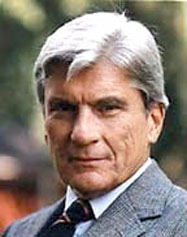
Virginia Senator John Warner

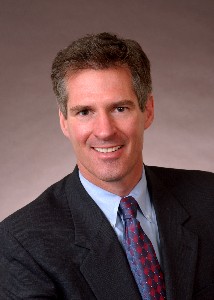
Mass. Senator Scott Brown

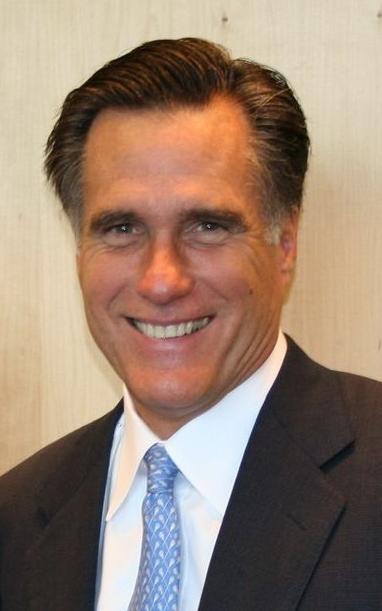
Former Mass. Gov. Willard Mitt Romney

It’s also clear, from reading Cape Wind, by Wendy Williams and Robert Whitcomb, that the alliance to “Save Our Sound,” created an anti-wind rogue’s gallery, a bipartisan coalition of moneyed special interests which led Senator Edward M. Kennedy, D-MA, Governor Willard Mitt Romney, R-MA, Senator Ted Stevens, R-AK, Representative Dan Young, R-AK, Sen. Trent Lott, R-MS, Sen. John Warner, R-VA, and very wealthy residents of Cape Cod, including Bill Koch, the late Richard Egan, Rachel “Bunny” Lambert Mellon (Sen. Warner’s ex-mother-in-law), professional environmentalist Robert F Kennedy, Jr. to obstruct the regulatory and the legislative processes and which slowed the development of Cape Wind and offshore wind farms off of the mid-Atlantic and elsewhere.

For them to oppose this project or say “I favor wind power, as long as it’s somewhere else,” was and remains cynical. Given that we have combat troops in Iraq, Afghanistan, and Libya, that Alan Greenspan, Chairman of the Federal Reserve from 1987 to 2006 described the mission in Iraq as a war for oil, was unpatriotic, perhaps traitorous.


Senator Olympia Snowe

Senator DomeniciYet another bipartisan coalition rose up to challenge them and support Cape Wind: Ted Roosevelt, IV, who lives on the Cape, Rep. Jim Bass, R-NH, Sen. Olympia Snowe, R-ME, Sen. John McCain, R-AZ, Sen. Jeff Bingaman, D-NM, Sen. Pete Domenici, R-NM, Matt Patrick, Massachusetts, Gov. Deval Patrick,  Greenpeace, unions, Fox News’ Sean Hannity. What these politicians have in common is an understanding of the values of energy independence and renewable energy.

Popular Logistics is a policy blog, not a politics blog. However, it’s worth noting that several political campaigns were won in Massachusetts by Democrats who supported Cape Wind, including Matt Patrick, the 5-term Democratic Representative of the 3rd District of Barnstable, Cape Cod, and Deval Patrick who started his 2006 Gubenatorial campaign in front of the Hull, MA, wind turbine.

Mitt Romney, who signed Ted Kennedy’s health care plan into law in the Commonwealth of Massachusetts, (also known as Obamacare 1.0) appears to be running for President in 2012. He lost in the 2008 Primary to John McCain. Mr. Romney signed on to the Kennedy-Koch-Egan-Mellon anti-Cape Wind jihad. Americans favor wind power. Will they support Romney in 2012?

Scott “Mitt-Lite” Brown, said (here) “While I support the concept of wind power as an alternative source of energy, Nantucket Sound is a national treasure.”  Massachusetts voters favor Cape Wind 70 to 30. Will they support Brown in his re-election campaign in 2012?  The Statue of Liberty is a “National Treasure,” as is the Constitution.  I last visited Cape Cod when I was 7. Nantucket Sound is not a “National Treasure.” Getting America off coal, oil, natural gas, and nuclear power, moving to clean, renewable, sustainable energy means our children and grandchildren will enjoy our national treasures.

In their book Williams and Whitcomb suggest that Senator Kennedy may have realized that he had made a bad decision in opposing Cape Wind, but that for a variety of reasons he refused to back down. They may be right. While I think Kennedy was wrong, I can’t speak to whether he came to that understanding. As I noted on this blog, back in August, 2009, (here) President Obama said of Ted Kennedy,”His ideas and ideals are stamped on scores of laws and reflected in millions of lives: in seniors who know new dignity; in families who know new opportunity; in children who know education’s promise; and in all who can pursue their dream in an America that is more equal and more just, including myself.

Obama said “More equal and more just,” but he didn’t say “perfect.” America is not perfect. It is nation of men and women governed by the rule of law. The laws are not perfect, and neither are the men and women who make, enforce and interpret the laws.

Our energy policy is electricity flows when people flip a switch. Most of that electricity comes from burning fossil fuels and harnessing nuclear fission. We can pretend that the carbon we are pumping into the oceans and the atmosphere will have no effect, that we have unlimited supplies of fossil fuels, and uranium, that all the waste from coal mining, processing, transporting, and burning, and all the radiation leaks from nuclear plants (and radioactive waste from coal) are trivial or routine. Or we can get real. The choice is between coal, oil, methane, and nuclear, or wind, solar, tidal, and geothermal. I choose wind, solar, tidal and geothermal; for myself, for my backyard, not just for people who are my equal in the eyes of the law, whether they have more or less money than me.
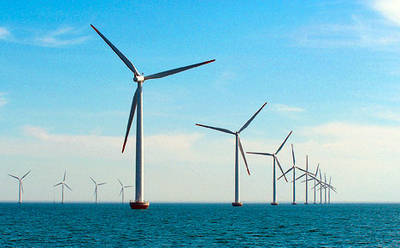
Offshore wind farm. monopoles are about 100 m.

Index to the series that explores Offshore Wind and Politics:

  1. Cape Wind, Leadership and Vision, here.
  2. Why Cape Wind Still Matters, here.
  3. Ted Roosevelt, IV, on Cape Wind (coming soon).

Cape Wind, Leadership and Vision

Jim Gordon


Follow LJF97 on Twitter

On Friday, March 25,2011, Cape Wind LLC‘s CEO Jim Gordon spoke at Columbia University about the long delayed project. When he started the project, back in 2001, the Europeans were 10 years ahead of us. Today the Europeans are 20 years ahead of us, and the Chinese too are years ahead of us.

Mr. Gordon quoted Theodore Roosevelt, IV, as saying, “I live on the Cape. If we don’t do this, in 50 years the Cape will be under water.” Cape Cod’s highest point is about 300 feet above sea level so Mr. Roosevelt was exaggerating.  His home may wind up under water, but at least some of the Cape will be one or more islands. Speaking of islands, Nantucket, which in 2006 had the highest median property values in Massachusetts, rises some 30 feet above sea level. If sea level rises 30 feet, Nantucket will get washed away.

Mr. Gordon said, “Cape Cod has the most polluted air in New England. When you harness the wind you get clean electricity: No arsenic, lead, mercury, thorium, uranium, or zinc or carbon dioxide like you get from burning coal. No barges of oil that can spill. No radioactive waste like you get from nuclear power. Last year we read about the coal mine disaster in West Virginia. Then the Deepwater Horizon. Now we’re reading about the disaster in Japan.  With wind there is no possibility of a disaster, Zero.”

And, he added, “Fossil fuels are a finite resource. New England has neither coal, oil, or natural gas – but there is a tremendous amount of wind. When you factor in the costs of storms and sea level rise – you would think it’s a no-brainer.” The question is not “Can wind power provide base line capacity?” But “How can wind power provide base line capacity.”

Mr. Gordon told how during a trade mission to China, one of his engineers was grilled about wind power, offshore wind, engineering, costs, and siting. After the end of the grilling his hosts said “we read Cape Wind, by Wendy Williams and Robert Whitcomb. We would never allow that here.” In 2009 China built a 100 mw wind farm off the coast of Shanghai – completed the project quickly. By the end of 2010 they had 41.8 gigawatts of nameplate capacity wind power – enough for about 45 million Americans (wikipedia). Continue reading