Author Archives: L J Furman, MBA

About L J Furman, MBA

Analyst here and Director of Information Technology with an MBA in Managing for Sustainability.

Hon. Rush D. Holt, on the Budget Control Act of 2011

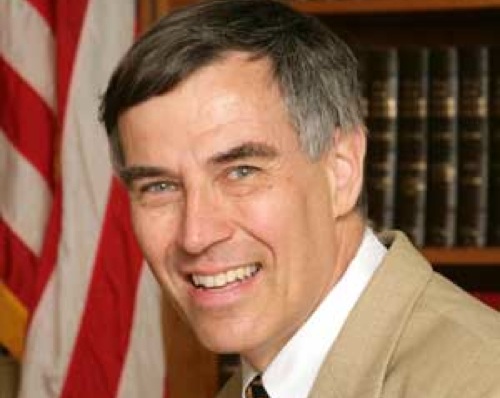
The Hon. Rush D. Holt, NJ 12  Follow LJF97 on Twitter Tweet Popular Logistics is a policy blog, not a politics blog. However, politicians make policy. The Honorable Rush D. Holt, NJ-12, said this on Monday, August 1, 2011, when casting a vote against the “Budget Control Act of 2011.”

SPEECH OF

HON. RUSH D. HOLT

OF NEW JERSEY

IN THE HOUSE OF REPRESENTATIVES

MONDAY AUGUST 1, 2011


BUDGET CONTROL ACT OF 2011

Mr. Speaker, the default debate is, at its heart, a debate between two visions for America. One side envisions rebuilding our country, investing in jobs and education and infrastructure, and rising from the Great Recession as a stronger and more resilient Nation. The other side accepts a pessimistic vision of a weakened America with a shrunken government–a Nation hampered by deep cuts to the safety net and hobbled by a refusal to invest in our future.

Continue reading

"Beyond Fuel" at the Space Coast Green Living Festival

Space Coast Green Living Festival

Green Living Festival

Follow LJF97 on Twitter Tweet I am presenting “Beyond Fuel: From Consuming Natural Resources to Harnessing Natural Processes,” a discussion of the hidden costs, or “economic externalities,” of nuclear power, coal, and oil, and the non-obvious benefits of wind, solar, marine hydro and efficiency at the Space Coast Green Living Festival, Cocoa Beach, Florida, Sept 17, 2011.

The festival  is sponsored by the Cocoa Beach Surfrider Foundation and the Sierra Club Turtle Coast Group. It will be at the Cocoa Beach Courtyard by Marriott.

Continue reading

Mitt Romney: "Corporations are People"

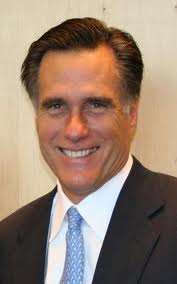
Mitt Romney  Follow LJF97 on Twitter Tweet On the campaign trail in Iowa, Mitt Romney said, “Corporations are people.” (NY Times, Washington Post)

An argument can be made that Mr. Romney meant that corporations are composed of people, that they magnify the abilities of individuals. However, Ayn Rand might suggest that the candidate made a collectivist statement. Mr. Romney could also have meant that corporate profits eventually wind up in the pockets of investors like himself and Warren Buffett, and their heirs, like his children and Paris Hilton. However, that may be a nuance that may be lost in the political debate.

It could also be that Mr. Romney meant exactly what he said.

But what is closer to the truth, I think, is that corporations are legal mechanisms by which people use to limit their liability and to develop and protect their wealth.

In my courses at the Marlboro MBA in Managing for Sustainability, we discuss corporations as a “nexus of contracts.” That’s not really a definition of a person that a flesh and blood person, a person whos DNA is DNA would use.

People, that is flesh-and-blood-based people, DNA-based people can own corporations. Corporations can own other corporations. But neither people nor corporations can own people.

In “The Divine Right of Capital,” Marjorie Kelly (Amazon, EcoBooks) clearly describes why corporations ought not be considered “persons.”

But that’s not the only issue I have with Mr. Romney’s statements in Iowa.
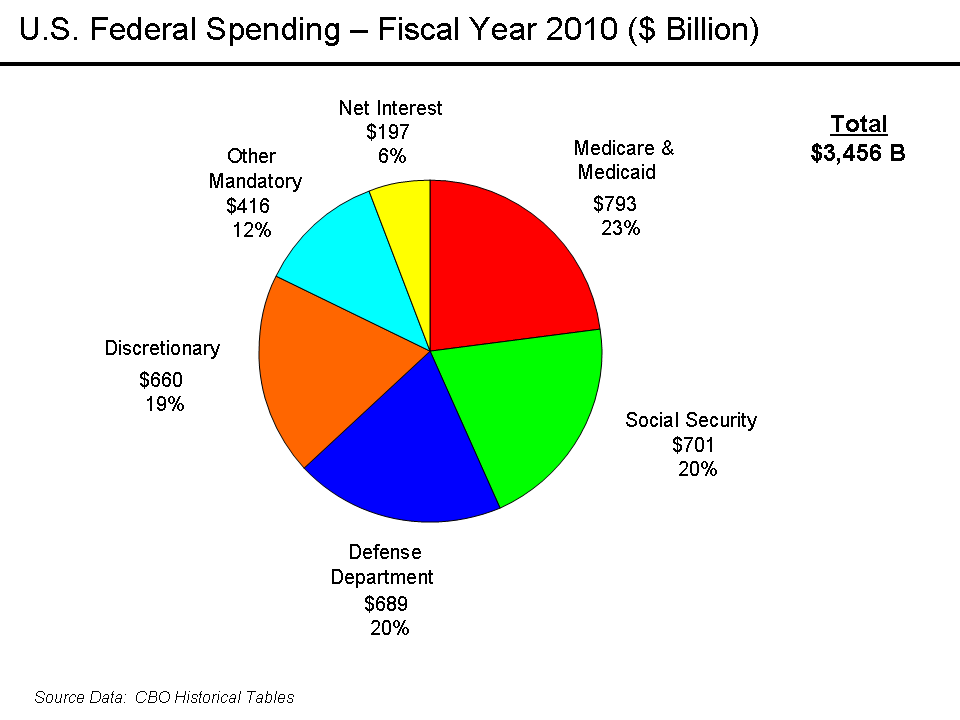
Mr. Romney also said, “Social Security, Medicare, and Medicaid account for about half of Federal Spending.” This seems to be factually incorrect. According to the Congressional Budget Office summarized on  Wikipedia, Social Security, Medicare, and Medicaid account for 43% of total federal spending, in fiscal year 2010. (Note that total defense spending is greater than the 20% reported in the figure because certain programs and agencies, such as the CIA, the NSA, and other defense and intelligence agencies are funded, in part, out of the “Discretionary” category.)

While $1.491 Trillion, 43%, is $350 Billion less than 50% of the budget of FY 2010, you could argue that Mr. Romney was exaggerating for effect, something politicians do. However, I imagine if we were to raise taxes to 50% on the wealthiest 1% of Americans, people with over, say, $50 Million, Mitt Romney has $284 Million, and say, “It’s only about 43%,” he would at the very least question our understanding of mathematics.

Mr. Romney also said, “You can raise taxes, that’s not the approach I would make.”

That is the approach I would take. As noted here, taxes are “The price we pay for civilization.” They are revenues raised by the people in governments to pay for the things they understand must be paid for; things like education, infrastructure, security. I would raise taxes on people making more than $250,000 per year. And raise them significantly on people, making more than $1,000,000 per year, whether they make their money as actively as salary, or passively as dividends, capital gains, or distributions from trust funds.

I make less.  A lot less. My expenses – my health insurance, the costs of food, fuel, etc., are going up.  My income, however, is going down. In “real” terms, as inflation is going up, and in actual numbers, as the bonus I used to be given have shrunk or been eliminated because of, it has been said, “the economic conditions faced by the firm.”

The government Lincoln defined as “Of the people, by the people, and for the people” needs money to pay its obligations. It needs money to build infrastructure. And as has been noted, Keynesian economic theory suggests that in an economic conditions such as we face only the government can be willing to act to create jobs. The government can only really raise money by borrowing it or by raising taxes. We should be developing government programs to shift the energy paradigm to clean, renewable, sustainable energy. It will create 2.4 Million jobs, directly cut unemployment from about 9.1% to about 7.3%, indirectly cut unemployment by another 1.0 to 2.0% and generally stimulate the economy in a terrific manner. (Click here).

As we have noted before, and will doubtless do again, Popular Logistics is a POLICY blog, not a POLITICS blog. However, we  do think about politics, at least occasionally.  And it appears to this blogger that Mr. Romney just lost the election. Whether he has lost to Mr. Obama or to one of the other Republicans remains to be seen.

 

Socialists v Stalinists

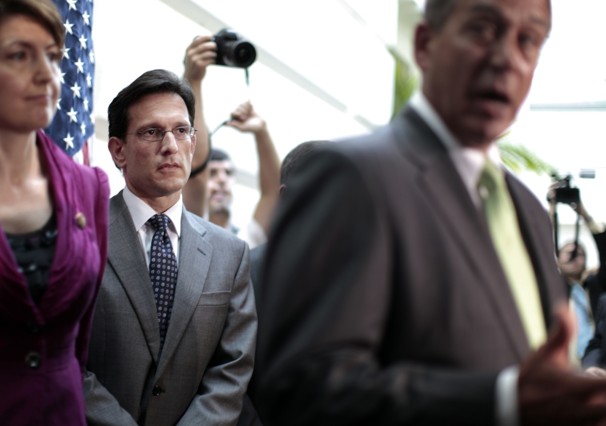
John Boehner, Eric Cantor, & a friend Follow LJF97 on Twitter Tweet The Washington Post reported, here, that John Boehner, Eric Cantor, Paul Ryan, and the “Young Guns,” their Republican comrades in the House of Representatives, PLANNED as far back as January, 2009 to use the debt ceiling to create a political crisis. It seems to have worked. The Republicans held fast, Obama and the Democrats blinked. The rating agency Standard & Poors, S&P, downgraded their rating of the credit-worthiness of the United States of America, President Obama’s core supporters seem to be abandoning him. And the stock markets are plummeting – the Dow Jones Industrial Average dropped 1000 points in 3 days.

Allowing US debt to be downgraded – forcing it to be downgraded – will cause a rise in interest rates, an increase in unemployment and bankruptcies. Altho a rise in interest rates will benefit bondholders. This is not the fiscal policy I expect from the party that claims to be fiscal conservatives. Altho, as noted, it does benefit bondholders.

The government should be creating jobs.  Our elected representatives should be guiding the ship of state to a prosperous and sustainable future, not selling it short.

The NY Times reports, here, that S&P’s downgrade will spur the Republicans to demand more cuts in government spending, which will put more people out of work, furthor erode the economy. The only hope for the country is for Obama to realize that there is nothing he can do to win the love and admiration of the right wing, to ignore them and look to the center and to his base, and do what is good for the country, regardless of what Bachmann, Boehner, Cantor,  Ryan and the Young Guns, and Grover Norquist want.

Continue reading

Taxes – The Price We Pay For Civilization

“Taxes are the price we pay for civilization.” – Oliver Wendell Holmes.

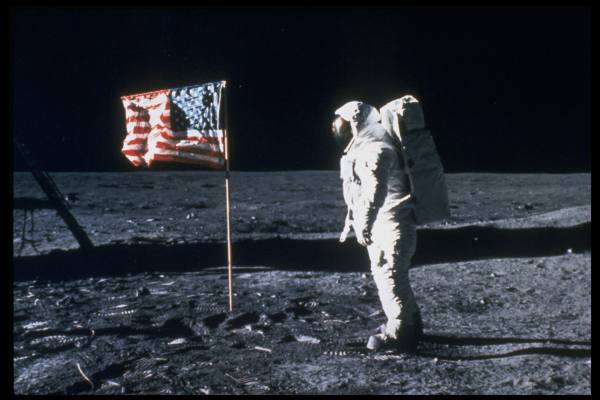
Neil Armstrong on the surface of the moon

Your Tax Dollars At Work, Courtesy NASA

Follow LJF97 on Twitter Tweet Taxes fund Medicare and Medicaid so the poor and the elderly can see a physician and get treatment when they are sick. Taxes fund education for our children and our neighbors children so they can grow up to be doctors, lawyers, engineers, architects,  accountants, teachers, plumbers, electricians, carpenters, builders, actors, etc., so we can buy things that work properly, travel safely, enjoy life, so we can, in a word, thrive.  Taxes fund police, fire-fighting, defense, judicial and other services so we can be secure in our homes and our persons, so the innocent do not go to prison, so the guilty pay their debts to society, and so we, when we do foolish things, can compensate those we accidentally harm. Continue reading

The Crash of 2011

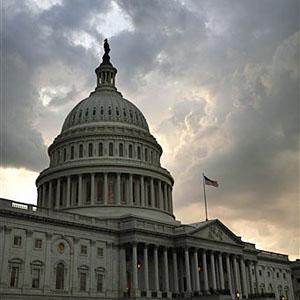
US Capitol Follow LJF97 on Twitter  Tweet I thought the market would crash in the wake of the Earthquake / Tsunami / Nuclear Meltdowns at Fukushima. It didn’t. However, something much less serious may be bringing the market – and the economy – to it’s knees. Politics. The Voice of America reported here that Standard & Poors downgraded US debt from AAA to AA+. Click here for the S&P’s Special Report and here for the full report.

S&P’s analysts wrote:

The downgrade reflects our opinion that the fiscal consolidation plan that Congress and the Administration recently agreed to falls short of what, in our view, would be necessary to stabilize the government’s medium-term debt dynamics.

John BoehnerIt is clear that the emphasis on cutting government spending, eliminating government jobs, eliminating benefits to unemployed citizens, rather than raising revenues and developing infrastructure is not in the long term or short term interests of the United States. As the 512 point drop in the Dow Jones Average, and the downgrade of US debt indicate, Republicans and the Tea Party should be careful for what they wish for – they just might get it.


In the discussions over the debt ceiling, John Boehner said something to the effect that if a family or a business is borrowing too much it simply must tighten it’s belt. Continue reading

Why the TVA Wants Nuclear Power

Follow LJF97 on Twitter  Tweet

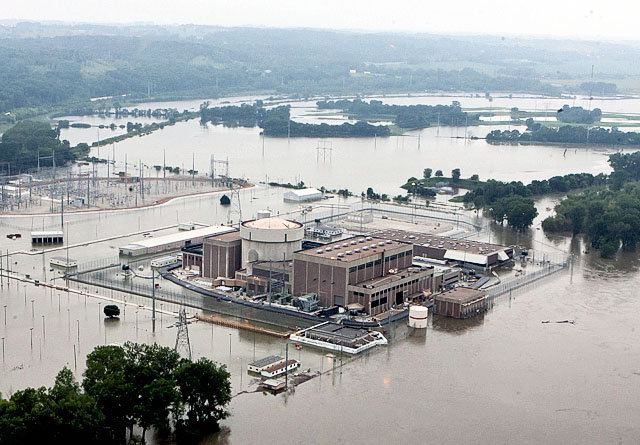
Fort Calhoun plant in the Missouri RiverIn “Why We Still Need Nuclear,” the “op-ed” piece written in the New York Times, July 30, 2011, Tom Kilgore, the President and CEO of the Tennessee Valley Authority, seems to have made up his mind to attempt to complete the Bellefonte 1 nuclear power plant, in Hollywood, Alabama. Mr. Kilgore is in good company: the President of Iran, Mahmoud Achmadinejad, also wants to build nuclear power plants.

The TVA began work on the Bellefonte nuclear plants in 1974. Construction was suspended in 1988, after the TVA spent about $4.1 Billion on the plant. The TVA wants to spend another $5 Billion over the next six to eight years to complete the plant. It would therefore cost a total of $9.1 Billion to construct a 1.26 gigawatt plant. That’s $7.22 Billion per gigawatt, plus interest, over a period that spans 34 years, with construction in three phases: 14 years of work from ’74 to ’88, 22 years of non-work, from ’88 to 2012, and another six to eight years of work. (Times Free Press, TVA News, TVA Environment).

This suggests the real reason why the TVA wants to complete the plant. Currently Bellefonte 1 a $4.1 billion liability on the TVA’s books. If the TVA adds another $5 Billion, this $4.1 hot white elephant will be magically transformed into a cool (but heat producing) 9.1 billion asset. Continue reading

Exxon Profits: $10,700,000,000 for the Quarter

Follow LJF97 on Twitter
Tweet

The Associated Press via the Sacramento Bee reported that “Exxon Mobil Corp. earned $10.7 billion … its highest quarterly profit since the third quarter of 2008…. However, Exxon officials noted that sluggish business investment, lower consumer spending and high debt would continue to weigh on the economy.”

Let’s do some math – Exxon earned $10.7 Billion this past quarter. Yet Exxon and other big oil companies receives $2 Billion to $3 Billion per year in tax subsidies. If divided equally, then Exxon would get $400 to $600 million per year, $100 to $150 Million per quarter. The subsidies amount to 0.93% to 1.4% of Exxon’s profits of $10.7 Billion this quarter, and 0.108% to 0.16$ of Exxon’s annual revenues of $370 Billion for the year ended 12/31/10 (Google Finance). This is equivalent to giving someone earning $50,000 per year a gift of $54 to $81.

A lot of people need help: American college students need help paying tuition, Americans on Medicare and Medicaid need help paying their medical bills, and Americans on Unemployment need help paying for food, people trying to design and build a renewable sustainable energy infrastructure. But we are helping oil companies.Why?

Let’s look again at the numbers. For the year ending Dec. 31, 2010, Exxon’s Gross Revenues were $383 Billion. Gross Profits were $107 Billion, and Income Before Taxes were $53 Billion. Profit was 27.9% of Gross Revenues.  Income before Taxes was 13.8% of Gross Revenues.

Exxon 12/31/10
Total Revenues $383 B
Gross Profit $107 B
Income before Taxes $53 B
Gross Profit / Revenues 27.94%
Income BT / Revenues 13.84%
Period  Income  Nominal Tax
 Year ending 12/31/2010  $53 Billion  $18.55 B
 Quarter ending 6/30/2011  10.7 Billion  $3.745 B

And according to Valeri Vasquez, at the Center for American Progress, here, Exxon’s tax rate is 17.6%. The nominal corporate rate is 35%.  With profits of $53 Billion last year, rather than receiving subsidies. Exxon should have paid $18.55 Billion in taxes last years. With profits of $10.7 Billion last quarter, Exxon should have paid $3.745 Billion.

Continue reading

Roughing It

Interior of Pilatus PC 12.  Follow LJF97 on Twitter  Tweet A s they struggle to pay their bills, forced to work, the wealthy cope as only they can. By sending their children to summer camp in private jets. In  “To Reach Simple Life of Summer Camp, Lining Up for Private Jets” Christine Haughney, in the New York Times,  July 24, 2011, wrote:

 “A turboprop Pilatus PC-12 carrying Melissa T., her daughter, her daughter’s friend and a pile of lacrosse equipment took off for their home in Connecticut, following the girls’ three-week stay at Camp All-Star in nearby Kents Hill, Me. Shortly after, a Cessna Citation Excel arrived, and a mother, a father and their 13-year-old daughter emerged carrying a pink sleeping bag and two large duffel bags, all headed to Camp Vega in Fayette. … as the economy limps along, more of the nation’s wealthier families are cutting out the car ride and chartering planes to fly to summer camps. One private jet broker, Todd Rome of Blue Star Jets, BlueStarJets.com, said his summer-camp business had jumped 30 percent over the last year.”

A quick check on the Camp All Star web site’s “Dates & Rates” page suggests that 3 weeks will cost about $4500.  Trips, horseback riding and hockey are extra. Getting there on a private jet, would add $6,318 to  $15,240 per party, $2,106 to $5,080 per camper for a camper, his or her mom, and a friend.  As I tell people, it’s the trip, not only the destination.

Tell me again, Mr. Boehner, why the wealthy can’t afford to pay taxes?

Beechcraft 350, exteriorI did some checking. Went to Blue Star‘s website, priced a charter for three (3) from Allaire Airport in Monmouth County, New Jersey to Augsta State in Maine. I was surprised at how affordable it is. Blue Star offered 5 alternatives, all turboprops:

  • A Ratheon Super King BE 350, a 9-passenger aircraft, $6,318, which is $2,106 per passenger,
  • The BE-C90, a 6 passenger turboprop, $11,270, or $3,757 per passenger,
  • The BE-100, an 8 passenger turboprop: $12,151 for the trip, $4,050 per passenger.
  • The BE 200, in a 9-passenger configuration, for $13,043, $4,348 per passenger, and
  • The BE-200 in an 8-passenger configuration: $15,240, $5,080 per passenger.

These data are summarized in the table below.

Plane Trip Per Passenger, 3 passengers Per Passenger If Full
Ratheon Super King BE 3509 Passenger Turboprop $6,318 $2,106 per person. $702 per person for 9.
BE-C90, 6 passenger Turboprop $11,270 $3,757 per person. $1,878 per person for 6.
BE-100, 8 passenger Turboprop $12,151 $4,050 per person. $1,519 per person for 8.
BE-200 9 Passenger Turboprop $13,043 $4,348 per person. $1,630 per person for 9.
BE-200 8 Passenger Turboprop $15,240 $5,080 per person. $1,905 per person for 8.

I don’t know if the airline serves food, drinks, or offers in-flight movies. But caviar is only $115 per oz (Russian Sevruga, Caviar Express, Glendale, CA).

Clean Energy, Good Jobs, and a Vibrant Economy … But


Earth from Space, courtesy NASA (our tax dollars at work)

courtesy NASA (our tax dollars at work)

Follow LJF97 on Twitter  Tweet  It sounds too good to be true:

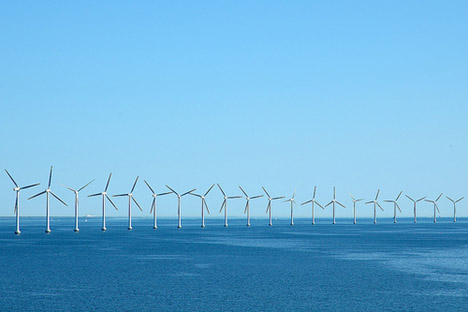
*   100 gigawatts of offshore wind, $300 Billion,
*   100 gw of landbased wind, $200 Billion,
*   75 gw of solar, $300 Billion,
*   75 gw of geothermal, $200 Billion.
*   200 gigawatt equivalents of efficiency – $200 Billion.
*   100 & Clean, Renewable, Sustaianble Energy: 1.2 Trillion.
*   2.7 Million New Jobs and a Healthy Economy: Priceless!

This is happening, slowly, inexorably, by the “invisible hand of the market.” But it will happen faster if the “invisible mind of the community” acts. This means the government!

Continue reading

So What If We Default?

Tweet Follow LJF97 on Twitter   Be careful what you wish for. You just might get it.

Hong Lei, spokesman for foreign affairs of China

Chinese Spokesman for Foreign Affairs

If, on August 2, 2011, the United States defaults on various debt obligations, then historians may well consider that date as the date on which the United States of America ceases to occupy the position it has held since the end of World War II.  However, August 2, 2011, may be the end of the beginning. If so, it will mark a point of inflection in a curve that maps processes that has been in motion for a long time. The trends in personal debt, bankruptcy, home foreclosures, unemployment, and the disparity of income and assets between the wealthiest 10% of the population and the other 90% have developed over years.

July 14, 2011, Bastille Day in France, may be considered to mark the coming of age of the successor to the United States as the superpower of the 21st Century, and that would be China.  In “China Urges U.S. to Protect Creditors by Raising Debt,” Bettina Wassener in Hong Kong and Matthew Saltmarsh in Paris report in the New York Times, that “Hong Lei, a Chinese foreign affairs spokesman, urged the United States to protect the interests of foreign investors.” As one of the United States’s biggest creditors, China, which holds over $1.0 Trillion in US Treasury bills, “urged American policy makers on Thursday to act to protect investors’ interests, highlighting rising concerns around the globe about the protracted budget talks taking place in Washington.”

These mark gradual processes of waxing and waning of cultures and economies. These did not happen overnight. It did not happen with the election and inauguration of Barack Obama as 44th President of the United States, as spokespeople of the Tea-Republican Party, and News Corp (some of whom are in both) may assert. Nor did it happen in 2000 with the Presidential Election, the Supreme Court decision which decided the election, and the subsequent inauguration of George W. Bush as the 43rd President.

The development of the US as a superpower at the end of World War II was facilitated by the election of Franklin Delano Roosevelt to the office of President in 1932, and his reelections in ’36, ’40, and ’44.  However, it was less President Roosevelt himself than the progressive economic policies of the New Deal that he put in place.  Similarly the descent from superpower status and the crumbling of American infrastructure have been slow processes. Perhaps it began with the conflation of news and entertainment and the elimination of the Fairness Doctrine in 1987 under President Reagan.

In order, therefore, for the United States to continue to be a superpower, we need to return to the progressive economic policies that build infrastructure and finance infrastructure projects by taxes, rather than by mortgaging our children’s futures to potentially unfriendly foreign powers such as Communist China.

The wisest, but least easy course would be to allow the Bush tax cuts to expire and increase taxes. Everyone should pay their fair share.

Finally,

If we increase the debt ceiling, will China continue to buy U.S. Treasury Bills?

China holds over $1 trillion of US Treasury Bills, about 7.5% of our debt.  Is that in our national interest?

"Three Meltdowns at Fukushima" – Washington Post

Tweet Follow LJF97 on Twitter   The earthquake and tsunami that occurred  in Japan has led to what the Washington Post now describes as three nuclear meltdowns (here).

“Japan has been bracing for major aftershocks since the 9.0-magnitude earthquake March 11 triggered a powerful tsunami, creating one of the largest disasters in this country’s history. The catastrophe left tens of thousands dead or missing, and scores more without homes or businesses. It also prompted the most serious nuclear crisis in a quarter century at the Fukushima plant, where three reactors sustained meltdowns.” Chico Harlan, July 9, 2011, “7.0 Aftershock Hits Japan Coast,” in the Washington Post, 7/9/11.

Ask Obama – Internet Town Hall

What would I #AskObama (on Twitter or in person)?

1: #AskObama Economists think in terms of resources. How do we change the conversation to think in terms of processes, systems, interactions?

2: #AskObama Neoclassical Economics: Resources & Wastes. Ecological Economics: Systems: Stocks, Flows, Processes. Burn Coal: Fuel ergo Waste. Solar: No fuel ergo no waste.

3: #AskObama Ecological Economics: “Like neoclassical but a better understanding of time and costs.” Marlboro MBA Managing for Sustainability.

At 2pm EDT, July 6, 2011, President Obama will participate in the first Twitter town hall at the White House to discuss the economy and jobs with Americans across the country. The entire event will be streamed live at WhiteHouse.gov. Right now, thousands of people are talking about the event and asking questions on Twitter, using the #AskObama hashtag.  Take a moment to join the conversation and ask your own question.

Fires Near Los Alamos

NBC Nightly News, June 28, 2011. Lisa Myers reports,

Pete Stockton, former Department of Energy official, says “the public should be concerned but not alarmed as a wildfire inches closer to a  nuclear weapons facility in Los Alamos, New Mexico.”

New Mexico fire managers scrambled Tuesday to reinforce crews battling a third day against an out-of-control blaze at the edge of one of the top U.S. nuclear weapons production centers.

The fire’s leading edge burned to within a few miles of a dump site where some 20,000 barrels of plutonium-contaminated waste, including clothing and equipment, is stored at the Los Alamos National Laboratory, fire officials said.

The town of Los Alamos, home to about 12,000 people, was evacuated Monday afternoon as a precaution.

The wildfire — which has burned 60,000 acres, or 93 square miles, in just two days — was as close as 50 feet from the Los Alamos National Laboratory grounds on Tuesday afternoon.

On Monday, a spot fire at the lab was quickly contained, and lab officials said no contamination was released.

Lab officials and fire managers said they’re confident the flames won’t reach key buildings or areas where radioactive waste is stored in barrels above ground.

Fort Calhoun Nuclear Plant – Update


in the Missouri River

Follow LJF97 on Twitter  Tweet The flooded Fort Calhoun nuclear power plant is not exactly like the nuclear plants at Fukushima Daichi and Fukushima Diana. There are three main differences: First of all, there’s one plant, not 12. The difference of scale is tremendous. Secondly, it was offline – shut down for refueling – when flooded. Meaning, we got lucky, really lucky.  Finally, it was hit by the gradually increasing pressures of rising floodwaters, not by an earthquake, a tsunami, and aftershocks. This is huge!

Steve Everly, at the Kansas City Star, reported that David Lochbaum of the Union of Concerned Scientists was “Reassured.” (here). I spoke to Mr. Lochbaum about the flooded plant on June, 29, 2011.

Most of the releases of radioactive material, generally tritium and tritiated water, occur when plants are online.  Because the plant was offline, very little radioactive material has been released into the biosphere as a result of the flooding.  While it is easy to filter heavy metals, it is very expensive to isolate tritiated water from water.

The damages due to the flooding are likely to be in the ballpark of $1,000,000 per day in lost revenue – $23 Million since June 6 – because the plant produces power worth about $1,000,000 per day. The buildings that have been damaged are collateral buildings, not the reactor itself. Those buildings would be less expensive to repair than the reactor.

At 35 years old, the plant is near the end of its design life. While we can engineer plants that are as safe as the NRC requires, new wind, solar, geothermal, hydro, and efficiency cost less than new nuclear or coal with carbon sequestration. Safety, security, and waste management are not the challenges with sustainable technologies that they present with nuclear and coal. Therefore, it seems logical to consider that once it is decommissioned, the plant will be replaced with wind, solar, geothermal, hydro, and efficiency.

Continue reading