TAX THE WEALTHY & EVERYONE ELSE – We’re All In This Together
IMPUESTO SOBRE LOS RICOS Y TODOS LOS DEMÁS – Estamos Todos Juntos en Es to
 / Tweet / Zuccotti / MP3 Continue reading

TAX THE WEALTHY & EVERYONE ELSE – We’re All In This Together
IMPUESTO SOBRE LOS RICOS Y TODOS LOS DEMÁS – Estamos Todos Juntos en Es to
/ Tweet / Zuccotti / MP3 Continue reading
“Taxes are the price we pay for civilization.” – Oliver Wendell Holmes.
Progressive tax structures are not about punishing the rich. They are a recognition that wealthy people derive benefits from being in society. Warren Buffett, Steve Jobs, Bill Gates, Michael Jordan, Oprah, for example, got rich because people buy their products or watched them play basketball or on TV. Paris Hilton is wealthy because her great-grandfather built a successful business. Their successes are wonderful. But their success should not require me to subsidize their lifestyles.
This tax structure can be implemented by October 31, 2012, and effective January 1, 2013, if not by Congress, then by Executive Order.
| / Tweet / Zuccotti / mp3 | Continue reading
 _ Tweet Sometimes the “Invisible Hand” shoots itself in its “Invisible Foot.”
I’m here and most of us are here because we see dramatic inequities in the system. We play by the rules. The banksters are playing Three Card Monte and we are captive players – marks – in the game. They’ve marked the cards and stacked the deck. Bank of America, for example, took $45 Billion in TARP money and then started charging $5.00 dollars a month to depositors who hold a debit card. The bank borrows money for which it pays next to nothing. The bank charges usurious fees to customers who borrow money using credit cards, and it charges depositors absurd fees to access their funds on deposit in the bank.
This is one issue. Other issues include taxes, access to health care, education, jobs, and energy. All have to do with our nature as economic actors within the larger communities of the nation and the world. The question we are trying to answer, with a resounding “YES!” is “Should we live in an economic democracy?”
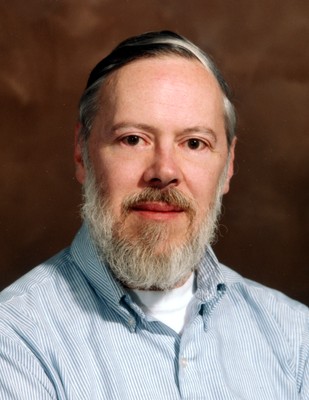 Dennis Ritchie, co-inventor, with Brian W. Kernighan, of the C programming language, and co-author of the book of that name, and co-inventor, with Ken Thompson, of the Unix operating system, died at his home in Berkeley Heights, NJ. He was 70.
He spent his professional career at Bell Labs, an iconic institution which boasted a patent a day for years, if not decades, and includes among its inventions both the transistor and the photovoltaic cell.
Like Steve Jobs, Dennis Ritchie was an iconic pioneer who changed the world significantly and dramatically. And like Steve Jobs, Dennis Ritchie’s work influences modern computers, from the servers in network operations centers to desktop, laptops, tablets, and phones.
One of the beauties of Unix is that it was itself written largely in C, so it was easy to port from one line of computer, say the DEC PDP 9 to the next, say the DEC PDP 11, and from the Mac built on the Power PC to the Intel X-86. The Unix operating system migrated from telephone systems and switches to workstations from HP, IBM, & Sun, to the NeXT machines and then the Mac.
Back in the late ’80’s and ‘early to mid-’90’s, when I worked as a programmer and DBA on Unix systems, most of the people who used workstations running HPUX, AIX, SunOS and Solaris knew they were working on Unix computers, and were familiar with C, C with Classes, C++, etc. But I would be astounded if today more than 0.01% of the current population of MAC, iPad, iPhone, iPod Touch, or Android users know that they are working on a Unix C / C++ (OS X, iOS) or Linux C/C++ (Android) device. But that’s part of the elegance of Unix.
There’s another elegance to all this. Ritchie worked on the development of an operating environment and software development system which migrated from telephone company labs and network operations centers to the phones that many of us carry in our pockets and on our belts.
Who knew when he wrote “Hello world” that he was introducing us to a new virtual world that was saying hello?
 _ Tweet The Supreme Court, in “Citizens United (against the citizens)” said, as Gov. Romney put it “Corporations are people, my friend.”
The people at “Occupy Wall Street” say, “I’ll agree that ‘Corporations are people’ when the government executes one.”
and “If a Corporation is a person then why isn’t it murder to declare bankruptcy? ”
A lawyer I consulted rationalizes the notion that “Corporations are people” by arguing that corporations have the rights to be secure against unreasonable search and seizure, as guaranteed by the Fourth Amendment, in the Bill of Rights, ratified 15, December, 1791.
However, it is the people who own the corporation and the people who work in the corporation who have the right, guaranteed by the Fourth Amendment, to be secure against unreasonable search and seizure – not the corporation.
The corporation can not exist without owners. A corporation is a piece of property, like a car, a house, a gun, etc. These objects have no rights. When an accused shooter goes on trial, it is the person who allegedly squeezed the trigger, or the person who paid for the “hit.” It is not the weapon. As the National Rifle Association might say, “Guns don’t kill people, people use guns to kill people.”
While people can own one or more corporations, in whole or in part, people may not own other people. This, i.e. slavery, described by Barack Obama as the “Original sin of America,” was claimed under the rubric of “States Rights” referenced in the “Declaration of Causes of Seceding States” on 24, December, 1860. However, it was voided by the Thirteenth Amendment, ratified on 6, December, 1865 and the Fourteenth Amendment, ratified on 9, July, 1868.
Additional counter-arguments can be found in Marjorie Kelly’s “The Divine Right of Capital” (ISBN 1576752372).
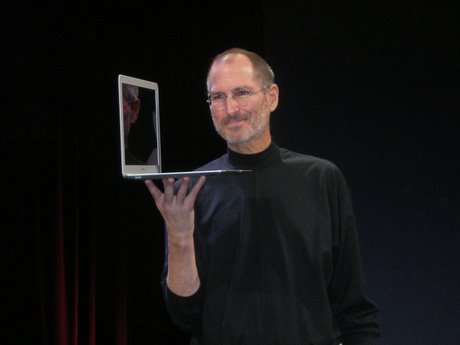 Many of us want to change the world. And we all to to varying extents. Some for the better, some for the worse, some significantly and dramatically, others less so.
Steve Jobs changed the world significantly, dramatically and in many ways for the better.
Because of their focus on “Computers for the rest of us” he and Steve Wozniak could have called the company they built “Prometheus Computers.” The Apple II, Lisa, Mac, Newton, iPod, iTunes store, iPod Touch, iPhone, iPad, are, in a sense, like the fire ‘stolen’ in the myth by Prometheus and given to man. Jobs, however, while known for being tough, was not known for being pompous.
He will be missed by his family and friends. His ideas will be missed by the rest of us.
Goodbye Steve, and thanks.
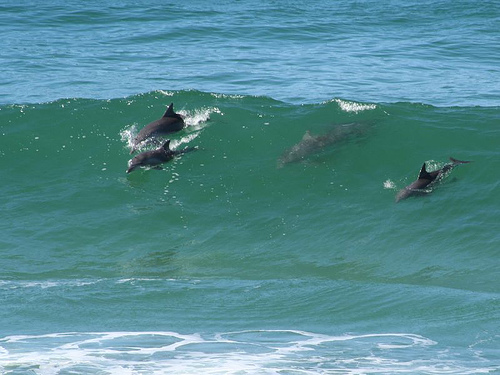
Tweet The observable fact that dolphins surf is something we humans need to think about.
Amory Lovins, of the Rocky Mountain Institute, coined the term “Negawatt” when he said “The cheapest unit of energy is the one you don’t have to buy.” The next cheapest, the “Nega-Fuel-Watt” is the unit of energy that doesn’t require fuel.
| 100% Clean Energy | |
| 100 Gigawatts Wind | $300 Billion |
| 100 GW Marine Hydro | $300 B |
| 50 GW Solar | $200 B |
| 50 GW Geothermal | $200 B |
| 200 GW Equiv Efficiency | $200 B |
| A Smart Grid | $100 B |
| 500 GW or GW Equiv. | $1.3 Trillion |
I’m not sure if Lovins first public use of the term Negawatts was in Montreal in 1989 (here) or in Foreign Affairs in 1976 (abstract here), whether 22 or 35 years ago. Regardless, our current energy paradigm today is the hard fuel based path Lovins criticized 35 years ago. While we are turning away from nuclear, as documented by Mycle Schneider in the WorldWatch Report (here) – the latest radioactive nail in the radioactive coffin being the fatal explosion at a reprocessing facility in France on Monday, Sept. 12, 2011 (here) – we burn literally mountains of coal and oceans of oil and gas (According to the DoE, in 2010 we burned 1,085,281 thousand short tons of coal and 15,022 thousand short tons of coke (here). And there are consequences. We suffer oil spills, polluted water, mercury, coal mine disasters, nuclear power plant melt-downs, we fight wars …
Wind and solar don’t burn fuel. The winds blow, the sun shines, you put a widget in the path of those moving particles in the air or those photons of light and you get electricity – without greenhouse gases, radioactive wastes, toxic wastes, and it costs less. So the question is not ‘Can we meet our energy needs with clean, sustainable renewable energy technologies?” The real question are How? How Much? And How quickly?
We could do it in 25 years if we wanted to. And we should, for our children, our grandchildren, the cetaceans with whom we share our oceans, and other charismatic megafauna with whom we share our world.
 _ Tweet I spoke with two of the Wall Street protesters this morning. We discussed credit unions, other cooperative ventures, Buckminster Fuller’s ideas, capitalism, and productivity. (“A 4-day work week,” Fuller was quoted as saying, “would give us time to enjoy the wealth we create.”) We didn’t talk about Warren Buffett or President Obama, but it seems that both would agree with the protesters’ sentiments, as I do, that our financial system “favors the rich and powerful at the expense of ordinary citizens.” (The protests and the protesters’ motives were described here by Colin Moynihan in the New York Times, Sept. 17, 2011.) The protests are also covered by Think Progress, here.
Buffett, in “Stop Coddling the Super-Rich“, published in the NY Times, said
I paid … only 17.4 percent of my taxable income — and that’s actually a lower percentage than was paid by any of the other 20 people in our office. Their tax burdens ranged from 33 percent to 41 percent and averaged 36 percent.
If you make money with money, as some of my super-rich friends do, your percentage may be a bit lower than mine. But if you earn money from a job, your percentage will surely exceed mine — most likely by a lot.
Obama’s initiative is explained on White House . gov and Talking Points Memo, and by Obama in recent days, “It’s not class warfare,” he said, “it’s math” and “If it’s class warfare,” he said in Ohio and Kentucky, while discussing an old bridge between southwestern Ohio and Kentucky that needs to be renovated, “I’m a warrior for the Middle Class.”
Move On has a petition here, saying, “I agree with Buffett – and Obama.”
Despite the evidence, from the 2001 to the present, that cutting taxes on rich people does not create jobs, Charles Gasparino, in the New York Post, a Rupert “We-hack-cell-phones-for-fun-and-profit” Murdoch product, said, here, “taxing the rich will destroy jobs.”
Gasparino is clearly wrong. And Buffett and Obama are clearly correct. Rich people can afford to pay higher taxes, and asking them to pay 17.4% while others, who need to spend a much higher percentage of their income on food, clothes, and housing, pay 33% to 41% does not seem fair.
But the question is “What do we do with the money?” Buffett has also said that he would never have made the money he made had he not been born in the United States, and had he not gone to Columbia University and studied “Value Investing.” He basically argues that the cultural climate and economic systems in the United States enabled him to become wealthy, that this is a good thing, and others deserve the same opportunities. “We must plan for the future and invest in infrastructure. And the wealthy should pay their fair share. ”
Tax policy must be linked to fiscal policy. What we are doing today, Obama, Buffett, and the protesters would say, is using tax policy to make rich people more rich. They would argue, and I would agree, we should use tax policy to develop infrastructure. One idea is to build a 40 kilowatt photovoltaic solar array on each of the 92,000 public schools in the United States. Solar only generates power during the day; schools need most of their power during the day. This would use tax revenues to pay for infrastructure upgrade – and tax revenues pay public schools electric bills. PV Solar systems provide energy without pollution, without toxic wastes, without greenhouse gases. And in the event of an emergency, if disconnected from the grid, we would have a network of 92,000 local emergency shelters with power during the day, when the sun is shining.
Marked cards and a stacked deck are great when you’re doing card tricks. But don’t play poker against a cheater using them.

Tweet I will be presenting Beyond Fuel: From Consuming Natural Resources to Harnessing Natural Processes at the Space Coast Green Living Festival, Cocoa Beach, Florida, Sept 17, 2011. The festival is sponsored by the Cocoa Beach Surfrider Foundation and the Sierra Club Turtle Coast Group. It will be at the Cocoa Beach Courtyard by Marriott. Haley Sales, (Website / Facebook / Youtube),a local singer / songwriter, will perform.

Our current energy paradigm today is to fuel based. We burn oceans of oil and methane mountains of coal. And there are consequences. We suffer oil spills, polluted water, mercury, coal mine disasters, nuclear power plant melt-downs, we fight wars …
According to the DoE, in 2010 we burned 1,085,281 thousand short tons of coal and 15,022 thousand short tons of coke (here).
Wind and solar don’t burn fuel. The winds blow, the sun shines, you put a widget in the path of those moving particles in the air or those photons of light and you get electricity – without greenhouse gases, radioactive wastes, toxic wastes, and it costs less. So the question is not ‘Can we meet our energy needs with clean, sustainable renewable energy technologies?” The real question are How? How Much? And How quickly?
| 100% Clean Energy | |
| 100 Gigawatts Wind | $300 Billion |
| 100 GW Marine Hydro | $300 B |
| 50 GW Solar | $200 B |
| 50 GW Geothermal | $200 B |
| 200 GW Equiv Efficiency | $200 B |
| A Smart Grid | $100 B |
| 500 GW or GW Equiv. | $1.3 Trillion |
And we could do it within 25 Years if we wanted to.
Amory Lovins, of the Rocky Mountain Institute, coined the term “Negawatt” to mean energy you don’t need to buy, as in “The cheapest unit of energy is the one you don’t have to buy.” The next cheapest, the “nega-fuel-watt” is the unit of energy that doesn’t require fuel.
— Tweet — Nuclear Power: Accident in France Kills 1, Injures 4 — NPR, and the Associated Press report “An explosion at a nuclear waste facility in southern France killed one person and injured four on Monday… The Nuclear Safety Authority declared the accident “terminated” soon after the blast at a furnace in the Centraco site, in the southern Languedoc-Roussillon region, about 20 miles (32 kilometers) from the city of Avignon. One of the injured suffered severe burns.”
The DC Bureau reported “The workers were operating a high temperature industrial oven that burns low-level nuclear waste in a sealed building when the unit blew up. The worker who was killed was burned so badly his body was carbonized, according to officials.”
The French Nuclear Safety Authority, analogous to the US Nuclear Regulatory Commission, or maybe Vichy, designated the accident as a 1 on a scale from 0 to 9.
While a death in an industrial accident is tragic, and while a worker could die as a result of injuries sustained falling off the nacelle of a wind turbine or a roof while installing or working on a solar array, it is probably impossible for a worker to get ‘Carbonized’ working on a wind turbine or solar farm. Continue reading
Copyright, L. J. Furman, 2011, All Rights Reserved.
Tweet In Part 1, I criticized “How to Really Save the Economy“, an op-ed in the New York Times, published Sept. 10, 2011. So how do we really save the economy?
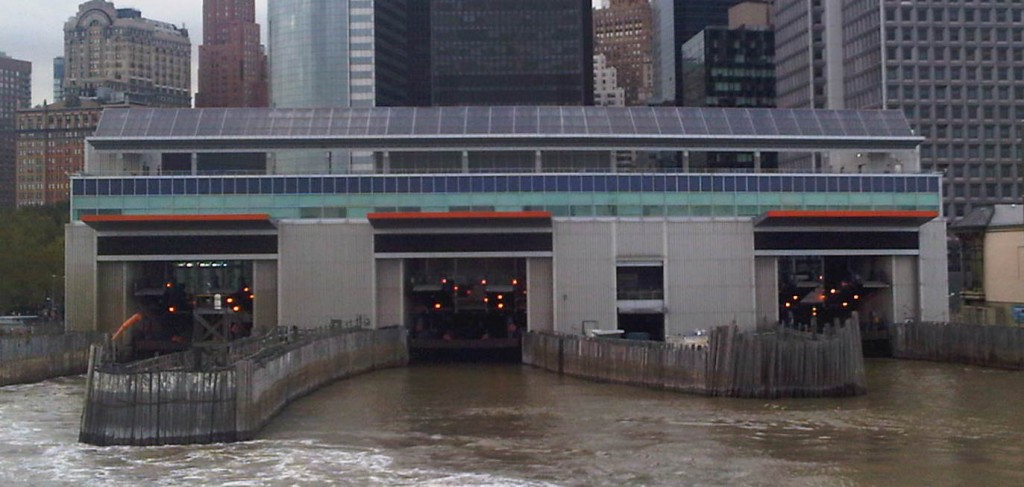
“One of the best kept secrets in New York City,” I wrote, “is the existence of a 40 kilowatt (KW) photovoltaic solar array on the Whitehall Street terminal of the Staten Island Ferry,” pictured above, and first covered in Popular Logistics in 2007, here.
There are 90,000 public schools in the United States. Suppose we were to install a 40 KW solar energy system on each of them. PV solar modules require very little maintenance over their 35 to 45 year life expectancy. My initial thought was $5 per watt or $5,000 per kilowatt, but $4,000 per kilowatt is more realistic for the near term price of solar, particularly at the utility scale. This is where we expect the cost of solar in the Q4 2012 timeframe, without subsidies.
At $4,000 per KW of nameplate capacity, each of these 90,000 systems would cost $160,000. This 3.6 gigawatts of distributed daylight-only capacity would cost about $14.4 billion.
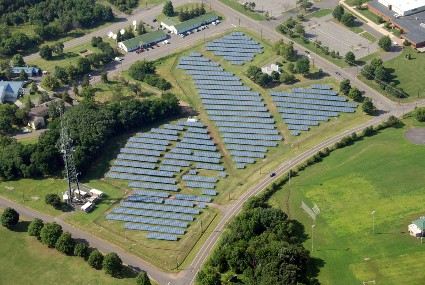 It seems to make sense to use taxpayer monies to finance these systems; taxpayers pay the electric bills for public schools and other public infrastructure, so rather than pay a utility to burn coal, oil, or gas, or harness nuclear fission, we could buy solar modules, put them on the roof and transform sunlight into electricity. But what are the other implications? What would it give us? And what do we do at night? How much juice do we get?
The US Dept. of Energy’s (DOE) National Renewable Energy Lab’s (NREL) PV Watts solar energy calculator tells you the power you can expect from a given solar system anywhere in the US. Regarding night-time; solar is effective in conjunction with other sources of energy, and other clean, renewable, sustainable sources include wind, geothermal, micro-hydro, biofuel.
Every public school in the country would have a power plant that generates power, during the day, with no fuel cost and no waste., and no associated mining, processing, transportation, fuel costs and no waste management costs. At $5.00 per watt, or $5 billion per gigawatt, the capital costs are lower than the costs of new nuclear and significantly lower than the costs of coal with carbon sequestration, with none of the risks or hazards associated with the systems: no arsenic, mercury, lead, thorium, uranium, zinc, or carbon.
The systems would be tied to the electric grid, after all, while most of their operations are during the day, schools need power at night. If these systems could be disconnected from the electric grid, then we would have 90,000 structures distributed all over the United States, with power during the day in the event of power outages from storms, earthquakes, accidents, etc. Even if we lost 10% of them in a disaster like Katrina, or an event like Irene or the recent earthquake, we would still have 81,000 all over the country. Coupled with efficient refrigeration systems, we would have shelters with power to keep food and medications cold during emergencies; and these would be distributed across the country.
The solar systems would obviously have to be installed here, which would stimulate the economy, and we could even require the components to be manufactured here, further stimulating the economy.
Why not business as usual?
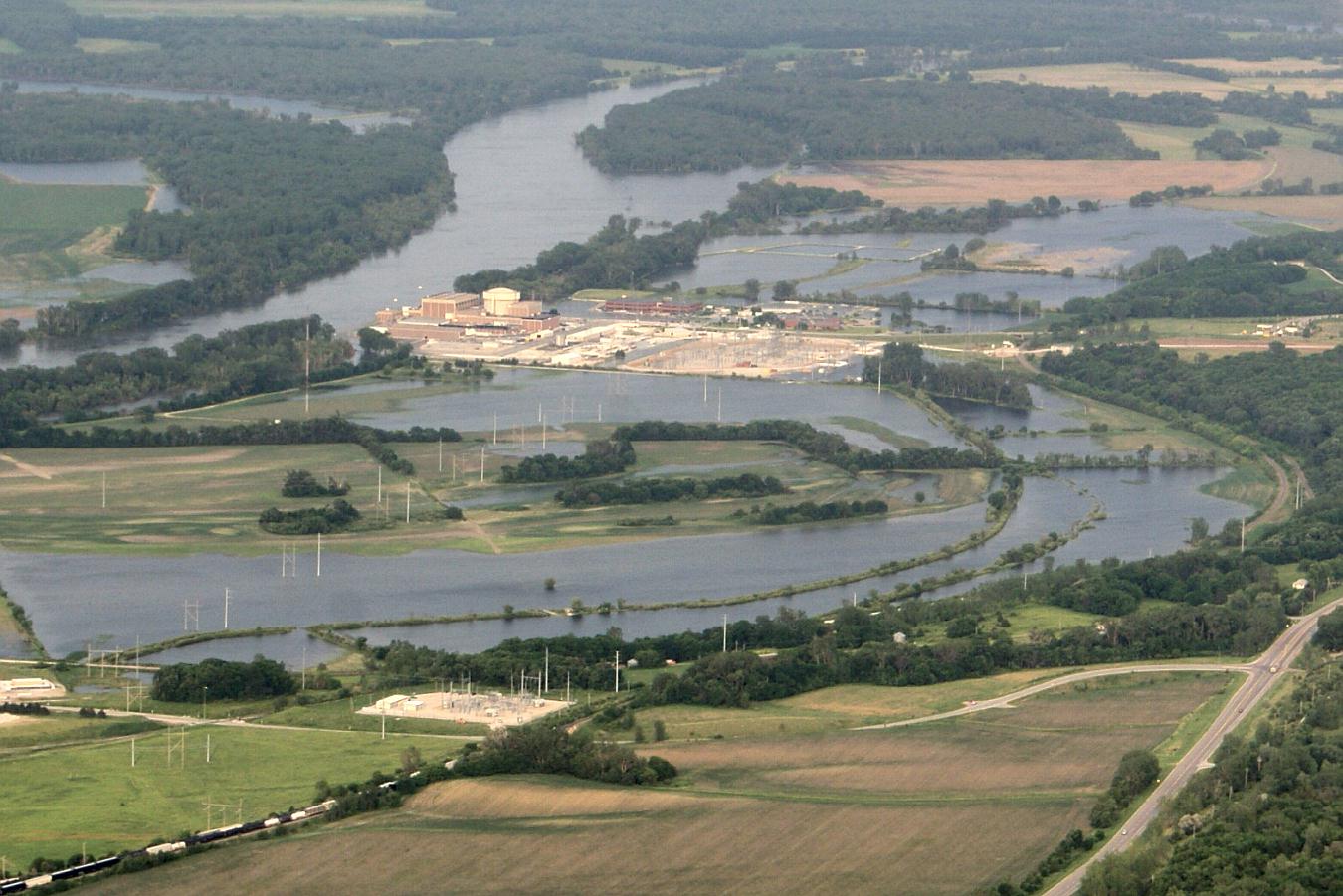 As reported here the North Anna nuclear plants in Virginia were shut down during the earthquake a few days before hurricane Irene. The Dominion plants in Virginia, and the Oyster Creek plant in New Jersey were shut down and the Millstone 2 & 3 plants in Connecticut and the Brunswick plants in North Carolina were brought to reduced capacity during Irene, and the Fort Calhoun plant in Nebraska has been shut down due to flooding, and losing $1 million per day, since June 6, 2011.
In Part 1, I criticized “How to Really Save the Economy, “an op-ed in the New York Times, published Sept. 10, 2011. “The United States,” according to Robert Barro, who teaches economics at Harvard and is a “fellow” at the Hoover Institution, “is in the third year of a grand experiment by the Obama administration.”
“This is inaccurate,” I wrote, Obama is the President, but the US Constitution provides a framework in which power is divided into three branches of the Federal government, and the power of the each of the branches is checked and balanced by the others, and “all power not expressly granted to the federal government is held by the states and the citizens.” It would be more accurate, therefore, to say,
“The United States is in the third year of an experiment in governance between the Obama administration, the Congress, the Judiciary, the Republican Party, various special interests, and the citizens. This appears to be an experiment in governance by not-governing. Due to significant differences of opinion with regards to the direction in which to drive the ship of state, the ship of state appears to be floundering. Governance by not-governing doesn’t work!”
In parts 3 and 4 I hope to present feedback from the telecommunications and wind industries. Meanwhile, another radioactive nail in the nuclear coffin – an explosion in a low-level waste management facility in France killed one person and injured four. DC Bureau, Associated Press reports “An explosion at a nuclear waste facility in southern France killed one person and injured four on Monday. Authorities said there was no radioactive leak, but critics urged France to rethink its nuclear power in the wake of the catastrophe at Japan’s Fukushima plant.The Nuclear Safety Authority declared the accident “terminated” soon after the blast at a furnace in the Centraco site, in the southern Languedoc-Roussillon region, about 20 miles (32 kilometers) from the city of Avignon. One of the injured suffered severe burns…. the body was burned so badly it was carbonized”
 Tweet “The United States,” according to Robert Barro, who teaches economics at Harvard and is a “fellow” at the Hoover Institution, “is in the third year of a grand experiment by the Obama administration.” This is inaccurate. Obama is the President, but the US Constitution provides a framework in which power is divided into three branches of the Federal government, and the power of the each of the branches is checked and balanced by the others, and “all power not expressly granted to the federal government is held by the states and the citizens. It would be more accurate to say that the United States is in the third year of a grand experiment by the Obama administration, the Congress, the Judiciary, the Republican Party, various special interests, and the citizens.
Barro published this flawed analysis in “How to Really Save the Economy, “an op-ed in the New York Times, published Sept. 10, 2011.
“How is the experiment going?” Barro asks rhetorically. “Not well,” he answers.
How could it? On January 16, 2009, a week before the Inauguration, Rush Limbaugh, one of the leaders of the right wing of the United States said, “I hope Obama fails.” (The text is on Limbaugh’s site. An audio is on You Tube.) As I wrote, on Popular Logistics, here, a hope that the President fails is hope that the United States fails.
As was reported, here, in the Washington Post on August 6, 2011, and here on Popular Logistics, on August 8, 2011, John Boehner, Eric Cantor, Paul Ryan, and the “Young Guns,” their Republican comrades in the House of Representatives, PLANNED as far back as January, 2009 to use the debt ceiling to create a political crisis. The Republicans have been trying to actualize Mr. Limbaugh’s hopes.
Barro is a professor of neoclassical economics, and a fellow of the Hoover Institution. What he doesn’t understand, and what President Herbert Hoover didn’t understand, is that under economic conditions such as we see today, while businesses and government are able to create jobs, business owners are risk averse, and won’t risk capital. The government MUST create jobs, because businesses won’t. Everyone who has a job and a 10 year old car, and is hesitant with regards to buying a new car, understands this. John Maynard Keynes understood this. Franklin Delano Roosevelt understood this. Herbert Hoover didn’t – which is why he lost to Mr. Roosevelt in 1932, and why, 36 years later, President Nixon said “We are all Keynesians now.” (Note that Mr. Nixon has been called many things. However, “Liberal” is not one of them.)
So how do we really save the economy? See Part Deux.
One of the best kept secrets in New York City is the existence of a 40 kilowatt (KW) photovoltaic solar array on the Whitehall Street terminal of the Staten Island Ferry, pictured above, and first covered in Popular Logistics in 2007, here.
There are 90,000 public schools in the United States. Suppose we were to install a 40 KW solar energy system on each of them. PV solar modules require very little maintenance over their 35 to 45 year life expectancy. At a cost of $5,000 per kilowatt of nameplate capacity, each of these 90,000 systems would cost $200,000. This 3.6 gigawatts of distributed daylight-only capacity would cost about $14.4 billion. The total costs would probably be less because PV Solar is subject to economic forces like Moore’s Law.
It seems to make sense to use taxpayer monies to finance these systems; taxpayer monies pay the electric bills for public schools and other public infrastructure.
Every public school in the country would have a power plant that generates power, during the day, with no fuel cost and no waste. And with no associated mining, processing, transportation, fuel costs and no waste management costs. At $5.00 per watt, or $5 billion per gigawatt, the capital costs are lower than the costs of new nuclear and significantly lower than the costs of coal with carbon sequestration, with none of the risks or hazards associated with the systems: no arsenic, mercury, lead, thorium, uranium, zinc, or carbon.
But what are the other implications? What would it give us? Again. see Part Deux
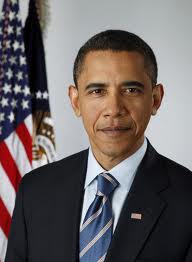 Tweet To Say “I hope he fails” about the President is to advocate treason. To question the wisdom in his decisions is citizenship. This post outlines 10 things we think Obama has done right, and three things we think Obama has not done right, at least not yet. We hope Obama’s presidency is successful and effective, if for no other reason than when the President is successful and effective then the nation will be strong and prosperous.
(As noted previously, Popular Logistics is a POLICY blog, not a POLITICS blog. But, to make Policy, you must be effective at Politics.)
Obama Presidency – First Term – What he’s done right.
What Obama has not done right.
Treason versus Wisdom
It’s one thing to question the President’s judgment, wisdom, intelligence, capabilities and character. We should do that, not just for this president, or his predecessor, but for each president and every viable candidate for every elected office. That is our right as citizens of the United States, and it is a right not granted to “citizens” of Iran, N. Korea, or China, or subjects to the King of Saudi Arabia. More than our right, it is our obligation.
Further, it is one thing to say “I am concerned that the President has made a decision that will have disastrous consequences… I am concerned that the President will fail.” Because when the President fails the country suffers; we the citizens – and our children – suffer. But saying “I hope he [the President] fails” is the same as saying “I hope the country fails.” (Not because the President is King – he isn’t – but because the President is, by the power vested in the President by the Constitution, the Chief Executive of the Federal Government and the Commander in Chief of the Armed Forces.) This, “I hope he fails” is to advocate treason. People who say that should be recognized for what they are.
Strike 1 – Solar Power
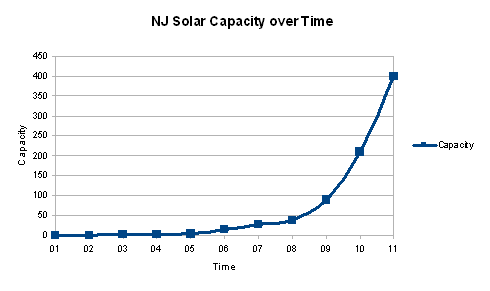
When the NJ Clean Energy Program started in 2001, there were six (6) solar energy systems and a nameplate capacity of nine (9) kilowatts. By December 31, 2010 there were over 7000 systems with a combined capacity close to 300 megawatts, MW, of solar electric generating capacity. In the first six months of 2011, another 100 MW was added, bringing the total to 400 MW by June 30, 2011. By these metrics, the NJ Clean Energy Program has been successful.
Tweet Nuclear power diminishes National Security and the stability of the electric grid.
Consider the Brunswick, Fort Calhoun, Millstone, North Anna, and Oyster Creek nuclear power plants, and the Fukushima melt-downs. And consider the “Mobley Factor.”
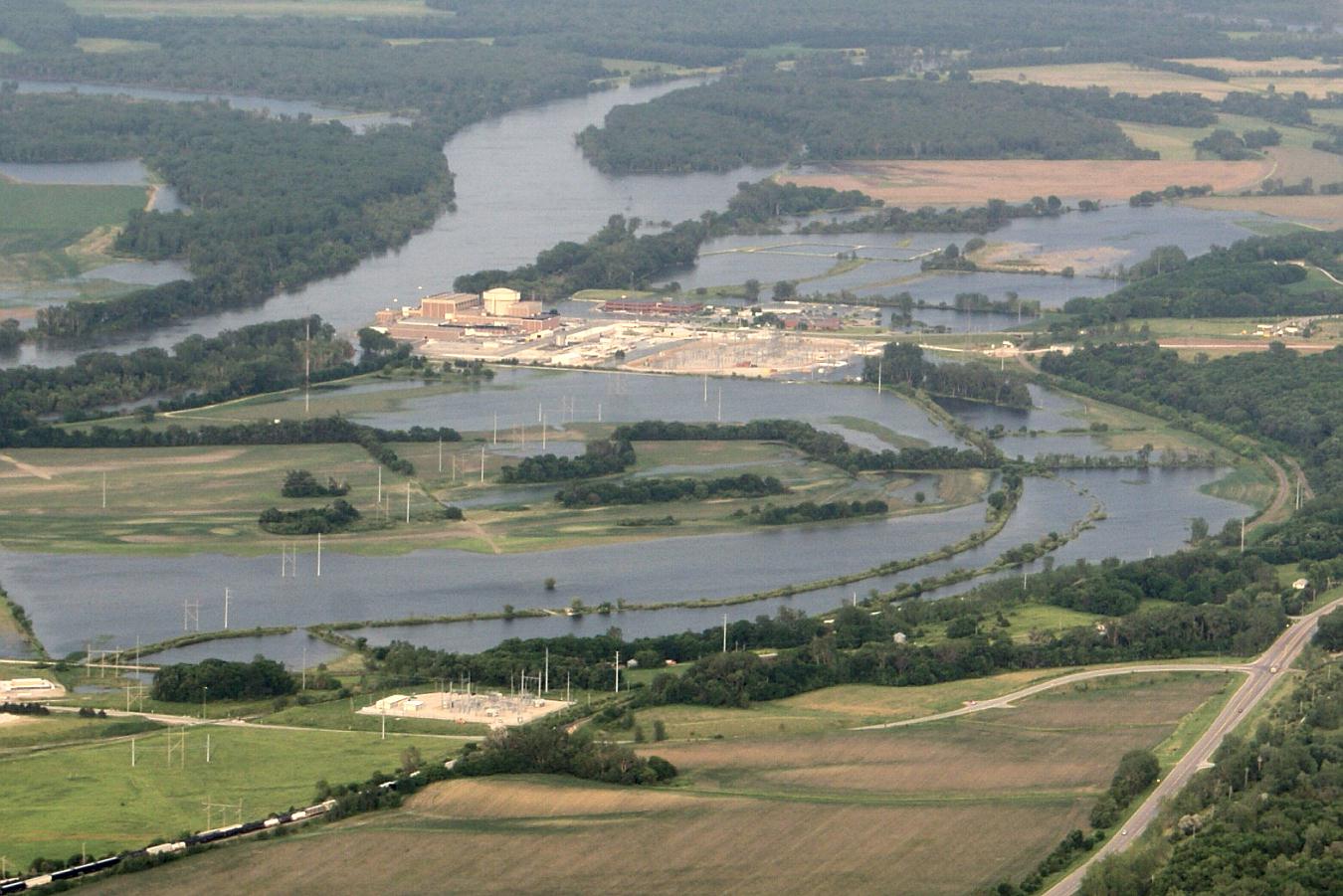
The Brunswick nuclear plants in North Carolina, and the Millstone nuclear power plants in Connecticut were brought to “reduced power” in preparation for Hurricane Irene. The Oyster Creek plant in New Jersey was shut down. The North Anna nuclear plant, about 90 miles from Richmond, Virginia, was shut down Because of the earthquake that hit the east coast of the United States on Tuesday, August, 23, 2011( Popular Logistics coverage here). The Fort Calhoun, Nebraska, nuclear plant, pictured above, near Omaha, Nebraska, shut down in May, 2011, for refueling, remains shut down (losing $1.0 million per day) due to the flooding of the Missouri River that began June 6, 2011. (Popular Logistics coverage here and here, photos are here).
In an emergency we know that nuclear plants will be shut down, and therefore not generating power. However, they will require emergency power and emergency response resources.
“The Mobley Factor” refers to Sharif Mobley, an American currently in prison in Yemen, suspected of ties to Al Queda. Before going to Yemen, Mr. Mobley worked as a laborer in six nuclear power plants in New Jersey, Pennsylvania, and Maryland, including the Salem and Hope Creek plants in New Jersey, the Peach Bottom, Limerick and Three Mile Island plants in Pennsylvania, and the Calvert Cliffs plant in Maryland. Mr. Mobley had unrestricted access to those plants. Equipped with a cell phone he could have taken pictures, lots of pictures, also known as “Actionable Intelligence.”
Bloomberg News reported (here) “Federal regulations require nuclear reactors to be in a ‘safe shutdown condition,’ cooled to less than 300 degrees Fahrenheit, two hours before hurricane-force winds strike.” Paradoxical, but nuclear power plants – a source of power – depend on fossil fuel.
The Bloomberg News article continues, “Plant operators typically begin shutting down reactors 12 hours before winds exceeding 74 miles per hour are predicted to arrive, said Roger Hannah, a spokesman with the U.S. Nuclear Regulatory Commission’s Region II office in Atlanta.”
Reuters (here) reported that the operators are working to bring online the various nuclear power plants shut down due to the hurricane and the earthquake.
STATE         OWNER      PLANT          STATUS   RESTART      CAPACITY MW
--------------------------------------------------------------------------
Connecticut   Dominion   Millstone 2    REDUCED  UNKNOWN         884
Connecticut   Dominion   Millstone 3    REDUCED  UNKNOWN       1,227
New Jersey    Exelon     Oyster Creek   OFFLINE  UNKNOWN         619
N. Carolina   Progress   Brunswick 1    REDUCED  24-36 Hours     938
N. Carolina   Progress   Brunswick 1    REDUCED  24-36 Hours     937
Virginia      Dominion   North Anna 1   OFFLINE  UNKNOWN         980.5
Virginia      Dominion   North Anna 2   OFFLINE  UNKNOWN         972.9
Nebraska                 Fort Calhoun   OFFLINE  UNKNOWN         484
--------------------------------------------------------------------------