Author Archives: L J Furman, MBA

About L J Furman, MBA

Analyst here and Director of Information Technology with an MBA in Managing for Sustainability.

The Deepwater Horizon – The Good, The Bad, & The Ugly

Oil Eating Bacteria

Oil Eating Bacteria

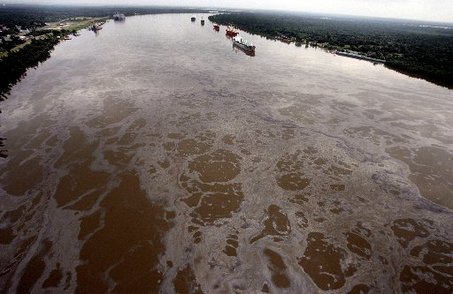
The good news is that newly discovered bacteria biodegrade oil in the oceans, and have been chowing down on the oil spilled from the Deepwater Horizon  (Earth and Sky, NPR, PBS, SFGATE) and from oil seeps for millions of years.

While it’s unexpected and wonderful that bacteria are biodegrading the oil, is begs the question:

Do we want to fill the seas with oil and oil-eating bacteria or oceans of clean water, coral, oysters, fish, turtles, and dolphins?

And how quickly can they consume the 5.1 million barrels that gushed into the Gulf at a rate of 60,000 barrels per day for 85 days begining April 20, continuing thru May and June, and ending July 15, 2011?

I suspect it will take more than a few weeks, months, or years.

And do those bacteria break down dispersants?

John Ehrenfeld defines “Sustainability” as “Flourishing.” Because they are small and short-lived, shrimp can handle a higher level of toxics than say dolphins, turtles, etc. We will know the Gulf is clean when there are flourishing populations of dolphins, turtles, and larger and longer-lived fauna, and when they have lower concentrations of heavy metals and petrochemicals in their tissues. Continue reading

Coal: More Radioactive Waste than Nuclear Power

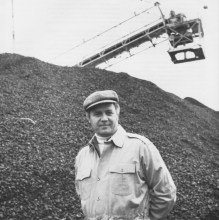
Alex Gabbard at the Coal pile in front of the Oak Ridge National Lab

Alex Gabbard at the Coal pile in front of the Oak Ridge National Lab

Strange and counter-intuitive as it may seem, burning coal produces more radioactive waste than nuclear fission.  And it’s not regulated.

Back in 1993, Alex Gabbard, of the Oak Ridge National Laboratory, published “Coal Combustion: Nuclear Resource or Danger” in ORNL Review. Gabbard built on the work of J. P. McBride, R. E. Moore, J. P. Witherspoon, and R. E. Blanco, also of Oak Ridge, in their article, “Radiological Impact of Airborne Effluents of Coal and Nuclear Plants,” Science, Dec. 8, 1978.

Continue reading

September 11, and the Future of Energy

Combined Cycle Power Plant

Combined Cycle Power Plant

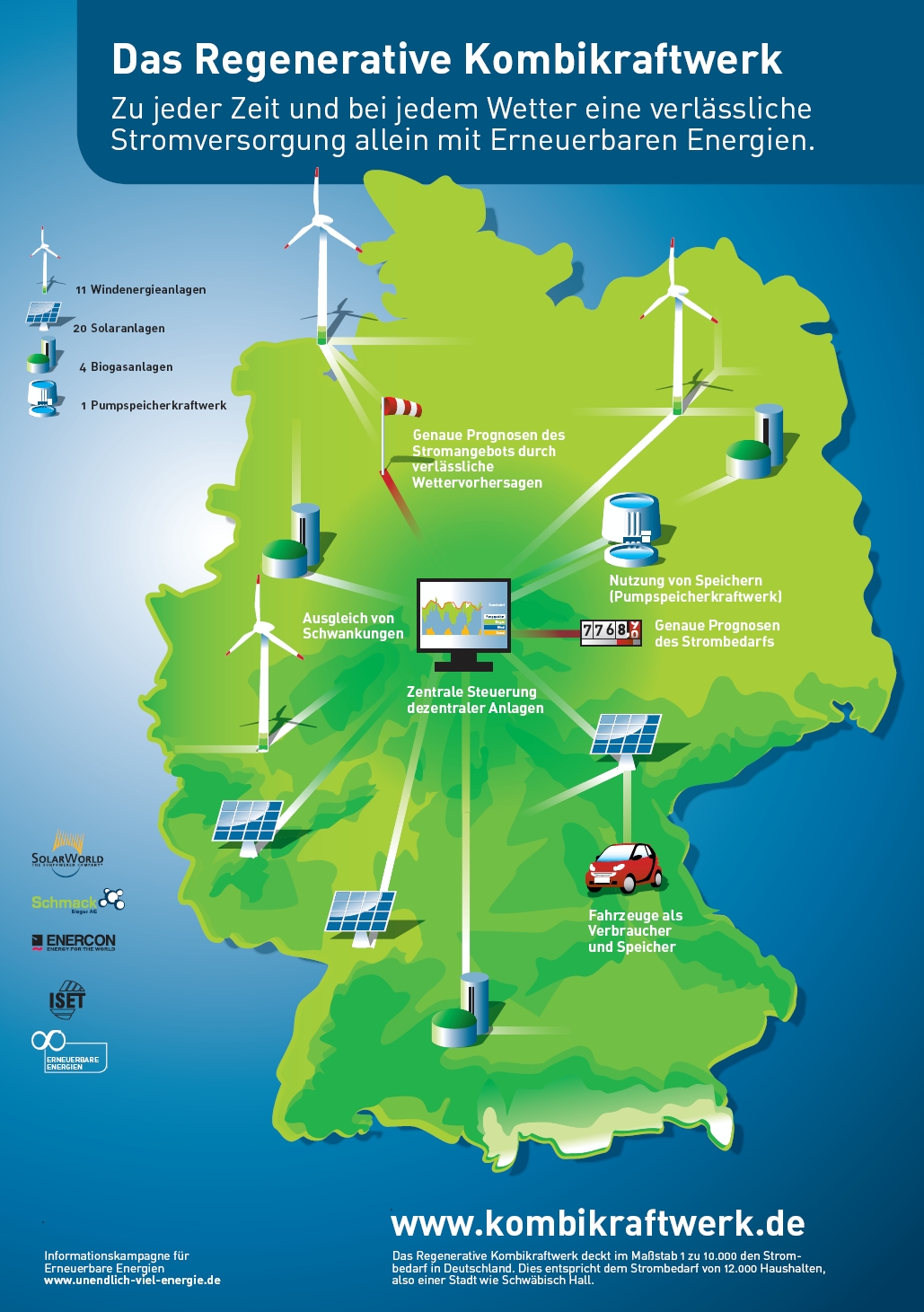
The Combined Cycle Power Plant, “Kombikraftwerk” can harness wind, sunlight, water, and biofuels to meet ALL Germany’s electric power needs, 365 days per year, regardless of weather conditions.  And if it “werks” in Germany, it will work here.

Professor Jurgen Schmid and his colleagues at the Institute for Solar Energy Supply Systems of the University of Kassel, in Germany, with funding from Enercon GmbH, SolarWorld AG and Schmack Biogas AG, have developed the Combined Cycle Power Plant, or “Kombikraftwerk” and proven that they can use wind, solar, biomass and hydro to meet ALL Germany’s electricity needs around the clock regardless of weather conditions. Schmid says.“If renewables continue to grow as they have done in the past, they’ll provide around 40% of Germany’s electricity needs by 2020. We could therefore achieve 100% by the middle of the century.” Information on the Combined Cycle Power Plant is here, and here, at “Germany’s Renewable Energy Information Platform. Continue reading

Sustainability in Consumer Electronics

SONY EX 7

Apple Logo
Apple, Blackberry, Dell, HP, Lenovo, Motorola, Panasonic, Sony, Toshiba and other consumer electronics companies can be less unsustainable than their competitors and less unsustainable tomorrow than they are today. However, given:

  1. The state of the art in manufacturing,Blackberry
  2. Electronics are made with designs that are supplanted before they wear out, and
  3. Recycling consumer electronics is expensive and releases toxins,

the consumer electronics industry can not, almost by definition,  be “Sustainable.” For what they need to do, click beneath the fold.

Continue reading

Apple, Cool but What Happens Next?

Farshad Manjoo, “10 Lessons from the Coolest Company, Anywhere,” in Fast Company, offers some interesting history and observations on Apple. He writes:

The one-time underdog from Cupertino is the biggest music company in the world and soon may rule the market for e-books as well. What’s next? Farming? Toothbrushes? Fixing the airline industry?

As much as I respect Steve Jobs, I don’t see him changing farming or fixing the government, as is suggested in the Fast Company article. The cool iPhone / iPad apps that identify trees and constellations can not tap a maple tree, milk a cow, slaughter and butcher a cow, hog, or chicken. The iPhone can’t even scramble eggs or make a cup of coffee.

Apple makes mistakes, as the “Death Grip” on the iPhone 4 proves. And they are on and overloading the AT&T network; maybe they should switch to another carrier.  Be that as it may, as Manjoo says:

Right now, it seems as if Apple could do all that and more. The company’s surge over the past few years has resembled a space-shuttle launch — a series of rapid, tightly choreographed explosions that leave everyone dumbfounded and smiling. The whole thing has happened so quickly, and seemed so natural, that there has been little opportunity to understand what we have been witnessing.

Continue reading

Everything you need to know about Global Warming in 5 Minutes

Unlike Warren Buffett, Jeremy Grantham, chairman of Grantham Mayo van Otterloo, GMO.com, is not a “celebrity investor.” And also unlike Buffett, Grantham is an environmentalist. Jeremy and his wife, Hannelore, established the Grantham Foundation for the protection of the environment, and The Grantham Research on Climate Change and the Environment at the London School of Economics. Like Buffett, Mr. Grantham talks to investors who hire him, and via his investments, charities, and other work, he talks to the world.  Mr. Grantham recently wrote “Everything you want to know about Global Warming in 5 minutes“,

Two ideas stand out:

Climate warming involves hard science. The two most prestigious bastions of hard science are the National Academy in the U.S. and the Royal Society in the U.K., to which Isaac Newton and the rest of that huge 18th century cohort of brilliant scientists belonged.  The presidents of both societies wrote a note recently, emphasizing the seriousness of the climate problem and that it was man-made. …  Both societies have also made full reports on behalf of their membership stating the same.  Do we believe the whole elite of science is in a conspiracy?  At some point in the development of a scientific truth, contrarians risk becoming flat earthers.

Conspiracy theorists claim to believe that global warming is a carefully constructed hoax driven by scientists desperate for … what?  Being needled by nonscientific newspaper reports, by blogs, and by right-wing politicians and think tanks?

The full text is below:

Continue reading

Wall Street and Climate Change

At Deutsch Bank, one of the world’s largest banks, there are some very bright people who understand that climate change is problem. An Internet search on “Deutsche Bank Climate Change” brings up links to Deutsche Bank Climate Change Advisors, which features a carbon counter,  showing the tons of Carbon Dioxide in the atmosphere, 3.6659 trillion metric tons.  Before the start of the “Industrial Revolution” there were approximately 2.5 trillion metric tons.  The question for the scientists is “What are the effects of shifting all this carbon from under the ground into the atmosphere?” For the citizens and policy makers, “Is this good or bad, and if bad, what should we do?”

What should Obama do? What is Celebrity Investor and Adviser to Presidents Warren Buffett doing?

Continue reading

Crisis (Mis) Management and the Gulf Oil Spill


What BP and the Government Could Have Done and Should Be Doing (updated 10/7/10)

The handling of the Deepwater Horizon catastrophe is a textbook study of how not to manage a crisis. The government and the Obama Administration seems to have understated the problem and ceded responsibility to BP, which seems to have acted to protect the Macondo oil field rather than the Gulf of Mexico and the Gulf Coast.

Continue reading

It's Like a Bad High School Math Problem

Oil Spill

Oil and Oceans Don't Mix. From Mining News.

“If oil gushes into the Gulf of Mexico at a rate of 60,000 barrels per day, and it takes 84 days to achieve a capability of “process” the spilled oil at a rate of 30,000 barrels per day, how long does it take to “process” the spilled oil?”

It takes two days to process each day’s gushed oil. So the answer is “2N + 188” where “N” equals the number of days oil gushes into the Gulf beyond the 84 days it took to achieve a processing capability of 30,000 barrels a day. If BP or the government stops the spill effective July 15, 2010, then they will process the oil spilled into the Gulf of Mexico by January 20, 2011. If they are able to stop the flow of oil by August 1, 2010, then it will be Feb 19, 2011, before the spilled oil is “processed.” (Source of image)

And what exactly do they mean by “Process the spilled oil?”

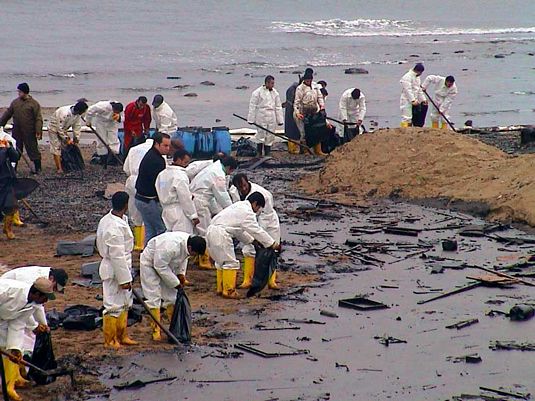
People cleaning up the spill

People cleaning up the spilled oil.

Here’s another problem: “What is the toxicity for people cleaning up, or “processing,” the spilled oil? How much exposure can an average person tolerate? Is BP providing adequate safety gear and instructions? If people working to clean up the spill are reporting “light-headedness” and other symptoms, is that an indication that they have sustained a toxic exposure?” For more details, here is Melissa Taylor’s article, “Doctors call for help protecting Gulf oil spill workers.

This Like a Bad High School Math Problem, is ninth in the series on the Deepwater Horizon / Macondo oil well disaster which began after Earth Day. Other posts include:

  1. Fossil Fuels and a Walk on the Moon,
  2. Drill Baby Drill or Drill Baby Oops,
  3. The Magnitude of the Spill,
  4. One Month After,
  5. The Chernobyl of Fossil Fuels?,
  6. Magnitude, Part 2,
  7. After Macondo, and
  8. Deepwater Horizon – Bombs and Hurricanes.

Deepwater Horizon – Bombs and Hurricanes

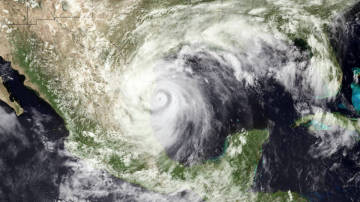
Satellite Photo of Alex, NOAA

Satellite Photo of Hurricane Alex, courtesy NOAA

Hurricane Alex has temporarily halted cleanup efforts (Reuters).  Yet the oil continues to gush unabated. Using the Government’s “Improved Estimate,” 2.8 to 4.8 million barrels have gushed into the Gulf in the MONTHS since the April 20 explosion which killed 11 workers. The explosion and spill have destroyed fisheries, tourism, and profoundly disrupted the ecology of the Gulf. Given that the spill of 35,000 to 60,000 barrels per day continues unabated the extent of the damage is unclear.

In “Blow Up the Well to Save the Gulf,” in the NY Times, 6/22/10, Christopher Brownfield, a former nuclear submarine officer, wrote, “President Obama needs to create a new command structure that places responsibility for plugging the leak with the Navy, the only organization in the world that can muster the necessary team. Then the Navy needs to demolish the well. … At best, a conventional demolition would seal the leaking well completely and permanently without damaging the oil reservoir. At worst, oil might seep through a tortuous flow-path that would complicate long-term cleanup efforts. But given the size and makeup of the geological structures between the seabed and the reservoir, it’s virtually inconceivable that an explosive could blast a bigger hole than already exists and release even more oil.”

President Obama instituted a 6-month  moritorium on deepwater drilling. Judge Martin L. C. Feldman of United States District Court, appointed by President Reagan in 1983, stopped the moritorium, writing that the Obama administration had failed to justify the need for such “a blanket … moratorium” on deep-water oil and gas drilling. “The blanket moratorium, with no parameters, seems to assume that because one rig failed and although no one yet fully knows why, all companies and rigs drilling new wells over 500 feet also universally present an imminent danger.” NY Times.

With all due respect to Judge Feldman, the editors at Popular Logistics think that oil, coal, natural gas, mining, drilling, and transport, do present an imminent danger

. Look at the evidence in the Gulf of Mexico, Ecuador, Nigeria, Prince Edward Sound, Montcoal, W. V, upriver of Kingston, Tenn, in the coal mines of China, and in the mercury levels in fish, shellfish, dolphins, and whales. The “Precautionary Principle”  dictates that we must stop drilling and figure out to move off fossil fuels.

Notes

  1. The “improved estimate of the Flow Rate Technical group, of 35,000 to 60,000 barrels per day, announced by Energy Secretary Chu, Interior Secretary Salazar, and Director of the U. S. Geological Survey and Chair of the National Incident Command’s Flow Rate Technical Group (FRTG) Dr. Marcia McNutt on June 15, 2010, is consistent with a scientific analysis of the 70,000 barrels per day reported one month earlier by  NPR May 14, 2010  and a “back-of-the-envelope” estimate of 25,000 to 50,000 barrels per day reported in this blog on May 15, 2010.
  2. The “Precautionary Principle” implies a social responsibility to protect the public and the environment from harm.  In general, the burden of proof that an action or policy is not harmful falls on those taking the action. This allows policy makers to take action in the face of limited scientific data.
  3. The series began after Earth Day and includes Fossil Fuels and a Walk on the Moon, Drill Baby Drill or Drill Baby Oops, Magnitude, Part 1, One Month After, The Chernobyl of Fossil Fuel?, Magnitude, Part 2 and The Deepwater Horizon after the Macondo Well Spill. It will continue indefinitely.

The Deepwater Horizon After the Macondo Well Explosion

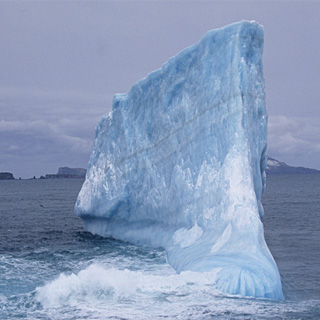
An Iceberg

First conclusion of a series that began after Earth Day and includes Fossil Fuels and a Walk on the Moon, Drill Baby Drill or Drill Baby Oops, Magnitude, Part 1, One Month After, The Chernobyl of Fossil Fuel?, and Magnitude, Part 2. )

As I wrote on Earth Day, “In 100 years our descendants will not be burning coal, oil, natural gas or using nuclear fission.  They might be using terrestrial nuclear fusion.  They will be using solar, wind, geothermal, marine current hydro, tidal energy systems – clean, renewable, sustainable energy systems. No fuel: No Waste. No mines, mills, wells, spills. No arsenic, lead, mercury, selenium, thorium – no carbon or fly ash to be contained, sequestered, or to leak.

“We have started.  California and New Jersey lead the U. S. Germany and Spain lead Europe. Boeing and Richard Branson’s Virgin Atlantic want to build aircraft that run on biodiesel.  We need to move forward in a big way – to 100% clean energy in 10 years, to retrain coal miners and oil rig operators to build and run solar arrays and wind turbines, and dig deep geothermal systems.”

Otherwise the Deepwater Horizon Explosion at the Macondo oil field, the oil spills in Ecuador and Nigeria, the coal ash floods like the TVA Kingston Steam Plant, coal mine disasters like at Upper Big Branch, spills like the Exxon Valdez, and events like Three Mile Island and Chernobyl will be ‘”Business as Usual.”

A friend of mine who works for BP, and who would like to work for BP Solar, tells me that most BP staff don’t go to work thinking “How can I destroy the earth today. They are, she says “focused on obtaining and selling oil.”  Few consider themselves environmentalists. Many see this as business as usual. “Oil spills happen,” they say. They are “focused on getting petrochemicals to market.”

The Macondo oil field that was tapped by the Deepwater Horizon could have contained 1 Billion Barrels of crude. It could have been one of the largest oil discoveries in the world .” (Click here for CBS and here for Times of London). The well could gush oil for YEARS and could have met US needs in 2007 – 21 Million Barrels per Day – for 47 days (here).

This volume of crude oil – 1 Billion Barrels – could explain the explosion. The equipment was built to operate at 20,000 PSI and withstand 60,000 PSI. It the pressures exceeded the limits, then the equipment could have failed. Simple. And Catastrophic. When you consider the pressures under 5000 feet of ocean, and the pressure of 1 Billion Barrels of oil, when you have engineers scratching their head saying “I don’t know, I never saw anything like this. What do You think we should do?”  One the thing to do is run like hell.

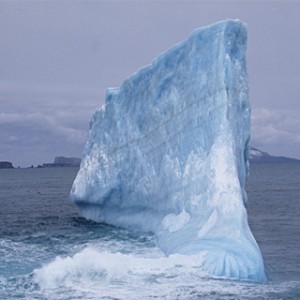
An Orca

An Orca

As was noted earlier in the series, like the iceberg pictured above and the Orca pictured at left, this is a singularity.  But it has precedents.

  • TVA Kingston: 1.2 Billion Gallons of toxic coal ash sludge, upstream of Kingston, Tennessee, 12/22/08.
  • Chevron Texaco: (alleged) 18 Billion Gallons (428.6 million barrels) of Oil Process Waste, Rainforests of Ecuador, 1964 to 1990.
  • Oil Fires of Kuwait: 6 Million Barrels per Day, up to 6 Months, 1991.
  • Exxon Valdez: 250,000 Barrels, Prince William Sound, 1989.
  • The Niger Delta, in Nigeria, 250,000 Barrels per year for the last 50 years (click here), “Big oil spills are no longer news in this vast, tropical land….has endured the equivalent of the Exxon Valdez spill every year for 50 years by some estimates…. Perhaps no place on earth has been as battered by oil, “
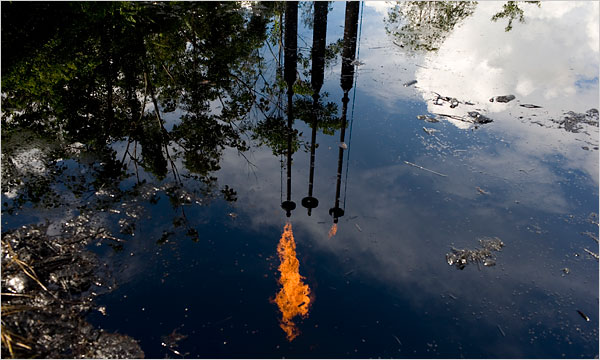
Flares in the Jungle

Flares in the Jungle

The TVA coal ash flood (here, here, here), the Upper Big Branch Mine accident (here, here), and the Deepwater Horizon at Macondo may be the “Trifecta” of American Fossil Fuel Disasters.  But, like the problems in Ecuador (here) and Nigeria (here), these are “Systems Problems” – built into the system. The only way to eliminate them is to change the system.

This is what precisely what some people are trying to do. Students and faculty in the Marlboro MBA in Managing for Sustainability at the Marlboro College Graduate Center in Brattleboro, Vermont. They think about “Changing the Climate of Business.” And they may be are on to something, as are like minded people at the Presidio, the Fowler Center for Sustainable Value, at Case Western, and Columbia University’s Earth Institute.

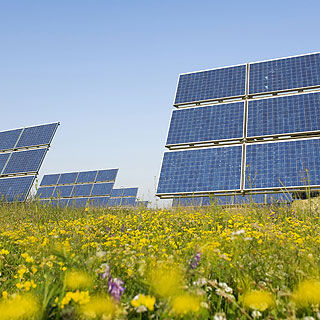
Here’s an idea that will enable BP to make things right, change their image, and even make money. Suppose BP Solar built new factories in Florida and Louisiana, and hire former petrochemical and seafood workers – and churned out 25,000 to 50,000 PhotoVoltaic solar modules and 1,250 to 2,500 inverters per day. This would be 5 to 10 megawatts per day, 160 to 300 mw per month, 600 mw to 1.2 gigawatts per year.

According to my back of the envelope calculations, we need about 50 gw of solar in this country, along with 200 gw of wind, and 50 to 100 gw of other CRS (Clean, Renewable, Sustainable) generating capacity, so this is a drop in the bucket. But this is real change. It’s defining moment, substantive, shake the cobwebs out of the attic, hurricane force, Dorothy we’re not in Kansas anymore, paradigm shifting change.

BP Solar, or Massey Energy, or Akeena, Evergreen, First Solar, Sunpower, could do the same thing in West Virginia – build factories to manufacture PV Solar Modules and Solar Hot Water Panels, and hire local people to work in the factories.

It is change we can wrap our arms around, change we can celebrate. As President Obama might say, “change we can believe in. ”

This was planned as the Final Post in this series on the Deepwater Horizon / Macondo oil well disaster which began after Earth Day. Other posts include:

  1. Fossil Fuels and a Walk on the Moon,
  2. Drill Baby Drill or Drill Baby Oops,
  3. The Magnitude of the Spill,
  4. One Month After,
  5. The Chernobyl of Fossil Fuels?, and
  6. Magnitude, Part 2.

However, I will continue to offer my thoughts and analysis once or twice per month as the oil continues to gush forth into the Gulf of Mexico.

Gulf Oil Emergency Phone Numbers.

* Report oiled shoreline or request volunteer information: (866) 448-5816
* Submit alternative response technology, services or products: (281) 366-5511
* Submit your vessel for the Vessel of Opportunity Program: (281) 366-5511
* Submit a claim for damages: (800) 440-0858
* Report oiled wildlife: (866) 557-1401
* Medical support hotline:  (888) 623-0287

Deepwater Horizon: 40,000 Barrels Per Day or 70,000?

Deepwater Horizon oil spill in the Gulf of Mexico Sunday, June 13, 2010. Oil continues to flow from the wellhead some 5,000 feet below the surface. (AP Photo/Dave Martin)

The Deepwater Horizon spill. Sunday, June 13, 2010, AP Photo/Dave Martin

Part 6 in a Series that began after Earth Day (1 Fossil Fuels and a Walk on the Moon, 2 Drill Baby Drill or Drill Baby Oops, 3 The Magnitude, 4 One Month After, 5 Like Chernobyl?)

Last month I wrote on Popoular LogisticsBP and the government say … 5,000 barrels per day is reaching the surface and most of the oil – 80%  to 90% – is below the surface. So I think it’s on the order of 25,000 to 50,000 barrels per day.” (click here)

This was a “back of the envelope” reflection of NPR’s analysis, reported May 14 (click here) that the spill was 70,000 barrels per day, with a margin of error of 14,000 barrels – so maybe as low as 56,000 Barrels per Day and maybe as much as 84,000 Barrels per Day.

In their article “Deepwater Horizon round up: it’s worse than you think (again) – June 11, 2010,” Nature.com noted “At the end of May the official estimate was raised again to between 12,000 and 19,000 barrels day. Now the Flow Rate Technical Group has produced a bevy of new estimates ranging from 25,000 to 40,000. Crucially, legal liability established for a spill can be linked to its size.” (click here) and here for the Flow Rate Technical Group.

It looks like I’m in good company. But I’d prefer to be wrong.

I also note that this is “business as usual” for BP and other fossil fuel companies, and compared it to the accident at the Kingston Steam Plant, 12/22/08, the Upper Big Branch Mine, 4/5/10, the Exxon Valdez, and Chevron-Texaco’s alleged dumping of 18 BILLION Gallons

of oil process waste in Ecuador between 1964 and 1990  (click here).

It is obvious to me that we MUST move to a post-carbon economy.

  • 100 gigawatts – offshore wind, $300 Billion
  • 100 gigawatts – land based wind $200 Billion
  • 50 gigawatts – solar $200 Billion (price is going down)
  • 50 gigawatts – marine current – $200 Billion.
  • Clean Energy Infrastructure: $900 Billion.
  • Save the World: Priceless.

Emergency phone numbers.

* Report oiled shoreline or request volunteer information: (866) 448-5816
* Submit alternative response technology, services or products: (281) 366-5511
* Submit your vessel for the Vessel of Opportunity Program: (281) 366-5511
* Submit a claim for damages: (800) 440-0858
* Report oiled wildlife: (866) 557-1401
* Medical support hotline:  (888) 623-0287

The Series, following “Earth Day for the Future”

(Here)

  1. Fossil Fuels and a Walk on the Moon (Here)
  2. Drill Baby, Drill – or Drill Baby, Oops (Here)
  3. The Magnitude of the Deepwater Horizon Spill (Here)
  4. One Month After The Spill BP Siphoning 3,000 Barrels Per Day (Here)
  5. Deepwater Horizon – the Chernobyl of Deep Water Drilling? (Here)
  6. Deepwater Horizon: 40,000 Barrels Per Day or 70,000? (Here)

Sustainability and Israel

Images from IHH showing "Peace Activists" with daggers and sliced Israelis

Images from IHH showing "Peace Activists" with daggers and sliced Israelis, cropped for "effect" by Reuters

Question: What do you call a “Peace Activist” with a dagger?

Answer: A supporter of the Palestinians.

Popular Logistics joins CameraYNet, Fox News, and the NY Post in documenting  Reuter’s “Fauxtography”, or propaganda by doctoring photos.

To look at the Israeli blockade of Gaza and not ask:

  • Why exactly is Israel blockading Gaza?
  • What would the US do to a flotilla of would-be blockade runners from Venezuela to Cuba?
  • What would happen if the Palestinians would say to the Israelis ‘Ok, we hate you, we really hate you, but we’re going to stop trying to kill you and your children. Will you please lift the blockade?’

To look at the Israeli blockade of Gaza and not ask these questions is to look with the mind’s eye closed.

A Joke:

Continue reading