Author Archives: L J Furman, MBA

About L J Furman, MBA

Analyst here and Director of Information Technology with an MBA in Managing for Sustainability.

Reuters Full of Crop

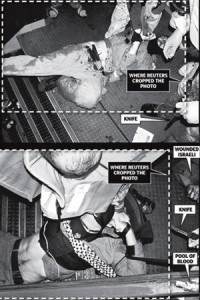
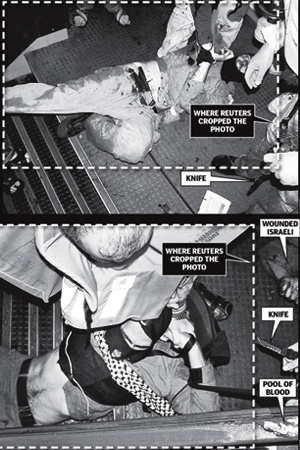
Popular Logistics joins Camera (click),  YNet (click), Fox (click), and the New York Post (click) accused Reuters of “Fauxtography”, or propaganda by doctoring photos .

Photo of action on Mavi Marmara.

Photo of action on Mavi Marmara. Dashed lines shows cropping by Reuters to hide knifes wielded by "Peace" Activist and pools of Israeli blood.

These are photos of the clash between released by IHH documenting it’s clash with Israeli commandos.

In the words of the Post Editorial,

“One photo shows an Israeli surrounded by IHH “peace” activists, one of whom is holding a knife. The second shows another Israeli lying under a bloodstained railing as a second IHH activist also holds a knife.  In the photos distributed by Reuters, there were no knives. And no blood.

“The impact being to make it look more like an Israeli massacre of innocent civilians and less like an act of self-defense against armed thugs masquerading as humanitarian workers.

“This isn’t the first time Reuters has been caught in some blatantly anti-Israel photo retouching.

“Back in 2006, during the Israel-Lebanon war, at least two images sent by Reuters over its wire from Beirut were deliberately doctored so as to suggest great damage inflicted by Israel.

“Indeed, it was the very same blogger, Charles Johnson, who uncovered the outrageous exercise in what he called ‘fauxtography.’

“At first, the agency also claimed an innocent mistake, saying the photographer had been trying to remove ‘dust marks.’

“It admitted the photos had been deliberately faked, severed its ties to the photographer, Lebanese freelancer Adnan Hajj, and removed all 920 pictures he’d taken from its server. A senior photo editor also was fired.

“Reuters insists that it’s ‘committed to accurate and impartial reporting.'”

Deepwater Horizon – the Chernobyl of Deep Water Drilling?

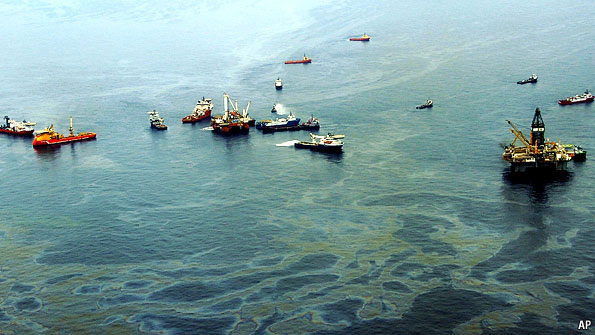
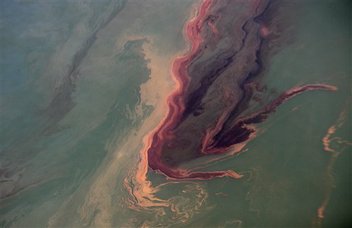
Oil from the Deepwater Horizon

Oil from the Deepwater Horizon

Fifth in a series I wish I didn’t have to write (0, 1, 2, 3, 4, 5)

After 42 days (six weeks) the Deepwater Horizon Well is still gushing an estimated 70,000 barrels per day. It has probably gushed around 2.94 Million barrels of crude oil into the Gulf of Mexico, about 123.5 Million gallons – 123,500,000 gallons.

2.94 Million Barrels. 123.5 Million Gallons. That’s a huge amount of oil in the Gulf of Mexico, but according to Nationmaster.com, the US consumed at a rate of 21 Million Barrels per Day in 2007. The U.S. Daily Burn is 7 Deepwater Horizon spills.

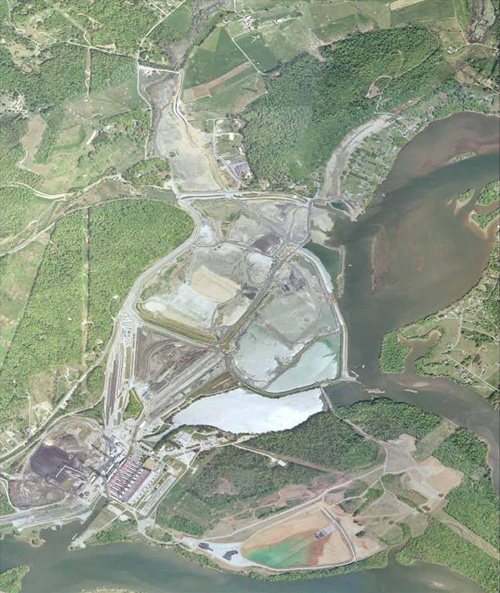
Arial view of the Kingston Spill Site, 4/19/10

Arial view of the Kingston Spill Site, 4/19/10

It’s one tenth of the 1.2 billion gallons (1,200,000,000 gallons) of coal fly ash that on 12/22/08 flooded the Clinch and Emory Rivers and 3,000 acres near Kingston, Tennessee with arsenic, mercury, lead, and other toxic heavy metals. (Official EPA, NY Times, I Love Mountains)

That’s a fraction of the up to 6 million barrels per day of Kuwaiti oil Saddam burned after his rout in “Desert Storm” in 1991. And those fires burned for 6 Months (I Love Green).

And less than 0.667% of the 18 Billion Gallons of oil process waste Chevron Texaco allegedly dumped into the rain forests of Ecuador between 1964 and 1990. (click here and here).

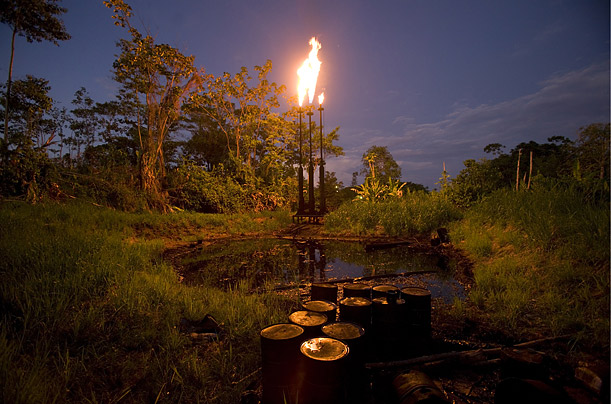
An abandoned oil pool and production flare outside of Lago Agrio, Ecuador. ©Ivan Kashinsky – Time Magazine

Abandoned oil pool and production flare, Lago Agrio

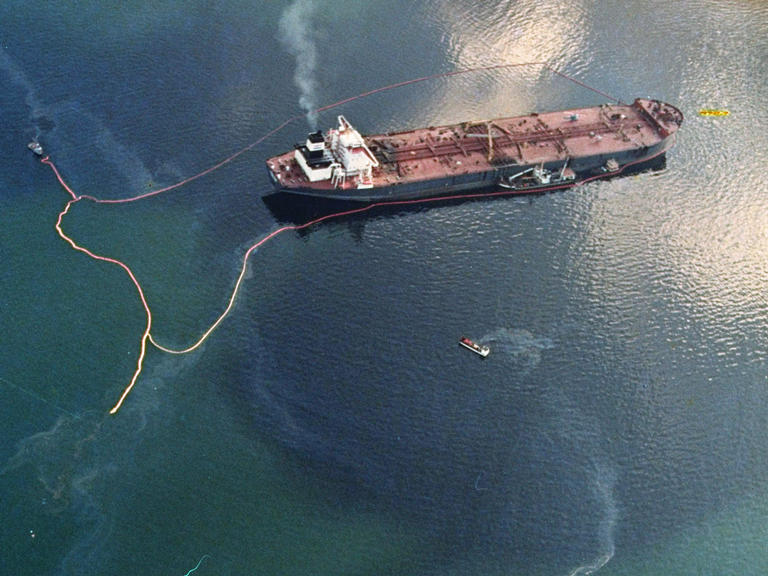
It’s more than the consensus estimate of 250,000 barrels of oil spilled by the Exxon Valdez into the Prince William Sound, which after 21 years, remains degraded (click here and here).

So what’s different?

Let’s look at these again:

  • Deepwater Horizon: 70,000 barrels a day, 40 days, 2.8 million barrels (and counting), Gulf of Mexico, 2010.
  • TVA Kingston: 1.2 billion gallons, toxic sludge, upstream of Kingston, Tennessee, 12/22/08.
  • Chevron Texaco: (alleged) 18 Billion Gallons (428.6 million barrles) of Oil Process Waste, Rainforests of Ecuador, 1964 to 1990.
  • Oil Fires of Kuwait: 6 Million Barrels per Day, up to 6 Months, 1991.
  • Exxon Valdez: 250,000 barrels, Prince William Sound, 1989.
Exxon Valdez

Exxon Valdez in the Prince William Sound

So what’s different?

It’s not the Ecuadorian rainforest, the Kuwaiti desert, the backwoods of Tennessee (excuse me Bubba, but to the Yankees of Wall Street and the Brahmins of Boston, Kingston, Tennessee is backwoods) or a remote body of water off the coast of Alaska. It’s the Gulf of Mexico. That’s not our backyard; it’s our playground. The Gulf coast of Florida from Pensacola to Georgia is (soon will be was) known as the “Emerald Coast.” I was there. The beaches are (were) beautiful. In the morning, before the people came out to play you could see dolphins swimming in the waters. It’s our fishing hole: 25% of our seafood, 70% of our shrimp, came from the Gulf.

This isn’t the first fishing ground to die. We used to get Little Neck clams from the Long Island Sound, halibut and shad, even sturgeon, from the Hudson River, and Maryland crab from the Chesapeake. But this is the biggest, the most sudden and the most dramatic.

This is a singularity. The oil is on beaches, bays, bayous, and marshes of Louisiana, Mississippi, and Georgia. Some may be in the Gulf Stream, and if so will wrap around Florida and head up the Atlantic past the Outer Banks, the Chesapeake, the Jersey Shore, Fire Island, The Hamptons, Martha’s Vinyard, Cape Cod, and the rocky shores of Maine.

It’s not that BP wanted this to happen. They sell oil because we buy oil. The problem is that neither BP, nor the government, nor anyone, really knows how to stop it. The engineers are saying things like:

“This is interesting. I’ve never seen this before. What do you think we should do?”

“I don’t know, what do YOU think we should do?”

When engineers say things like that grab your hat and run like hell.

The Deepwater Horizen accident might do for oil what 3 Mile Island and Chernobyl did for nuclear power. (However, the biggest difference is that we are more dependent on fossil fuels than we were on nuclear power, and Chernobyl and 3 Mile Island made crystal clear to the people on Wall Street that their billion dollar investments could quickly turn into multi-billion liabilities.)

So along with your hat, coat, and camping gear, grab some solar modules.

I monitor an investment list-serve that is approaching this from a pure capitalist investor perspective, and they’re asking “Should you get out of oil?”

With oil still flooding into the Gulf and BP PLC’s failure to do anything about it, shivers are running down the spine of those who considered offshore oil a lucrative investment. Now with the planned ban on offshore drilling in the US, what will happen to the industry? What are the consequences for our economy as a whole?  More importantly, what does it mean for YOUR portfolio?

When the investors, albeit the “contrarians,” are saying “Business as usual is bad for our wallets” it means the paradigm is shifting.

One Month After The Spill BP Siphoning 3,000 Barrels Per Day

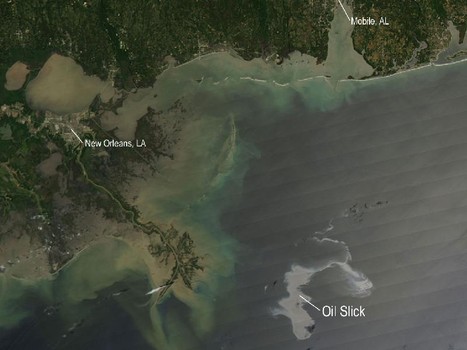
Satellite Image of Gulf from New Orleans to Mobile, showing oil slick.

Satellite Image, courtesy of NASA, of Gulf from New Orleans to Mobile, showing oil slick.

Fourth in a series  1, 2, 3, 4) that began on “Earth Day” (0).

Steve Gelsi at Marketwatch (click here) reports that BP is now siphoning 3,000 Barrels Per Day from the Deepwater Horizon Spill. According to research by NPR, the spill was 70,000 barrels per day.  In the 30 days that have elapsed since the April 20 accident a total 2,100,000 to  barrels have spilled.  And BP is siphoning off 3,000 per day. At that rate the spill will be cleaned up in only 700 days if it were to stop gushing now. That’s less than two years.

Greg Bluestein and Michael Kunzelman at Gouverneur Times (click here) report that oil from the slick has entered the Loop Current – which is part of the Gulf Stream.

This could be for fossil fuels what Chernobyl was for nuclear power.

Full text below the click. Continue reading

The Magnitude of the Deepwater Horizon Spill

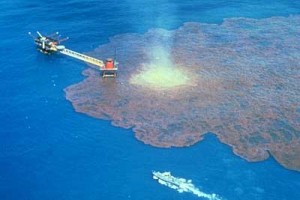
The oil slick in the gulf

The Surface of the Oil Slick

Third in a series (1, 2, 3) that began on “Earth Day” (0).

BP and the government say they can’t measure the spill on the ocean floor. However, 5,000 barrels per day is reaching the surface and most of the oil – 80%  to 90% – is below the surface. So I thnk it’s  is on the order of 25,000 to 50,000 barrels per day.

But that’s my back-of-the-envelope estimate.  NPR, on Friday, May 14, 2010 reported that Steven Wereley, who teaches mechanical engineering at Purdue University, Tim Crone, a research scientist at Lamont-Doherty, and Eugene Chiang, an astrophysicist at UC Berkeley, believe they can make a pretty reasonable estimate of the amount of oil gushing into the Gulf. Wereley based his estimate on particle image velocimetry analysis of the video BP released. He says says 70,000 barrels per day, give or take 14,000 barrels,  is gushing from the Deepwater Horizon spill. Crone agrees with Wereley but said he’d like better video from BP before drawing a firm conclusion. Chiang estimates the flow at 20,000 to 100,000 barrels per day. 880,000 to 2,200,000 gallons of petroleum products into the Gulf of Mexico Each

DAY! That’s 6,160,000 to 15,400,000 gallons per week.

After 20 days that’s 400,000 to 2.0 million barrels. Each barrel could have been refined into 44 gallons of gasoline, jet fuel, and other petrochemicals.  But even at 5,000 barrels per day – 100,000 barrels in the first 20 days – this is a catastrophic event.

President Ronald Reagan

President Reagan

One hundred years from now, when historians, in energy efficient homes and offices powered by wind, solar, and geothermal, write about the end of the era of fossil fuel, they will point to the April 5, 2010 disaster at the Upper Big Branch, W. Virginia coal mine and the April 20, 2010 catastrophe at the Deepwater Horizon oil rig in the middle of the Gulf of Mexico.

Historians may assign responsibility to the energy policies of President George W. Bush and Vice President Cheney. They will note that President Carter put solar water heating system on the roof of the White House (click here for pdf) and President Reagan took them down in 1986. Their assessment of President Obama will be predicated on his next actions. Does he continue to embrace “Drill Baby Oops,” Coal with Carbon Sequestration, and Nuclear Power? Or do a 180 degree turn to sustainability?

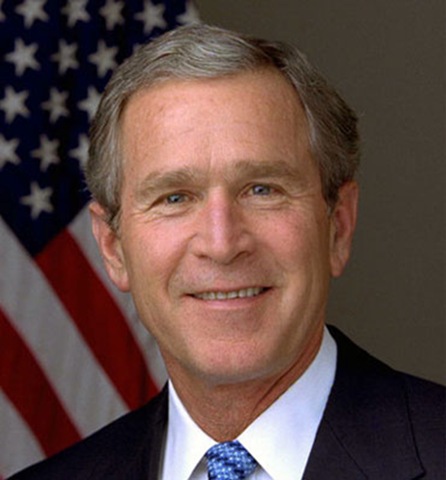
President George W. Bush

Pres. George W. Bush

I don’t know what the pressures are at a depth of 5000 feet below the surface of the ocean. But there’s methane ice down there. At atmospheric pressure, Liquid Methane freezes is at -182.5 °C and methane gas liquifies at -181 °C (here)

The most important questions are:

What will be the effect of all that oil on fishing, tourism, the weather and the climate? It could be good for the maple syrup, solar power, and wind power industries, and the locavore food movement.

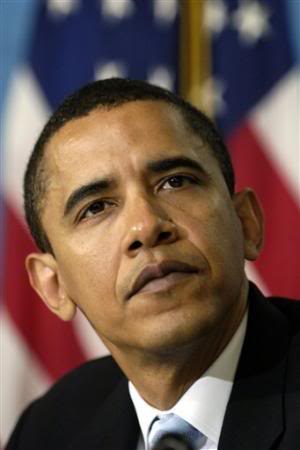
President Obama

President Obama

Given the severity of the spill, and what it demonstrates about our ability to operate at 5,000 feet below the surface of the ocean, I think we should rethink the Purgen Coal with Carbon Sequestration Plant, which will pump carbon dioxide into a well a mile below the ocean.

In addition, NPR reported on May 12, (here) that a House investigative subcommittee said Wednesday that the blowout preventer, had multiple defects — everything from leaky hydraulics to a dead battery.

How did it happen? BP and Transocean say the rig was built to handle working pressures of 20,000 PSI, but the safety equipment was built for pressures of 60,000 PSI.  Clearly, the upward pressure released by drilling 18,000 feet below the ocean floor, itself at a depth of 5,000 feet below sea level, exceeded the 60,000 PSI – that’s 60,000 pounds per square inch. In terms of reference, atmospheric pressure at sea level is 14 PSI. For more information and an exploration of this,  Click Here to “Moore Think, Less Confusion.

Full text of both articles by NPR are reproduced below the fold Continue reading

Drill Baby, Drill – or Drill Baby, Oops

Second in a series  (1, 2) that began on “Earth Day” (0).

“In order to make Policy, you have to be good at Politics.”

– Deborah Stone, “Policy Paradox”

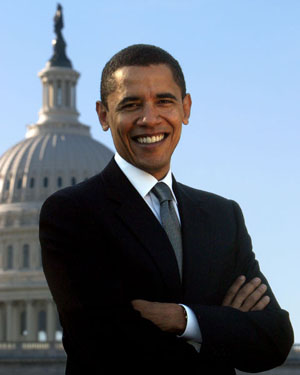
President Obama

President Obama, Official Photo

I like and respect President Obama. I think he’s a well educated lawyer and law school professor, with a good grasp of the Constitution, and the realities of Chicago machine politics and Inside-The-Beltway politics. He understands Stone. He’s also a moderate liberal. However, his economic advisors – Tim Geithner and Larry Sommers – only know what’s good for Wall Street, so every answer is “what’s good for Wall Street.” They don’t appear to know anything about ecological economics.  Obama needs to listen to Herman Daly, Robert Costanza, Paul Krugman, Robin Krugman, Joseph Stiglitz, and others with a long term view and a better understanding of what neoclassical economists call “externalities.”

Perhaps worse, his energy secretary, Steven Chu, is focused on carbon sequestration, nuclear power, and what we might as well call “Drill Baby, Opps.” Continue reading

Fossil Fuels and a Walk on the Moon

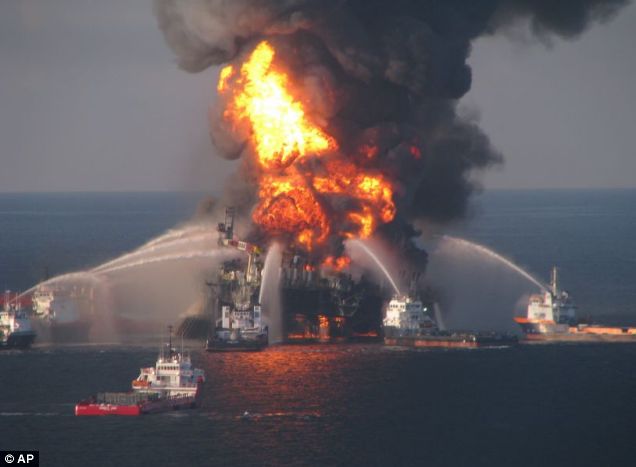
Ships trying to Extinguish the Flames

Ships trying to Extinguish the Flames at the Deepwater Horizon Rig

The unfolding disaster at the Deepwater Horizon rig in the Gulf of Mexico, which promises to be an environmental catastrophe, (click here) the recent disasters at the Upper Big Branch coal mine in West Virginia, and the Kingston, Tennessee fly ash retention pond demonstrate that fossil fuels are dirty and dangerous.  Safety and environmental protection are expensive and cannot be guaranteed. The oil will adversely effect fisheries in the Gulf for years. If the oil gets into the Gulf Stream, it will curl around Florida and flow up the coast hitting Georgia, South Carolina, North Carolina, Virgina, Maryland, Delaware, Pennsylvania, New Jersey, New York, Rhode Island, Massachusetts, New Hampshire, and if it flows around the Long Island Sound, Connecticut – all the original 13 states, then Maine and the Atlantic Provinces of Canada.

Rather than harnessing the Gulf Stream to push pollution from the Gulf of Mexico up the Atlantic coast of the United States, we should harness the Gulf Stream for clean renewable energy. (Here’s how.)

Solar and wind, which harness natural processes rather than consume natural resources, provide power without fuels, and without waste: with no arsenic, carbon dioxide, lead, mercury, methane, and other toxins, greenhouse gases or radioactive waste. These systems enable us to meet our needs and allow future generations to meet their needs – and flourish.

Rather than clinging to the dirty and hazardous infrastructure of the past, we must build the clean, renewable, and sustainable infrastructure of the future.

Cape Wind and the Staten Island Ferry solar array and the thousands of other solar and wind projects here in the U. S. and elsewhere on the globe are, to paraphrase Buzz Aldrin and Neil Armstrong, “small steps … yet giant leaps for mankind.”

This post is the First Installment of a series that will follow the unfolding catastrophe in the Gulf of Mexico.

The index is below:

  1. Fossil Fuels and a Walk on the Moon, May 3, 2010.
  2. Drill Baby Drill or Drill Baby Oops, May 7, 2010.
  3. The Magnitude of the Spill, May 15, 2010.
  4. One Month After The Spill BP Siphoning 3,000 Barrels Per Day, May 20, 2010.
  5. Deep Water Horizon – The Chernobyl of Deepwater Drilling?, June 2, 2010.
  6. The Deepwater Horizon: 40,000 Barrels Per Day or 70,000, June 13, 2010.
  7. The Deepwater Horizon After the Macondo Well Explosion, June 19, 2010.
  8. Deepwater Horizon – Bombs and Hurricanes, July 1, 2010.
  9. Like a Bad High School Math Problem, July 14, 2010.
  10. Crisis Management and the Gulf Oil Spill, July 16, 2010.
  11. The Deepwater Horizon: The Good, The Bad, and The Ugly, October 7, 2010.

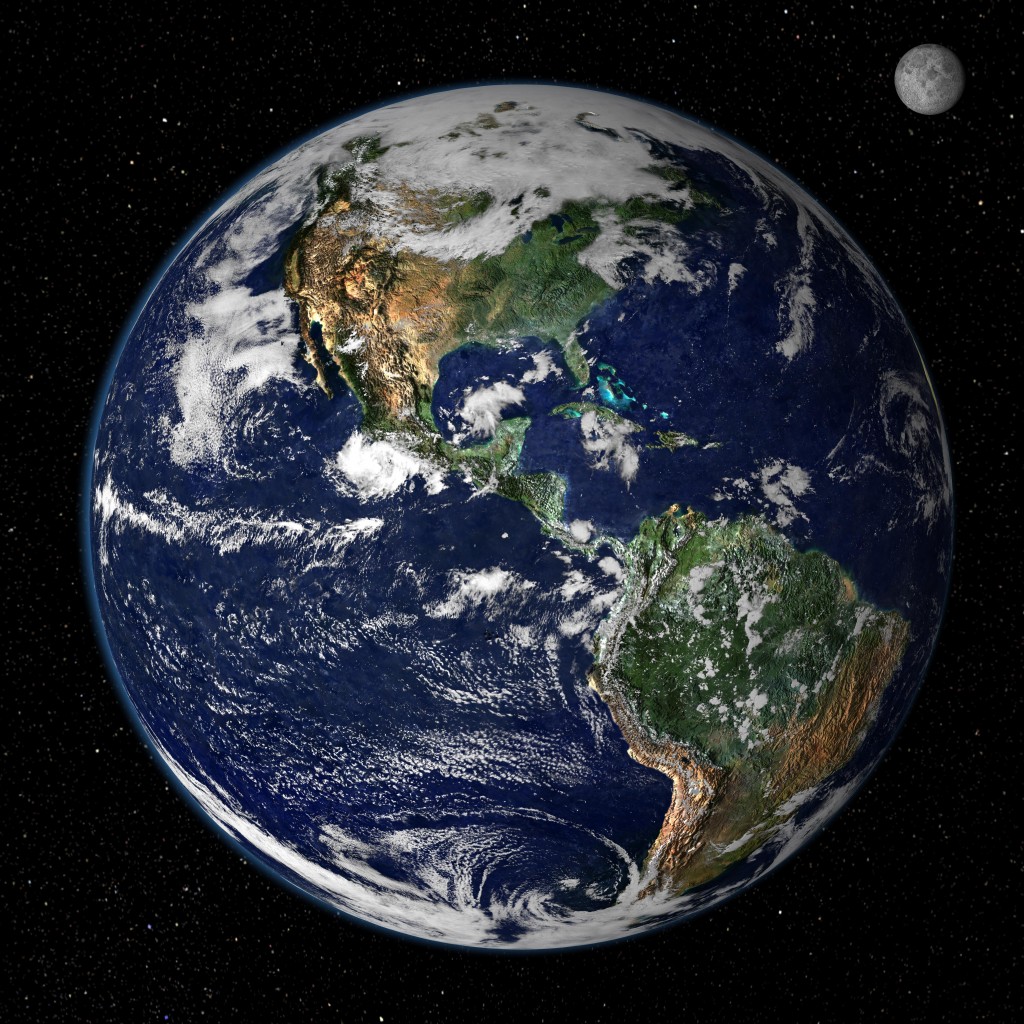
Earth Day For the Future

Earth from Space, Courtesy NASA

In 100 years our descendants will not be burning coal, oil, natural gas or using nuclear fission.  They might be using terrestrial nuclear fusion.  They will be using solar, wind, geothermal, marine current hydro, tidal energy systems – clean, renewable, sustainable energy systems. No fuel: No Waste. No mines, mills, wells, spills. No arsenic, lead, mercury, selenium, thorium – no fly ash to be contained or to leak.

We have started.  California and New Jersey lead the U. S. Germany and Spain lead Europe. Boeing and Richard Branson’s Virgin Atlantic want to build aircraft that run on biodiesel.  We need to move forward in a big way – to 100% clean energy in 10 years, to retrain coal miners and oil rig operators to build and run solar arrays and wind turbines, and dig deep geothermal systems.

Reagan's Beliefs, America's Folly

Michael Douglas as Gordon Gekko

Michael Douglas as Gordon Gekko in the film "Wall St."

Cynicism is fashionable.  But Gordon Gekko Was Wrong! Greed is Not Good!

Presidents, whether Republican or Democratic, always speak about Service, and when talking about wars,  they speak of Sacrifice, and The Ultimate Sacrifice.  Many approach their role from that perspective as well. George H. W. Bush, for example, approached politics from the traditional Conservative perspective of service. He also tried to spur volunteerism – the 1000 points of light.

But Reagan believed in Hoover’s fallacy, in the rugged individualist riding off into the sunset.  What he didn’t understand is that those iconoclastic rugged individualists ride horses descended from wild beasts tamed thousands of years ago. Their horseshoes are made by blacksmiths. Their guns are made in factories. Their boots, clothes, and other gear are made in other workshops or factories. These rugged individualist, giants as they might be, stand on the shoulders of others.

You don’t teach kids to swim by pushing them off a pier. They don’t  need flotation devices in 15 cm of water, either. What they need is someone to show them how, in waist deep water, and to say, “This is how it’s done. Why don’t you try? And don’t worry, I’ll make sure you don’t drown.”

The code of the Good Samaritan was simple: “Help when help is needed.”

Indeed, this is the common thread of 3000 years of human moral thinking, beginning with Abraham, Moses and Jesus in the West; Confucius and the Budda in the East. Continue reading

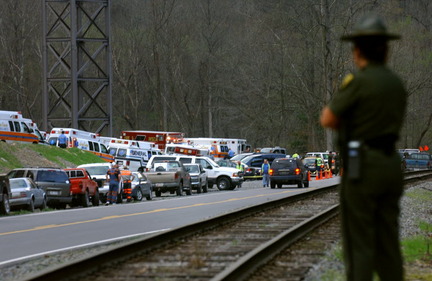
25 Dead in W. Virginia Coal Mine Accident

Police, Emergency, and Concerned Citizens

Police, Emergency, and Concerned Citizens

Monday, April 4, 2010, in West Virginia, at least 25 coal miners were killed and another four remain unaccounted for in a methane gas explosion in a coal mine owned by Massey Energy. As reported in the NY Times, “In the past two months, miners had been evacuated three times from the Upper Big Branch due to dangerously high methane levels, according to two miners who asked for anonymity for fear of losing their jobs. … the disaster has raised new questions about Massey’s attention to safety under the leadership of its pugnacious chief executive, Don L. Blankenship, and also why stricter federal laws, put into effect after a mining disaster in 2006, failed to prevent another tragedy.”

Is this a pattern of behavior? Does it establish a callous attitude or criminal intent?

In January, Charleston, W. Virginia, Robert F. Kennedy, Jr. debated Massey CEO Don Blankenship.

Kennedy argued again and again that the coal industry is indirectly subsidized by society. “Every single waterway in our country is contaminated with mercury,” and 70 percent of it is from coal-burning power plants, he said. (click here).  Kennedy concluded by pointing out Massey’s own reports of 12,900 violations of the federal Clean Water Act in a single year, and asked, “Is it possible to do mountaintop removal mining without violating the Clean Water Act?” (here). Blankenship shrugged and responded that complying with regulations is too expensive.

We need to do is transform the coal industry into a wind and solar industry.

Vermont Yankee – Leaks Cesium

The latest news about Vermont Yankee – The leak of Cesium-137 is not a new leak.  From VermontBiz.com (click here) or the Burlington Free Press (here).

“In a statement issued yesterday, Vermont Yankee said that recent news reports have focused less on the tritium resolution and more on the other isotopes found in the soil at the plant. Despite the recent media coverage, Vermont Yankee said the presence of Cesium-137 and other radionuclides found in the soil at the plant is not new news. During the first week of March, the company shared soil sample results with the Vermont Department of Health indicating the existence of cesium in the soil.”

What’s worse than a nuclear power plant that leaks radioactive tritium?  A nuclear power plant that leaks radioactive cesium. The good news  that it’s not a new leak. Vermont Yankee ” has not had a fuel defect that could leak Cesium-137 since 2001.” Exactly how is this reassuring?

It’s “not dangerous” according to the NRC and the people who either lied or didn’t know about the tritium leaks.

In an unscientific web-based poll (here) WPTZ a Vermont television station affiliated with NBC, 5,487 or 53% of the responders said Vermont Yankee should be shut down now (3,387 / 33%) or when it scheduled to shut down in 2012 (2,100 / 20%). The question was “Do you think Vermont Yankee should continue operations beyond its scheduled shut down in 2012?

” The question was answered affirmatively by 4,506, or 44%.

The Vermont Dept. of Health provided a summary, here of tritium contamination, here.

While nuclear power provides a tremendous amount of power from a small amount of material, it is very expensive when done right. And when done wrong we have disasters like Three Mile Island, Chernobyl, and business as usual like Vermont Yankee, Indian Point, Oyster Creek – the list of accidents is long for each operating nuclear power plant.

The economic externalities of nuclear and coal are very expensive in terms of health effects to people and the environment. As I’ve addressed elsewhere in this blog, solar, wind, and other renewable sources are safe and inexpensive, and the economic externalities are beneficial.

The only good news is that Vermont, in the spirit of Ethan Allen, is pointing the U. S. in the direction we need to go, vis a vis nuclear power.

Nuclear Power and National Security – "The Mobley Factor."

Follow LJF97 on Twitter Tweet  The Mobley Factor. Suppose a terrorist or one sympathetic to their cause works at a solar power plant or a wind farm. The damage that he or she can do – knock out a wind turbine, a string of solar modules, even kill a few co-workers, while serious, is minimal. But suppose a terrorist or one sympathetic to their cause works at a nuclear power plant. Even if he or she can’t trigger a disaster along the lines of the Three Mile Island or Chernobyl, he or she can provide “Actionable Intelligence.”

Sharif Mobley, 26, an American citizen of Somali descent, is suspected of ties to Al Queda. Mobley was arrested and is being held in a jail in Yemen after he allegedly killed a police guard and seriously injured another during a shootout at a hospital on Monday. Mobley has worked as a laborer in six nuclear power plants in New Jersey, Pennsylvania, and Maryland, including the Salem and Hope Creek plants in New Jersey, the Peach Bottom, Limerick and Three Mile Island plants in Pennsylvania, and the Calvert Cliffs plant in Maryland.

NBC Philadelphia, NJ Star Ledger/AP.

According to the AP Report, “Authorities are investigating whether he had access to sensitive information that would be useful to terrorists.” He was a laborer who worked in the plants when they were shut down for refueling and maintenance. He had “Vital Access” which allowed him into any area of the plants. He could have taken pictures. Lots of pictures. . . . with a cellphone.

Vermont Senate Voted to Shut Down Vermont Yankee

Vermont Yankee, on the Connecticut River

Vermont Yankee, on the Connecticut River

The Vermont Senate voted 26 to 4 to close Vermont Yankee.  While proponents of nuclear power claim that the plants can be run safely and economically, Entergy, the Louisiana company that operates the plant, is now known to be running Vermont Yankee AT A LOSS!

Economics is not the issue. The Vermont Senate isn’t interested in the profitability of an enterprise. What is at issue is whether Vermont Yankee can be operated safely and whether Entergy can be trusted to operate Vermont Yankee safely. By a vote of 26 to 4, the Vermont Senate answered those questions with a resounding “NO!”

An Entergy Executive responsible for Vermont Yankee testified under oath to two state panels that there were no buried pipes at Vermont Yankee that could leak tritium.  This testimony is now known to be false. The Entergy executive has been relieved of his responsibilities. (Click  here.)  According to NPR (here) “Entergy Nuclear chief executive J. Wayne Leonard did not identify the official by name. But he described the executive relieved of his duties in a way that could only apply to Vice President Jay Thayer.

State Senator Peter Shumlin, Democrat, Wyndham, asked “What’s worse, a company that won’t tell you the truth or a company’s that’s operating your aging nuclear power plant on the banks of the Connecticut River and doesn’t know that they have pipes with radioactive water running through them that are leaking? And they don’t know because they didn’t know the pipes existed. Neither is very comforting.”

Vermont State Senator Randolph Brock, Republican, St. Albans, who in the past has supported Vermont Yankee, said “If the board of directors and management of Entergy were thoroughly infiltrated by antinuclear activists, I do not think they could have done a better job of destroying their own case.”

Entergy claims that no tritium has turned up in drinking water, but that claim must be verified. The Connecticut River, which flows past Vermont Yankee, probably should be checked for Tritium.

Officials at Entergy, the Louisiana company that owns Vermont Yankee, are trying to sell Vermont Yankee, Indian Point, and three other nuclear power stations in the north-east.

It is a similar design to the Oyster Creek nuclear power station, in New Jersey, operated by Exelon, which is also known to be leaking tritium.

Michael Wald covered the story for The New York Times.  Guy Raz covered the story at NPR.

L J Furman, MBA

February 27, 2010

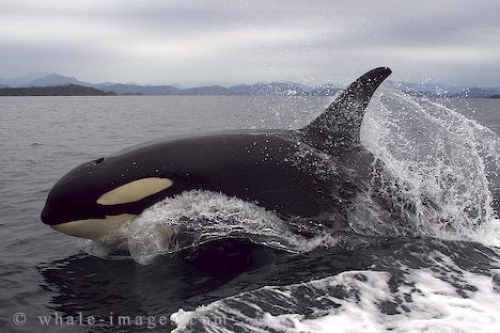
An orca in the open ocean

An Orca in the Pacific ocean near Vancouver Island, British Columbia, Canada, image courtesy of Whale-Images.com

Tilikum, an Orca, attacked and killed Dawn Brancheau, a trainer at Seaworld, Orlando, on Wednesday, Feb. 24, 2010.

As reported in Asia One, Ric O’Barry and Dave Phillips of the Earth Island Institute have called for a federal investigation into the death of Ms. Brancheau.

In their statement, O’Barry and Phillips said,

“SeaWorld allowed public and trainer contact with an orca that was a known risk, and after three deaths they’re suggesting that it actually continue…. We believe this situation warrants the immediate initiation of a federal investigation into SeaWorld’s possible negligence and violations of the Marine Mammal Protection Act….Along with sadness of this tragic event we can’t help feeling anger toward those who insist upon exhibiting these wild creatures in habitats that can drive them to violence.”

Let’s look at this from another side.

  • Orcas eat fish, as do other whales, dolphins, and humans.
  • Fish are high in mercury. (All mercury pollution comes from human industrial activities, much of it from burning coal in power plants).
  • Mercury causes brain damage.

This leads to a few questions:

  1. What is the level of mercury in the Tilikum’s brain and central nervous system?
  2. Is it causing nervous system damage?
  3. Is Tilikum “Mad as a Hatter?” Is he suffering from Minamata’s Disease?

Tiger Woods & Subprime Mortgages

Tiger Woods may be a great golfer. But I wouldn’t buy a mortgage from him. Here’s why.

(click to stream audio)

Economics II: Macroeconomics and Political Economy

The way for the government to stimulate the economy and to avoid or climb out of a Depression, as John Maynard Keynes wrote, and as President Franklin Delano Roosevelt proved with the New Deal, is to invest money and resources in infrastructure, not to lower taxes or put money in the hands of private businesses. This latter tactic, which New Jersey’s new Governor, Chris Christie1 is trying, was not proven to work by President Herbert Hoover and proven not to work by President George W. Bush.

Keynes’ basic analysis rests on two evident economic phenomena. One is the different effects on the Keynsian Multiplier of government revenues collected as taxes and government revenues not collected as tax-cuts. The other is the basic response of people to a “Deep Recession” or a Depression.2

If a Recession is a series of calendar quarters in which there is a decline in GDP, a “Deep Recession3” or a Depression is characterized by a recession in which there is a general reluctance to invest in new staff or new projects on the part of businesses and individuals. A portion of any income, tax refund, or tax cut is saved. Money is hoarded. Money spent by the government is obviously, spent. The Keynsian Multiplier of money spent directly by the government is greater than money provided to businesses by tax credits because the government spends money directly, while individuals and businesses spend what they must and hoard what they can. For example, for every $1 Million the government spends purchasing goods and services, $1 Million is added to the GDP. However, for every $1 Million of taxes the government cuts, there is $1 Million the government doesn’t spend, a chunk of that $1 Million is spent, and a chunk that $1 Million is hoarded.4 When the government spends directly, particularly on domestic infrastructure, the Multiplier is, in a word, multiplied.

Obama’s tax incentive to hire people, is partially neo-classical, supply-side economics of the type favored and proven ineffective by Hoover and Bush. However, to the extent that it generates jobs, it will help the people whos jobs are created, their families, and the economy.

Robert Reich, a Keynesian economist, said5,:

“The best and fastest way for government to prime the pump is to help states and locales, which are now doing the opposite. They’re laying off teachers, police officers, social workers, health care workers, and many more who provide vital public services. And they’re increasing taxes and fees. … We need a second stimulus directed at states and locales. “

Paul Krugman6 seems to agree. The only way to avoid a Depression is for the government to spend money. Lowering taxes doesn’t work when people are reluctant to spend. However, the government must create jobs that will reduce the deficit in the future.

Wars don’t do this. As President Bush demonstrated, wars create jobs that increase the deficit and deplete the economy by destroying capital, both human and physical. Investing in local clean, sustainable energy and rearchitecting the health care system in the United States, however, are ways to use government spending today to reduce future deficits.

Local Clean Sustainable Energy

Suppose we were to install a 50 kw photovoltaic solar array and a 2,500 liter (660.4 gallon) solar hot water heater system on every school in the United States. That’s approximately 100,000 of each.7 Suppose each solar electric system costs $7.50 per watt, or $375,000, and each solar hot water heater would cost $50,000. That’s $425,000 per school, at 100,000 schools that’s $42.5 Billion. .

Because these are powered by a natural process – sunlight – rather than non-renewable fuels, and because of relatively low maintenance costs and operating costs, these systems will pay for themselves quickly and last a very long time, they will pay for themselves over and over. The return on investment is between 10% and 16% for PV Solar and 20% to 33% for Solar Hot Water. This is outlined in Table 1, below.

Solar Electric and Solar Hot Water Heaters

Solar Electric

Solar Hot Water

Cost of each

$375,000

$50,000

Total Cost

$37.5 Billion

$5.0 Billion

Years to pay for itself

6 to 10 years

3 to 5 years

Useful Life

40 years

25 years

Annual ROI

10% to 16%

20% to 33.3%

Table 1.

The ROI is higher when you factor in the external benefits of clean, renewable energy – there is no pollution, and therefore are no health effects from pollution.

One way to use the deficit to stimulate the economy in a manner that is consistent with reduced long term deficits is thru the development of clean energy resources, such as solar electric and hot water systems on the nation’s public schools.

Health Care

In July, 2007, President George W. Bush said “People have access to health care in America. After all, you just go to an emergency room.8” While Emergency Rooms are well suited for acute conditions – emergencies – such as the traumas of car accidents, gunshot wounds, and broken arms, they are ill-equipped for chronic conditions such as hypertension, diabetes, cancer. If a person with diabetes was to go to the emergency room, the emergency room staff would say “We can’t help you. Come back when you’re in a coma, or you need your leg amputated.” Similarly, while the Emergency Room can’t manage hypertension, it can treat the heart attack or stroke suffered by a person with hypertension.

Assuming Pres. Bush’s statement is accurate, then the approximately 47 million, or one out of six, or 15.46% of Americans who don’t have health insurance only have access to health care in an emergency. This means that the Health Care System can handle non-emergency health care for five out of six Americans, but is not capable of meeting the non-emergency needs of one out of six, or 15.46% of Americans. This means we need about 15.46% more doctors, nurses, medical office staff, hospital staff, medical offices, and hospitals. For every 100 medical doctors practicing today, we need 115.46. For every 100 nurses, we need 115.46.

According to the Bureau of Labor Statistics, there were about 661,000 physicians and surgeons in the US in 2008 and are about 2.6 million Registered Nurses, RN’s, today.9 If this is sufficient for the 357 Million Americans who have health insurance, then we need an addtional 102,191 physicians and surgeons, and an additonal 401,960 nurses, and they need offices, examining rooms and other infrastructure. However, we can’t just push a button and create 102,191 physicians and surgeons and 401,960 nurses out of thin air. It takes nine years to train a physician and three years to train a nurse.10

Selected Demographic Information

Americans

With Insurance

Without Insurance

Total

Americans

257 M

47 M

304 M

Medical Professionals

Have

Need

Total

Physicians & Surgeons

661,000

102,191

763,191

Nurses

2.6M

401,460

3.0 M

Table 2

Another way to use deficit spending today to stimulate the economy and invest for the future is to build the medical infrastructure for the 47 million Americans who can’t afford or are without health insurance.

Paul Krugman on Banking, Securitization, and The Canadian Model

In his recent columns in the New York Times, Paul Krugman11 has discussed the banking industry, the banking debacle, banking reform, and the Canadian model for banking regulation and banking risk management. He quotes testimony by Jamie Dimon of JP Morgan Chase and Lloyd Blankfein of Goldman Sachs. In hearings of the Financial Crisis Inquiry Commission, Dimon basically said “this was business as usual.” Blankfein, however, said “it was an act of God.” While they disagreed about the cause of what happened, they agree with the solution: “Let bankers be bankers. If the government regulates banking, the economy will crumble.” It appears that we tried this deregulatory approach, and the economy crumbled.

“Securitization” of loans, in which bad loans are bundled with good loans and sold, doesn’t limit risk, it rewards risk. In terms Tiger Woods or a Wall Street banker should be able to understand, Securitization is like sexual activity and HIV AIDS. Suppose one person has 100 relations with 10 partners, 10 with each, one of whom is infected with the HIV AIDS virus. Suppose another person has one relation with each of 100 partners, one of whom is infected with the virus that causes HIV AIDS. Clearly the first person has a higher risk of infection. However, the second person is also at risk. In the case of securitization of “toxic assets” the bankers were rewarded to have relations with as many people as possible. They didn’t minimize risk. They spread it around.

The Canadian banking model limits risky loans, limits bank leverage, and limits securitization. This is what Obama must do. He must demand and enforce regulations that require transparency in banking, regulate derivatives, eliminate incentives for bankers to make bad loans, create incentives for bankers to make good loans; to practice what might be called safe banking

. Regulations, for example, like those mandated by Glass Steagal.

Patrick Henry once said. “Give me liberty or give me death,”

Today he might add, “Entrust my money with cautious bankers.

———— Notes ————-

1Faced with high unemployment and a lack of unemployment compensation funds, NJ Gov. Christie is proposing to cut unemployment benefits, and cut the unemployment tax used to fund unemployment benefits. Beth DeFalco, “Christie proposes to cut jobless benefits,” NJ Herald, 2/25/10, http://www.njherald.com/story/news/nj-jobless-benefits, and Athena D. Merritt, “Christie proposes fix for N.J.’s insolvent unemployment fund,” Philadelphia Business Journal, 2/25/10, http://www.bizjournals.com

2Discussed at length by Riddell, Shackelford, Stamos, and Schneider, Economics, Pearson – Addison Wesley, 2008, pg 365-368.

3I’m using the term “Deep Recession” in conjunction with “Depression” because there appears to be a general reluctance on the part of bankers, journalists, pundits, and others to use the term “Depression” in discussions of the state of the economy today.

4Acharya, Viral and Ouarda Merrouche, “Precautionary Hoarding of Liquidity and Inter-Bank Markets: Evidence from the Sub-prime Crisis,” July 3, 2009, at Stern.NYU.edu, http://pages.stern.nyu.edu/~sternfin/vacharya/public_html/acharya_merrouche.pdf.

5Reich, Robert, “Obama Needs to Teach The Public How To Get Out Of The Mess We’re In, But He’s Not”, 1/29/10, http://www.huffingtonpost.com

6Paul Krugman, the Princeton University Economist, and Nobel Laureate, writes a column for the New York Times.

7According to Statemaster.com there are about 94,260 elementary and secondary schools in the US. I rounded this up to 100,000 to simplify the math. http://www.statemaster.com/graph/edu_ele_sec_tot_num_of_sch-elementary-secondary-total-number-schools.

8On July 10, 2007, “Pennsylvania Progressive” reported then President Bush said: “People have access to health care in America. After all, you just go to an emergency room.” http://pennsylvaniaprogressive.typepad.com/my_weblog/2007/07/bush-on-healthc.html

Also reported on July 11, 2007 by Dan Froomkin in the “Washington Post,” in his column “Mock The Press”. http://www.washingtonpost.com/wp-dyn/content/blog/2007/07/11/BL2007071101146_5.html

9Bureau of Labor Statistics, Occupational Outlook Handbook, 2010-11 Edition,

Physicians and Surgeons. http://www.bls.gov/oco/ocos074.htm#outlook,

Registered Nurses, http://www.bls.gov/oco/ocos083.htm

10I’m assuming a 6-year Biomedical program and a 3 year Medical Residency for physicians and surgeons and a 2 year practical nursing program with a 1 year Residency for nurses.

11Krugman’s Recent columns in the NY Times include, “Bubbles and the Banks”, 1/8/10, “Bankers Without A Clue”, 1/15/10, “March of the Peacocks”, 1/29/10, and “Good and Boring,” 2/1/10. These can be found on the Internet at http://www.nytimes.com.

Sustainability and Carbon Sequestration

Abstract. By burning fossil fuels we have put 3.6 trillion tons of Carbon Dioxide, CO2 in the atmosphere1 in the last 200 years – most in the last 60. This has changed the concentration of atmospheric CO2 from 270 parts per Million, ppm, to 390 ppm, an increase of approximately 31%. This increase of atmospheric CO2 is resulting in changing precipitation and rising temperatures, from the equator to the poles.

The typical modern reductionist approach is to simplify the problem to develop a solution:

“Burning coal, oil, and natural gas puts CO2 into the atmosphere. All we need to do to solve the problem is modify the machines so they burn fossil fuel without releasing CO2 into the atmosphere. How do we do that? We should capture the carbon dioxide, and the arsenic, mercury, other heavy metals, radionucleotides, etc, and store it somewhere.”

But we need to remember that we are burning coal, oil, and natural gas for a reason: to generate heat, hot water, electricity and transportation. There are alternative energy technologies, including nuclear, solar, and wind.

Coal with Carbon Sequestration is estimated to cost $10 to $15 Billion per gigawatt, without considering the costs of mining, processing and transporting the coal, cleaning up after mining, and isolating the arsenicals, mercury, and radionucleotides released from burning coal.  Solar is estimated to cost $6.5 Billion per gigawatt – with no fuel and no wastes. Wind $2 to $3 Billion per gigawatt – with no fuel and no wastes.

We at Popular Logistics think, feel and believe that we need to replace coal with solar and wind immediately.

Continue reading