Tiger Woods may be a great golfer. But I wouldn’t buy a mortgage from him. Here’s why.
Economics II: Macroeconomics and Political Economy
The way for the government to stimulate the economy and to avoid or climb out of a Depression, as John Maynard Keynes wrote, and as President Franklin Delano Roosevelt proved with the New Deal, is to invest money and resources in infrastructure, not to lower taxes or put money in the hands of private businesses. This latter tactic, which New Jersey’s new Governor, Chris Christie1 is trying, was not proven to work by President Herbert Hoover and proven not to work by President George W. Bush.
Keynes’ basic analysis rests on two evident economic phenomena. One is the different effects on the Keynsian Multiplier of government revenues collected as taxes and government revenues not collected as tax-cuts. The other is the basic response of people to a “Deep Recession” or a Depression.2
If a Recession is a series of calendar quarters in which there is a decline in GDP, a “Deep Recession3” or a Depression is characterized by a recession in which there is a general reluctance to invest in new staff or new projects on the part of businesses and individuals. A portion of any income, tax refund, or tax cut is saved. Money is hoarded. Money spent by the government is obviously, spent. The Keynsian Multiplier of money spent directly by the government is greater than money provided to businesses by tax credits because the government spends money directly, while individuals and businesses spend what they must and hoard what they can. For example, for every $1 Million the government spends purchasing goods and services, $1 Million is added to the GDP. However, for every $1 Million of taxes the government cuts, there is $1 Million the government doesn’t spend, a chunk of that $1 Million is spent, and a chunk that $1 Million is hoarded.4 When the government spends directly, particularly on domestic infrastructure, the Multiplier is, in a word, multiplied.
Obama’s tax incentive to hire people, is partially neo-classical, supply-side economics of the type favored and proven ineffective by Hoover and Bush. However, to the extent that it generates jobs, it will help the people whos jobs are created, their families, and the economy.
Robert Reich, a Keynesian economist, said5,:
“The best and fastest way for government to prime the pump is to help states and locales, which are now doing the opposite. They’re laying off teachers, police officers, social workers, health care workers, and many more who provide vital public services. And they’re increasing taxes and fees. … We need a second stimulus directed at states and locales. “
Paul Krugman6 seems to agree. The only way to avoid a Depression is for the government to spend money. Lowering taxes doesn’t work when people are reluctant to spend. However, the government must create jobs that will reduce the deficit in the future.
Wars don’t do this. As President Bush demonstrated, wars create jobs that increase the deficit and deplete the economy by destroying capital, both human and physical. Investing in local clean, sustainable energy and rearchitecting the health care system in the United States, however, are ways to use government spending today to reduce future deficits.
Local Clean Sustainable Energy
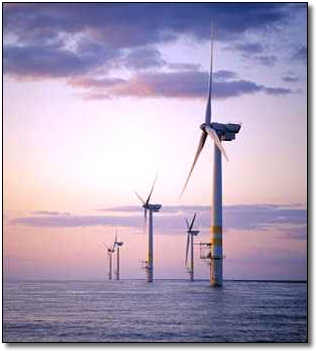
Suppose we were to install a 50 kw photovoltaic solar array and a 2,500 liter (660.4 gallon) solar hot water heater system on every school in the United States. That’s approximately 100,000 of each.7 Suppose each solar electric system costs $7.50 per watt, or $375,000, and each solar hot water heater would cost $50,000. That’s $425,000 per school, at 100,000 schools that’s $42.5 Billion. .
Because these are powered by a natural process – sunlight – rather than non-renewable fuels, and because of relatively low maintenance costs and operating costs, these systems will pay for themselves quickly and last a very long time, they will pay for themselves over and over. The return on investment is between 10% and 16% for PV Solar and 20% to 33% for Solar Hot Water. This is outlined in Table 1, below.
-
-
Solar Electric and Solar Hot Water Heaters
Solar Electric
Solar Hot Water
Cost of each
$375,000
$50,000
Total Cost
$37.5 Billion
$5.0 Billion
Years to pay for itself
6 to 10 years
3 to 5 years
Useful Life
40 years
25 years
Annual ROI
10% to 16%
20% to 33.3%
Table 1.
-
The ROI is higher when you factor in the external benefits of clean, renewable energy – there is no pollution, and therefore are no health effects from pollution.
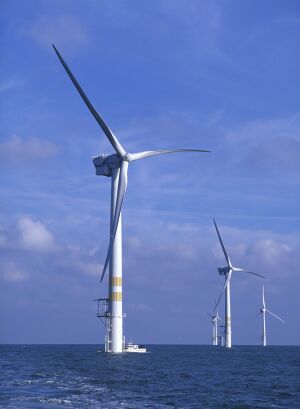
One way to use the deficit to stimulate the economy in a manner that is consistent with reduced long term deficits is thru the development of clean energy resources, such as solar electric and hot water systems on the nation’s public schools.
Health Care
In July, 2007, President George W. Bush said “People have access to health care in America. After all, you just go to an emergency room.8” While Emergency Rooms are well suited for acute conditions – emergencies – such as the traumas of car accidents, gunshot wounds, and broken arms, they are ill-equipped for chronic conditions such as hypertension, diabetes, cancer. If a person with diabetes was to go to the emergency room, the emergency room staff would say “We can’t help you. Come back when you’re in a coma, or you need your leg amputated.” Similarly, while the Emergency Room can’t manage hypertension, it can treat the heart attack or stroke suffered by a person with hypertension.
Assuming Pres. Bush’s statement is accurate, then the approximately 47 million, or one out of six, or 15.46% of Americans who don’t have health insurance only have access to health care in an emergency. This means that the Health Care System can handle non-emergency health care for five out of six Americans, but is not capable of meeting the non-emergency needs of one out of six, or 15.46% of Americans. This means we need about 15.46% more doctors, nurses, medical office staff, hospital staff, medical offices, and hospitals. For every 100 medical doctors practicing today, we need 115.46. For every 100 nurses, we need 115.46.
According to the Bureau of Labor Statistics, there were about 661,000 physicians and surgeons in the US in 2008 and are about 2.6 million Registered Nurses, RN’s, today.9 If this is sufficient for the 357 Million Americans who have health insurance, then we need an addtional 102,191 physicians and surgeons, and an additonal 401,960 nurses, and they need offices, examining rooms and other infrastructure. However, we can’t just push a button and create 102,191 physicians and surgeons and 401,960 nurses out of thin air. It takes nine years to train a physician and three years to train a nurse.10
-
-
Selected Demographic Information
Americans
With Insurance
Without Insurance
Total
Americans
257 M
47 M
304 M
Medical Professionals
Have
Need
Total
Physicians & Surgeons
661,000
102,191
763,191
Nurses
2.6M
401,460
3.0 M
Table 2
-
Another way to use deficit spending today to stimulate the economy and invest for the future is to build the medical infrastructure for the 47 million Americans who can’t afford or are without health insurance.
Paul Krugman on Banking, Securitization, and The Canadian Model
In his recent columns in the New York Times, Paul Krugman11 has discussed the banking industry, the banking debacle, banking reform, and the Canadian model for banking regulation and banking risk management. He quotes testimony by Jamie Dimon of JP Morgan Chase and Lloyd Blankfein of Goldman Sachs. In hearings of the Financial Crisis Inquiry Commission, Dimon basically said “this was business as usual.” Blankfein, however, said “it was an act of God.” While they disagreed about the cause of what happened, they agree with the solution: “Let bankers be bankers. If the government regulates banking, the economy will crumble.” It appears that we tried this deregulatory approach, and the economy crumbled.
“Securitization” of loans, in which bad loans are bundled with good loans and sold, doesn’t limit risk, it rewards risk. In terms Tiger Woods or a Wall Street banker should be able to understand, Securitization is like sexual activity and HIV AIDS. Suppose one person has 100 relations with 10 partners, 10 with each, one of whom is infected with the HIV AIDS virus. Suppose another person has one relation with each of 100 partners, one of whom is infected with the virus that causes HIV AIDS. Clearly the first person has a higher risk of infection. However, the second person is also at risk. In the case of securitization of “toxic assets” the bankers were rewarded to have relations with as many people as possible. They didn’t minimize risk. They spread it around.
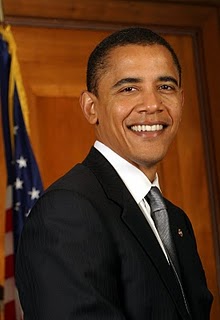
The Canadian banking model limits risky loans, limits bank leverage, and limits securitization. This is what Obama must do. He must demand and enforce regulations that require transparency in banking, regulate derivatives, eliminate incentives for bankers to make bad loans, create incentives for bankers to make good loans; to practice what might be called safe banking
. Regulations, for example, like those mandated by Glass Steagal.
Patrick Henry once said. “Give me liberty or give me death,”
Today he might add, “Entrust my money with cautious bankers.”
———— Notes ————-
1Faced with high unemployment and a lack of unemployment compensation funds, NJ Gov. Christie is proposing to cut unemployment benefits, and cut the unemployment tax used to fund unemployment benefits. Beth DeFalco, “Christie proposes to cut jobless benefits,” NJ Herald, 2/25/10, http://www.njherald.com/story/news/nj-jobless-benefits, and Athena D. Merritt, “Christie proposes fix for N.J.’s insolvent unemployment fund,” Philadelphia Business Journal, 2/25/10, http://www.bizjournals.com
2Discussed at length by Riddell, Shackelford, Stamos, and Schneider, Economics, Pearson – Addison Wesley, 2008, pg 365-368.
3I’m using the term “Deep Recession” in conjunction with “Depression” because there appears to be a general reluctance on the part of bankers, journalists, pundits, and others to use the term “Depression” in discussions of the state of the economy today.
4Acharya, Viral and Ouarda Merrouche, “Precautionary Hoarding of Liquidity and Inter-Bank Markets: Evidence from the Sub-prime Crisis,” July 3, 2009, at Stern.NYU.edu, http://pages.stern.nyu.edu/~sternfin/vacharya/public_html/acharya_merrouche.pdf.
5Reich, Robert, “Obama Needs to Teach The Public How To Get Out Of The Mess We’re In, But He’s Not”, 1/29/10, http://www.huffingtonpost.com
6Paul Krugman, the Princeton University Economist, and Nobel Laureate, writes a column for the New York Times.
7According to Statemaster.com there are about 94,260 elementary and secondary schools in the US. I rounded this up to 100,000 to simplify the math. http://www.statemaster.com/graph/edu_ele_sec_tot_num_of_sch-elementary-secondary-total-number-schools.
8On July 10, 2007, “Pennsylvania Progressive” reported then President Bush said: “People have access to health care in America. After all, you just go to an emergency room.” http://pennsylvaniaprogressive.typepad.com/my_weblog/2007/07/bush-on-healthc.html
Also reported on July 11, 2007 by Dan Froomkin in the “Washington Post,” in his column “Mock The Press”. http://www.washingtonpost.com/wp-dyn/content/blog/2007/07/11/BL2007071101146_5.html
9Bureau of Labor Statistics, Occupational Outlook Handbook, 2010-11 Edition,
Physicians and Surgeons. http://www.bls.gov/oco/ocos074.htm#outlook,
Registered Nurses, http://www.bls.gov/oco/ocos083.htm
10I’m assuming a 6-year Biomedical program and a 3 year Medical Residency for physicians and surgeons and a 2 year practical nursing program with a 1 year Residency for nurses.
11Krugman’s Recent columns in the NY Times include, “Bubbles and the Banks”, 1/8/10, “Bankers Without A Clue”, 1/15/10, “March of the Peacocks”, 1/29/10, and “Good and Boring,” 2/1/10. These can be found on the Internet at http://www.nytimes.com.