Category Archives: Connecting the Dots

Sustainability v Globalization

Olive Trees

“Think Global, Act Local,” – Anonymous.

“Re-localization is a critical step in moving toward sustainability. The “global economy” is one of the culprits of our present mess,” – John Ehrenfeld.

“Sustainability is the possibility that human and other life will flourish on the planet forever,” – John Ehrenfeld.

Ehrenfeld, author of “Sustainability by Design,” here,   lectures at Marlboro College in its MBA in Managing for Sustainability.

In “Italy’s accordion Industry: Tiny and Thriving“, NPR’s Morning Edition, on 1/9/12, discussed globalization in the context of the accordion industry in Italy. The piece began: “More than 70% of Italy’s gross domestic product comes from small businesses – and they’re not growing. Economists are worried that this will make it impossible for Italy to climb out of it’s massive $2.6 Trillion debt.”It concluded “But until more small companies [coalesce into giants like Prada] things in … Italy will stay out of tune with the global eonomy.

But the piece also reported that the Italian accordion makers focus on quality. They don’t make many instruments – make about 20% of what they made in their heyday, one company makes 180 to 200 per month, but they make the Ferraris of the accordion world.  More accordions are made today are by China, Inc., but those are cheap, low quality things.  The Italian instruments sell for up to $50,000 each, to professional musicians such as Bjork  and “The Decemberists.”

The story also asks about the long term consequences of 70% of a nation’s GDP coming from small businesses?

But it doesn’t ask:

  • What is the standard of living and quality of life for craftspeople in Italy? Are people happy? Fulfilled?
  • What is the wage and income differential between the workers and the owners? Between the manufacturers and the suppliers?
  • How interconnected are the local economies? Are they using locally sourced materials? Is the economy local?  How much of the economy is local?
  • Aside from Italy’s debt, is their economy sustainable? Another way of asking this is “Could Italy service the debt with a 30 or 50 year payment schedule, with interest set at 2.5% or 3.5%? According to the CIA Factbook, (here) Italy has a population of about 61 million people. While NPR puts the Italian debt at $2.6 Trillion, according to CNN Money, (here) Italy’s debt is about $262 Billion. That’s a per capita debt load of about $4300, according to CNN Money, and $41,995. $4,300 doesn’t seem too bad. Even $42,000 isn’t too bad, over a person’s lifetime. In the United States, $43,000 buys one or two years of college at the undergraduate level.

As noted, the piece ended with “But until more small companies [coalesce into giants like Prada] things in … Italy will stay out of tune with the global eonomy.”  This leads me to my final unanswered questions:

Is it a bad thing for Italy to be out of tune with the global economy? and

Is Italy really out of tune with the global economy?

The first two things that come to my mind when I think of “The Global Economy” are China, Inc. / WalMart, and oil. (I see China, Inc. and WalMart as one thing, but that’s another story). I see environmental degredation, poverty of mind, body, and spirit, and working conditions that equate to slavery.Personally, I’d rather be making accordions for a living wage in Italy, where I have a chance to open my own shop, than in China where conditions are equivalent to slavery.

Bjork, a singer from Reykjavík, Iceland, and the Decemberists, from Portland, Oregon, are buying Italian accordions. They would rather spend $50,000 on accordions from Italy than $399 on accordions from China.  This suggests that the Italian accordion makers are, in fact, in the global economy, albeit on a different scale of that of the Chinese and one that economists don’t understand.

This brings me to the olive trees pictured above. Olive trees take a long time to mature – 35 to 150 years. But they live, thrive, and produce olives – for a very long time – hundreds of years, thousands of years with luck and proper cultivation. (Achaia Olive Groves).

And just as I would rather be making accordions that sell for $50,000 than those that sell for $399, I would rather sell 200 units for $50,000 each than 25,063 units for $399.

How to Deal With Iran: Sanctions? Bomb? Rescue?

USS Kidd & Iranian fishing vessel

While the editors of Popular Logistics understand that it is important to prepare for emergencies – and carry flashlights, per the 911 Commission, we also understand that it is important to avoid emergencies.

We also note that President Theodor Roosevelt once said “Speak softly but carry a big stick.”

ABC News reports the statements made by the candidates for President in regards to Iran’s nuclear ambitions. Most agree that Iran wants nuclear power and nuclear weapons.

ABC, Quoting Candidate Barack Obama, from 2008 as saying, “In confronting these threats, I will not take the military option off the table. But our first measure must be sustained, direct and aggressive diplomacy…. I will always keep the threat of military action on the table to defend our security and our ally, Israel.”  The article did not mention the Stuxnet attack on the Iranian Nuclear program, which has been reported to have slowed the development of nuclear technology in Iran. While the origin of the computer virus is unknown, it is reported to be American or American and Israeli.

Newt Gingrich supports regime change in Iran, and using military action if necessary “as a last recourse.” (ABC News).

Jon Huntsman: “Realistically, you’ve got to have all options on the table. You’ve got to be prepared to use all elements of national power.” (ABC News)

Ron Paul: “Why do we have to bomb so many countries? Why are we [having] 900 bases in 130 countries and we’re totally bankrupt? . . . We need a strong national defense . . . and we need to only go to war with a declaration of war.” Paul has called sanctions against Iran an “act of war” that could damage the global economy by impeding the flow of oil. “I think they solution is to do a lot less a lot sooner, and mind our own business, and we wouldn’t have this threat of another war.” (ABC News)

Mitt Romney: ‘Ultimately, regime change is what’s going to be necessary,” says Romney, who believes both “covert and overt” actions should be used to stop Iran from developing nuclear weapons. He said the U.S. should develop military plans, though he hoped they were never put into effect. “But the Iranians will understand that we have prepared credible military options, that they’ll know there is a consequence of becoming nuclear.” (ABC News)

Rick Santorum: “‘Yes, that’s the plan,’ said Santorum, when asked if he would order air strikes on Iran if they were going to obtain nuclear weapons. The conservative dark horse … is the most bellicose of the GOP contenders when it comes to Iran. In an interview with Glenn Beck, he said Iran’s regime was worse than al Qaeda, and that an attack on Iran would prevent war.” (ABC News).

As noted, President Theodore Roosevelt once said “Speak softly but carry a big stick.”  Huntsman and Obama are speaking softly. Paul is whining. Gingrich, Romney and Santorum are waving their sticks. Santorum went as far as to say “an attack would prevent war.” That is “War prevents war.”

Iran, like Syria, is unstable. The people want food and a healthier economy. They also want change. Gingrich, Romney, and Santorum are saying what the Ayatollahs and Ahmadinejad want to hear. Their bellicose statements unify the people behind the Ayatollahs and Ahmadinejad. But rescuing fishermen – this is the last thing the Ayatollahs and Ahmadinejad want us to do.  It shows that they cannot protect Iranians against Somali pirates. It unifies the people of Iran against the government of Iran. And it unifies the people of Iran behind the United States.

It also begs the question – “Why is piracy so common in Somalia?”

Shakespeare, Sorkin, and The American Presidency

Mallard, common to North AmericaMandarin duck

“If it looks like a duck, walks like a duck, smells like a duck, and quacks …  it’s a duck” – anonymous

“What’s in a name? A Rose by any other name would smell as sweet” – Shakespeare, “Romeo and Juliet.”

“Being President of this country is entirely about character.” – Aaron Sorkin “The American President” /screenplay  / YouTube.

Santorum, Gingrich & Lobbying

Since he lost his reelection campaign in 2006, the Honorable former Senator, Rick Santorum, has been consulting, primarily to companies which benefited from legislation he pushed as a Senator. He earned over $1.0 Million in 2010. Like the Honorable Mr. Gingrich, we know Mr. Santorum is not a “Lobbyist” because he has not REGISTERED as a “Lobbyist.” (NY Times article by Mike McIntire and Michael Luo here and Op-Ed by Maureen Dowd here.)

However, as reported (here) by ABC News, the non-profit “Citizens for Responsibility and Ethics in Washington” (CREW) filed a complaint with the U.S. attorney in D.C. and the FBI in which it claims Gingrich repeatedly met with or called members of Congress to pressure them to pass a contentious 2003 Medicare reform bill — legislation from which members of a Gingrich-founded group may have directly profited and Gingrich himself may have indirectly benefitted. (Press Release, here).

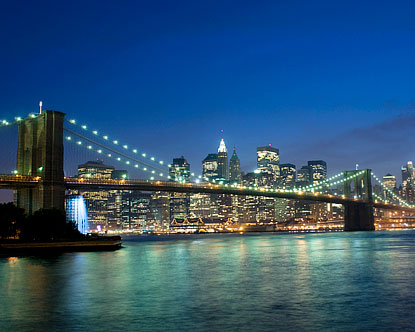
These men may try to sell us the Brooklyn Bridge. Or they may try to lease it to someone else, who will in turn erect toll booths and charge us to drive, bike, or walk across.

Continue reading

For the 25th Anniversary of the Bruntdland Commission Report on Our Common Future

Image courtesy of NASA. Our tax dollars at work.

Let us remember the Blue Marble. There would be no food – and no life – without sunlight and clean water.

The whales, and the dolphins, the deer and the polar bear, are our cousins.

Let us return to the UN on March 20, May 9, June 20, September 3, and December 21 with delegations of thinkers and builders of sustainability and demand, respectfully, that we as members of communities of Earth, whether economically “Developed,” such as  the United States, United Kingdom, Germany, France, or Canada; or “Developing,” such as Brazil, China, India, and Mexico; whether materally rich or materially poor, set as our overriding goal “Sustainable Development.”

This, “Sustainable Development,” as defined by Gro Harlem Brundtland as “development that meets the needs of the present without compromising the abilities of future generations to meet their needs,” or as defined by John Ehrenfeld as “development that leads to flourishing forever,” is simply and precisely development around harnessing natural processes such as wind, sunlight, ocean currents, the heat of the earth’s core, rather than extracting and consuming natural resources such as coal, oil, subterranean methane, and uranium, and creating toxic wastes.

Let us embrace not only the negative goals of lowering greenhouse gas emissions, and reducing distribution of toxic substances such as the arsenic, lead, mercury, uranium, zinc, etc. emitted from burning coal but also the positive goal of rearchitecting our economies – our interconnected global economy – around sustainable development.

Not more stuff distributed inequitably, but GOOD stuff, equitably distributed. After all, do we need a new cellphone every two years? Or a new car every three or four? How many shoes, trousers, shirts, coats, cameras, televisions, etc. does a person need?

Let us do this as a protest outside the UN, along the lines of Occupy Wall Street and other demonstrations – with substantive statements, drums, guitars, flair, and enthusiasm, and cover it ourselves on YouTube, Twitter, the blogosphere, and Ted Talks, but let us also demand that our Representatives in state houses, governor’s offices, the House, the Senate, and the White House and city halls and state capitals across the world listen and bring our message to the UN for a day, an hour, or even just 15 minutes.

We want to celebrate a turning point in human history. Let us do this on March 20, the anniversary of the Brundtland Commission Report. And, as May 8 and  September 2 respectively mark the 67th anniversaries of the Allied victory over the Nazis and Imperial Japan in World War II, somber turning points in human history, and let us return to the United Nations, and to our city halls, state capitals, congresses and parliments on on May 9 and September 3, and on the solstices June 20 and December 21.

And let us do this with hope for peace, love, and the future.

The World Will Not End & Other Predictions for 2012

space-apple-logo


Here are my top 10 predictions for 2012. These are less readings of the tea leaves or the entrails of goats and chickens and more simple extrapolations of patterns in progress. Altho that may be the way effective oracles. They just masked their observations with hocus pocus, mumbo-jumbo, and guts.

This list runs a gamut from business and technology to energy, instability in the Middle East, micro-economics in the United States, politics, and not-yet-pop culture.

  1.  Apple and IBM will continue to thrive. Microsoft will grow, slightly. Dell and HP will thrash. A share of Apple, which sold for $11 in December, 2001, and $380 in Dec. 2011, will sell for $480 in Dec. 2012.
  2. The Price of oil will be at $150 to $170 per barrel in Dec., 2012. The price of gasoline will hit $6.00 per gallon in NYC and California.
  3. There will be another two or three tragic accidents in China. 20,000 people will die.
  4. There will be a disaster at a nuclear power plant in India, Pakistan, Russia, China, or North Korea.
  5. Wal-Mart will stop growing. Credit Unions, insurance co-ops and Food co-ops, however, will grow 10% to 25%.
  6. The amount of wind and solar energy deployed in the United States will continue to dramatically increase.
  7. The government of Bashar Al Assad will fall.
  8. Foreclosures will continue in the United States.
  9. Arizona Sheriff Joe Arpaio will resign. Calls for Clarence Thomas to recuse himself from matters involving his wife’s clients will become louder, but Justice Thomas will ignore them. A prominent politician who says “Marriage is between a man and a woman,” or her husband, will be “outed” as gay. President Obama will be re-elected.
  10. The authors of Vapor Trails will not win a Nobel Prize for literature. They will not win a “MacArthur Genius Award.” Nor will I despite my work on this blog or “Sunbathing in Siberia” and the XBColdFingers project.

Here are the details … Continue reading

Moore's Law Applied to Solar Power

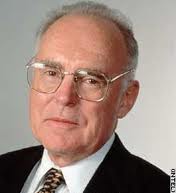
Gordon MooreDoes “Moore’s Law” hold for Solar Power?

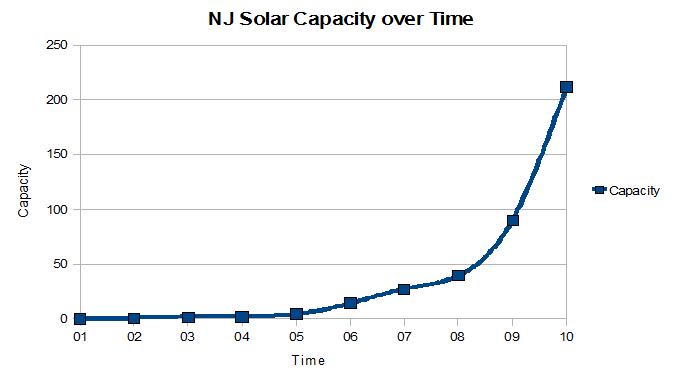
In New Jersey, between 2001 and 2010, we went from a total of six systems with a combined capacity of 9.0 KW to about 7000 systems with a combined capacity of 211,000 KW or 211 MW. This is illustrated below.

Solar Capacity, NJ, 2001 to 2010. Increase from 9 KW in 6 systems to 211 MW, or 211,000 KW in 7000 systems

Increase from 9 KW in 6 systems to 211,000 KW in 7,000 systems. Copyright, 2010, L. J. Furman. All Rights Reseved.

This is the “hockey stick” curve of exponential growth typical of positive feedback mechanisms. I expect this kind of growth to continue for the next few years as prices drop, until solar meets 25% to 35% of New Jersey’s needs. This would be another 2500 to 3500 systems and about 200 additional MW in 2011 and 4000 to 5000 systems of 300 to 500 MW in 2012 , and brings me back to “Does ‘Moore’s Law,’ or a corollary, apply to PV Solar?” or “Is this a bubble?” Continue reading

Jeremy Grantham at Marlboro College – on Investing for Sustainability

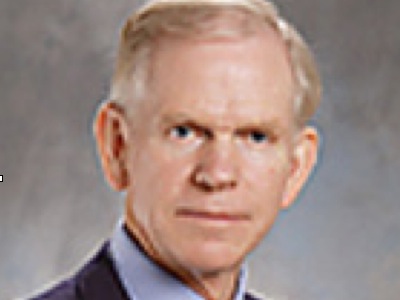
Jeremy GranthamJeremy Grantham, the founder of GMO LLC, a hedge fund with $93 Billion under management, will speak Friday, 12/2/2011, at 5:00 PM at the Marlboro College Grad School, 28 Vernon Street, Brattleboro, Vermont.

Grantham has written “Everything you need to know about global warming in 5 minutes,” which can be found at Think Progress and The Big Picture.”

He says “In the last 200 years we have increased the level of carbon dioxide in the atmosphere by about 40%.”

(Ed. note: We have pumped about 1.0 trillion tons of Carbon Dioxide into the atmosphere. This has increased the atmosphere’s capacity to absorb heat and water.)

It is prudent and conservative to ask “What will happen next?”

Grantham continues:

What is the cost of lowering CO2 output and having the long-term effect of increasing CO2 turn out to be nominal?  The cost appears to be equal to foregoing, once in your life, six months’ to one year’s global growth – 2% to 4% or less.  The benefits, even with no warming, include: energy independence from the Middle East; more jobs, since wind and solar power and increased efficiency are more labor-intensive than another coal fired power plant; less pollution of streams and air; and an early leadership role for the U.S. in industries that will inevitably become important.

Conversely, what are the costs of not acting on prevention when the results turn out to be serious:  costs that may dwarf those for prevention; and probable political destabilization from droughts, famine, mass migrations, and even war.  And … what might be the cost at the very extreme end of the distribution: Definitely life changing, possibly life threatening.”

It would be interesting to hear Mr. Grantham’s views on Cape Wind, Solar Energy, Marine Hydro, the Obama – Buffett idea to tax wealthy people, and the Popular Logistics plan for 100% Clean, Renewable Energy (here). However, I suspect I know what he might say:

How would you pay for it?

Granted that if we factored the environmental costs of carbon dioxide, arsenic, lead, mercury, radioactive wastes, zinc, etc. coal, oil, methane, and nuclear would be much more expensive than they are believed to be today. But we don’t factor in those costs….

In New Jersey between 2001 and 2010, e went from a total of six systems with a combined capacity of 9.0 KW to about 7000 systems with a combined capacity of 211,000 KW or 211 MW, and I expect another 3000 systems and about 200 additional MW in 2011. This is exponential growth, leading to the following questions:

  • Does ‘Moore’s Law’ apply to Solar?
  • Is this a Bubble?
  • Or Is it a Paradigm – Shift?

GOP Debate On CNN, with Questions by American Enterprise Institute & Heritage Foundation

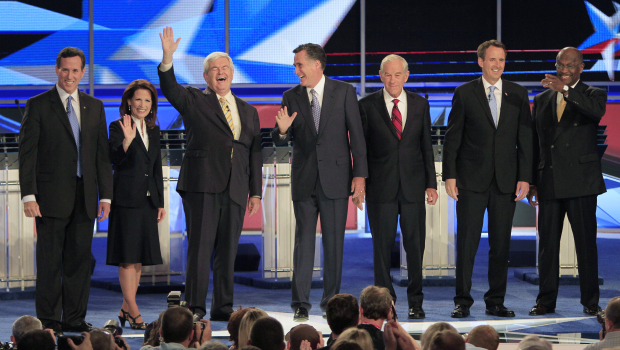
GOP Candidates, 2011, Courtesy CBS News

Follow LJF97 on Twitter Tweet At the conclusion of the GOP debate, Wolf Blitzer thanked CNN‘s partners, the American Enterprise Institute and the Heritage Foundation. This partnership explains the framing of the debate on energy as “Burn Baby Burn” or “Drill Baby Drill.”

No questions were asked on the potential for renewable energy technologies, such as wind, solar, geothermal, hydro. Nor were questions asked on climate change or on the pollution and cleanup costs from coal, oil, gas, or nuclear.

Energy policy and climate are linked, and could be addressed in one question:

This summer people in Texas experienced an extended drought and 100 days in which the temperature was over 100 degrees (CBS). Is this normal? Is this the ‘new normal?’ If this is triggered by burning so much carbon based fuel in the last 200 years that we have elevated the level of atmospheric carbon dioxide from about 260 parts per million in 1800 to about 390 ppm today (350.org), and we have burned mountains of coal, lakes of oil and gas, is it prudent to continue to burn coal, oil, and gas, or should we embark on a plan to transition to non-fossil-carbon sources of energy, such as wind, solar, hydro, geothermal, etc? And if so, how quickly?

This could also be asked in a national security context:

Admiral Mike Mullen, chairman of the Joint Chiefs of Staff, identified energy and climate change among the constraints which, in his words, “could place the United States at a strategic turning point…. Glaciers are melting at a faster rate, causing water supplies to diminish in Asia. Rising sea levels could lead to a mass migration and displacement similar to what we saw in Pakistan’s floods last year.  And other shifts could reduce the arable land needed to feed a growing population in Africa, for example. Scarcity of water, food and space could create not only a humanitarian crisis but create conditions that could lead to failed states, instability and, potentially, radicalization.” (NRDC / WWF) What does this mean for the USA in the next 4 to 8 years and what should the President do about it?
Continue reading

Worldly Philosophers for Hire

| |Follow LJF97 on Twitter Tweet | In “Wanted: Worldly Philosophers,” Roger Backhouse and Bradley Bateman say:|”IT’S become commonplace to criticize the “Occupy” movement for failing to offer an alternative vision. But the thousands of activists in the streets of New York and London aren’t the only ones lacking perspective: economists, to whom we might expect to turn for such vision, have long since given up thinking in terms of economic systems — and we are all the worse for it. ”

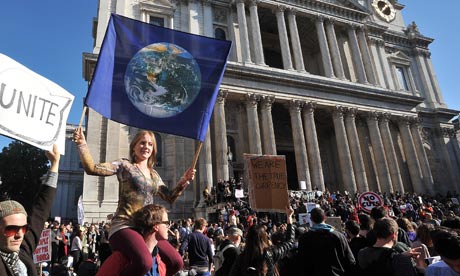
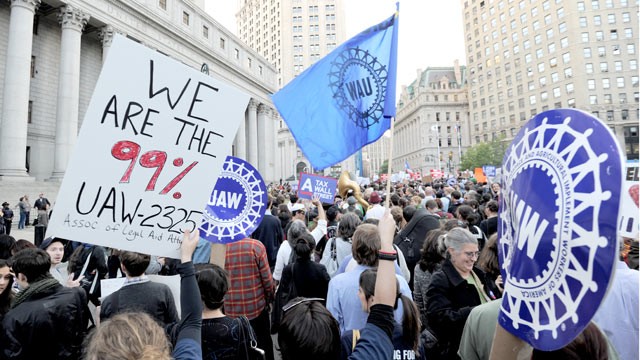
 As these pictures, from here, and here, show, the “Occupy” movement supports labor rights and environmental protection. The “Occupiers” do not, therefore, lack perspective.

Image shows union support at Occupy Wall St.They – we – see my work here at Popular Logistics, here at XBColdFingers, or meet me at Zuccotti – lack influence.

Paul Krugman and Joe Stiglitz are the most famous economists whom Backhouse and Bateman might describe as “Worldly Philosophers with perspective.” Tom Friedman may not have have studied economics; but he too fits the bill of “Worldly Philosopher with Perspective.” There are others.

Sadly, Obama, Biden, Sommers, Geithner, and Chu, like Bush, Cheney, Rice, Rove and Rumsfeld, like Bachmann, Cain, Gingrich, Huntsman, Paul, Perry, Romney, and Santorum, don’t know the answers – and what is worse, they don’t even seem to know which questions to ask.

As noted above, “the ‘Occupiers’ do not lack perspective.  They – we – lack influence.” To correct that I would like to personally extend an invitation to President Obama, Vice President Biden, any members of the cabinet, or the White House or campaign staff and any of the current candidates for the Republican nomination to meet me at Zuccotti Park, or at the time and place of their choosing, for a discussion on the issues.

Can Anyone Really Create Jobs? Yes We Can!

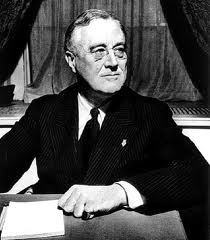
FDR Follow LJF97 on Twitter Tweet Writing in the NY Times, Adam Davidson of Planet Money, asks “Can Politicians Really Create Jobs? Davidson says “No.”

But with all due respect to Mr. Davidson, as Barack – The Candidate – Obama said, “Yes, We Can!”

And yes, Presidential candidates can create jobs – presidential campaigns are staffed by people. So obviously, the President can create jobs. Anyone can. All it takes is a need for something to get done. Whether you do it yourself or you pay someone else to do it, it’s a job. So the real question for the President, the Presidential Candidates, our elected Representatives in Washington and in State and Local Government, and for us ourselves, is not “Can we create jobs?” The real question is “How do we create 10 or 15 million good new jobs?

Davidson talks about Keynes and the Chicagoans.

Chicagoans believe that economies can only truly recover on their own and that policy interventions only slow the recovery. It’s a puzzle of modern politics that Republicans have had electoral success with a policy that fundamentally asserts there is nothing the government can do to create jobs any time soon…. Romney, Perry, Herman Cain and the rest won’t come out and say, “If elected, I will tell you to wait this thing out.”

This is what Herbert Hoover said and why Franklin Delano Roosevelt won the election in 1932.

Instead, Republican candidates fill their jobs plans with Chicagoan ideas that have nothing to do with the current crisis, like permanent cuts in taxes and regulation. These policies may (or may not) make the economy healthier in 5 years or 10, but the immediate impact would require firing a large number of America’s roughly 23 million government workers.

What John Maynard Keynes said is less that “government can create jobs” but is more along the lines of

“in economic times such as these, when there is high unemployment because business will not hire people to create inventory that is likely to remain unsold, government is the only entity that has both the means and the will to create jobs.”

Less “government can” and more “Government Must!

What is our government, after all? Lincoln said it best:

– “Government of the people, by the people and for the people.

And there is much work to be done. We need to rebuild our infrastructure. This includes our crumbling current infrastructure of schools, roads, mass transit, etc. This will create jobs. We also know that domestic energy production peaked in 1971. International oil production seems to be peaking now, altho given the state of the world economy, and the state of infrastructure in Iran, Iraq, and Libya, the international peak may be a few years off. However, we should build a sustainable energy infrastructure. We will need it eventually. It is good for the environment, it will strengthen our economy and our state of national security. But rather than by using a simple program to provide loan guarantees to various corporations; the government should mandate that all government buildings should be well insulated, efficient, heated and cooled with geothermal, and powered with a mix of solar, wind, local hydro, biofuel (from waste, sewage, manure, etc., not food crops).

Just as police and courts exist to protect people from those who would point a gun at their heads and say “Your money or your life,” enforcement agencies must protect people from those who would discard toxic substances into the air we breathe, the water we drink, the food we eat, and the ground from which we farm.  We need to regulate banks and other financial firms. This too will create jobs. We need to provide health care to all our citizens, not just 5 out of 6, or 265 million out of 307 million, leaving 1 out of 6, or 45 out of 307 million without access to health care.

Davidson is wrong about one other thing. It’s not either go into debt to create jobs or fire people to cut taxes. Government has two sources of revenue: debt and taxes. It seems fair to me that a progressive tax policy, can be used to generate the revenues needed to pay for the jobs society needs to be done.  Wealth, after all, is not created in a vacuum. Wealth is created by people buying things that other people are selling. People want to buy Apple computers, music players, cell phones.  The people who design and build them get wealthy. The wealthy benefit by living in society; therefore demanding that all, including the wealthy, pay a fair share, as illustrated here, in my post on Progressive Tax Policy is fair, balanced, reasonable, and smart.

  • Over $100 Million, 57.5%. Plus 5.0% Social Security Insurance & Medicare.
  • Between $10 Million and $100 Million: 52.5%. Plus 5.0% SSI & M.
  • Between $5 Million and $10 Million: 42.5%. Plus 5.0% SSI & M.
  • Between $1 Million and $5 Million: 32.5%. Plus 5.0% SSI & M.
  • Between $100,000 and $1 Million: 22.5%. Plus 5.0% SSI & M.
  • Below $100,000: 17.5%. Plus 4.0% SSI & M.
  • Royalty income should be taxed at the same rates as wages and salary.
  • Income in the form of unsold stock options is tax-deferred and taxed when sold.
  • Inheritances of $1.0 million and under from a grandparent, parent, partner, or child should not be taxed. Inheritances from distant relatives, or that portion above $1.0 million should be taxed as indicated above.

So can anyone create jobs? The answer is a resounding ‘Yes, We Can!’

It's The Feedback – It's Always The Feedback

NYPD Interacts WithProtester  Follow LJF97 on Twitter Tweet On Nov 2, 2011, Senator Tom Udall of New Mexico introduced a Constitutional Amendment that would overturn the Citizens United decision of the Supreme Court (Technorati / WSJ).

The managers of Bank of America, who accepted $45 billion in TARP money, and decided to pay back its customers with a $5 per month fee for the privilege of holding a debit card, recently recently decided to reverse course on the fee for debit cards ( CBS Miami /Oregon Live).

Meanwhile, back on the streets, the authorities appear to believe that a show of force and the use of force by the police will quell the demonstrations. Yet the opposite is the case. As the cops overreact – pepper spraying 4 women in NYC (NY Times / YouTube), running over a lawyer for the Occupiers (CBS / Daily Mail / Salon / Yahoo) people get angrier and join the Occupation – causing the police to either moderate or escalate their response.

The Plot to Sieze the White HouseAfter a US Marine Corps veteran of the Iraq war was injured in Oakland other veterans come to occupations all over the country. They came quoting Smedley Darlington Butler, the Marine Corps General who wrote “War is a Racket,” ISBN: 978-1434407009, and figured in the events described in “The Plot to Seize The White House,” by Jules Archer, ISBN: 978-1602390362.

These are examples of balancing feedback loops, as described by Dana Meadows in Thinking in Systems, A Primer, ISBN: 978-1603580557. (A researcher with Jay Forrester at MIT and Dartmouth, Meadows founded the Sustainability Institute.)

Continue reading

Progressive Tax Policy

Taxes are the price we pay for civilization.” – Oliver Wendell Holmes.

Progressive tax structures are not about punishing the rich. They are a recognition that wealthy people derive benefits from being in society. Warren Buffett, Steve Jobs, Bill Gates, Michael Jordan, Oprah, for example, got rich because people buy their products or watched them play basketball or on TV.  Paris Hilton is wealthy because her great-grandfather built a successful business. Their successes are wonderful. But their success should not require me to subsidize their lifestyles.

This tax structure can be implemented by October 31, 2012, and effective January 1, 2013, if not by Congress, then by Executive Order.

| Follow LJF97 on Twitter / Tweet  / Zuccotti  / mp3 | Continue reading

Dennis Ritchie, 1941 – 2011

Dennis Ritchie,  co-inventor, with Brian W. Kernighan, of the C programming language, and co-author of the book of that name, and co-inventor, with Ken Thompson, of  the Unix operating system, died at his home in Berkeley Heights, NJ. He was 70.

He spent his professional career at Bell Labs, an iconic institution which boasted a patent a day for years, if not decades, and includes among its inventions both the transistor and the photovoltaic cell.

Like Steve Jobs, Dennis Ritchie was an iconic pioneer who changed the world significantly and dramatically. And like Steve Jobs, Dennis Ritchie’s work influences modern computers, from the servers in network operations centers to  desktop,  laptops, tablets, and phones.

One of the beauties of Unix is that it was itself written largely in C, so it was easy to port from one line of computer, say the DEC PDP 9 to the next, say the DEC PDP 11, and from the Mac built on the Power PC to the Intel X-86. The Unix operating system migrated from telephone systems and switches to workstations from HP, IBM, & Sun, to the NeXT machines and then the Mac.

Back in the late ’80’s and ‘early to mid-’90’s, when I worked as a programmer and DBA on Unix systems, most of the people who used workstations running HPUX, AIX, SunOS and Solaris knew they were working on Unix computers, and were familiar with C, C with Classes, C++, etc. But I would be astounded if today more than 0.01% of the current population of MAC, iPad, iPhone, iPod Touch, or Android users know that they are working on a Unix C / C++ (OS X, iOS) or Linux C/C++  (Android) device. But that’s part of the elegance of Unix.

There’s another elegance to all this. Ritchie worked on the development of an operating environment and software development system which migrated from telephone company labs and network operations centers to the phones that many of us carry in our pockets and on our belts.

Who knew when he wrote “Hello world” that he was introducing us to a new virtual world that was saying hello?

Corporations Are NOT People

_Follow LJF97 on Twitter Tweet  The Supreme Court, in “Citizens United (against the citizens)”  said, as Gov. Romney put it “Corporations are people, my friend.

The people at “Occupy Wall Street” say, “I’ll agree that ‘Corporations are people’ when the government executes one.

and “If a Corporation is a person then why isn’t it murder to declare bankruptcy?

A lawyer I consulted rationalizes the notion that “Corporations are people” by arguing that corporations have the rights to be secure against unreasonable search and seizure, as guaranteed by the Fourth Amendment, in the Bill of Rights, ratified 15, December, 1791.

However,  it is the people who own the corporation and the people who work in the corporation who have the right, guaranteed by the Fourth Amendment, to be secure against unreasonable search and seizure – not the corporation.

The corporation can not exist without owners. A corporation is a piece of property, like a car, a house, a gun, etc. These objects have no rights. When an accused shooter goes on trial, it is the person who allegedly squeezed the trigger, or the person who paid for the “hit.” It is not the weapon. As the National Rifle Association might say, “Guns don’t kill people, people use guns to kill people.”

While people can own one or more corporations, in whole or in part, people may not own other people. This, i.e. slavery, described by Barack Obama as the “Original sin of America,” was claimed under the rubric of “States Rights” referenced in the “Declaration of Causes of Seceding States” on 24, December, 1860. However, it was voided by the Thirteenth Amendment, ratified on 6, December, 1865 and the Fourteenth Amendment, ratified on 9, July, 1868.

Additional counter-arguments can be found in Marjorie Kelly’s “The Divine Right of Capital” (ISBN 1576752372).

Continue reading

Steve Jobs, 1955 – 2011


Steve Jobs, with Macbook Air Many of us want to change the world. And we all to to varying extents. Some for the better, some for the worse, some significantly and dramatically, others less so.

Steve Jobs changed the world significantly, dramatically and in many ways for the better.

Because of their focus on “Computers for the rest of us” he and Steve Wozniak could have called the company they built “Prometheus Computers.” The Apple II, Lisa, Mac, Newton, iPod, iTunes store, iPod Touch, iPhone, iPad, are, in a sense, like the fire ‘stolen’ in the myth by Prometheus and given to man. Jobs, however, while known for being tough, was not known for being pompous.

He will be missed by his family and friends. His ideas will be missed by the rest of us.

Goodbye Steve, and thanks.