Category Archives: Connecting the Dots

100% Clean Renewable Energy in 25 Years

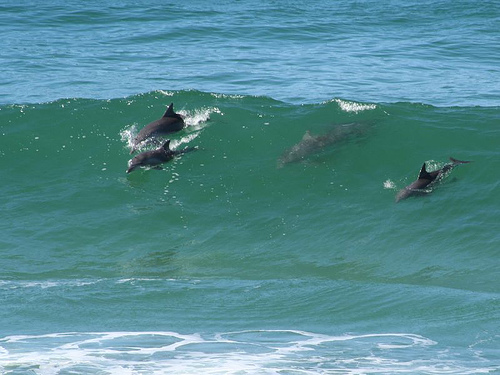
Dolphins surfing
Follow LJF97 on Twitter Tweet The  observable fact that dolphins surf is something we humans need to think about.

Amory Lovins, of the Rocky Mountain Institute, coined the term “Negawatt” when he said “The cheapest unit of energy is the one you don’t have to buy.” The next cheapest, the “Nega-Fuel-Watt” is the unit of energy that doesn’t require fuel.

  • Insulation Nega-Watts allow less power to heat or cool a given space.
  • Solar Nega-Fuel-Watts transform photons into electricity or heat.
  • Wind Nega-Fuel-Watts transform moving particles of air into electricity.
  • Geothermal Nega-Fuel-Watts transform the heat of the earth into heat or electricity, or use thermal gradients to cool a space.
  • Hydro Nega-Fuel-Watts transform moving particles of water – currents – to generate electricity.
100% Clean Energy
100 Gigawatts Wind $300 Billion
100 GW Marine Hydro $300 B
50 GW Solar $200 B
50 GW Geothermal $200 B
200 GW Equiv Efficiency $200 B
A Smart Grid $100 B
500 GW or GW Equiv. $1.3 Trillion

I’m not sure if Lovins first public use of the term Negawatts was in Montreal in 1989 (here) or in Foreign Affairs in 1976 (abstract here), whether 22 or 35 years ago. Regardless, our current energy paradigm today is the hard fuel based path Lovins criticized 35 years ago. While we are turning away from nuclear, as documented by Mycle Schneider in the WorldWatch Report (here) – the latest radioactive nail in the radioactive coffin being the fatal explosion at a reprocessing facility in France on Monday, Sept. 12, 2011 (here) – we burn literally mountains of coal and oceans of oil and gas (According to the DoE, in 2010 we burned 1,085,281 thousand short tons of coal and 15,022 thousand short tons of coke (here). And there are consequences.  We suffer oil spills, polluted water, mercury, coal mine disasters, nuclear power plant melt-downs, we fight wars …

Wind and solar don’t burn fuel. The winds blow, the sun shines, you put a widget in the path of those moving particles in the air or those photons of light and you get electricity – without greenhouse gases, radioactive wastes, toxic wastes, and it costs less. So the question is not ‘Can we meet our energy needs with clean, sustainable renewable energy technologies?” The real question are How? How Much? And How quickly?

We could do it in 25 years if we wanted to.  And we should, for our children, our grandchildren, the cetaceans with whom we share our oceans, and other charismatic megafauna with whom we share our world.

Protesting Marked Cards and a Stacked Deck

Warren Buffett_ Follow LJF97 on Twitter Tweet  I spoke with two of the Wall Street protesters this morning. We discussed credit unions, other cooperative ventures, Buckminster Fuller’s ideas, capitalism, and productivity. (“A 4-day work week,” Fuller was quoted as saying, “would give us time to enjoy the wealth we create.”)  We didn’t talk about Warren Buffett or President Obama, but it seems that both would agree with the protesters’ sentiments, as I do, that our financial system “favors the rich and powerful at the expense of ordinary citizens.” (The protests and the protesters’ motives were described here by Colin Moynihan in the New York Times, Sept. 17, 2011.) The protests are also covered by Think Progress, here.

Buffett, in “Stop Coddling the Super-Rich“, published in the NY Times, said

I paid … only 17.4 percent of my taxable income — and that’s actually a lower percentage than was paid by any of the other 20 people in our office. Their tax burdens ranged from 33 percent to 41 percent and averaged 36 percent.

If you make money with money, as some of my super-rich friends do, your percentage may be a bit lower than mine. But if you earn money from a job, your percentage will surely exceed mine — most likely by a lot.

Obama’s initiative is explained on White House . gov and Talking Points Memo, and by Obama in recent days, “It’s not class warfare,” he said, “it’s math” and “If it’s class warfare,” he said in Ohio and Kentucky, while discussing an old bridge between southwestern Ohio and Kentucky that needs to be renovated, “I’m a warrior for the Middle Class.”

Move On has a petition here, saying, “I agree with Buffett – and Obama.”

Despite the evidence, from the 2001 to the present, that cutting taxes on rich people does not create jobs, Charles Gasparino, in the New York Post, a Rupert “We-hack-cell-phones-for-fun-and-profit” Murdoch product, said, here, “taxing the rich will destroy jobs.”

Gasparino is clearly wrong. And Buffett and Obama are clearly correct. Rich people can afford to pay higher taxes, and asking them to pay 17.4% while others, who need to spend a much higher percentage of their income on food, clothes, and housing, pay 33% to 41% does not seem fair.

But the question is “What do we do with the money?” Buffett has also said that he would never have made the money he made had he not been born in the United States, and had he not gone to Columbia University and studied “Value Investing.” He basically argues that the cultural climate and economic systems in the United States enabled him to become wealthy, that this is a good thing, and others deserve the same opportunities. “We must plan for the future and invest in infrastructure. And the wealthy should pay their fair share. ”

Tax policy must be linked to fiscal policy. What we are doing today, Obama, Buffett, and the protesters would say, is using tax policy to make rich people more rich. They would argue, and I would agree, we should use tax policy to develop infrastructure. One idea is to build a 40 kilowatt photovoltaic solar array on each of the 92,000 public schools in the United States.  Solar only generates power during the day; schools need most of their power during the day. This would use tax revenues to pay for infrastructure upgrade – and tax revenues pay public schools electric bills. PV Solar systems provide energy without pollution, without toxic wastes, without greenhouse gases. And in the event of an emergency, if disconnected from the grid, we would have a network of 92,000 local emergency shelters with power during the day, when the sun is shining.

Marked cards and a stacked deck are great when you’re doing card tricks. But don’t play poker against a cheater using them.

Beyond Fuel – for the 21st Century – Cocoa Beach, Sept. 17

Space Coast Green Living Festival

Follow LJF97 on Twitter Tweet I will be presenting Beyond Fuel: From Consuming Natural Resources to Harnessing Natural Processes at the Space Coast Green Living Festival, Cocoa Beach, Florida, Sept 17, 2011.  The festival  is sponsored by the Cocoa Beach Surfrider Foundation and the Sierra Club Turtle Coast Group. It will be at the Cocoa Beach Courtyard by Marriott. Haley Sales, (Website / Facebook / Youtube),a local singer / songwriter, will perform.

Hayley Sales

Our current energy paradigm today is to fuel based. We burn oceans of oil and methane mountains of coal. And there are consequences.  We suffer oil spills, polluted water, mercury, coal mine disasters, nuclear power plant melt-downs, we fight wars …

According to the DoE, in 2010 we burned 1,085,281 thousand short tons of coal and 15,022 thousand short tons of coke (here).

Wind and solar don’t burn fuel. The winds blow, the sun shines, you put a widget in the path of those moving particles in the air or those photons of light and you get electricity – without greenhouse gases, radioactive wastes, toxic wastes, and it costs less. So the question is not ‘Can we meet our energy needs with clean, sustainable renewable energy technologies?” The real question are How? How Much? And How quickly?

100% Clean Energy
100 Gigawatts Wind $300 Billion
100 GW Marine Hydro $300 B
50 GW Solar $200 B
50 GW Geothermal $200 B
200 GW Equiv Efficiency $200 B
A Smart Grid $100 B
500 GW or GW Equiv. $1.3 Trillion

And we could do it within 25 Years if we wanted to.

Amory Lovins, of the Rocky Mountain Institute, coined the term “Negawatt” to mean energy you don’t need to buy, as in “The cheapest unit of energy is the one you don’t have to buy.” The next cheapest, the “nega-fuel-watt” is the unit of energy that doesn’t require fuel.

Saving the Economy, Part Deux

Copyright, L. J. Furman, 2011, All Rights Reserved.

Follow LJF97 on Twitter Tweet   In Part 1,  I criticized “How to Really Save the Economy“, an op-ed in the New York Times, published Sept. 10, 2011. So how do we really save the economy?

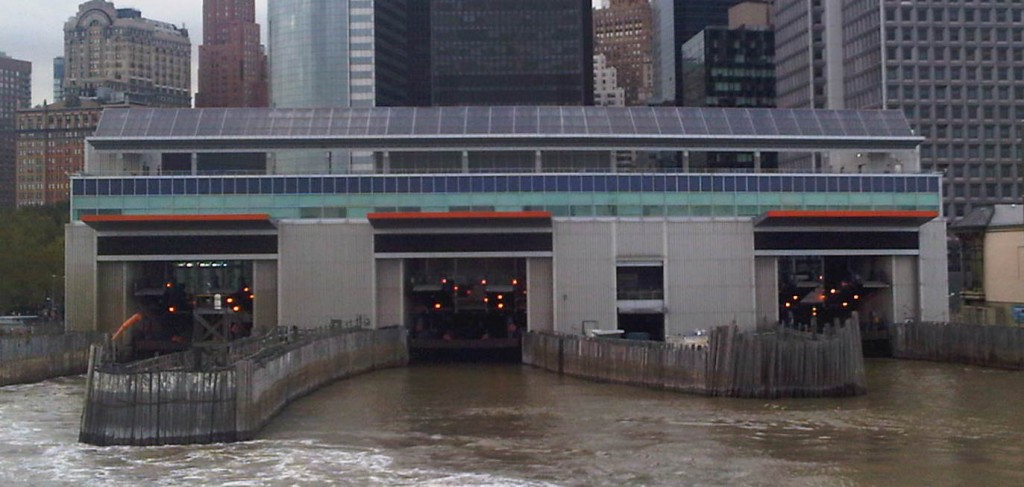
“One of the best kept secrets in New York City,” I wrote, “is the existence of a 40 kilowatt (KW) photovoltaic solar array on the Whitehall Street terminal of the Staten Island Ferry,” pictured above, and first covered in Popular Logistics  in 2007, here.

There are 90,000 public schools in the United States. Suppose we were to install a 40 KW solar energy system on each of them. PV solar modules require very little maintenance over their 35 to 45 year life expectancy. My initial thought was $5 per watt or $5,000 per kilowatt, but $4,000 per kilowatt is more realistic for the near term price of solar, particularly at the utility scale. This is where we expect the cost of solar in the Q4 2012 timeframe, without subsidies.

At $4,000 per KW of nameplate capacity, each of these 90,000 systems would cost $160,000. This 3.6 gigawatts of distributed daylight-only capacity would cost about $14.4 billion.
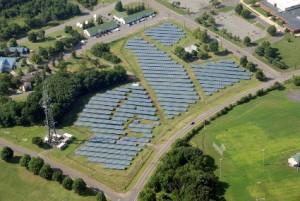
1.5 MW solar array at Rutgers University, Livingston campusIt seems to make sense to use taxpayer monies to finance these systems; taxpayers pay the electric bills for public schools and other public infrastructure, so rather than pay a utility to burn coal, oil, or gas, or harness nuclear fission, we could buy solar modules, put them on the roof and transform sunlight into electricity.  But what are the other implications? What would it give us? And what do we do at night? How much juice do we get?

The US Dept. of Energy’s (DOE) National Renewable Energy Lab’s (NREL) PV Watts solar energy calculator tells you the power you can expect from a given solar system anywhere in the US. Regarding night-time; solar is effective in conjunction with other sources of energy, and other clean, renewable, sustainable sources include wind, geothermal, micro-hydro, biofuel.

Every public school in the country would have a power plant that generates power, during the day, with no fuel cost and no waste., and no associated mining, processing, transportation, fuel costs and no waste management costs. At $5.00 per watt, or $5 billion per gigawatt, the capital costs are lower than the costs of new nuclear and significantly lower than the costs of coal with carbon sequestration, with none of the risks or hazards associated with the systems: no arsenic, mercury, lead, thorium, uranium, zinc, or carbon.

The systems would be tied to the electric grid, after all, while most of their operations are during the day, schools need power at night. If these systems could be disconnected from the electric grid, then we would have 90,000 structures distributed all over the United States, with power during the day in the event of power outages from storms, earthquakes, accidents, etc. Even if we lost 10% of them in a disaster like Katrina, or an event like Irene or the recent earthquake, we would still have 81,000 all over the country. Coupled with efficient refrigeration systems, we would have shelters with power to keep food and medications cold during emergencies; and these would be distributed across the country.

The solar systems would obviously have to be installed here, which would stimulate the economy, and we could even require the components to be manufactured here, further stimulating the economy.

Why not business as usual?
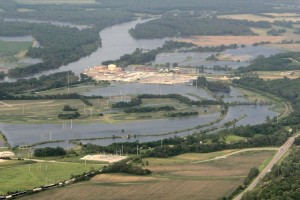
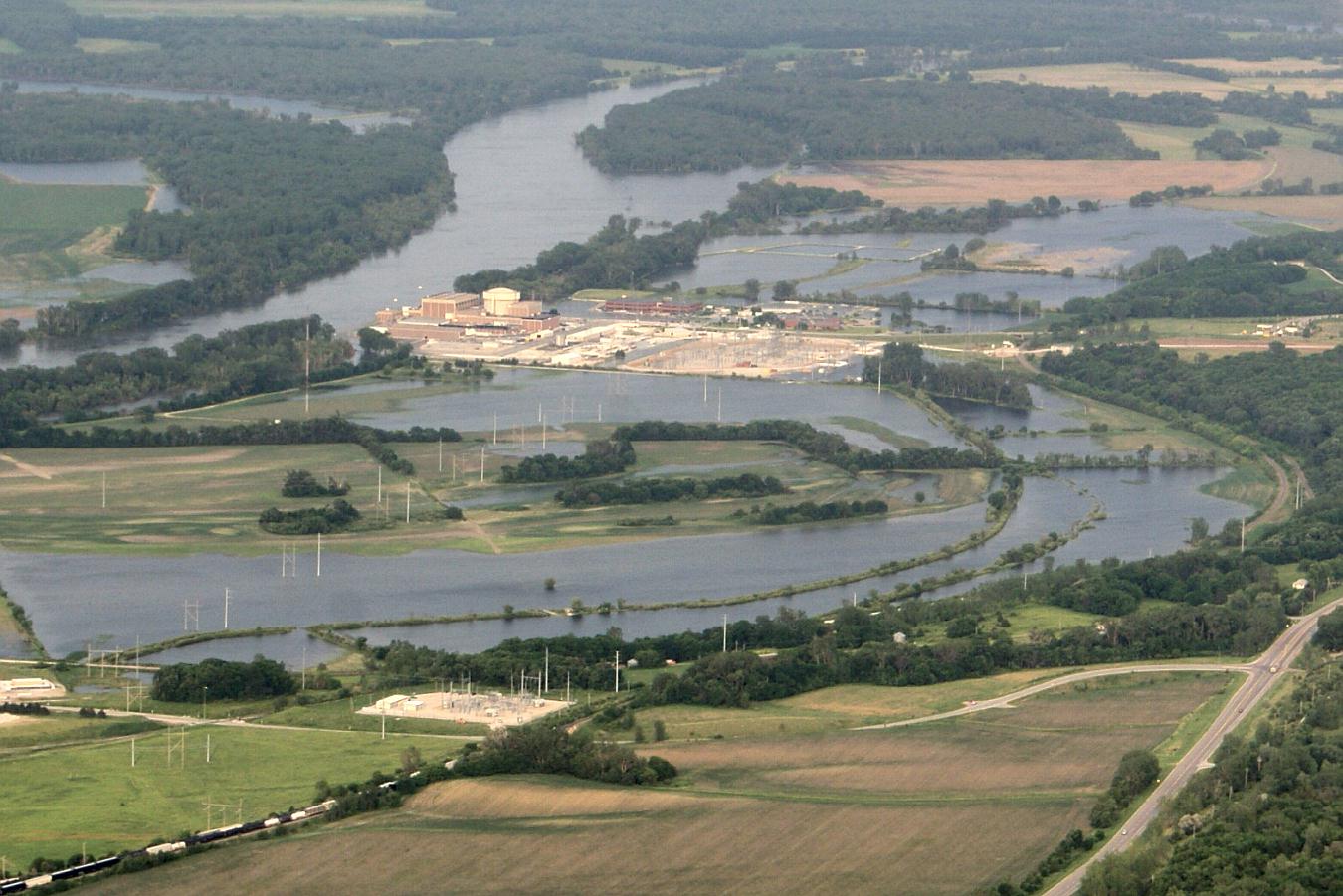
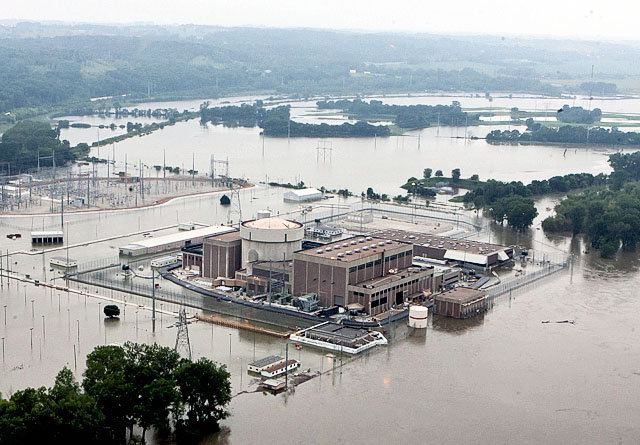
As reported here the North Anna nuclear plants in Virginia were shut down during the earthquake a few days before hurricane Irene. The Dominion plants in Virginia, and the Oyster Creek plant in New Jersey were shut down and the Millstone 2 & 3 plants in Connecticut and the Brunswick plants in North Carolina were brought to reduced capacity during Irene, and the Fort Calhoun plant in Nebraska has been shut down due to flooding, and losing $1 million per day, since June 6, 2011.

In Part 1, I criticized “How to Really Save the Economy, “an op-ed in the New York Times, published Sept. 10, 2011. “The United States,” according to Robert Barro, who teaches economics at Harvard and is a “fellow” at the Hoover Institution, “is in the third year of a grand experiment by the Obama administration.”

“This is inaccurate,” I wrote, Obama is the President, but the US Constitution provides a framework in which power is divided into three branches of the Federal government, and the power of the each of the branches is checked and balanced by the others, and “all power not expressly granted to the federal government is held by the states and the citizens.” It would be more accurate, therefore, to say,

“The United States is in the third year of an experiment in governance between the Obama administration, the Congress, the Judiciary, the Republican Party, various special interests, and the citizens. This appears to be an experiment in governance by not-governing. Due to significant differences of opinion with regards to the direction in which to drive the ship of state, the ship of state appears to be floundering. Governance by not-governing doesn’t work!”

In parts 3 and 4 I hope to present feedback from the telecommunications and wind industries. Meanwhile, another radioactive nail in the nuclear coffin – an explosion in a low-level waste management facility in France killed one person and injured four. DC Bureau, Associated Press reports “An explosion at a nuclear waste facility in southern France killed one person and injured four on Monday. Authorities said there was no radioactive leak, but critics urged France to rethink its nuclear power in the wake of the catastrophe at Japan’s Fukushima plant.The Nuclear Safety Authority declared the accident “terminated” soon after the blast at a furnace in the Centraco site, in the southern Languedoc-Roussillon region, about 20 miles (32 kilometers) from the city of Avignon. One of the injured suffered severe burns…. the body was burned so badly it was carbonized”
 

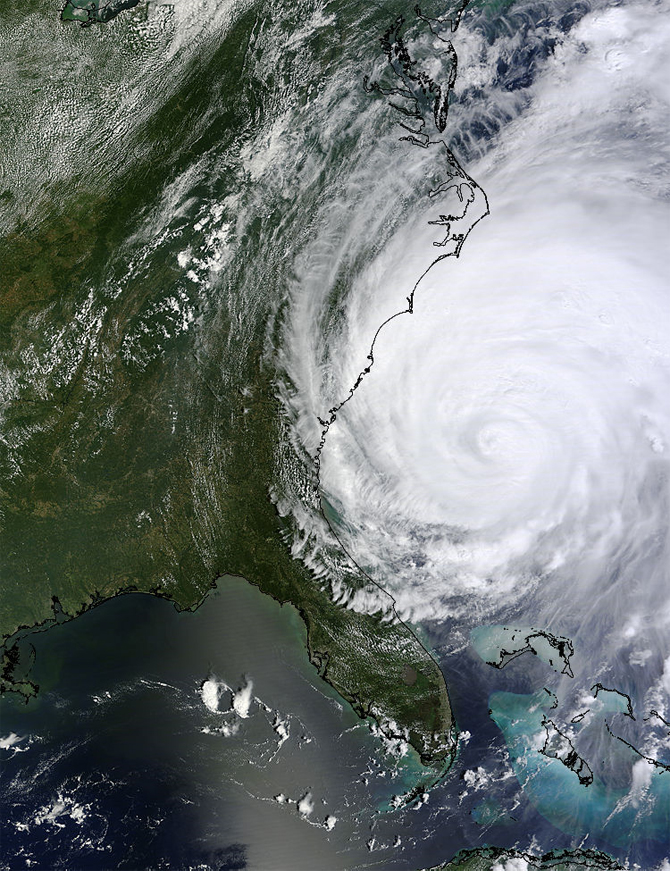
Follow LJF97 on Twitter Tweet  “Irene is especially worrisome … because of its uncommonly massive size. According to Ron Steve, a meteorologist at the National Weather Service’s Wilmington Office, Irene covers an area of approximately 170,000 square miles, or about the size of California or Iraq.”  Star News Online.

The storm had a 400 miles north to south and covered 170,000 square miles – about the size of California.

Hon. Rush D. Holt, on the Budget Control Act of 2011

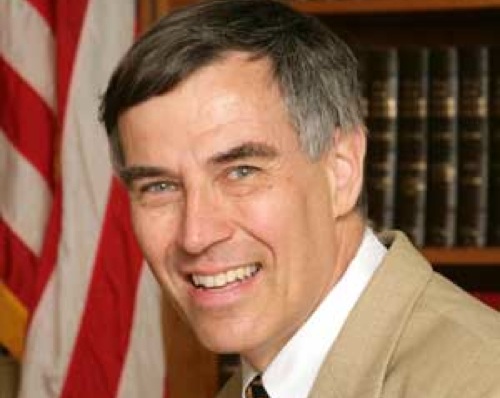
The Hon. Rush D. Holt, NJ 12  Follow LJF97 on Twitter Tweet Popular Logistics is a policy blog, not a politics blog. However, politicians make policy. The Honorable Rush D. Holt, NJ-12, said this on Monday, August 1, 2011, when casting a vote against the “Budget Control Act of 2011.”

SPEECH OF

HON. RUSH D. HOLT

OF NEW JERSEY

IN THE HOUSE OF REPRESENTATIVES

MONDAY AUGUST 1, 2011


BUDGET CONTROL ACT OF 2011

Mr. Speaker, the default debate is, at its heart, a debate between two visions for America. One side envisions rebuilding our country, investing in jobs and education and infrastructure, and rising from the Great Recession as a stronger and more resilient Nation. The other side accepts a pessimistic vision of a weakened America with a shrunken government–a Nation hampered by deep cuts to the safety net and hobbled by a refusal to invest in our future.

Continue reading

"Beyond Fuel" at the Space Coast Green Living Festival

Space Coast Green Living Festival

Green Living Festival

Follow LJF97 on Twitter Tweet I am presenting “Beyond Fuel: From Consuming Natural Resources to Harnessing Natural Processes,” a discussion of the hidden costs, or “economic externalities,” of nuclear power, coal, and oil, and the non-obvious benefits of wind, solar, marine hydro and efficiency at the Space Coast Green Living Festival, Cocoa Beach, Florida, Sept 17, 2011.

The festival  is sponsored by the Cocoa Beach Surfrider Foundation and the Sierra Club Turtle Coast Group. It will be at the Cocoa Beach Courtyard by Marriott.

Continue reading

Socialists v Stalinists

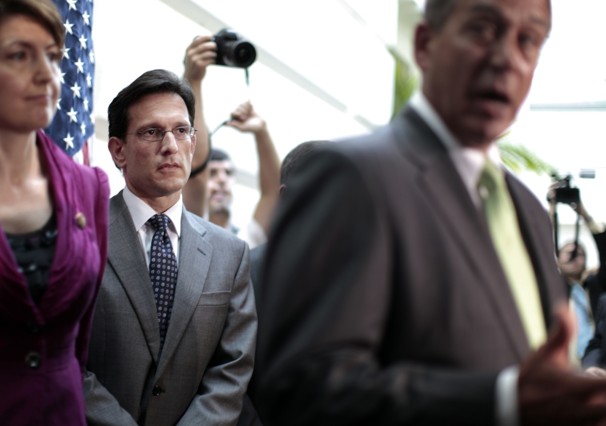
John Boehner, Eric Cantor, & a friend Follow LJF97 on Twitter Tweet The Washington Post reported, here, that John Boehner, Eric Cantor, Paul Ryan, and the “Young Guns,” their Republican comrades in the House of Representatives, PLANNED as far back as January, 2009 to use the debt ceiling to create a political crisis. It seems to have worked. The Republicans held fast, Obama and the Democrats blinked. The rating agency Standard & Poors, S&P, downgraded their rating of the credit-worthiness of the United States of America, President Obama’s core supporters seem to be abandoning him. And the stock markets are plummeting – the Dow Jones Industrial Average dropped 1000 points in 3 days.

Allowing US debt to be downgraded – forcing it to be downgraded – will cause a rise in interest rates, an increase in unemployment and bankruptcies. Altho a rise in interest rates will benefit bondholders. This is not the fiscal policy I expect from the party that claims to be fiscal conservatives. Altho, as noted, it does benefit bondholders.

The government should be creating jobs.  Our elected representatives should be guiding the ship of state to a prosperous and sustainable future, not selling it short.

The NY Times reports, here, that S&P’s downgrade will spur the Republicans to demand more cuts in government spending, which will put more people out of work, furthor erode the economy. The only hope for the country is for Obama to realize that there is nothing he can do to win the love and admiration of the right wing, to ignore them and look to the center and to his base, and do what is good for the country, regardless of what Bachmann, Boehner, Cantor,  Ryan and the Young Guns, and Grover Norquist want.

Continue reading

Taxes – The Price We Pay For Civilization

“Taxes are the price we pay for civilization.” – Oliver Wendell Holmes.

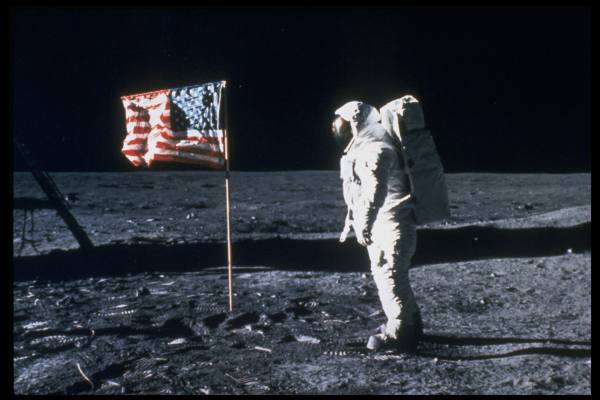
Neil Armstrong on the surface of the moon

Your Tax Dollars At Work, Courtesy NASA

Follow LJF97 on Twitter Tweet Taxes fund Medicare and Medicaid so the poor and the elderly can see a physician and get treatment when they are sick. Taxes fund education for our children and our neighbors children so they can grow up to be doctors, lawyers, engineers, architects,  accountants, teachers, plumbers, electricians, carpenters, builders, actors, etc., so we can buy things that work properly, travel safely, enjoy life, so we can, in a word, thrive.  Taxes fund police, fire-fighting, defense, judicial and other services so we can be secure in our homes and our persons, so the innocent do not go to prison, so the guilty pay their debts to society, and so we, when we do foolish things, can compensate those we accidentally harm. Continue reading

The Crash of 2011

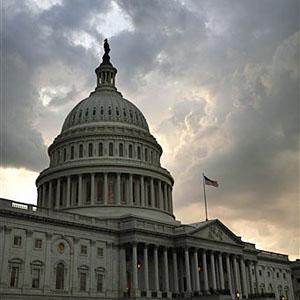
US Capitol Follow LJF97 on Twitter  Tweet I thought the market would crash in the wake of the Earthquake / Tsunami / Nuclear Meltdowns at Fukushima. It didn’t. However, something much less serious may be bringing the market – and the economy – to it’s knees. Politics. The Voice of America reported here that Standard & Poors downgraded US debt from AAA to AA+. Click here for the S&P’s Special Report and here for the full report.

S&P’s analysts wrote:

The downgrade reflects our opinion that the fiscal consolidation plan that Congress and the Administration recently agreed to falls short of what, in our view, would be necessary to stabilize the government’s medium-term debt dynamics.

John BoehnerIt is clear that the emphasis on cutting government spending, eliminating government jobs, eliminating benefits to unemployed citizens, rather than raising revenues and developing infrastructure is not in the long term or short term interests of the United States. As the 512 point drop in the Dow Jones Average, and the downgrade of US debt indicate, Republicans and the Tea Party should be careful for what they wish for – they just might get it.
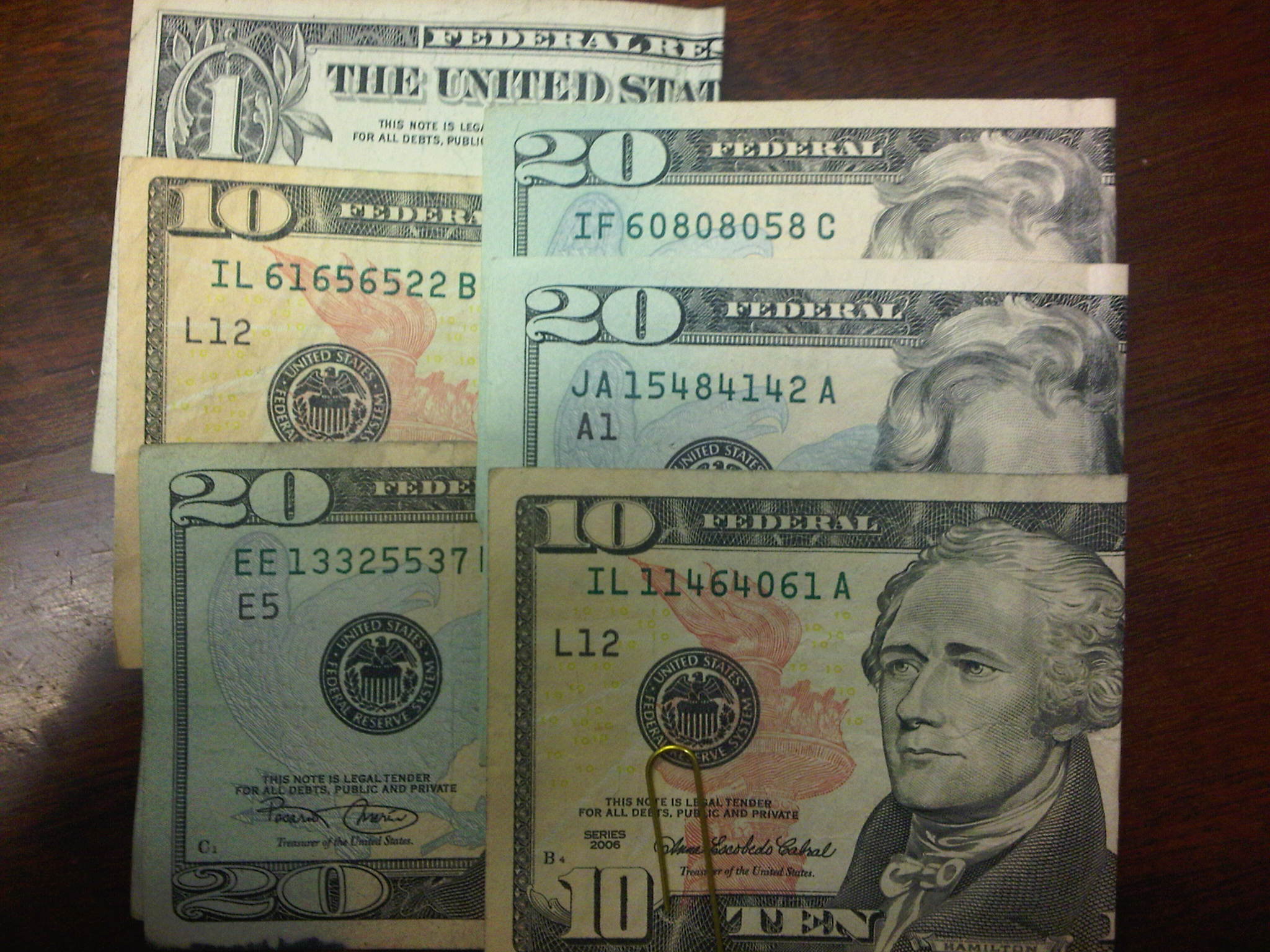
In the discussions over the debt ceiling, John Boehner said something to the effect that if a family or a business is borrowing too much it simply must tighten it’s belt. Continue reading

Why the TVA Wants Nuclear Power

Follow LJF97 on Twitter  Tweet

Fort Calhoun plant in the Missouri RiverIn “Why We Still Need Nuclear,” the “op-ed” piece written in the New York Times, July 30, 2011, Tom Kilgore, the President and CEO of the Tennessee Valley Authority, seems to have made up his mind to attempt to complete the Bellefonte 1 nuclear power plant, in Hollywood, Alabama. Mr. Kilgore is in good company: the President of Iran, Mahmoud Achmadinejad, also wants to build nuclear power plants.

The TVA began work on the Bellefonte nuclear plants in 1974. Construction was suspended in 1988, after the TVA spent about $4.1 Billion on the plant. The TVA wants to spend another $5 Billion over the next six to eight years to complete the plant. It would therefore cost a total of $9.1 Billion to construct a 1.26 gigawatt plant. That’s $7.22 Billion per gigawatt, plus interest, over a period that spans 34 years, with construction in three phases: 14 years of work from ’74 to ’88, 22 years of non-work, from ’88 to 2012, and another six to eight years of work. (Times Free Press, TVA News, TVA Environment).

This suggests the real reason why the TVA wants to complete the plant. Currently Bellefonte 1 a $4.1 billion liability on the TVA’s books. If the TVA adds another $5 Billion, this $4.1 hot white elephant will be magically transformed into a cool (but heat producing) 9.1 billion asset. Continue reading

Exxon Profits: $10,700,000,000 for the Quarter

Follow LJF97 on Twitter
Tweet

The Associated Press via the Sacramento Bee reported that “Exxon Mobil Corp. earned $10.7 billion … its highest quarterly profit since the third quarter of 2008…. However, Exxon officials noted that sluggish business investment, lower consumer spending and high debt would continue to weigh on the economy.”

Let’s do some math – Exxon earned $10.7 Billion this past quarter. Yet Exxon and other big oil companies receives $2 Billion to $3 Billion per year in tax subsidies. If divided equally, then Exxon would get $400 to $600 million per year, $100 to $150 Million per quarter. The subsidies amount to 0.93% to 1.4% of Exxon’s profits of $10.7 Billion this quarter, and 0.108% to 0.16$ of Exxon’s annual revenues of $370 Billion for the year ended 12/31/10 (Google Finance). This is equivalent to giving someone earning $50,000 per year a gift of $54 to $81.

A lot of people need help: American college students need help paying tuition, Americans on Medicare and Medicaid need help paying their medical bills, and Americans on Unemployment need help paying for food, people trying to design and build a renewable sustainable energy infrastructure. But we are helping oil companies.Why?

Let’s look again at the numbers. For the year ending Dec. 31, 2010, Exxon’s Gross Revenues were $383 Billion. Gross Profits were $107 Billion, and Income Before Taxes were $53 Billion. Profit was 27.9% of Gross Revenues.  Income before Taxes was 13.8% of Gross Revenues.

Exxon 12/31/10
Total Revenues $383 B
Gross Profit $107 B
Income before Taxes $53 B
Gross Profit / Revenues 27.94%
Income BT / Revenues 13.84%
Period  Income  Nominal Tax
 Year ending 12/31/2010  $53 Billion  $18.55 B
 Quarter ending 6/30/2011  10.7 Billion  $3.745 B

And according to Valeri Vasquez, at the Center for American Progress, here, Exxon’s tax rate is 17.6%. The nominal corporate rate is 35%.  With profits of $53 Billion last year, rather than receiving subsidies. Exxon should have paid $18.55 Billion in taxes last years. With profits of $10.7 Billion last quarter, Exxon should have paid $3.745 Billion.

Continue reading

U.S. settles with whistleblower Bunny Greenhouse

Follow LJF97 on Twitter
Tweet

 Below is an excerpt from Erik Eckholm’s piece in the Times, noting the settlement of litigation between Bunnatine “Bunny” Greenhouse and DOD for retaliatory action after her objections, in 2005, to the Halliburton/KBR no-bid contract for logistical support in Iraq. Greenhouse had been the Chief Contracting Officer for the Army Corps of Engineers. She’d previously had a perfect record of performance ratings.

More here

Her primary objections:

  • the study rationalizing the sole-source KBR contract was itself outsourced – to Halliburton/KBR, which recommended itself as the sole source;
  • Even if the contract’s premise was justified for the first few months on emergency grounds, it didn’t make sense for a multiyear, potentially indefinite contract.

Which raises the question of how much work KBR/Halliburton are doing now in Iraq, Afghanistan and elsewhere for DOD, CIA, et cet.  We note the it’s KBR’s former CEO, and later the United States Vice President, who made famous the phrase “undisclosed location.” (For readers from Brooklyn, “undisclosed location” roughly translates to “going to the mattresses.”) KBR is currently, publicly, one of two logistics contractors in Iraq – but classified contracts are, by definition, outside the scope of public review – and for practical purposes – outside the scope of Congressional review.

Continue reading

Debt, Catastrophe, and Foreign Entanglements

Follow LJF97 on Twitter
Tweet
A young father of our country. The battle raging today between Democrats and Republicans will not solve  the nation’s debt problems, nor avert a financial catastrophe in the future. The politicians do not appear to have a handle on a comprehensive solution to our financial woes. I’m not certain that I do, either, but I feel an obligation as a citizen and a stakeholder in our nation’s present and future to present my ideas and add to the debate.

The issues, as I see them, revolve around the debt ceiling, government obligations, the economy, consumer debt and what George Washington might consider foreign entanglements of the kind he warned us against in his farewell address. The solutions must benefit the American taxpayers today and in the future. Here are the issues and some ideas toward resolution. Continue reading

Roughing It

Interior of Pilatus PC 12.  Follow LJF97 on Twitter  Tweet A s they struggle to pay their bills, forced to work, the wealthy cope as only they can. By sending their children to summer camp in private jets. In  “To Reach Simple Life of Summer Camp, Lining Up for Private Jets” Christine Haughney, in the New York Times,  July 24, 2011, wrote:

 “A turboprop Pilatus PC-12 carrying Melissa T., her daughter, her daughter’s friend and a pile of lacrosse equipment took off for their home in Connecticut, following the girls’ three-week stay at Camp All-Star in nearby Kents Hill, Me. Shortly after, a Cessna Citation Excel arrived, and a mother, a father and their 13-year-old daughter emerged carrying a pink sleeping bag and two large duffel bags, all headed to Camp Vega in Fayette. … as the economy limps along, more of the nation’s wealthier families are cutting out the car ride and chartering planes to fly to summer camps. One private jet broker, Todd Rome of Blue Star Jets, BlueStarJets.com, said his summer-camp business had jumped 30 percent over the last year.”

A quick check on the Camp All Star web site’s “Dates & Rates” page suggests that 3 weeks will cost about $4500.  Trips, horseback riding and hockey are extra. Getting there on a private jet, would add $6,318 to  $15,240 per party, $2,106 to $5,080 per camper for a camper, his or her mom, and a friend.  As I tell people, it’s the trip, not only the destination.

Tell me again, Mr. Boehner, why the wealthy can’t afford to pay taxes?

Beechcraft 350, exteriorI did some checking. Went to Blue Star‘s website, priced a charter for three (3) from Allaire Airport in Monmouth County, New Jersey to Augsta State in Maine. I was surprised at how affordable it is. Blue Star offered 5 alternatives, all turboprops:

  • A Ratheon Super King BE 350, a 9-passenger aircraft, $6,318, which is $2,106 per passenger,
  • The BE-C90, a 6 passenger turboprop, $11,270, or $3,757 per passenger,
  • The BE-100, an 8 passenger turboprop: $12,151 for the trip, $4,050 per passenger.
  • The BE 200, in a 9-passenger configuration, for $13,043, $4,348 per passenger, and
  • The BE-200 in an 8-passenger configuration: $15,240, $5,080 per passenger.

These data are summarized in the table below.

Plane Trip Per Passenger, 3 passengers Per Passenger If Full
Ratheon Super King BE 3509 Passenger Turboprop $6,318 $2,106 per person. $702 per person for 9.
BE-C90, 6 passenger Turboprop $11,270 $3,757 per person. $1,878 per person for 6.
BE-100, 8 passenger Turboprop $12,151 $4,050 per person. $1,519 per person for 8.
BE-200 9 Passenger Turboprop $13,043 $4,348 per person. $1,630 per person for 9.
BE-200 8 Passenger Turboprop $15,240 $5,080 per person. $1,905 per person for 8.

I don’t know if the airline serves food, drinks, or offers in-flight movies. But caviar is only $115 per oz (Russian Sevruga, Caviar Express, Glendale, CA).