Everything You Need To Know About Ricin, The Poison Mailed To President Obama | Popular Science

Everything You Need To Know About Ricin, The Poison Mailed To President ObamaRicin is one of the most poisonous substances on Earth, its scarily easy to make, and somebody is mailing it to the President and at least one U.S. senator. What it is, how it works, and more, inside.By Dan Nosowitz

via Everything You Need To Know About Ricin, The Poison Mailed To President Obama | Popular Science.

35 Dead in Fire and Explosion at Texas Fertilizer Warehouse. Others Missing.

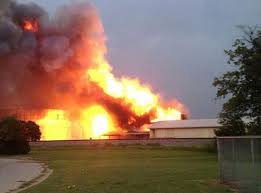
West Fertilizer Explosion. Courtesy Mother Jones.

West Fertilizer Explosion. Courtesy Mother Jones.

West, Texas. April 18, 2013. An explosion during a fire at a fertilizer plant in West, Texas killed 35, including at least 10 firefighters and EMS responders. At this time, 6 other EMS responders are missing. If not found alive, and the outlook appears grim, the death toll will jump to 41, including at least 16 First Responders. This is a devastating loss of first responders in a community of 2600 and a tragic loss to the families and friends of those killed. 160 people were injured, according to CNN, here.
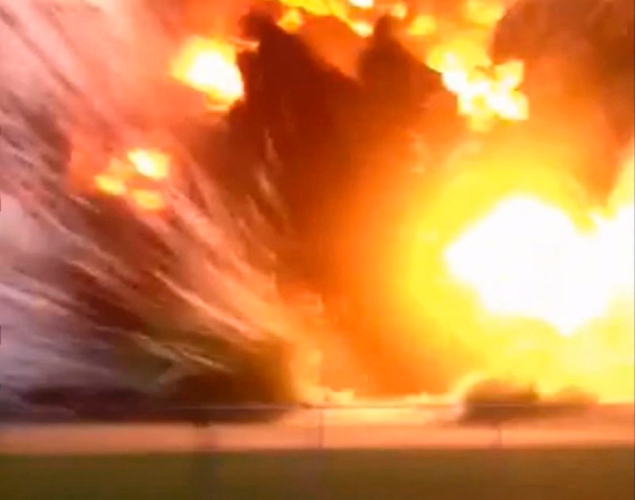
Detail of the Explosion, Courtesy NY Daily News

Detail of the Explosion

This news clip, from CBS, reports, “The explosion, with the force of a small earthquake, was felt 15 miles away. The blast knocked out windows half-a-mile away.”
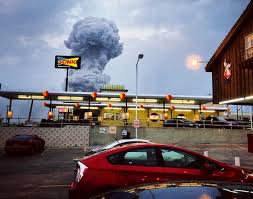
Cloud from explosion at Texas fertilizer plant.

Cloud from explosion at Texas fertilizer plant.

West Fertilizer Company may have been negligent – that’s for the courts to decide.Ricardo Lopez, writing in the LA Times, reported, “West Fertilizer Co. paid $5,250 last year to the U.S. Pipeline and Hazardous Materials Safety Administration, PHMSA, over violations discovered in 2011.”   CBS also reported that the last EPA inspection was 1985 and that West Fertilizer Co was fined in 2006 for failure to implement a disaster plan.

The Houston Chronicle, reported, here, that

  • West Fertilizer was cited in 2006 for lacking a permit,
  • An intermediate school near the plant has been evacuated “more than once” due to fumes and pollution from the plant,
  • The plant had not been inspected by Occupational Health and Safety Administration, OSHA in more than 10 years,
  • West Fertilizer, incorporated in Texas in May 2004, did not get its state air pollution permit until 2007 after a complaint was filed about foul odors from the facility.

The Chronicle, also reported, here, that Donald Adair, the owner of Adair Grain and West Fertilizer, issued a statement Friday afternoon expressing sympathy,

My heart is broken with grief for the tragic losses to so many families in our community. I know that everyone has been deeply affected by this incident. Loved ones have been injured or killed. Homes have been damaged or destroyed. Our hearts go out to everyone who has suffered.

I was devastated to learn that we lost one of our employees in the explosion. He bravely responded to the fire at the facility as a volunteer firefighter. I will never forget his bravery and his sacrifice, or that of his colleagues who rushed to the trouble.

The citizens of Texas and of the United States need to decide if the regulatory regimes are inadequate. Government safety regulations are like government regulations prohibiting drunk driving. Drunk drivers don’t mean to do any harm, they just want to get home after having a good time. Remember that canonical accounting rule: “Assets = Liabilities + Owners’ Equity.” Business owners want to make money selling valuable products, and just want to add a few dollars to “Owners’ Equity” perhaps by subtracting a few dollars from the category of “Safety & Emergency Preparedness” in the “Liabilities,” column.

Final questions:

If fertilizer is so explosive why is it good to use on our lawns and use it to grow our food? What alternatives are available?

Mr. Adair sounds like an alcoholic who has just learned that he has killed someone after driving while intoxicated and crashing into another car. If we prosecute drunk drivers for killing by accident while under the influence, or creating what Justice Holmes called “A clear and present danger,” shouldn’t we prosecute owners of corporations for killing by accident, or creating a clear and present danger, especially when, as appears to be the case here, there is a pattern of disregard for regulation?

The staff, budgets, and authority of regulatory and enforcement agencies such as PHMSA, OSHA, and the EPA have been cut under the administrations of President George W. Bush and by the House of Representatives under the leadership of John Boehner. Should we continue to cut the staff and budgets of PHMSAOSHAEPA and other regulatory and enforcement agencies or should we rethink our approach to law enforcement and regulation?

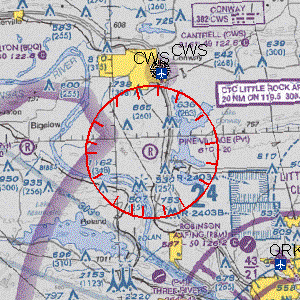
Exxon Manages No-Fly Zone Over Arkansas Oil Spill

No Fly Zone over Mayflower, Arkansas

No Fly Zone over Mayflower, Arkansas

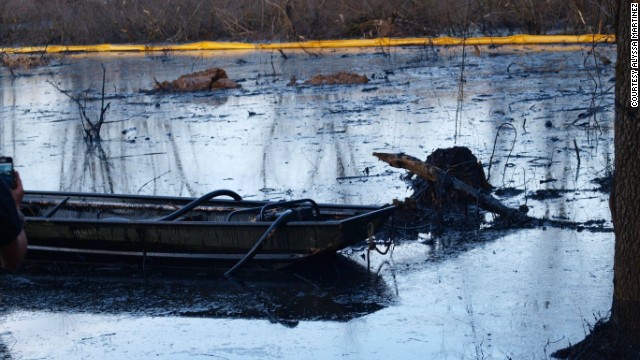
An Exxon pipe leaked, flooding 500,000 gallons of crude oil onto Mayflower, Arkansas. Exxon is in charge of a No Fly Zone in the vicinity of the spill.

  1. Do independent observers who want to witness the tar sands spill disaster have to ask Exxon’s permission?
  2. Why Is Exxon Controlling the No-Fly Zone Over Arkansas Tar Sands Spill?
  3. Because it wants to? Because it can?

Because … the FAA put an Exxon employee in charge of a  no-fly zone over Exxon’s latest oil spill.

Contact the FAA at (866) 835-5322 and the White House  at (202) 456-1111 to ask Why is an oil company managing a no-fly-zone over an oil spill it caused? Why is a publicly traded for-profit oil company that caused an oil spill managing air traffic in the vicinity of the oil spill?

Continue reading

Mayflower Oil Spill – Economic Externalities

Image showing oil covering lake at Dawson's Cove, Mayflower, Arkansas

Image showing oil covering lake at Dawson’s Cove, Mayflower, Arkansas

Back in the mid-1970’s, Amory Lovins, currently with the Rocky Mountain Institute, said “The cheapest unit of energy is the one you don’t need to buy.” He called this the “Nega-Watt.” We now know that the Nega-Watt is also the cleanest unit of energy. And the second cheapest – and second cleanest – is the one which doesn’t need fuel and doesn’t create waste, which might be called the “Nega-Fuel-Watt” or “Nega-Waste-Watt.”

Edward McAllister, reported in Reuters, covered by Yahoo News,

Warren Andrews had just finished putting up balloons for his stepdaughter’s 18th birthday party at their suburban home in Mayflower, Arkansas, when his wife came inside and said something was wrong.

After stepping out of his house, and taking one glance, he immediately dialed 911.

“I don’t know what’s going on, but I’ve got a river of oil coming down the street at me,” Andrews told the operator.

Five minutes later, the slick of noxious black crude spewing from a ruptured Exxon Mobil pipeline was eight feet wide, six inches deep and growing fast.

We now know that an Exxon Mobil pipeline, like the proposed Keystone Pipeline, carrying Canadian crude oil ruptured on Friday, March 29, 2913, spilling an estimated 500,000 gallons of oil into the grounds of the town. 500,000 gallons is roughly 11,000 barrels.

Continue reading

Inspiring aspirations – preamble of the founding charter of the United Nationa

We  – me, certainly – think of myself as relatively immune to surprise, by evil or good. People say that it’s in the New York City Charter, right next to the rule about not being nice to tourists, lest we lose our municipal reputation for poor manners and indifference. But the right words still can, and should, have the power to move us – and founding documents often contain evidence of the best and worst of society. The United States Constitution, for example, was structured around giving slave-holding states a disproportionate amount of power (because of the Three-Fifths Compromise, and the undemocratic Senate, in which representation is distinctly undemocratic. Within the slave states, of course, individual slave-owners were free to treat their slaves as they wished, extracting as much economic value as was possible. And so among slave owners the economic incentive was a “race to the bottom.” ((We had thought that the phrase originated with Adam Smith, but further research suggests that first use may have been by Justice Louis Brandeis in Ligget Co. v. Lee (288 U.S. 517, 558–559) (1933). )) Yet, other parts of the body of the Constitution and Bill of rights bespeak noble and compassionate aims. And the absence of even a single use of the words “slave” or “slavery” are testimony that at least some of the Framers were opposed to, ashamed of, slavery.

And so with the United Nations: we can all bring to mind easily events in which the United Nations’ conduct – and even more often, cowardly inaction and silence doesn’t mean its existence hasn’t affirmatively led to good outcomes, and by creating channels for communication and  temp0rizing – the latter being essential if the casus belli is in some part a politician with a bruised ego.

It is in this context that we present to you the Preamble of the founding Charter of the United Nations. It’s notable for many reasons but we think it worth pointing out that you can read this entire block of text from top to bottom, including the headings, or, you can read all the body copy as one statement, and read all of the headings, without reference to the text beneath each heading, as a separate complementary statement. Here it is:

PREAMBLE

WE THE PEOPLES OF THE UNITED NATIONS DETERMINED

  • to save succeeding generations from the scourge of war, which twice in our lifetime has brought untold sorrow to mankind, and
  • to reaffirm faith in fundamental human rights, in the dignity and worth of the human person, in the equal rights of men and women and of nations large and small, and
  • to establish conditions under which justice and respect for the obligations arising from treaties and other sources of international law can be maintained, and
  • to promote social progress and better standards of life in larger freedom,

AND FOR THESE ENDS

  • to practice tolerance and live together in peace with one another as good neighbours, and
  • to unite our strength to maintain international peace and security, and
  • to ensure, by the acceptance of principles and the institution of methods, that armed force shall not be used, save in the common interest, and
  • to employ international machinery for the promotion of the economic and social advancement of all peoples,

HAVE RESOLVED TO COMBINE OUR EFFORTS TO ACCOMPLISH THESE AIMS

Accordingly, our respective Governments, through representatives assembled in the city of San Francisco, who have exhibited their full powers found to be in good and due form, have agreed to the present Charter of the United Nations and do hereby establish an international organization to be known as the United Nations.

You can read the Preamble – and the nineteen chapters of the Charter – here on the site of the United Nations. And, if you think that world peace, social justice and economic fairness are worth discussing ((No sarcasm intended; thanere are people who believe, for instance, that we should let markets sort things for us, that collective efforts to improve things  will only make things worse; those aren’t unreasonable positions, even if we don’t share them. The latter proposition is merely an application of Murphy’s Law to global matters. )), consider the proposition that a global language would be an affirmative step. We think it’s worth considering, even if it’s a limited language, and we don’t think the discussion begins or ends with Esperanto, and in fact even a limited vocabulary in a signed language, spoken by even a small number – say 2% – of each country’s population.

Brett Zamir, the brilliant creator of, among other things, at least 11 Firefox extensions – is owed our thanks for inspiring this post, is an advocate of the universal-language premise and an advocate of Gestuno, also known as International Sign. Brett, with permission “from the World Federation of the Deaf, [has] put online an early book on Gestuno,”


And if you’ve now got an appetite for founding documents, the Universal Declaration of Human Rights is a must-read.

Charles Komanoff

Charles Komanoff is widely known for his work as an energy-policy analyst, transport economist and environmental activist in New York City. He “re-founded” NYC’s bike-advocacy group Transportation Alternatives in the 1980s, co-founded the pedestrian-rights group Right Of Way in the 1990s, and wrote or edited the landmark reports Subsidies for Traffic, The Bicycle Blueprint, and Killed By Automobile. Earlier, Komanoff gained prominence for deconstructing the disastrous economics of nuclear power in the United States as author-researcher and expert witness for states and municipalities across the U.S. He wrote his visionary oil-saving report, Ending The Oil Age, after witnessing at close range the traumatic events of 9/11. Komanoff’s current work includes modeling and advocacy for traffic pricing and free transit in New York City in partnership with renowned civic activist Ted Kheel. He also directs the Carbon Tax Center, a clearinghouse for information, research and advocacy on behalf of revenue-neutral carbon taxes to address the climate crisis. A math-and-economics graduate of Harvard, Komanoff lives with his wife and two sons in lower Manhattan.11 Hanover Square21st FloorNYC 10005kea@igc.org

via Charles Komanoff.

Fracking: Scientifically Proven Clean – But Is It ‘Junk Science’?


President Reagan against the US Flag

Ronald Reagan, Courtesy Google Images

The petrochemical industry says “Trust us. The Fracking fluids are water mixed with sand, and a few – 0.5% – other chemicals, household chemicals, like chlorine and benzine.”

According to SourceWatch,

There were more than 493,000 active natural-gas wells across 31 states in the U.S. in 2009, almost double the number in 1990. Around 90 percent have used fracking … according to the drilling industry.[2] Nationwide, residents living near fracked gas wells have filed over 1,000 complaints regarding tainted water, severe illnesses, livestock deaths, and fish kills.

While 1000 complaints on 493,000 wells is a low percentage, if fracking was safe and clean, why the complaints and controversy? President Reagan used to say “Trust people, but check.” Well,

  • If the speed limit was 350 miles per hour; then no one would get a speeding ticket.
  • If the tax code was “Whatever you feel like paying;” then I certainly would pay less taxes.
  • So if fracking was safe and clean; then why the complaints?

The industry says “Trust us, fracking is clean…. We adhere to all regulations…. ” But what are the regulations?

Continue reading

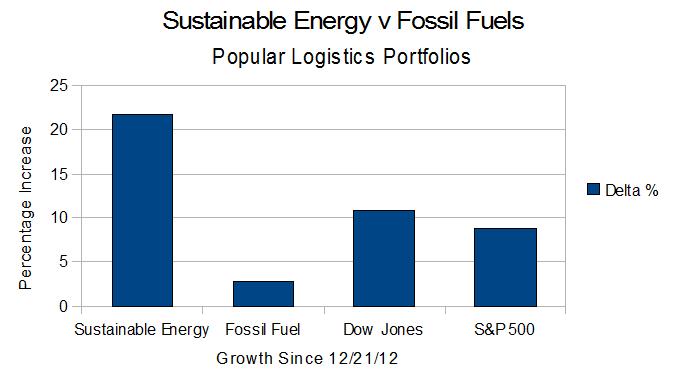
Energy Portfolios At 3 Months: Sustainable Energy: Up 22%. Fossil Fuels: Up 3%

PopLog_EPort.130322

As of the close of trading on March 22, 2013, excluding the effects of dividends, the Sustainable Energy reference portfolio I created on 12/21/12 is up 21.67%, from $8.0 Million to $9.73 Million. Excluding the effects of dividends, the Fossil Fuel Reference Virtual Portfolio is up 2.7%, from $8.0 Million to $8.221 Million in the same time frame. The Dow Jones Industrial Average is up 10.85% and the S&P 500 is up 8.88%.  Note that this is a simulation.  Note also that this doesn’t take into account the effects of dividends.

Continue reading

Vizicities: Rich Geo Data Visualization Tool

Vizicities, now in development, may be the richest and most layered geographic information tool ever, which might make it the ideal urban planning, risk management and disaster response management tool ever. Based explicitly on the data layers in the game SimCity, it’s being developed by Pete Smart and Rob Hawkes.

Here’s a screenshot from SimCity:

SimCity Screenshot

SimCity Screenshot

And here are screenshots of Vizicities, still in early days:

[imagebrowser id=107]


Fracking – Above the Law

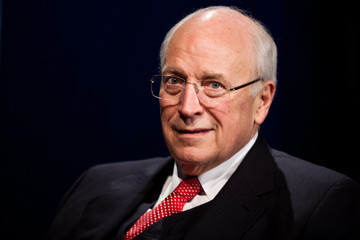
Former Vice President & former CEO of Halliburton, Richard B. Cheney

Former Vice President & former CEO of Halliburton, Richard B. Cheney

Energy From Shale says,

“Spent or used fracturing fluids are normally recovered at the initial stage of well production and recycled in a closed system for future use or disposed of under regulation, either by surface discharge where authorized under the Clean Water Act or by injection into Class II wells

as authorized under the Safe Drinking Water Act. Regulation may also allow recovered fracturing fluids to be disposed of at appropriate commercial facilities. Not all fracturing fluid returns to the surface. Over the life of the well, some is left behind and confined by thousands of feet of rock layers.”

This is a very misleading statement, given that Congress, in 2005, passed the “Halliburton Rule,” which exempted Fracking from regulation by the Clean Water Act and the Safe Drinking Water Act.

As noted by the Environmental Defense Center, here, and Source Watch, here, Fracking is actually exempt from Eight (8) major federal regulations.

  1. The Clean Water Act , due to the “Halliburton loophole” pushed through by former Vice-President/former Halliburton CEO Dick Cheney, exempting corporations from revealing the chemicals used in fracking fluid;
  2. The Safe Drinking Water Act, also due  to the “Halliburton loophole”.
  3. The Toxic Release Inventory under the Emergency Planning and Community Right-to-Know Act.
  4. The Resource Conservation and Recovery Act, which exempts fracking from federal regulations pertaining to hazardous waste;
  5. The Comprehensive Environmental Response, Compensation, and Liability Act;
  6. The Clean Air Act,
  7. The National Environmental Policy Act; and
  8. The Superfund law, which requires that polluters remediate for carcinogens like benzene released into the environment, except if they come from oil or gas;

As noted here, Bill McKibben, of 350.org, R. P. Siegel, who co-wrote Vapor Trails and writes for Triple Pundit, Al Gore, and many others, including myself, who think about global warming and climate change and see the challenges presented by our need for energy and the potential of sustainable energy suggest that it would be better to use wind, solar, geothermal, and other fuel free systems, and to manufacture fuel from sewage, garbage, agricultural waste and algae than to dig fossil fuels – and heavy metals – out of the ground – and in so doing severely damage the biosphere.

But I think McKibben, Siegel, Gore, and Cheney would agree with me that “Fracking” is aptly named.

Part 3 in a Series.

  1. L. Furman, 3/12/13, Hydro Fracturing, aka Fracking, Dirty & Ugly, but What Choice do we Have?
  2. L. Furman, 3/14/13, Fracking,Best Practices versus Current Practice
  3. L. Furman, 3/18/13, Fracking – Above the Law

An analyst with Popular Logistics, Lawrence J. Furman holds a Bachelor’s in Biology, and an MBA in “Managing for Sustainability” from Marlboro College, Vermont. He also has experience in information technology. He can be reached at ‘L Furman 97” at G Mail.

Carbon Sequestration: A Surreal Carbon Solution

What was once a mountain

What was once a mountain. image courtesy of Appalachian Voices. AppVoices.org

Writing in the New York Times, here, Joe Nocera, says,

Sometime this summer, in Odessa, Tex., the Summit Power Group plans to break ground on a $2.5 billion coal gasification power plant. Summit has named this the Texas Clean Energy Project. With good reason.

The people behind this project want people to believe that the energy the plant produces is clean. Mr. Nocera continues.

Part of the promise of this power plant is its use of gasified coal; because the gasification process doesn’t burn the coal, it makes for far cleaner energy than a traditional coal-fired plant.

The plant doesn’t burn SOLID coal. It gassifies the coal, then burns the gas. It’s still burning the coal. Only this process uses energy to gassify the coal. It then uses more energy to capture and sequester 90% of the carbon.  Think, Mr. Nocera, how can this make CLEANER?  Answer: It Can’t and it Doesn’t. But it can – and does – make it more expensive.

And what about the Arsenic, Mercury, Uranium that are embedded in coal? And the processes that dig coal out of the ground? Refer to Appalachian Voices for more on mountaintop removal.

Continue reading

Nuclear Power – Not “Carbon Free” Energy

Fukushima

Fukushima

Jeff Hanson, spokesman for the Omaha Public Power District, OPPD, in discussing the Fort Calhoun reactor, closed since April, 2011 for refueling then, in June, 2011, due to flooding, said,

“[Nuclear power is] a reliable source of electricity that’s carbon-free. That becomes more valuable going forward,” OPPD spokesman Jeff Hanson said.

This assertion that nuclear power is “carbon free”  or that it produces “no greenhouse gases” is based on a simplified view of one aspect of the nuclear power – fissioning uranium – and ignores the complete picture.

Fallout Map from Fukushima Disaster

Fallout Map from Fukushima Disaster

While fissioning uranium does not release carbon dioxide, when we look at the entire fuel / waste cycle we see that getting uranium out of the ground, fashioning it into fuel rods, transporting the fuel rods to the plant and managing the waste requires energy, and much of this energy releases carbon dioxide.

Continue reading

Fort Calhoun – Still Shut Down – Since April, 2011

Fort Calhoun nuclear power plant, within the Missouri

Ft. Calhoun Nuclear Station, within the Missouri

The Fort Calhoun Nuclear Plant, (OPPD / NRC) 19 Miles from Omaha, Nebraska, was shut-down for refueling in April, 2011. Flooded by the Missouri River in June, 2011, the plant remains shut-down. It Will Be Two Years – 2 YEARS – In April!

The Omaha Public Power District, OPPD has raised rates 6.9% to finance a $143 million repair bill. This does not include the costs to the OPPD to purchase electricity that the plant would provide – which is 25% of the power that the OPPD needs on a daily basis.. This also does not include costs to replace teflon coated wiring – which disintegrates on exposure to high levels of radiation – and costs to repair some of the plant’s support structures.  This also probably does not include the costs to the district for Excelon to run the plant for the next 20 years, reported on Jan. 28, 2013, by Kevin Cole, of Omaha.com, the Omaha World-Herald, (here),

“For the first year of management work, OPPD will pay Exelon between $20 million and $26.5 million.”

In a telephone interview with me, in August, 2011, David Lochbaum, of the Union of Concerned Scientists, UCS, estimated the total cost of maintaining the plant and purchasing replacement electricity to be $1.0 million per day – roughly $600 million, to date.

By asking Exelon to run the plant, it looks like the OPPD has decided to keep the plant running. Similarly, by requiring the OPPD to do what needs to be done to bring the plant back up, it seems like the NRC has decided that this 50 year old and severely constrained nuclear power plant is worth bringing back on line. Who is asking whether or not this is a good idea?  It seems to me that OPPD would be better off asking Warren Buffett, Omaha based head of Berkshire Hathaway how to manage their assets than asking Exelon to spend whatever it takes to “Bring this bad boy back on-line.”

Continue reading

Fracking, Best Practices versus Current Practice


Gas Flare in North Dakota, Courtesy National Geographic

Gas Flare in North Dakota, Courtesy National Geographic

EnergyFromShale.org, the industry website, says,

“The oil and natural gas production industry uses these lessons to develop best practices to minimize the environmental and societal impacts associated with development.”

The image above from National Geographic, The New Oil Landscape, March, 2013, suggests that the ideal is far from the reality. And even if the “Frackers” used “Best Practices”, “Best Practices” for a carbon source of energy is not “Best Practice” for an sustainable economy. Efficient use of energy obtained via solar, wind, geothermal, marine hydro and in stream hydro are best practices. Fracking doesn’t even come close.

But even if extraction was done in such as manner as to isolate all heavy metals, carcinogens, radioisotopes and other pollutants from the biosphere, the whole point of hydro-fracturing is to extract carbon from beneath the earth, in order to burn it and transfer carbon dioxide – a greenhouse gas – into the atmosphere.

Bill McKibben, of 350.org, R. P. Siegel, who co-wrote Vapor Trails and writes for Triple Pundit, Al Gore, who won the popular vote for US President in 2000, and many others, including myself, who think about global warming and climate change and see the challenges presented by our need for energy and the potential of clean, renewable, sustainable energy suggest that it would be better to use wind, solar, geothermal, and other fuel free systems, and to manufacture fuel from sewage, garbage, agricultural waste and algae than to dig fossil fuels – and heavy metals – out of the ground – and in so doing severely damage the biosphere.

But I think we agree that “Fracking” is aptly named.

Part 2 in a Series.

  1. L. Furman, 3/12/13, Hydro Fracturing, aka Fracking, Dirty & Ugly, but What Choice do we Have?
  2. L. Furman, 3/14/13, Fracking, Best Practices versus Current Practice

An analyst with Popular Logistics, Lawrence J. Furman holds a Bachelor’s in Biology, an MBA in “Managing for Sustainability” from Marlboro College, experience with information technology. He can be reached at ‘L Furman 97” @ G Mail.


Dr. Irwin Redlener on President Obama’s State of the Union Address:

“The president made a strong case for universal early education in America, along with raising the minimum wage. But his commitment to eliminate extreme poverty and save children from preventable deaths was focused on children of the world. All of this is, of course, laudable. But we hoped to hear a commitment to eliminate child poverty in America, where more than 16 million children are facing grim challenges right now that undermine their futures – and the future economy of the nation.  Poor kids are not a voting block and they don’t have the capacity to influence public policy.  The sooner the president engages the full power of his office in the battle to eliminate child poverty, the better the prospects of every child reaching his or her potential.”

Statement by Irwin Redlener, MD on President Obama’s State of the Union Address

Via Dr. Irwin Redlener’s blog.  Dr. Redlener is the co-founder and president of The Children’s Health Fund.