Dare to Be Great, President Obama

US Presidential Inauguration

Close to One Million people were in Washington to celebrate President Obama’s second inauguration. As Rachel Maddow commented on her show, you can catch a glimpse of the character of the man in his unscripted moments. She showed footage of Barack the man, with Michelle and their children. Maddow also showed that on the occasion of his Second Inauguration, President Obama turned, as people walked past him, to regard the crowd, estimated on The Hill, to over 1,000,000 people, and said “I’ll never see this again.”

But we can also infer the character of the man from his speeches. He said “We” 65 times. He said “I” four times, including the phrase “you and I” twice.

Obama’s greatest accomplishments for his first term, according to an NBC Poll:

  1. Ending the War in Iraq
  2. Killing Osama bin Laden
  3. Raising taxes on the wealthiest while not raising taxes on everyone else.

I would add passing the Affordable Care Act, aka ObamaCare and thwarting the Republican efforts in the House and Senate to be a One Term President.

Continue reading

Barbara Buono will Win, Apple will Grow, Assad will Die and other forecasts for 2013


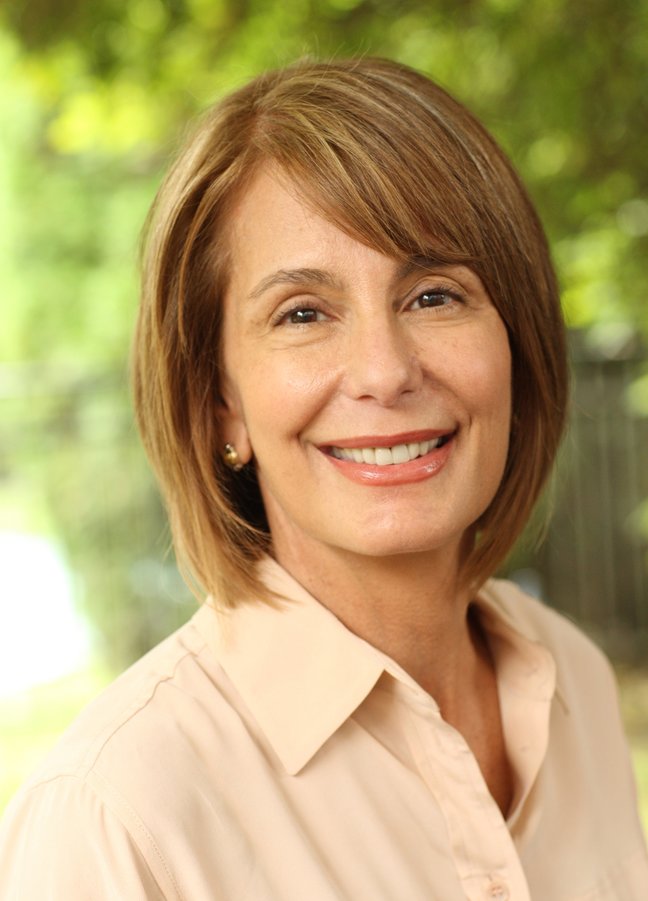
LF_w_Barbara_Buono

In “The World Will Not End and Other Predictions for 2012,” I developed a set of predictions for 2012, the accuracy of which were described by me in 2012 Revisited. Here are my predictions for 2013. As noted last year, I am extrapolating from patterns that I see – also known as reading tea leaves.

  1. New Jersey’s Governor Chris Christie will lose his re-election campaign to NJ Senator Barbara Buono, pictured with me, above. The Tea Party Republicans will not compromise with President Obama, Democrats in the House and Senate, or the Republican Leadership in the House and Senate.  They will, again, threaten to shut-down the U. S. government.
  2. A major hurricane will batter the Gulf Coast or the Eastern Seaboard, causing $25 to $80 Billion worth of damage. FEMA will be there to help.
  3. Apple will continue to report record sales and record profits. It will close out the year with a market capitalization around $650 Billion, up from today’s level of $470 Billion. If HP‘s Board doesn’t fire CEO Meg Whitman, HP may return to profitability. Dell‘s market share and market capitalization will fall.
  4. The wind and solar industries will increase in the US and globally, particularly Japan, which is now planning to have 100% renewable energy by 2040, and India, which is learning from the mistakes being made in China, Japan, and the West.
  5. Large industrial conglomerates will continue to design and sell wind turbines, LED lighting, PV solar modules and more energy efficient medical devices, etc.
  6. Assad will fall – and will die – by the end of 2014.
  7. Mohammed Morsi and the Moslem Brotherhood will consolidate power in Egypt, but will not abandon the Egypt – Israel peace treaty.
  8. Iran will provide weapons and support to Islamists in the Middle East, North Africa, and Central Asia.
  9. Israel, feeling threatened, and very concerned regarding Iran, Syria and Egypt, will ignore pressure to negotiate with the Palestinians.
  10. Roger Saillant and RP Siegel will not win any awards for their novel, Vapor Trails.

For an overview of the details see below.

Continue reading

How To Fix Social Security

Franklin-Roosevelt
Social Security will be solvent until 2038. (Social Security Adminstration, Summary of 2012 Annual Reports). Social Security is completely funded by the Social Security Tax and the payouts add nothing to the deficit. Reducing Social Security benefits will not reduce the Federal deficit one cent. Social Security benefits are fully funded until 2038. However, there are five changes to the structure of the Social Security tax that could, and I think should, be made.

First, eliminate the ceiling. Currently the Social Security tax is 6.2% of the first $110,000 of income. Everyone who makes $110,000 or less pays 6.2% of his or her income into the Social Security fund. People who make $50,000 pay $3,100. People who make $100,000 pay $6,200. People who make $110,000 pay $6,820. But people who make $1,000,000 also pay $6,820, as do people who make $100 million, or $1 billion. This makes Social Security a regressive tax. Eliminating the ceiling would make it flat tax.

Second, impose a floor, perhaps $25,000 per year. This would transform the tax from a regressive tax into a slightly progressive tax for the lower 80%.

Third, transform the structure of the tax to a fully progressive tax, as illustrated below.

Progressive Structure for Social Security
Income Tax Rate
Under $25,000 0.00%
$25,001 to $50,000 2.50%
$50,001 to $100,000 3.50%
$100,001 to $250,000 4.50%
$250,001 to $500,000 5.50%
$500,001 to $1.0 Million 6.50%
over $1.0 Million 7.50%
Table 1

Fourth, REQUIRE, elected and appointed representatives in all branches and at all levels of Federal government to participate in the program. That would include the President, Representatives in the House and Senate, the Honorable Justices of the Supreme Court, lower courts, as well as elected representatives in the governments of the states of the Union and territories.

And Fifth, consider Capital Gains, distributions from Trust Funds, and other distributions that are not “W2 Income” as defined by the Internal Revenue Service to be treated like “W2 Income” for the purposes of funding Social Security.

Other posts on tax policy:

  • How to Fix Medicare, Medicaid, and Social Security, 11/29/12, here.
  • Occupy Wall Street – On Taxes, 9/28/12, here.
  • Progressive Tax Policy, 10/28/11, here.
  • Taxes – the Price We Pay For Civilization, 8/7/11, here.

BombSight.org: using current geo data information to illustrate the London Blitz`

We’ve excerpted just a slice of a single view of Bombsight.org’s interactive map of the London Blitz. Our screen grab doesn’t  do it justice – no scrolling, zooming, no selection of time slices.  Check it out.


This is a project of the United Kingdom’s National Archives Image Library; we can imagine this map as a point of departure for other datasets, such us as overhead images of the damage and recovery. Compare this to one of the first iterations of the very first data map, Dr. John Snow’s mapping of cholera in London.

300px-Snow-cholera-map-1

Dashboard Camera Captures Airplane Falling

httpv://youtu.be/3Zaqi5DwCYE

Via Kottke.org, a Russian dashboard cam captures a plane crash. Apparently, according to Kottke, dashboard video is very popular in Russia. See Kottke’s earlier post Russians are dashboard-cam crazy.

I would disagree with Kottke. The Russians are not crazy. Apparently their legal and insurance systems are in such a state of failure that  vehicle owners must be prepared to capture their own evidence in order to prove their claims. Thus a driver with a dashboard camera can provide proof of the facts of a case.

Maybe that’s a good outcome – better evidence, more accurate outcomes – but a sad way to come to it. On the other hand, as we have seen here in the United States, after members of the LA Police were filmed beating Rodney King,  citizens with video have prompted the police to change their behavior.

Securing Our Schools, Part 2

 KIDS

(18 of the 20 children killed at Sandy Hook. Image courtesy of Island 106.)

In response to the killing of 20 children and four teachers, Dawn Hochsprung, the school’s beloved principal, and school psychologist Mary Sherlach at Sandy Hook Elementary School, the NRA’s Wayne LaPierre’s proposed stationing armed police, at taxpayer’s expense, in every school. We at Popular Logistics, think this wasn’t thought through – or is a “red herring” meant to distract people from the real problem – close to 300 million weapons in the hands of roughly 80 million people in the United States.  given the number of weapons in the USA, the number of people with weapons, the ease and lack of oversight with which people can obtain weapons, the editors of Popular Logistics, as discussed here, believe that we need to think seriously about securing our schools.

(Note that the NRA’s executive offices are at 11250 Waples Mill Rd, Fairfax, VA, 22030. The NRA can be reached via telephone to 703-267-1250, via Fax to 703-267-3985, and via e-mail at nracrdf@nrahq.org)

As with commercial aviation safety, we should start by securing, or hardening our schools. Our “back of the envelope” calculation suggests that we can do this for about $40,000 per school, and therefore $5.6 Billion for the 140,040 schools in the United States. That will be explored in Part 3 of this series. This post continues the discussion of development of a squad of officers/agents for each school, begun in Part 1.

Continue reading

An Armed Police Presence in Every School

Police officers, image courtesy of Bureau of Labor Statistics

Police Officers, Image courtesy of BLS.


Following the December 14, 2012 killing of 20 children, four teachers, the principal and psychologist in Sandy Hook Elementary School, and his mother by Adam Lanza in Newtown, Connecticut (CNN),  Wayne LaPierre (bio) of the National Rifle Association gave a “Press Conference” (in which the Press were not allowed to ask any questions). He suggested that the Federal Government hire police officers for every school in the USA (full transcript: Daily Caller, Washington Post).

Left unsaid is how many new police officers we would need, and what it would cost to hire, train, and equip them. Continue reading

2012 Revisited

Crystal Ball

In “The World Will Not End & Other Predictions for 2012, here, I wrote:

  1. Apple and IBM will continue to thrive. Microsoft will grow, slightly. Dell and HP will thrash. A share of Apple, which sold for $11 in December, 2001, and $380 in Dec. 2011, will sell for $480 in Dec. 2012.” (Mostly Correct, except Apple did better than I expected.)
  2. The Price of oil will be at $150 to $170 per barrel in Dec., 2012. The price of gasoline will hit $6.00 per gallon in NYC and California.” (Wrong)
  3. There will be another two or three tragic accidents in China. 20,000 people will die. (The number of accidents was underestimate. Their magnitude was overestimated – however … )
  4. There will be a disaster at a nuclear power plant in India, Pakistan, Russia, China, or North Korea. (Wrong)
  5. Wal-Mart will stop growing. Credit Unions, insurance co-ops and Food co-ops, however, will grow 10% to 25%. (Wrong on WalMart, right on Credit Unions, altho the numbers were off.)
  6. The amount of wind and solar energy deployed in the United States will continue to dramatically increase. (Right. Very Right!)
  7. The government of Bashar Al Assad will fall. (Wrong – but there’s still time.)
  8. Foreclosures will continue in the United States. (sadly, true, but not as bad as it could have been – thanks to Obama)
  9. Arizona Sheriff Joe Arpaio will resign. Calls for Clarence Thomas to recuse himself from matters involving his wife’s clients will become louder, but Justice Thomas will ignore them. A prominent politician who says “Marriage is between a man and a woman,” or her husband, will be “outed” as gay. President Obama will be re-elected.” (Right on Obama and the American voter. Wrong on Arpaio)
  10. The authors of Vapor Trails will not win a Nobel Prize for literature. They will not win a “MacArthur Genius Award.” Nor will I despite my work on this blog or “Sunbathing in Siberia” and the XBColdFingers project. (Right, tho I would have like to have been wrong on this one.)

Here are the details. Continue reading

Popular Logistics Sustainable Energy Portfolio

Earth from Space

Popular Logistics announces the Popular Logistics Sustainable Energy Portfolio Simulation.

This portfolio is composed of companies in the solar, biofuel and LED lighting industries.

I think these are disruptive technologies, like personal computers and workstations and client server software architecture in the 1980s and aircraft in the mid-20th and automobiles in the early 20th Century. We may be approaching, or may have recently crossed a “tipping point” in the Wind, Solar, LED lighting and Bio Fuel industries.

As points of reference, this “Sustainable Energy Portfolio” will be compared to an “UnSustainable Energy Portfolio,”  composed of oil industry stocks, and the Dow Jones Industrial Average and the S&P 500.

Continue reading

Solar Power & Electric Utilities: Is The Paradigm Shifting?

Ground Mounted Array.

The 16-module solar array pictured above was built in 2005.  It probably has 2.5 Kilowatt (KW) to 2.8 KW of nameplate capacity. In New Jersey, residential solar systems range from 3 KW to 30 KW. Most are between 4 and 10 KW. Commercial systems range from 8KW to 200 KW. Utility scale systems are in the 10 Mega Watt (MW) to 550 MW range. In 2005, the costs for small scale residential systems were around $8.50 / watt, exclusive of any incentives. Today it is probably around half that, and cheaper for the larger utility scale systems. 1.0 MW system would require 4,000 modules of 250 watts each. The system pictured above requires about 50 square feet of land.As illustrated by the photo of the Topaz array, below, a 550 MW system, like Topaz, would require 2.2 million modules, and would cover a lot of ground.

First Solar Topaz

First Solar, FSLR, a $2.8 Billion company, and Sunpower, SPWR, an $840 Million company, two of the pillars of what is left of the American solar energy industry, made some interesting statements in their 2011 annual reports: Continue reading

Fort Calhoun Nuclear Plant, Update.

Fort Calhoun Nuclear Plant

Back in April, 2011, the Fort Calhoun nuclear power plant, on the banks of the Missouri River about 19 miles north of Omaha, was shut down for refueling. The timing was perfect because in June, 2011, the Missouri River flooded. As pictured above, the plant that had been on the shore of the river was suddenly in the middle of the river.

THE PLANT IS STILL SHUT-DOWN – 20 Months after the incident.

Erin Golden, of the Omaha World News, told me on Dec. 19, 2012,

The plant is expected to be $129 million over budget in 2012. The OPPD [Omaha Public Power District] has set a target for the First Quarter of 2013 to bring the plant back on line. And the people at OPPD are optimistic that they will get the plant back on-line. The NRC, however, is not optimistic.

Continue reading

One Airport’s Trash Is 2 Million Worms’ Treasure : The Salt : NPR

Food waste is not just a problem for restaurants — airports also have to deal with piles of this kind of garbage.

At one of the nation’s busiest airports, Charlotte Douglas International in North Carolina, each passenger generates half a pound of garbage on average per visit. But instead of just sending all that trash to the landfill, Charlotte has taken a different approach. It’s the first airport to put worms to work dealing with trash.

Yes, worms.

Before the worms get a whack at the airport waste, there’s some human work required. Twenty-five tons of trash a day tumbles onto a conveyor belt under the supervision of Charlotte Airport housekeeping manager Bob Lucas.

“You see it coming down off the cascade up there,” Lucas says. “What that does is, it gives it like a waterfall effect. So it spreads it out on the belt a little bit more.”

A dozen employees pluck out recyclables and sort through aluminum, plastic and more, so passengers don’t have to do the sorting in the terminal.

In the four months since this operation got under way, trash going from the Charlotte airport to the landfill is down an impressive 70 percent. Recyclables are crushed, baled and sold for cash. There are shirts sorted and laundered and donated, and plastic cups collected. (The shirts come from people who toss clothing when they suddenly discover their suitcases are too heavy.)

The organic stuff — waste from airport restaurants, food scraps off planes, and the half-eaten Cinnabon that a traveler has tossed out — mixes in a big tank for a few days to start the composting process. Then it’s time for the stars of this show to take over.

“There’s the workers,” Lucas says, digging his fingers into the top layer of a 50-foot-long composting bin, “1.9 million of them.”

They are common backyard red wigglers, about 3 inches long, a quarter-inch around — and hungry. Lucas says they eat half their weight a day.

Organic waste ends up in a series of 50-foot beds where the worms do their work. Castings (aka worm poop) fall through a screen at the bottom of the bed and will be used as fertilizer on airport grounds. Enlarge image

Organic waste ends up in a series of 50-foot beds where the worms do their work. Castings (aka worm poop) fall through a screen at the bottom of the bed and will be used as fertilizer on airport grounds.

Julie Rose

“I have not heard of another airport that does that,” says Katherine Preston, environmental affairs director for Airports Council International-North America.

And that’s with good reason. First of all, recycling and worm composting take space many airports don’t have.

Plus, worms are finicky and — as Lucas recently learned — prone to crawling out en masse at times. That resulted in a panicked call to the guy who sold him the worms.

“First thing I told him: ‘They’re trying to leave.’ And he said, ‘Get a light and stick it under the bed.’ And they just turn around and go back in and they’re happy,” Lucas says.

Light on. Crisis averted. If Lucas can keep the worms happy, they’ll soon be producing enough worm poop to fertilize all of the airport’s flower beds and shrubs, Lucas says.

Worm poop. Go ahead and giggle. Charlotte officials sure did as they debated the $1.2 million it cost to launch the program. But they’re not laughing now: The airport expects to be making money off its trash in five years.

via One Airport’s Trash Is 2 Million Worms’ Treasure : The Salt : NPR.

A View From The Ground: Thailand Confronts Drug-Resistant Malaria : Shots – Health News : NPR

Global efforts to combat malaria are under threat from new strains of drug-resistant malaria, which are cropping up in Southeast Asia.

Over the last decade, the number of malaria deaths around the world has dropped sharply, from just over 1 million in 2000 to roughly 600,000 last year.

Much of that progress is due to the widespread use of drugs containing artemisinin. The new malaria drugs quickly kill the parasite.

But in Southeast Asia doctors are starting to see cracks in artemisinin’s armor. The drugs are working more slowly, and sometimes they’re failing to wipe out the malaria parasite entirely.

This 5-year-old boy was carried to a Thai malaria clinic by his mother from deep inside Myanmar. If the mother had waited even a day longer, doctors say, the child probably would have died.

Shots – Health News

Stakes Rise In Malaria Battle As Cracks Appear In Drug’s Armor

A second promo image for the malaria animation post.

Shots – Health News

Herbs And Empires: A Brief, Animated History Of Malaria Drugs

The World Health Organization reported Monday that artemisinin resistance has now been detected in four countries: Cambodia, Myanmar (also known as Burma), Thailand and Vietnam.

Although the resistance is still limited to Southeast Asia, WHO officials worry that it could spill out of the region.

Two hot spots for artemisinin resistance are in Thailand’s thickly forested border regions. One is along Thailand’s eastern border with Cambodia, and the other is on the country’s western boundary with Myanmar.

If artemisinin-based treatments become ineffective in Africa — where malaria remains the leading killer of children under the age of 5 — it could be disastrous. Doctors say they have few other powerful drugs to use against the disease.

Global funding for the fight against malaria rose to $1.71 billion in 2010, or nearly twentyfold since 2000. But it has plateaued in the past few years, the WHO said. Many malaria interventions, like distribution of bed nets and insecticide spraying have also leveled off during this time, the report found.

via A View From The Ground: Thailand Confronts Drug-Resistant Malaria : Shots – Health News : NPR.

Memory Quizzes Still Best For Alzheimer’s Diagnosis : Shots – Health News : NPR

When it comes to predicting whether someone will have Alzheimer’s disease, newfangled diagnostic tests for the illness aren’t as good as old-fashioned quizzes of thinking and memory.

That’s the word from a study that compared different methods for identifying Alzheimer’s. The results was just published in the Archives of General Psychiatry.

Scientists have been looking for a scan or lab test, such as changes in particular proteins in the blood, to simplify and speed up the detection of Alzheimer’s. The goal is to be able to identify people at risk of the illness long before symptoms such as impaired thinking surface. But that goal is far from being realized.

In this study, researchers compared how well biological and cognitive tests did at identifying whether people who already had mild cognitive impairment would go on to develop Alzheimer’s. They found that two tests measuring verbal memory were the best at predicting whether someone would develop Alzheimer’s in the next two years.

In those tests, people were read a story or a list of words, and then asked to recall the information 30 minutes later. In people who are progressing to Alzheimer’s, "there’s forgetting," neuroscientist Terry Goldberg, a co-author of the study, told Shots. "There’s an increased rate of forgetting."

One biological marker, a brain scan that measured changes in the thickness of the middle temporal lobe, also predicted people who went on to have Alzheimer’s. Other biological markers, such as tests for telltale proteins in blood and cerebrospinal fluid, also revealed changes, but not as well. Those tests have been used in research laboratories, but aren’t being used to test for Alzheimer’s in clinical practice.

"It’s not that the biomarkers didn’t work," says Goldberg, a professor at Hofstra North Shore-LIJ School of Medicine in Manhasset, N.Y. "But when you compared them head to head, you find that the cognitive markers are the most robust."

That means that the thinking tests can also be used for guides in designing therapies. In fact, Goldberg says, they may ultimately be more useful that the biological tests. "What you want to change is how people do in everyday life," he says.

The trick is to diagnose mild cognitive impairment, a stage between normal forgetfulness and serious cognitive problems. It sometimes leads to Alzheimer’s, but can be caused by other diseases, too. People with MCI can be more forgetful, have trouble multitasking, and take longer to remember or decide. This study looked at 116 people with MCI who were diagnosed with Alzheimer’s disease in two years, 204 people with MCI who didn’t get Alzheimer’s and 197 healthy people as controls.

The study used information from the Alzheimer’s Disease NeuroImaging Initiative, which is looking for ways to identify risk factors for Alzheimer’s, and techniques for early diagnosis.

The goal would then be to create treatments that could profoundly slow or even halt the disease’s process. No such treatments exist now. Earlier this year, the National Institute on Aging redefined Alzheimer’s, broadening the definition and including the fact that biomarkers can be used for early detection. But since there is no treatment that slows or halts the disease, those biomarker tests don’t help patients or families manage the disease.

via Memory Quizzes Still Best For Alzheimer's Diagnosis : Shots – Health News : NPR.