Microserrated Kitchen Knife – Never Needs Sharpening

10 CM / 3.9 in Nogent Profile. Florence Fabricant’s article,  DINER’S JOURNAL; Food Stuff: Keep the Hacksaw In the Garage, from the Style Section of the New York Times, caught my eye, and fired up my imagination in regards to citrus and other fruit drinks in the heat.

Neatly slice that blushing peach or that ripe tomato bursting with juice. Cut thin rounds of firm, peppery salami. Gently quarter sea scallops. Whack wedges of lime for drinks. These and many more everyday kitchen jobs will not daunt the new French paring knives by Nogent, with handles in bathing-suit colors.

What makes these knives unusual is that the stainless steel blades have serrations so fine as to be almost microscopic. They do not give hacksaw treatment to delicate fruits; they can handle tougher jobs, and, for those whose sharpening steels and stones simply gather dust, they require no sharpening.

Stainless steel knives with nearly microscopic serrations and no need of sharpening? The implications are not trivial: firefighters and rescue workers cutting people from seat belts; remote medical facilities able to re-use surgical instruments after sterilization but without resharpening? Survival knives which can undergo protracted use in harsh environments?

According to Nogent’s Canadian website, the firm is French, has been in existence since 1823.


Slashdot: new camo paint also protects against heat

New Face Paint Protects Soldiers Against Bomb Blasts

Posted by samzenpus on Monday August 27, @02:26PM

from the not-in-the-face dept.

Zothecula writes "For millennia, face paint has helped soldiers avoid being seen by enemy forces. Recently, however, a team of scientists from the University of Southern Mississippi announced that a new type of face paint may soon also be able to protect against the heat of bomb blasts and other explosions. Additionally, a clear version of the paint could be used by civilian firefighters."

via Slashdot: News for nerds, stuff that matters.

NYPD Use of force outside Empire State Building: should we be investing in more use-of-force training?

In a shooting just after 9:00 A.M. Friday, two NYPD officers shot and killed a man who’d just shot a former co-worker. and also wounded nine bystanders.

By Associated Press, Published: August 24 | Updated: Saturday, August 25, 5:04 PM


NEW YORK — All nine people injured during a dramatic confrontation between police and a gunman outside the Empire State Building were wounded by gunfire from the two officers, police said Saturday, citing ballistics evidence. Via NYPD: Ballistics show all 9 wounded outside Empire State Building were shot by police – The Washington Post:

The veteran patrolmen who opened fire on the suit-clad gunman, Jeffrey Johnson, had only an instant to react when he whirled around and pointed a .45-caliber pistol at them as they approached him from behind on a busy sidewalk.

Officer Craig Matthews shot seven times, and Officer Robert Sinishtaj fired nine times, police said. Neither had ever fired their weapons before on a patrol. The volley of gunfire felled Johnson in just a few seconds and left nine other people bleeding on the sidewalk. In the initial chaos Friday, it wasn’t clear whether Johnson or the officers were responsible for the trail of the wounded, but based on ballistic and other evidence, “it appears that all nine of the victims were struck either by fragments or by bullets fired by police,” Police Commissioner Raymond Kelly told reporters Saturday at a community event in Harlem. Police officials have said the officers appeared to have no choice but to shoot Johnson, whose body had 10 bullet wounds in the chest, arms and legs.

After-the-fact criticism is a cheap shot, and while these two cops did what they had to do, it’s still fair to question NYPD firearms policy: are our officers using the best handguns, given our population density, and whether we’re giving our officers not only the best training possible, but sufficient hours at sufficient intervals.

The truth be told – whatever the merits and failings of N.Y.P.D. Academy training, once it’s over, our cops are going to the range to qualify twice a year. It’s not enough.

Ecuador offers Wikileaks founder indefinite asylum

Julian Assange, the founder of Wikileaks, has been offered asylum indefinitely in the Ecuadorian embassy in London:

CARACAS, Venezuela — The government of Ecuador is prepared to allow Julian Assange, the founder of WikiLeaks, to remain in its embassy in London indefinitely under a type of humanitarian protection, a government official said in Quito on Wednesday night. Mr. Assange has been holed up in the embassy for two months seeking asylum.

Amid an escalating confrontation with Britain over Mr. Assange, Ecuadorean officials said they would announce the decision of the country’s president, Rafael Correa, on Thursday. The official said that the British government had made it clear it would not allow Mr. Assange to leave the country to travel to Ecuador, so even with a grant of asylum or similar protection, he would probably remain stuck in the embassy.

From Ecuador to Let Julian Assange Stay in Its London Embassy, by  William Neuman and Maggie Ayala at NYTimes.com

We’re not sure – not having reviewed the Wikileaks document set – that we’ve reached an opinion of the damage done by Mr. Assange; on the one hand, we believe the adage that, in political matters, “sunlight is the best disinfectant.” But governments do have legitimate needs,  particularly in the short term, to keep confidences, and especially to protect sources and methods. But we have a sense that the rules are being bent in Mr. Assange’s case: the sudden appearance of accusations of sex crimes committed in Sweden, and now reports that Britain threatened Ecuador with essentially using force to invade its embassy, effectively discarding several centuries of diplomatic law and custom. Those diplomatic practices are part of what allows us to keep lines of communication, direct and indirect, between nations, and have the potential of keeping open the possibility of non-violent resolution even when at the edge of the abyss.

Earlier Wednesday, Ecuador’s foreign minister, Ricardo Patiño, said that the British authorities had threatened to barge into the country’s embassy in London if officials did not hand over Mr. Assange. “Today we have received from the United Kingdom an explicit threat in writing that they could assault our embassy in London if Ecuador does not hand over Julian Assange,” Mr. Patiño said at a news conference in Quito, adding defiantly, “We are not a British colony.”

Also from Ecuador to Let Julian Assange Stay in Its London Embassy, by  William Neuman and Maggie Ayala at NYTimes.com


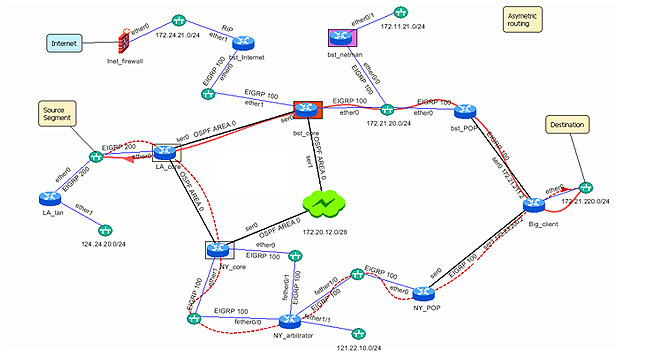
Assessing the Threat of Cyberwar

Sample Map

Bob Garfield began the segment, Assessing the True Threat of Cyberwar, on the WNYC radio show On the Media, on Friday, August 10, 2012,

Last year when a water pump in Springfield, Illinois burned out, a water district employee noticed that the system had been accessed remotely from somewhere inside Russia. Two days later, a memo leaked from the Illinois Intelligence Fusion Center, made up of state police, members of the FBI and the Department of Homeland Security, blamed the pump failure on Russian hackers. It looked to be the first example on American soil of the worst case scenario in cyber warfare, that a hacker could wreak havoc in the physical world.

Continue reading

Gonorrhea Evolving; Almost Untreatable

Treatment history. Courtesy of CDC and the AthlanticJames Hamblin, MD, at The Atlantic, here,  writes,

The list of effective antibiotics has been dwindling as the bacteria became resistant, and now it’s down to one. Five years ago, the CDC said fluoroquinolones were no longer effective, but oral cephalosporins were still a common/easy treatment. Now injected ceftriaxone is the only recommended effective drug we have left. And it has to be given along with either azithromycin or doxycycline.

Dr. Hamblin and The Atlantic also reproduced the graphic, above, tracing the treatments in use from 1988 to 2010.  Penicillins stopped being effective in the early 1990’s. While this news is disturbing, it also illustrates how evolution works. A small percentage survive because of natural resistance. They reproduce. Their offspring have the resistant genes.  Whether it’s grey moths that are obvious on trees in pristine environments and difficult to see on trees where the smog coloured the bark, pests in a farm field, or infectious bacteria, the principle is the same.

Looking from a whole systems perspective, maybe we need to develop medications that stimulate the human immune response, rather than medications that try to kill the bacteria. Continue reading

AT&T Seeks to Phase Out Landlines: “Relics of a Bygone Era”

POTS (Plain Old Telephone Service) lines proved an extraordinarily rugged communications system, highly energy efficient, and easy to keep going in the event of power failure (because while the local nodes, known in the trade as “switches” or “central offices” may need emergency generators, they’re not power hungry).

Another critical point is that while the central offices (C.O.’s) get their power from the local utility or emergency generators, the phones get their power from the central office. Thus, telephone service stays up in a power failure.

Piezo-electric phones are another rugged and extraordinary technology. These are sound powered-telephones. Sound waves of a person’s voice can power a clear and audible signal for up to five miles. (If you’ve seen them in action in the field or in movies, the cranking which precedes the call is for the bell on the other end.) These phones are required in underground mining, on naval ships, and are in use in prisons and jails to provide communications between the two sides of transparent barriers in visiting rooms. (Hence the absence of wires leading from the handsets).

That’s why the copper-wire based POTS system – a network which can survive a power network failure – is so critical. Here’s what James Grahame of Retro Thing reported back in 2009:

AT&T recently informed the FCC that they consider traditional landline telephones to be “relics of a by-gone era.” It’s a sad moment, because it comes as official acknowledgment that Alexander Graham Bell’s quaint analog system is now outdated enough to be a corporate nuisance.

However, the truth is that the plain old telephone service (POTS) has been mostly digital for years. The only analog part of the system is the final run to your house. So, while internet-based Voice Over IP (VoIP) service would be easier to deploy and maintain, those who insist on having a fixed home line won’t see a dramatic difference.

I’m mildly concerned by AT&T’s assertion that, “It makes no sense to require service providers to operate and maintain two distinct networks when technology and consumer preferences have made one of them increasingly obsolete.” Surely they’re intimately aware that the mobile phone network is considerably more profitable than the landline side of the business. Cellular service requires personal handsets, each with its own (often steep) fees and data surcharges. After all, few people replace their landline handsets every 18 months, and texting is out of the question on a rotary phone.

AT&T Seeks to Phase Out Landlines

Grahame is on the money here; we think there’s a strong argument to be  made for local sound-powered phone networks, say between police stations, hospitals, places of worship and schools  (both often used in emergencies for organization and shelter). See also our earlier post, Military leaders conclude simpler technology less failure-prone, more reliable.

Wikipedia Entry: Sound-powered telephone

Three marines murdered after accepting dinner invitation in Afghanistan; number of coalition forces killed by Afghans rises

, writing on NPR’s news blog “The Two-Way,” reports on the latest attack by Afghanis posing as allies of coalition force. From Three U.S. Troops Killed In Latest ‘Green On Blue’ Attack:

“Three U.S. Forces-Afghanistan service members died following an attack by an individual wearing an Afghan uniform in southwest Afghanistan today,” according to a statement from the International Security Assistance Force – Afghanistan.

NPR’s Soraya Sarhaddi Nelson, who is in Kabul, says more than one individual in an Afghan military or police uniform may have done the shooting. She’s reports that “a senior Afghan police official” said the Americans were invited to a dinner and that during the meal several police recruits stood up and opened fire.

The New York Times writes that “Muhammad Sharif, the governor of Sangin District of Helmand Province, where the killings took place,” said it was a local police commander who invited the Americans “to eat dinner at his check post on Thursday.”

There’s been a claim of responsibility from someone saying he speaks for the Taliban.

CNN notes that today’s attack “came a day after Secretary of State Hillary Clinton condemned an attack in the eastern Kunar province that killed USAID Foreign Service Officer Ragaei Abdelfattah, three ISAF service members and an Afghan civilian, and injured a State Department Foreign Service officer. That led Clinton to issue a statement “strongly” condemning the attack — but adding that “it strengthens our resolve to continue working with the Afghan people to build their economy, democratic institutions, rule of law, and security so that Afghanistan can stand on its own as a stable, secure, and increasingly prosperous country.”

“Glowing Tooll Handles” – reduce loss of critical tools during crises –

From user jolshefsky at the always-outstanding site Instructables, this simple technique for making tools hard to lose in the dark, Glowing Tool Handles – a technique helpful during mionor inconveniences, but which may rise to the chllenge and become more useful the serious the situation.

We recommend the following: ig you’re only going to do this for one type of tool, do it for flashlights and around light switches.

But think of other applications: first aid equipment, any tools such as paintbrushes,

Buggy-Whips, Railroads & Oil: Systems Thinking on Fuel

West Texas PumpjackAt the 6th Annual Babson Energy Conference, “Energy, Environment, & Entrepreneurship: Challenging Assumptions, Changing Perceptions”, here, held March 30, 2012, Cimbria Badenhausen, (LinkedIn), an alum of the Marlboro College MBA in Managing for Sustainability, asked Tahmid Mizan, Senior Planning Advisor of Exxon Mobil, “Are you an ENERGY company or a PETROLEUM company?”

Mr. Mizan, of Exxon, didn’t answer the question.

Henry Ford, when asked why he doesn’t use focus groups, is believed to have said, “If I asked people what they wanted, they’d tell me faster horses.” (HBR) Continue reading

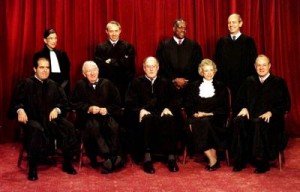
Justice Scalia on the Second Amendment

US Supreme Court Justice Antonin ScaliaJustice Antonin Scalia, interviewed on Fox News, talking about the July 20, 2012, massacre Aurora, Colorado, said,

Obviously the amendment does not apply to arms that cannot be hand carried. It’s to ‘keep and bear’ so it doesn’t apply to cannons but I suppose there are hand-held rocket launchers that can bring down airplanes that will have to be decided…. My starting point and probably my ending point will be what limitations are within the understood limitations that society had at the time.

The segment can be watched here, on YouTube. Continue reading

Sustainable Investing, Value Investing & Speculation

Earth from Space

Investing for Sustainable Value – changing the paradigm – is critical – because we only have one earth.

This post suggests that investing in Cree, the Ford Motor Company, GT Advanced Technologies, Lighting Sciences, and Solazyme, are investments in companies that are shifting the paradigm toward sustainability. Investments in Cree, Lighting Sciences and Solazyme appear speculative at this time. Investments in Ford and GT Advanced Technologies appear to be “value” investments with significant margins of safety.

Sustainable development is that which meets the needs of the present generation without compromising the abilities of future generations to meet their needs.” This canonical definition was offered in “Our Common Future,” a report to the United Nations by the Brundland Commission in 1987. Report here, see also wikipedia. “Sustainable Investing,” according to Krosinsky and Robins, is “an approach to investing driven by the long-term economic, environmental and social risks and opportunities facing the global economy.” Continue reading

The Second Amendment – Revisited

What does the Second Amendment mean in the context of the Aurora Massacre? Columbine? Virginia Tech? Rep. Giffords Town Meeting? The assassination attempt on President Reagan? The assassination attempts on President Ford? The assassinations of President John Kennedy, Robert Kennedy and Martin Luther King Jr? And conditions in other countries, Syria? Iraq? Iran?

Fat Man and Little Boy“A well-regulated Militia, being necessary to the security of a free State, the right of the people to keep and bear Arms shall not be infringed.”

US Constitution, Bill of Rights, Amendment 2.

Does this give each of us the right to our own nuclear warheads and other weapons of mass destruction? If not, what right does it convey? Continue reading

US report says Iraq ‘rebuilders’ died by hundreds – Boston.com

Excerpted from “Iraq ‘rebuilders’ Died by Hundreds,”  by Robert Burns, AP National Security Writer, via Boston.com (the online presence of The Boston Globe).

In the first tally of its kind, a federal investigative agency has calculated that at least 719 people, nearly half of them Americans, were killed working on projects to rebuild Iraq following the U.S. invasion in 2003.

The toll represents an aspect of the Iraq war that is rarely brought to public attention, overshadowed by the much higher number killed in combat as well as the billions of taxpayer dollars squandered on reconstruction.

There is no confirmed total number of Iraq war deaths. The U.S. military lost 4,488 in Iraq, and its allies a little over 300. The number of Iraq deaths has not been established but is thought to exceed 100,000.

Navy Cmdr. Duane G. Wolfe was among the 719. He was not fighting the insurgency, but it was fighting him.

He was among the army of lawyers, engineers, contractors and others who paid a heavy price trying to put a broken Iraq and its shattered economy back together. Their deaths were recorded among the war’s combat fatalities, but until now no one has carved out the “rebuilder” deaths as a subset of the overall casualty list.

Wolfe was killed on May 25, 2009, in a roadside bombing while returning to Baghdad after inspecting a waste water treatment plant under construction near Fallujah in Iraq’s western province of Anbar. The $100 million project endured long delays and large cost overruns, and a U.S. federal audit last fall concluded that it probably was not worth the cost. The audit said “many” people died getting it built, but it did not say how many.

via US report says Iraq ‘rebuilders’ died by hundreds – Boston.com.