Gasoline Consumption Calculator – from http://www.verbrauchsrechner.de (via LibreOffice)

Gasoline Consumption Calculator is a free LibreOffice template for use in calculating  vehicles’ mileage per gallon, as well as other ways to calculate cost:

Project Description


How does it work?
Input:
  • Date
  • Start km
  • Target km
  • Liter tanked
  • Price for Gasoline


Output (automatic):

  • Mileage
  • Consumption per 100 km
  • Price per km

We assume with this data, one could also factor in price, cost of insurance, garaging the car,  and repairs, (and in New City, the disguised over the course of time Gasoline Consumption Calculator

Colorado movie theater attack: first reports

Mark Memmott. an NPR journalist who is one of the hosts of the NPR blog “The Two-Way,”  and his colleagues at NPR have done an outstanding job reporting this story. We’ll be checking back with NPR and other sources; it’s our hope to provide some context for these events, and what inferences and implications should be made and understood given the relative sophistication of the attack (we’ll explain why we think, in relative terms, this incident shows some signs of planning and sophistication) and the relatively low frequency of attacks in theaters, movie theaters,restaurants,  arenas – places where the are large numbers of relatively relaxed people.

In other words, a target-rich environment.

Some of what’s known at present :

  • At least 14 people are dead, police say.
  • 50 or so were reportedly injured.
  • One suspect is in custody.
  • The suspect has told police that there are explosives at his restaurant.
  • Some witness accounts report smoke bombs being used by the gunman, and at least one witness reported the use of tear gas.

from Mark Memmott, Real-Life Horror: Many Killed, Dozens Wounded At Colorado Movie Theater, on The Two-Way blog, a  project of National Public Radio (NPR).

Aside from the horror which the survivors, victims and their families must wrestle for the rest of their lives; there are law-enforcement and societal challenges. The theater and the mall in which it is located has become a crime scene. Law enforcement must get the victims and the survivors out of the theater; they must get the wounded to hospitals. Law enforcement must also interview the witnesses. The largest, most flexible government-owned space is a local public school.

Should we harden schools for use in emergencies? If so, we must install emergency generators on each of the 93,000 K-12 public schools in the USA. If so, should those generating systems be a mix of solar, wind, hydro, and battery systems or should they be diesel. Diesel generators are cheaper but diesel fuel costs money. Solar, wind, hydro and battery systems are more expensive but use no fuel, and can be used all the time. If we use hybrid or electric school buses, then can we use the bus batteries to power the schools during a power failure?

suicide among veterans

BBC


Lopate


infographic (with Garry)


From the National Institutes of Health:

Suicide is a major, preventable public health problem. In 2007, it was the tenth leading cause of death in the U.S., accounting for 34,598 deaths.1 The overall rate was 11.3 suicide deaths per 100,000 people.1 An estimated 11 attempted suicides occur per every suicide death.1

Suicidal behavior is complex. Some risk factors vary with age, gender, or ethnic group and may occur in combination or change over time.

If you are in a crisis and need help right away:

Call this toll-free number, available 24 hours a day, every day: 1-800-273-TALK (8255). You will reach the National Suicide Prevention Lifeline, a service available to anyone. You may call for yourself or for someone you care about. All calls are confidential.

What are the risk factors for suicide?

Research shows that risk factors for suicide include:

  • depression and other mental disorders, or a substance-abuse disorder (often in combination with other mental disorders). More than 90 percent of people who die by suicide have these risk factors.2
  • prior suicide attempt
  • family history of mental disorder or substance abuse
  • family history of suicide
  • family violence, including physical or sexual abuse
  • firearms in the home,3 the method used in more than half of suicides
  • incarceration
  • exposure to the suicidal behavior of others, such as family members, peers, or media figures.2

However, suicide and suicidal behavior are not normal responses to stress; many people have these risk factors, but are not suicidal. Research also shows that the risk for suicide is associated with changes in brain chemicals called neurotransmitters, including serotonin. Decreased levels of serotonin have been found in people with depression, impulsive disorders, and a history of suicide attempts, and in the brains of suicide victims. 4

Are women or men at higher risk?

  • Suicide was the seventh leading cause of death for males and the fifteenth leading cause of death for females in 2007.1
  • Almost four times as many males as females die by suicide.1
  • Firearms, suffocation, and poison are by far the most common methods of suicide, overall. However, men and women differ in the method used, as shown below.1
Suicide by: Males (%) Females (%)
Firearms 56 30
Suffocation 24 21
Poisoning 13 40

Is suicide common among children and young people?

In 2007, suicide was the third leading cause of death for young people ages 15 to 24.1 Of every 100,000 young people in each age group, the following number died by suicide:1

  • Children ages 10 to 14 — 0.9 per 100,000
  • Adolescents ages 15 to 19 — 6.9 per 100,000
  • Young adults ages 20 to 24 — 12.7 per 100,000

As in the general population, young people were much more likely to use firearms, suffocation, and poisoning than other methods of suicide, overall. However, while adolescents and young adults were more likely to use firearms than suffocation, children were dramatically more likely to use suffocation.1

There were also gender differences in suicide among young people, as follows:

  • Nearly five times as many males as females ages 15 to 19 died by suicide.1
  • Just under six times as many males as females ages 20 to 24 died by suicide.1

Are older adults at risk?

Older Americans are disproportionately likely to die by suicide.

  • Of every 100,000 people ages 65 and older, 14.3 died by suicide in 2007. This figure is higher than the national average of 11.3 suicides per 100,000 people in the general population. 1
  • Non-Hispanic white men age 85 or older had an even higher rate, with 47 suicide deaths per 100,000.1

Are Some Ethnic Groups or Races at Higher Risk?

Of every 100,000 people in each of the following ethnic/racial groups below, the following number died by suicide in 2007.1

  • Highest rates:
    • American Indian and Alaska Natives — 14.3 per 100,000
    • Non-Hispanic Whites — 13.5 per 100,000
  • Lowest rates:
    • Hispanics — 6.0 per 100,000
    • Non-Hispanic Blacks — 5.1 per 100,000
    • Asian and Pacific Islanders — 6.2 per 100,000

What are some risk factors for nonfatal suicide attempts?

  • As noted, an estimated 11 nonfatal suicide attempts occur per every suicide death. Men and the elderly are more likely to have fatal attempts than are women and youth.1
  • Risk factors for nonfatal suicide attempts by adults include depression and other mental disorders, alcohol and other substance abuse and separation or divorce.5,6
  • Risk factors for attempted suicide by youth include depression, alcohol or other drug-use disorder, physical or sexual abuse, and disruptive behavior.6,7
  • Most suicide attempts are expressions of extreme distress, not harmless bids for attention. A person who appears suicidal should not be left alone and needs immediate mental-health treatment.

What can be done to prevent suicide?

Research helps determine which factors can be modified to help prevent suicide and which interventions are appropriate for specific groups of people. Before being put into practice, prevention programs should be tested through research to determine their safety and effectiveness.8 For example, because research has shown that mental and substance-abuse disorders are major risk factors for suicide, many programs also focus on treating these disorders as well as addressing suicide risk directly.

Studies showed that a type of psychotherapy called cognitive therapy reduced the rate of repeated suicide attempts by 50 percent during a year of follow-up. A previous suicide attempt is among the strongest predictors of subsequent suicide, and cognitive therapy helps suicide attempters consider alternative actions when thoughts of self-harm arise.9

Specific kinds of psychotherapy may be helpful for specific groups of people. For example, a treatment called dialectical behavior therapy reduced suicide attempts by half, compared with other kinds of therapy, in people with borderline personality disorder (a serious disorder of emotion regulation).10

The medication clozapine is approved by the Food and Drug Administration for suicide prevention in people with schizophrenia.11 Other promising medications and psychosocial treatments for suicidal people are being tested.

Since research shows that older adults and women who die by suicide are likely to have seen a primary care provider in the year before death, improving primary-care providers’ ability to recognize and treat risk factors may help prevent suicide among these groups.12 Improving outreach to men at risk is a major challenge in need of investigation.

from NIMH · Suicide in the U.S.: Statistics and Prevention

XXX

Apple & Blackberry – Yesterday, Today, & Tomorrow

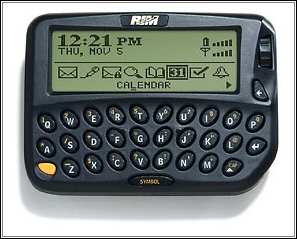
Blackberry 850 - 2-way messagingBack in 1999, I was walking down a hall to the data center of a US Navy base in Virginia, when I noticed a sign that said “Cell Phones Prohibited. Deadly Force Is Authorized in this Area.” Fortunately my cellphone didn’t ring.

One of my colleagues had an Apple Newton. Just as the Osborne and Kaypro led to the Compaq and the laptops, PDAs running the Newton operating system and PDAs from Go Computers led to the Palm Pilot, and ultimately to the iPod, iPhone, and iPad, but that’s another story.

Research In Motion had just introduced the Blackberry 850 handheld. My colleagues in the financial industry had them. I understood the potential and wanted one. That too is another story.


Continue reading

Cyberwar: USA & Israel v Iran, China v USA, Russia v The World

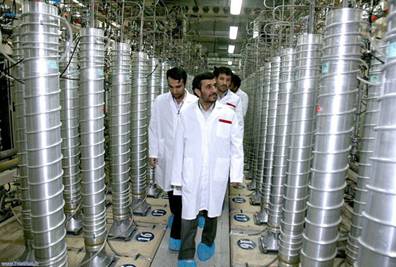
Iranian Pres. Achmadinejad at Natanz

Iranian Pres. Achmadinejad at Natanz.

Focusing on “Operation Olympic Games,” the US efforts behind the Flame and Stuxnet cyber attacks, Mischa Glenny, in “A Weapon We Can’t Control,” an op-ed in the NY Times, 6/24/12, says the U.S. has “fired the starting gun in a new arms race … cyberweaponry.” However, Mr. Glenny ignores efforts by hackers in China and from the former Soviet Union.

Continue reading

Co-Ops 102: Credit Unions

“Not for profit, not for charity, but for service.”

– Credit Union motto

“The National Bank at a profit sells road maps for the soul to the old folks home and the college.”

–   Bob Dylan, “Tombstone Blues

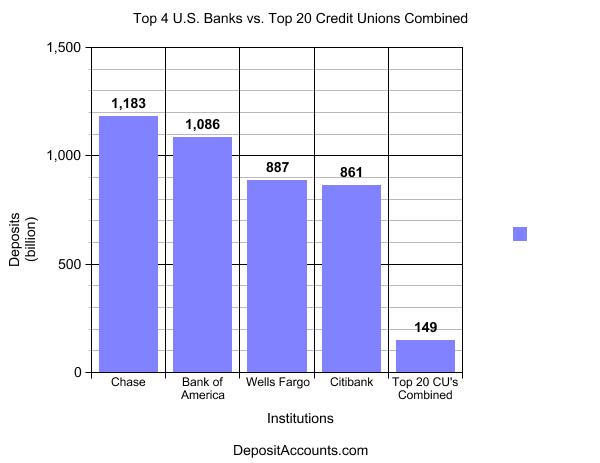
Graph showing deposits of top 20 credit unions and top four banks in the US

Back in 2010, over 9,000 credit unions in the United States had over $500 Billion in deposits. In November, 2011, the top 20 credit unions had $149 Billion in deposits, while Chase, Bank of America, Wells Fargo, and Citibank, the four largest U.S. banks, had over $4.0 trillion. However, as of the end of the first quarter, 2012, credit unions had over $1.0 trillion in deposits – their deposits doubled since 2010.  What happened?

Continue reading

How to blow $6 billion on a tech project | Ars Technica

n 1997, the Defense Department began its quest for the perfect family of radios: software-defined radios that, like computers, could be reprogrammed for different missions and could communicate with everything the US military used. Digital signal processing could adaptively use available radio spectrum based on the needs of the moment, turning soldiers, tanks, planes, and ships into nodes of a broadband radio-based network.The goal was to solve radio problems like this one in Afghanistan, detailed by the Center for Public Integrity in January 2012. Soldiers who watched an ambush forming on a ridge nearby found themselves limited by the hugely variable needs of their many radio systems: They had short-range models for talking with the reconstruction team; longer-range versions for reaching headquarters 25 miles away; and a backup satellite radio in case the mountains blocked the transmission. An Air Force controller carried his own radio for talking to jet fighters overhead and a separate radio for downloading streaming video from the aircraft. Some of these radios worked only while the troopers were stationary; others were simply too cumbersome to operate on the move.But the program meant to fix the mess, called the Joint Tactical Radio System JTRS, instead became a massive 15-year software and hardware development mess of its own, involving five sub-programs and multiple multi-billion dollar contracts. It has been a financial disaster for the DOD. Billions were thrown away on technology that will never see the light of day, despite multiple heroic efforts to pull the project back from the brink of disaster.JTRS provides a textbook case of what not to do in a technology development program, proving that even a few great ideas can’t save a project that has been over-specified and under-tested, and that remains blinkered to what’s going on in the world around it.

via How to blow $6 billion on a tech project | Ars Technica.

Co-Ops 101: More than Brown Rice, Granola, & Honey

When they think of cooperatives, Americans may think of hippies and brown rice, granola, and food co-ops like the Brattleboro Food Co-op, in Vermont, and the Flatbush Food Coop, in Brooklyn, New York. Israelis tend to think first of Kibbutzim and Moshavim, the collective farms of the early days of the Yishuv and the State of Israel that have evolved into corporations.  Eastern Europeans may think of the Kolhoz, the collective farms of the failed Soviet state.

Continue reading

Rod Nordlund/NYTimes.com

Rod Nordlund, Tmes correspondent in and around Afghanistan:

This is the only passable route for heavy truck traffic bringing NATO supplies in from the Central Asian republics to the north, as they now must come.

There are other roads, but they are often single-lane dirt tracks through even higher mountain passes, or they are frequently subject to ambushes by insurgents and bandits. So a tunnel built to handle 1,000 vehicles a day, and until the Pakistani boycott against NATO in November handling 2,000, now tries — and often fails — to let 10,000 vehicles through, alternating northbound and southbound truck traffic every other day.


See also BBC News – US cuts Pakistan aid over jailing of ‘Bin Laden doctor’

NY Times: Hydraulic Fracturing: “Cleaner than Coal”

Helicopter Cruising Greenland Ice Sheet

Helicopter Cruising Greenland Ice Sheet

To Make Fracturing Safer,” editorial, in May 11, 2012, begins “Gas … is cleaner than coal” and concludes “Oil and and gas drilling will always be a risky business; the administration cannot let pass this opportunity to make it safer.”

Clean and Green within 18 is the opportunity the Administration should not let pass. We should – MUST – shift to 100% sustainable energy in 18 years! Solar, wind and other sustainable energy systems do not require fuel and day-to-day operations do not create waste. Thus these “negafuelwatt” systems are clean; not just “cleaner than coal.” And they are also cleaner than oil, gas, and nuclear power.

Continue reading

Facebook IPO: The Sound of Bubbles Popping

Soap Bubble

Soap Bubble, by Irfan Mirza

 Facebook went public on Friday, May 18, 2012. Trading for FB opened at $42.025 per share, giving the company a market capitalization of $72.76 Billion. However, Facebook closed it’s first day as a publicly traded stock down 9.3% at $38.105 per share. On it’s second day, Monday, May 21, it opened at $36.53 per share and closed at $34.03 per share, dropping another 6.8%, and 19% from the opening price. It’s sliding is raising eyebrows in the financial media (Business Week, Chicago Tribune, Reuters).

A Bubble Popping, by Richard Heeks

Bubble Pop, by Richard Heeks

But the question may be less “Why is Facebook’s stock price dropping?” or “Who’s to blame?” than “What should be it’s price?

GMO‘s Jeremy Grantham talks about “Reversion to the Mean.” The mean, however, for a stock with 2 days of history is not statistically meaningful. So I compared it to Apple, Google, IBM, Microsoft, and Oracle, pulling data off of the Internet at Finance.Google.Com after the close of trading on Monday, May 21, 2012.

(Image Links: Soap Bubble & Bubble Pop)

Continue reading

What do these two technologies have in common?

What is/are the relationship(s) between the technologies pictured here? We’re not trying to be unfair, so we’ll explain that one image is of a pilot climbing into an F-16, and the other is of a whistle.

[nggallery id=103]

They differences, of course, are intuitive: The F-16, while still being manufactured for export to selected countries, is no longer being purchased by the United States military, but those still in service are intended to remain in service until 2025, which speaks volumes about the complexity of military aircraft design and the consequent length of the design cycle. The F-16 is unquestionably a weapons system or platform: there are many cofigurations of armament, electronic countermeasure, complex IFF systems (“Identify Friend or Foe,” an automated means of reducing friendly fire incidents on the one hand, and thereby permitting faster action by pilots who are, by using IFF, at less risk of accidentally attacking an ally, a colleague, perhaps even a friend and comrade); training is complex and demanding; because of its complexity and maneuvering ability, the F-16 is unforgiving of error.

The whistle, the WW-3 Res-Q™ Whistle, has a single function: to call for help and direct help towards the signaler (so perhaps two related functions), and its characteristics include:

  • Loud, shrill, dual tone audible from great distance
  • Unique flat design prevents holding water
  • Required by SOLAS 83
  • Meets USCG/SOLAS requirements
  • Aids in land or sea rescues
  • Use on life jackets, vests, foul weather gear, ring buoys, rafts, keychains, etc.
  • Developed for the U.S. Navy; used by NASA, major airlines and shipping companies
  • Complete with 18-inch (45.5 cm) lanyard

Its only safety defect is its greatest virtue: users and persons near them may experience discomfort or transient hearing loss because it is so loud. It’s simple to operate; as Lauren Bacall said in the film Key Largo,

“If you want me just whistle. You know how to whistle don’t you? Just put your lips together and blow.”

Lauren Bacall, The Complete Films of Humphrey Bogart; found at  Lauren Bacall Quotes Page, via GoodReads.com

So what do they have in common?

  1. The same parent company, Cobham plc, makes both components and subsystems for the F-16 and other very complicated pieces of tech costing millions of dollars, as well as the Res-Q-Whistle, which often retails for under $3 USD. It’s hard to imagine that there’s much of an economic motive for Cobham in selling these whistles, but we’re glad they have them on the market.
  2. The pilot stepping into the F-16 probably has the Res-Q-Whistle in his survival gear which, because its most likely use is after ejection and parachuting and consequently has carefully rationed space, says something about the perceived value of the whistle. Insofar as we know, the $2 whistle must be purchased separately, and is not included in the price of the more expensive F-16 subsystems and accessories.


Thanks to RFCafe.com for providing the link which led to this piece.