Do We Need Nuclear Power? Part 3

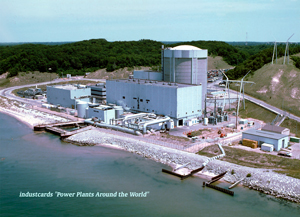
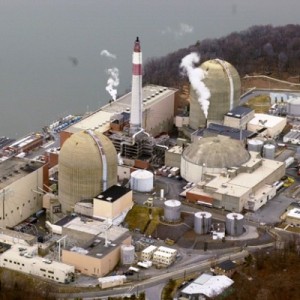
Aerial photo of Indian Point, courtesy Columbia University Earth Institute

Indian Point, Aerial view, courtesy Earth Institute

Indian Point’s two reactors, operating since 1974 and 1976, generate up to 30 percent of New York City and Westchester’s power. Yet the plant remains controversial.

March 1, 2012, Michael Gerrard, director of the Center for Climate Change Law, moderated  the Forum on the Future of Indian Point held at Columbia Law School. The forum asked whether Indian Point was “Safe, Secure and Vital or an Unacceptable Risk?”   Renee Cho covered it on the Columbia Earth Institute blog, here.

I was not there. However, have some thoughts …

Continue reading

Do We Need Nuclear Power? Part 2

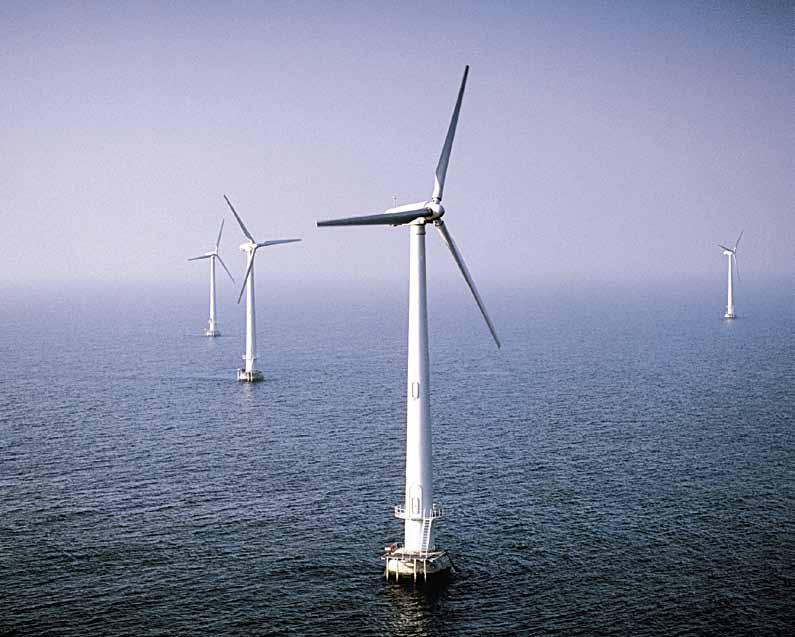
Wind Turbines at Vindeby

Turbines at Windeby

Rather than “Can we get away from Nuclear Power?” The real questions we need to ask ourselves are:

  1. How quickly can we phase out nuclear power?
  2. What will it cost?
  3. Given that a definition of insanity is doing the same behavior but expecting different results, Continue reading

Do We Need Nuclear Power? Part 1

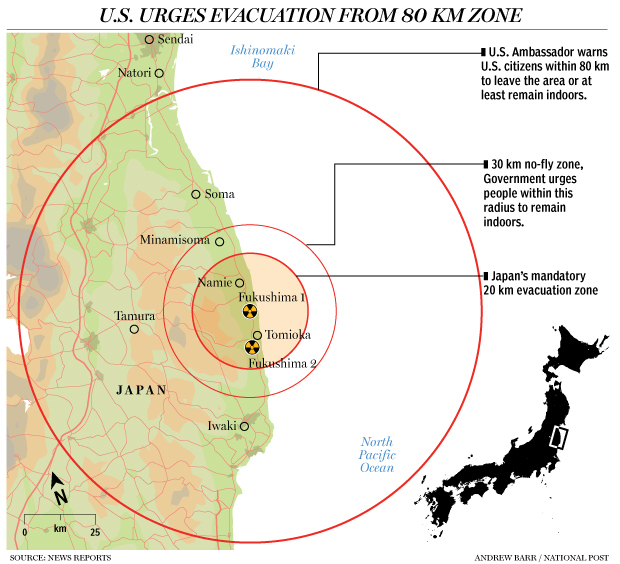
Did the Japanese (and the rest of the world) NEED Fukushima?

US Recommended evacuation zone


Happy Earth Day.  Think for the Future.

  • Do We Need Nuclear Power, Part 1, L. Furman, 4/20/12, here.
  • Do We Need Nuclear Power, Part 2, L. Furman, 4/20/12, here.
  • Do We Need Nuclear Power, Part 3, L. Furman, 4/21/12, here.


US Recommended evacuation zone of 80 km radius around Fukushima

Is Ford Motor Co Sustainable? And is Ford a Value Investment?

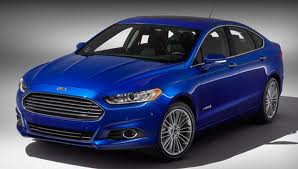
Ford Fusion

Ford Fusion, available as a hybrid

Back in October, 2007, I wrote about the Toyota Prius and the GM Hummer in Prius v Hummer, the Battle for the Streets and the Prius v Hummer, the Battle for the Brains. (Spoiler alert – the Prius won). Now I’m thinking about Ford Motor Company. A few years back their tag line was “Ford Has A Better Idea.” That may not be the current tag line, but I think it is the case. I will go further and say that Ford is on the road to being  Sustainable car company, and is a Value Investment.

While Toyota deserves credit for developing the hybrid- the Prius was introduced in 2000 – Ford has an extensive lineup of hybrids and is putting the EcoDrive – which boosts mileage by 20% – on vehicles, from small cars to the F150 truck. And 40% of the F150′s sold today are sold with the EcoDrive engine. Continue reading

Landmark Mistakes of the Supreme Court, Part 3

Al Gore

Al Gore

The decision in Bush v Gore is widely regarded as a landmark mistake, both because the Supreme Court acted politically and because of President Bush’s accomplishments and legacy.

While it is too recent for a historical consensus, and too political to be without controversy, virtually all liberals and progressives view the results of Bush v Gore, 2000, (Cornell Law School / Wikipedia) as disastrous based on the Bush Administration’s environmental, economic, and foreign policies, i.e., the Bush tax cuts, ignoring intelligence regarding Osama bin Laden on 6, August, 2011 (here), not killing bin Laden when we allegedly had him cornered in Tora Bora in 2001 (here), the War in Iraq, appointments of John Roberts and Samuel Alito to the Supreme Court, etc.

Landmark Mistakes of the Supreme Court, Part 2

Fred Korematsu as a young man

If Dred Scott, Citizen’s United, and Florence v Burlington are the three worst decisions by the United States Supreme Court, (post here) then Korematsu v United States, Dec. 18, 1944, Plessy v Ferguson, May 18, 1896 are next in line.

In Korematsu v United States, decided Dec. 18, 1944, the Supreme Court upheld Executive Order 9066, authorizing the internment of all Americans of Japanese ancestry. Mr. Korematsu is biographed here.

Plessy v Ferguson, decided on May 18, 1896, enabled segregation. This was overruled by Brown v Bd. of Education, May 17, 1954, with the now famous observation that “separate but equal is inherently unequal.”

Nuclear Divers – Swimming in Hot Water

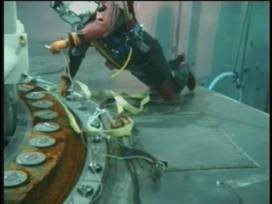
Diver using an AMP 100 to measure radiation

Another day at the office, from "The Life of a Nuclear Diver," William Sheaffer, here.

Nuclear power plant maintenance requires SCUBA divers in the rivers and oceans near the intake pipes and, as the image shows, in the reactor itself. And the men and women who work as employees and contractors for the plants and for Underwater Construction Corp, UCC do the job (more images).

According to Katheryn Kranhold, here, of the Wall Street Journal and Pittsburgh Post Gazette, “Divers are in great demand these days. Power companies need them to maintain many of the world’s 442 nuclear reactors. They’re also called on to repair aging bridges and water tanks…. That has done little to increase pay for nuclear divers, who start at salaries of about $30,000 a year.”

What are the risks of this work over and beyond the risks of SCUBA diving? What are the protections afforded the workers? What insurers underwrite the risks?  And who purchases the insurance? The divers? Their employers?  The nuclear plant operators? Or the sub-contractors who hire contract divers (at $20 per hour)? How many hours per year do the divers work, and can they afford the insurance? And if they can afford the insurance, do they actually buy it?

David Goodwillie, writing in Popular Science, reports on the chilling occupation of nuclear divers in Swimming On The Hot Side excerpted below. Continue reading

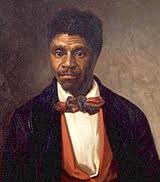
Landmark Mistakes by the US Supreme Court

Dred Scott

Dred Scott

Worst Three Decisions by the US Supreme Court: Dred Scott, Citizen’s United, and Florence v Burlington.  Dred Scott reinforced slavery – and led to the Civil War. Citizen’s United puts really, really big money in politics – think Mr. Gingrich’s sugar daddy with his $10 million in PAC-Gingrich, and leads to what we have today. Florence allows the police to strip search anyone they arrest.

The good news and is that these decisions force us to recognize that the Justices of the Supreme Court are fallible men and women who sometimes make decisions emotionally and or based on their perceived financial interest, as the five members of the Taney court whos families owned slaves and who voted for slavery.  This is also the bad news. The really bad news is that two out of three of these landmark mistakes occurred since January, 2010.

Looking with a long term perspective, the Dred Scott decision was overturned by the 14th Amendment.  Roger B. Taney and the other six justices who voted for slavery and against freedom are history. Their names are generally not remembered.  Similarly, Citizen’s United and Florence can, should, and someday will be overturned. Roberts, Alito, Kennedy, Scalia, and Thomas will someday join Roger B. Taney in the history books.

I am not a lawyer. But the Constitution is written for the citizens, not the citizens who are also lawyers.

Continue reading

This Football-Sized Robot Sub Handles Law Enforcement's Underwater Beat

This Football-Sized Robot Sub Handles Law Enforcement’s Underwater Beat

From inspecting cargo ships in NYC Harbor to searching for missing persons in South Texas, law enforcement is increasingly supplementing its human divers with these football-sized remote submersibles.

The VideoRay Pro 3 GTO is a tethered, remotely-controlled micro-submersible. The eight-pound machine can dive as far as 500 feet and move at up to 4.1 knots, thanks to its dual 100 mm horizontal thrusters. It’s sensor suite includes, among others, sonar imaging, GPS, water quality sensors, and metal thickness gauges. The Pro 3 GTO, which the NYPD employs also includes a grappling arm, wide-angle front-facing color camera illuminated with Dual 20W Halogen lamps, and an LED-lit HG black-and-white camera on the rear. The submersible is controlled remotely from a suitcase-sized control board.

The device is finding extensive use among in government agencies, like the US Army Corps of Engineers, the EPA, the ICE, and the US Coast Guard. Nearly 2,000 of the $31,000 machines are in use across the country—especially where conditions are too dangerous to prohibit human divers.

via This Football-Sized Robot Sub Handles Law Enforcement’s Underwater Beat.

WWII-era fire apparatus, Australia (image by Kristarella)

WWII-era ladder truck. Image by Kristarella/Kristarella.com

We’ve got a few reasons for publishing this image: Kristarella, an outstanding web designer and software developer, is also a fabulous photographer, and we encourage you to check out her Photoblog for page after  page of images which will capture your curiousity, imagination and awe. But that’s not, strictly speaking, on-topic.  These reasons are:

  1. We’re about to run a series of posts about firefighting apparatus – which is to say vehicles, mobile firefighting equipment, as opposed to infrastructure (fire water mains, sprinklers, hand-held gear and, as important as the rest, prevention), and thought this mid-20th century piece would be a good reference point;
  2. Note the following screenshot: Kristarella is a leader in managing the metadata – EXIF   (Exchangeable image file format, Wikipedia entry; see alsoEXIF.org) which accompanies digital images. We hope to explore the ways in which EXIF data and images might be used to crowd source risk assessment, disaster planning, and disaster response. So we’ll be exploring Kristarella’s Thesography Plugin, and more tools that will exploit EXIF and other usable meta-data.

Predator drones

From blimps to bugs, an explosion in aerial drones is transforming the way America fights and thinks about its wars. Predator drones, the Cessna-sized workhorses that have dominated unmanned flight since the Sept. 11, 2001, attacks, are by now a brand name, known and feared around the world. But far less known is the sheer size, variety and audaciousness of a rapidly expanding drone universe, along with the dilemmas that come with it.(via) [more inside]

posted by AElfwine Evenstar at 9:07 AM – 62 comments

via MetaFilter | Community Weblog.

MetaFilter | Community Weblog – Simple Comms (sound announcing presence)

“It is startlingly loud,” he warns, “and it’s loud enough that you can actually feel the sound wave going through your torso.” On East Brother Island in California, lightstation keeper Peter Berkhout is caretaker to one of the last working vintage foghorns in the United States.

posted by Laminda at 8:48 AM – 28 comments

via MetaFilter | Community Weblog.

Resources | Data Driven Journalism

Go back and select specific resources for Pop Log 

note cross-post from Discovery Strategist

Introduction to open-source GIS tools for journalists

Location is quickly becoming a core value of journalism and geographic literacy is on the rise. A look at geocoding tools.

Read more

Creating dot density maps with Chicago Tribune’s new open source toolkit

Chicago Tribune hacker Christopher Groskopf explains the tools and techniques behind the creation of dot density maps with U.S. census data.

Read more

via Resources | Data Driven Journalism.

WireCutter.com: Best LED lightbulb

Brian Lam at TheWireCutter.com, having done substantial research, suggests that this Phillips bulb may be the best currently available, and calculates a yearly cost of $1 to $2.50 per year, as opposed to $5/year for a conventional bulb. Of course, economies of scale and competition will bring prices down, but break-even on each bulb is probably no more than five years out – unless electricity prices spike. As we try to game out the post-Fukishima electricity supply, each market segment, or “wedge,” (think of a pie chart) will count. This is a problem which will be solved by massing a large number of small improvements.

Philips Ambient LED light bulb – threaded for conventional fixtures