Iran, Oil, & the NY Times

Iranian Warships in Gulf of Hormuz. Ebrahim Norouzi/Jamejamonline, via Agence France-Presse — Getty Images

Norouzi, Getty Images

While Iran is threatening to block the Straits of Hormuz, and various agents are calling for military actions, the crew of an American destroyer patrolling the North Arabian Sea rescued 13 Iranian fishermen captured by Somali pirates in November, 2011. U.S. Navy Rescues Iranians Held by Pirates, 1/6/12, Robert Mackey and J. David Goodman. The article quotes one of the rescued fishermen, Fazel Ur Rehman, 28, “It is like you were sent by God. Every night we prayed for God to rescue us. And now you are here.

Asian Customers of Iran Look for Other Oil Sources, 1/7/12, Keith Bradsher and Clifford Krauss,

In Bold Step, Europe Nears Embargo on Iran Oil, 1/5/12, Steven Erlander,

Iran Warns the United States Over Aircraft Carrier, 1/4/12, J. David Goodman,

Oil Price Would Skyrocket if Iran Closed the Strait of Hormuz, 1/5/12, Clifford Krauss,

Noise Level Rises Over Iran Threat to Close Strait of Hormuz, 12/29/11, Rick Gladstone,

Oil Prices Predicted to Remain Above $100 a Barrel Next Year, 12/29/11, Diane Cardwell and Rick Gladstone, Lawrence J. Furman, at Popular Logistics, forecast, “The Price of oil will be at $150 to $170 per barrel in Dec., 2012. The price of gasoline will hit $6.00 per gallon in NYC and California.”

Iran Calls Threat of Sacntions from European Union ‘Economic War’, 12/29/11, J. David Goodman,

Iran Threatens to Block Oil in Reply to Sanctions, 12/28/11, David E. Sanger and Anne Lowrey,

Iran Admits Sanctions are Inflicting Damage, 12/20/11, Rick Gladstone,

Given the implications of petroleum shortages and/or price spikes, current tensions with Iran are a serious matter, entirely aside from one’s opinions about Iranian government’s behavior. We note that in preparing a piece about the possibility of Iran attempting to limit world petroleum supplies, a search of the The Times for “+Iran +Oil” yields no less than ten pieces of reporting. We see our role, at Popular Logistics, as framing and interpreting what is going on. We strive to be primary sources of understanding while second-hand sources of news, especially in foreign theaters such as the Middle East, Europe and Asia. We rely on The New York Times, WNYC (our local NPR affiliate), the World Factbook of the CIA, and other agencies of the United States Government, the WorldWatch Institute and other Primary sources of news and information.  And so, we pay our taxes, because, as Justice Oliver Wendell Holmes said, “Taxes are the price we pay for civilization,” and (to pat ourselves on the back) we subscribe to the New York Times and WNYC.

Red Cross Physician Kidnapped in Qetta, Pakistan

Gunmen have kidnapped a British doctor working with the International Committee of the Red Cross in the south-western Pakistan city of Quetta, the organisation said.

Armed gunmen seized Khalil Rasjed Dale at about noon local time on Thursday. He was driving in the centre of Quetta from his office to his home, ICRC spokesman Christian Cardon said.

“He was in a clearly marked vehicle with an ICRC emblem. Several armed gunmen hijacked him,” he said, adding that Dale’s family had been informed. He added: “We call for Khalil’s rapid and unconditional release.”

Dale was based in Quetta, the capital of Pakistan’s troubled south-western Baluchistan province. He was working as the ICRC’s health programme manager. It is unclear how long he had been based in the region, or whether his family were in Pakistan or in the UK.

The Foreign Office said it was urgently investigating the incident. No one immediately claimed responsibility, but criminal gangs have often targeted foreign aid workers in the hope of securing large ransoms for their release.

“We are checking all routes out of the districts, but we have not been able to trace that vehicle,” Nazeer Kurd, a senior city police official, said. “We are trying to ensure that the vehicle does not leave Quetta.” Baluchistan is Pakistan’s biggest but poorest province, where Baluch separatist militants are fighting a protracted insurgency for more autonomy and control over the area’s natural resources.

Pro-Taliban militants are also active in the province, which shares borders with Afghanistan and Iran.

Four health workers, including two doctors, were kidnapped by militants last week from the Pishin area of Baluchistan, near Quetta. They were freed after a shootout between police and their kidnappersFrom The Guardian, Gunmen have kidnapped a British doctor working with the International Committee of the Red Cross in the south-western Pakistan city of Quetta, the organisation said.

Armed gunmen seized Khalil Rasjed Dale at about noon local time on Thursday. He was driving in the centre of Quetta from his office to his home, ICRC spokesman Christian Cardon said.

“He was in a clearly marked vehicle with an ICRC emblem. Several armed gunmen hijacked him,” he said, adding that Dale’s family had been informed. He added: “We call for Khalil’s rapid and unconditional release.”

Dale was based in Quetta, the capital of Pakistan’s troubled south-western Baluchistan province. He was working as the ICRC’s health programme manager. It is unclear how long he had been based in the region, or whether his family were in Pakistan or in the UK.

The Foreign Office said it was urgently investigating the incident. No one immediately claimed responsibility, but criminal gangs have often targeted foreign aid workers in the hope of securing large ransoms for their release.

“We are checking all routes out of the districts, but we have not been able to trace that vehicle,” Nazeer Kurd, a senior city police official, said. “We are trying to ensure that the vehicle does not leave Quetta.” Baluchistan is Pakistan’s biggest but poorest province, where Baluch separatist militants are fighting a protracted insurgency for more autonomy and control over the area’s natural resources.

Pro-Taliban militants are also active in the province, which shares borders with Afghanistan and Iran.

Four health workers, including two doctors, were kidnapped by militants last week from the Pishin area of Baluchistan, near Quetta. They were freed after a shootout between police and their kidnappers

Gunmen have kidnapped a British doctor working with the International Committee of the Red Cross in the south-western Pakistan city of Quetta, the organisation said. Armed gunmen seized Khalil Rasjed Dale at about noon local time on Thursday. He was driving in the centre of Quetta from his office to his home, ICRC spokesman Christian Cardon said. “He was in a clearly marked vehicle with an ICRC emblem. Several armed gunmen hijacked him,” he said, adding that Dale’s family had been informed. He added: “We call for Khalil’s rapid and unconditional release.” Dale was based in Quetta, the capital of Pakistan’s troubled south-western Baluchistan province. He was working as the ICRC’s health programme manager. It is unclear how long he had been based in the region, or whether his family were in Pakistan or in the UK. The Foreign Office said it was urgently investigating the incident. No one immediately claimed responsibility, but criminal gangs have often targeted foreign aid workers in the hope of securing large ransoms for their release. “We are checking all routes out of the districts, but we have not been able to trace that vehicle,” Nazeer Kurd, a senior city police official, said. “We are trying to ensure that the vehicle does not leave Quetta.” Baluchistan is Pakistan’s biggest but poorest province, where Baluch separatist militants are fighting a protracted insurgency for more autonomy and control over the area’s natural resources. Pro-Taliban militants are also active in the province, which shares borders with Afghanistan and Iran. Four health workers, including two doctors, were kidnapped by militants last week from the Pishin area of Baluchistan, near Quetta. They were freed after a shootout between police and their kidnappers

Guardian: Guangdong bus driver killed by H5N1 flu strain

A Chinese man diagnosed with the country’s first case of bird flu in more than a year has died in the southern city of Shenzhen.

The 39-year-old bus driver was admitted to hospital with pneumonia but tested positive for the H5N1 bird flu virus. This is the third case in two weeks. This report is disturbing on its face. That said, we wonder how many people around the world would be willing to bet their lives on the Chinese government’s veracity. Please feel free to comment, but let’s try to keep it polite. Excerpted from
Bird flu virus kills Chinese man

A Chinese man diagnosed with the country’s first case of bird flu in more than a year has died in the southern city of Shenzhen.

The 39-year-old bus driver was admitted to hospital with pneumonia but tested positive for the H5N1 bird flu virus.

The strain has a high mortality rate, killing up to 60% of infected humans.

The man, surnamed Chen, developed a fever on 21 December and was admitted to hospital on Christmas Day. Local health officials said 120 people who had close contact with Chen have not developed any abnormal symptoms.

The Chinese health ministry has informed the World Health Organisation about the case, health officials added.

During the month prior to his fever, Chen, apparently had no direct contact with poultry and did not travel out of Shenzhen.

The city, home to 10 million people, is separated by a small river from Hong Kong, where 19,000 chickens have been slaughtered after two were confirmed last week to have died from the H5N1 virus.

With thanks to The Guardian and staff for their coverage.

The city, home to 10 million people, is separated by a small river from Hong Kong, where 19,000 chickens have been slaughtered after two were confirmed last week to have died from the H5N1 virus.

Keynes, Krugman continue to give good advice

Paul Krugman continues to be persuasive, although we worry that it’s necessary for him to make this point. Excerpted from “Keynes Was Right:”

“The boom, not the slump, is the right time for austerity at the Treasury.” So declared John Maynard Keynes in 1937, even as F.D.R. was about to prove him right by trying to balance the budget too soon, sending the United States economy — which had been steadily recovering up to that point — into a severe recession. Slashing government spending in a depressed economy depresses the economy further; austerity should wait until a strong recovery is well under way.

Unfortunately, in late 2010 and early 2011, politicians and policy makers in much of the Western world believed that they knew better, that we should focus on deficits, not jobs, even though our economies had barely begun to recover from the slump that followed the financial crisis. And by acting on that anti-Keynesian belief, they ended up proving Keynes right all over again.

In declaring Keynesian economics vindicated I am, of course, at odds with conventional wisdom. In Washington, in particular, the failure of the Obama stimulus package to produce an employment boom is generally seen as having proved that government spending can’t create jobs. But those of us who did the math realized, right from the beginning, that the Recovery and Reinvestment Act of 2009 (more than a third of which, by the way, took the relatively ineffective form of tax cuts) was much too small given the depth of the slump. And we also predicted the resulting political backlash.

So the real test of Keynesian economics hasn’t come from the half-hearted efforts of the U.S. federal government to boost the economy, which were largely offset by cuts at the state and local levels. It has, instead, come from European nations like Greece and Ireland that had to impose savage fiscal austerity as a condition for receiving emergency loans — and have suffered Depression-level economic slumps, with real G.D.P. in both countries down by double digits.


For the 25th Anniversary of the Bruntdland Commission Report on Our Common Future

Image courtesy of NASA. Our tax dollars at work.

Let us remember the Blue Marble. There would be no food – and no life – without sunlight and clean water.

The whales, and the dolphins, the deer and the polar bear, are our cousins.

Let us return to the UN on March 20, May 9, June 20, September 3, and December 21 with delegations of thinkers and builders of sustainability and demand, respectfully, that we as members of communities of Earth, whether economically “Developed,” such as  the United States, United Kingdom, Germany, France, or Canada; or “Developing,” such as Brazil, China, India, and Mexico; whether materally rich or materially poor, set as our overriding goal “Sustainable Development.”

This, “Sustainable Development,” as defined by Gro Harlem Brundtland as “development that meets the needs of the present without compromising the abilities of future generations to meet their needs,” or as defined by John Ehrenfeld as “development that leads to flourishing forever,” is simply and precisely development around harnessing natural processes such as wind, sunlight, ocean currents, the heat of the earth’s core, rather than extracting and consuming natural resources such as coal, oil, subterranean methane, and uranium, and creating toxic wastes.

Let us embrace not only the negative goals of lowering greenhouse gas emissions, and reducing distribution of toxic substances such as the arsenic, lead, mercury, uranium, zinc, etc. emitted from burning coal but also the positive goal of rearchitecting our economies – our interconnected global economy – around sustainable development.

Not more stuff distributed inequitably, but GOOD stuff, equitably distributed. After all, do we need a new cellphone every two years? Or a new car every three or four? How many shoes, trousers, shirts, coats, cameras, televisions, etc. does a person need?

Let us do this as a protest outside the UN, along the lines of Occupy Wall Street and other demonstrations – with substantive statements, drums, guitars, flair, and enthusiasm, and cover it ourselves on YouTube, Twitter, the blogosphere, and Ted Talks, but let us also demand that our Representatives in state houses, governor’s offices, the House, the Senate, and the White House and city halls and state capitals across the world listen and bring our message to the UN for a day, an hour, or even just 15 minutes.

We want to celebrate a turning point in human history. Let us do this on March 20, the anniversary of the Brundtland Commission Report. And, as May 8 and  September 2 respectively mark the 67th anniversaries of the Allied victory over the Nazis and Imperial Japan in World War II, somber turning points in human history, and let us return to the United Nations, and to our city halls, state capitals, congresses and parliments on on May 9 and September 3, and on the solstices June 20 and December 21.

And let us do this with hope for peace, love, and the future.

LED Lamps – The Paradigm is Shifting

40 and 65 watt equivalents from CREE and Lighting SciencesI just bought some LED bulbs at Home Depot. The bulbs, from Cree and Lighting Sciences, are sold under the “ecosmart” ™ brand. The Lighting Sciences bulbs will go into my bathroom.  The CREE bulbs will go into the bedrooms, family room, and the kitchen. Over their 35,000 lifespan, each LED bulb will outlast 14 or 15 incandescents, or 4 or 5 compact flourescents and will use 16% of the power of the incandescent bulbs or 75% of the power of the compact flourescents. At $0.14 per kwh, the LEDs will consume $51.45 worth of power over their lifetimes, compared to $68.60 for the CFL’s and $318.50 for the incandescents. This is summarized in Table 1, below.

Comparison of LED, Incandescent Filiment, and CFL Light Bulbs
Description   Filiment         CFL         LED
Wattage 65 14 10.5
Bulb lifespan (hours) 875 8,000 35,000
Electricity (kwh) per 35,000 hours 2762.5 595 446.25
Electricity cost at $0.14 / kwh $318.50 $68.60 $51.45
Table 1


CREE LED High Hat, offCREE LED High Hat, onThese are “Dimmable.” They are also expensive – the 65watt equivalent, rated for 35,000 hours, costs $24.97; the 40watt-equivalent, rated for 50,000 hours, costs $9.97. Lowes and CostCo have similar units. The units from Lowes are currently more expensive. The prices are offset by the electricity savings and durability of the bulbs. These bulbs should last 15 to 20 years. If they are on 4 hours per day. If electricity prices don’t change, the LEDs will cost 3/4 the cost of a CFL and 1/6 the cost of an incandescent. In addition, since they use much less electricity, they will throw off much less heat. Thus, I will also save on air conditioning bills. Since 1 LED bulb will last as long as 4 CFL’s or 15 incandescents, I will also spend much less time changing bulbs – once installed, I expect to change the bulbs, every 15 to 20 years.

Like old fashioned incandescents, invented by Thomas Edison in the 1800’s, and unlike compact flourescents, or CFL’s, LED bulbs use no mercury or lead. They are easy to dispose of; if they break they do not create a toxic waste issue.

They offer three very clear advantages: They use much less power, they last much longer, they release no toxic wastes when they break.

The 65-watt equivalent bulbs, from CREE, produce 575 lumens of light on 10.5 watts of power.  They have a 3-year warranty, but as noted, are rated for 35,000 hours of use. They also feature an integrated housing to fit inside a 6″ can or “high hat.” These are dimmable. If on for an hour, each will consume 10.5 watt-hours, 0.0105 kwh.

LEDs from Lighting SciencesThe 40-watt equivalent bulbs, from Lighting Sciences, produce 429 lumens of light with 9 watts. Thus, if on for an hour, each will consume 9 watt-hours, or 0.009 kilowatt hours, as opposed to 0.04 kwh. The three used in my bathroom will consume 0.027 kwh, per hour as opposed to 0.12 kwh per hour from the bulbs they are replacing. These are for indoor use only, and should last 50,000 hours. I am concerned about heat dissipation in the fixture, and will probably replace the glass housings.

LED & CFL at turn-on This picture shows LED and CFL bulbs in the bathroom at turn-on. Note that there is no “warm-up” time for the LED bulb.

Cree, a $2.5 billion company, trades under the symbol CREE. Its price, at the close of trading, on 12/23/11, was $21.66 per share.  It’s 52-week range is $20.25 to $69.21. Cree has an EPS, or earnings per share of $0.92. a P/ E, or price / earnings ratio of 23.60, a debt to asset ratio of 0.00, and net operating margins of 17.08. Cree has 4,753 employees. Institutions own 78% of the company.

Lighting Sciences, a $284 million company, trades under the symbol LSCG. Its price, at the close of trading on 12/23/11, was $1.39 per share. The debt to asset ratio is 8.52. It’s 52-week range is $1.32 to $5.39. The operating margins are negative -122.84, and the EPS is negative: -$2.59. Lighting Sciences has 152 employees. Institutions do not own this company.

This is probably a good time to invest in CREE.  It might be a great time to speculate in Lighting Sciences.

The paradigm is shifting. Or, as Dylan once said, “The times, they are a-changin’.”

Chanukah: Festival of Lights, Conservation & Renewable Energy

Hanukkah Menorah

Photo courtesy Joseph Skibell

The Jewish celebration of Chanukah, the “Festival of Lights,” commemorates the successful struggle for freedom and independence of Israel from the Selucid Greeks,  about 2200 years ago.  At the conclusion of this war, the Macabees purified The Temple in Jerusalem and sought to relight their “Eternal Lamp.”

They only had enough oil for one day. The process by which they made oil required eight days. Miraculously, one day’s oil lasted eight days.

Clearly, God believes in energy conservation and, as they used olive oil, renewable energy.

A brief history:

Alexander the Great, aka Alexander of Macedonia, acquired the Kingdom of Judah without a battle. But his empire collapsed after his death. The Kingdom of Judah became part of the Selucid Greek Empire. Where Alexander promised the Jews religious freedom, the Selucids demanded that the Jews worship the Greek pantheon. The Jews rebelled, following the Macabees. They won. The Macabees established the Hasmonean Dynasty, which ruled for 101 years, from 164 Before the Common Era, BCE, to 63 BCE, until the Romans came, saw, and conquered.

The Jews, then known as the Judeans, from the province of Judea, subsequently rebelled against Rome.  The First Jewish–Roman War took was fought from year 66 to year 73, the Kitos War was fought from 115 to 117, and the Bar Kokhba revolt was fought from 132 to 135. From these rebellions we get two holidays: Tesha B’Av, which is observed by Jews as a day of mourning, and Christmas, which is generally not celebrated by Jewish people today.

More details are on Wikipedia, and, in a more comprehensive fashion, in Jews, God and History, by Max I. Dimont. ASIN: B0012H8UJI, 1962.

The World Will Not End & Other Predictions for 2012

space-apple-logo


Here are my top 10 predictions for 2012. These are less readings of the tea leaves or the entrails of goats and chickens and more simple extrapolations of patterns in progress. Altho that may be the way effective oracles. They just masked their observations with hocus pocus, mumbo-jumbo, and guts.

This list runs a gamut from business and technology to energy, instability in the Middle East, micro-economics in the United States, politics, and not-yet-pop culture.

  1.  Apple and IBM will continue to thrive. Microsoft will grow, slightly. Dell and HP will thrash. A share of Apple, which sold for $11 in December, 2001, and $380 in Dec. 2011, will sell for $480 in Dec. 2012.
  2. The Price of oil will be at $150 to $170 per barrel in Dec., 2012. The price of gasoline will hit $6.00 per gallon in NYC and California.
  3. There will be another two or three tragic accidents in China. 20,000 people will die.
  4. There will be a disaster at a nuclear power plant in India, Pakistan, Russia, China, or North Korea.
  5. Wal-Mart will stop growing. Credit Unions, insurance co-ops and Food co-ops, however, will grow 10% to 25%.
  6. The amount of wind and solar energy deployed in the United States will continue to dramatically increase.
  7. The government of Bashar Al Assad will fall.
  8. Foreclosures will continue in the United States.
  9. Arizona Sheriff Joe Arpaio will resign. Calls for Clarence Thomas to recuse himself from matters involving his wife’s clients will become louder, but Justice Thomas will ignore them. A prominent politician who says “Marriage is between a man and a woman,” or her husband, will be “outed” as gay. President Obama will be re-elected.
  10. The authors of Vapor Trails will not win a Nobel Prize for literature. They will not win a “MacArthur Genius Award.” Nor will I despite my work on this blog or “Sunbathing in Siberia” and the XBColdFingers project.

Here are the details … Continue reading

Moore's Law Applied to Solar Power

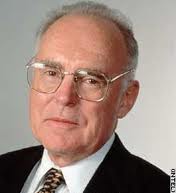
Gordon MooreDoes “Moore’s Law” hold for Solar Power?

In New Jersey, between 2001 and 2010, we went from a total of six systems with a combined capacity of 9.0 KW to about 7000 systems with a combined capacity of 211,000 KW or 211 MW. This is illustrated below.

Solar Capacity, NJ, 2001 to 2010. Increase from 9 KW in 6 systems to 211 MW, or 211,000 KW in 7000 systems

Increase from 9 KW in 6 systems to 211,000 KW in 7,000 systems. Copyright, 2010, L. J. Furman. All Rights Reseved.

This is the “hockey stick” curve of exponential growth typical of positive feedback mechanisms. I expect this kind of growth to continue for the next few years as prices drop, until solar meets 25% to 35% of New Jersey’s needs. This would be another 2500 to 3500 systems and about 200 additional MW in 2011 and 4000 to 5000 systems of 300 to 500 MW in 2012 , and brings me back to “Does ‘Moore’s Law,’ or a corollary, apply to PV Solar?” or “Is this a bubble?” Continue reading

MIT Study suggests U.S. power grid improvements

From MIT Study: US Can Meet Power Grid Challenges of Future, by Gino Troiani,

According to a recent two-year study commissioned by the Massachusetts Institute of Technology‘s Energy Initiative, if certain measures are taken, the answer is yes. The study was composed of 13 MIT faculty members, 1 Harvard faculty member, 10 graduate students and an advisory panel of 19 leaders from academia, industry and the government.

“The grid will face a number of serious challenges over the next two decades, while new technologies also present valuable opportunities for meeting these challenges,” the study says.

The report concluded the grid is adequate to meet today’s demands. However, it also said the measures the U.S. takes now will dramatically affect the grid throughout the next 20 years.

Some of the study’s key findings and recommendations include:

  • The diversity of ownership and regulatory structures within the U.S. grid complicates policy-making.
  • To combat cyber security threats, a single federal agency should be given the responsibility across the entire power sector, while increasing bulk and power and distribution systems.
  • Utilities should generate “fixed” network costs via customer charges that do not vary with the amount of electricity they use, but rather at set fees.
  • The electric and power industry should invest more revenue in the research and development of computational tools for bulk power system operations, methods for wide-area transmission planning, and procedures for response and recovery from cyberattacks.
  • Increased data and research on the grid should be compiled and made more easily accessible to help improve the decision making process in the areas of developing and improving the  grid.

Via ExecutiveGov.com.

Vaccine Developed Against Ebola: Jennifer Carpenter, BBC

http://www.bbc.co.uk/news/science-environment-16011748

Scientists have developed a vaccine that protects mice against a deadly form of the Ebola virus.

First identified in 1976, Ebola fever kills more than 90% of the people it infects.

The researchers say that this is the first Ebola vaccine to remain viable long-term and can therefore be successfully stockpiled.

The results are reported in the journal Proceedings of National Academy of Sciences.

Ebola is transmitted via bodily fluids, and can become airborn. Sufferers experience nausea, vomiting, internal bleeding and organ failure before they die.

Although few people contract Ebola each year, its effects are so swift and devastating that it is often feared that it could be used against humans in an act of terroism.

All previously developed vaccines have relied on injecting intact, but crippled, viral particles into the body.

Long-term storage tends to damage the virus, paralysing the vaccine’s effectiveness.

The new vaccine contains a synthetic viral protein, which prompts the immune system to better recognise the Ebola virus, and is much more stable when stored long-term.

The vaccine protects 80% of the mice injected with the deadly strain, and survives being “dried down and frozen,” said biotechnologist Charles Arntzen from Arizona State University who was involved in its development.

He said the next step is to try the vaccine on a strain of Ebola that is closer to the one that infects humans.


Morgan Stanley settles charges of price-fixing in NYC area electricity maret

In a settlement which doesn’t seem to have been much noticed by major media outlets, Morgan Stanley has agreed to pay $4.8 million to settle charges of acting, in concert with energy company Keyspan, in anticompetitive behavior affecting the NYC electricity market. Here’s the Department of Justice press release of September 30, 2011, with the caption Morgan Stanley Rigs NYC Electricity Bids  Here’s an excerpt.

The Department of Justice today announced a settlement with Morgan Stanley that requires Morgan to pay $4.8 million for violating the antitrust laws by entering into an agreement with KeySpan Corporation that restrained competition in the New York City electricity capacity market. The department said the agreement likely resulted in a price increase for electricity retailers, which, in turn, led to increased electricity prices for consumers. The department’s Antitrust Division today filed a civil antitrust complaint in U.S. District Court for the Southern District of New York and submitted a proposed settlement that, if approved by the court, would resolve the lawsuit. The settlement provides for disgorgement of profits for a violation of the antitrust laws and requires Morgan to pay $4.8 million to the United States. The department previously entered into a settlement with KeySpan that required the company to disgorge $12 million in profits for its role in the agreement, which was approved by the court in February 2011. “This settlement with a major financial institution will signal to the financial services community that use of derivatives for anticompetitive ends will not be tolerated,” said Sharis A. Pozen, Acting Assistant Attorney General in charge of the Department of Justice’s Antitrust Division. “Disgorgement of ill-gotten gains, as was paid here, is an effective Antitrust Division tool to remedy harm to competition.” According to the complaint, in January 2006, KeySpan and Morgan executed a financial derivative for New York City capacity while Morgan simultaneously entered into an off-setting derivative with Astoria Generating Company, KeySpan’s largest competitor in the capacity market. The agreements effectively transferred to KeySpan a financial interest in Astoria’s capacity, thereby ensuring that KeySpan would withhold substantial output from the capacity market and increase prices. For its part, Morgan earned revenues by retaining the spread between the fixed prices of the two derivative agreements. The anticompetitive effects of the Morgan/KeySpan agreement lasted until March 2008, when regulatory conditions eliminated KeySpan’s ability to affect the market price of electricity capacity.

While we’re happy that the excellent attorneys in DOJ’s Antitrust Division brought this case,  the press release leaves seval questions neither asked nor answered:

  1. How much did Morgan Stanley and Keyspan make? Without knowing that, it’s impossible to determine whether the settlement is sufficient.
  2. Did anyone at Morgan Stanley or Keyspan lose their job, receive a demotion, or lose a bonus?
  3. Did the settlement negotiations include  an agreement to issue a press release on a Friday, lessening the likelihood that major news  organizations would see the release before it went stale?

Measles outbreak in Europe

Via the BBC, alarming news. The World Health Organization warns of measles outbreak in Europe, which has included 26,000 cases and nine deaths.
From WHO issues Europe measles warning:

European countries need to act now to tackle measles outbreaks, the World Health Organization warns. The WHO report says there were over 26,000 measles cases in 36 European countries from January to October 2011. Western European countries reported 83% of those cases, with 14,000 in France alone. In England and Wales, there were just under 1,000 confirmed measles cases in that period – compared with just 374 in the whole of 2010. Altogether, measles outbreaks in Europe have caused nine deaths, including six in France, and 7,288 hospitalisations. France has now launched a nationwide campaign to raise awareness about the need for MMR vaccination. Jean-Yves Grall, the Director-General for Health in France, said: “France can simply not afford to have deaths, painful and costly hospitalisations, disruptions to work and school from a completely vaccine-preventable disease.” Ninety per cent of European cases were amongst adolescents and adults who had not been vaccinated or people where it was not known if they had been vaccinated or not. And measles from Europe has been linked to outbreaks in several other countries including Brazil, Canada and Australia.

‘Potential danger’

Zsuzsanna Jakab, WHO regional director for Europe, said: “The increase in measles in European countries reveals a serious challenge to achieving the regional measles elimination goal by 2015.

“Every country in the European region must take the opportunity now to raise coverage amongst susceptible populations, improve surveillance and severely reduce measles virus circulation before the approaching measles high season.”    A spokeswoman for the Health Protection Agency, which covers England and Wales, said: “Anyone who missed out on MMR as a child will continue to be at risk of measles, which explains why we are continuing to see cases in a broad age range.”     “We are again reminding parents and young adults of the importance of immunisation. We cannot stress enough that measles is serious and in some cases it can be fatal.”  “Measles is a highly infectious and potentially dangerous illness which spreads very easily. Whether you stay here in the UK or travel abroad it is crucial that individuals who may be at risk are fully immunised.” 

XXX

revenge of the electric car – NYTimes.com Search

Times Topics: Tesla Motors

If a struggling Detroit could not make an electric vehicle, then a Silicon …. Chris Paine, the director of “Revenge of the Electric Car,” discusses …

Times Topics: Elon Musk

The director, whose “Revenge of the Electric Car” had its premiere this past weekend, was joined onstage on Saturday by Elon Musk, the Tesla Motors chief …

Times Topics: Tribeca Film Festival (NYC) – – Times Topics

13 hours ago … The director, whose “Revenge of the Electric Car” had its premiere this past weekend, was joined onstage on Saturday by Elon Musk, the Tesla …

Budget Shortfall Could Imperil Subsidies for Electric Vehicles …

The best known subsidy for electric vehicles, a $7500 tax credit that qualifying buyers … Chris Paine Returns with ‘Revenge of the Electric Car’ …November 10, 2011 – Wheels

via revenge of the electric car – NYTimes.com Search.