Largest energy net-zero school in U.S.

Jessica Dailey, writing at Inhabitat, notes the United States’ largest net-zero school, Lady Bird Johnson Middle School, in Texas:

Texas is known for the Alamo, spicy Tex-Mex food, big Stetson hats, and now it also has the nation’s largest net-zero public school. Welcoming its first students this past fall, the Lady Bird Johnson Middle School in Irving Texas is a 152,000 square foot facility that produces as much energy as it uses thanks to wind turbines, solar panels, and a slew of the most advanced green technologies and building techniques. Dallas-based firm Corgan Associatesled the design team, which incorporated a variety of experts to create a school that serves not only as a classroom, but also as a teacher of sustainability and energy-efficiency.

From  US’s Largest Net Zero School Welcomes Students in Irving, Texas

Apparently the building is powered by a large solar array and a smaller array of wind turbines, producing in a ratio of 99 to 1; the 152,000-plus square foot building also uses geothermal energy, employs every conservation tactic available, and still has some power to sell back to the grid.

Apple, Blackberry, and Classical Physics

In “The World Will Not End, and Other Predictions for 2012,”  I wrote “Apple and IBM will continue to thrive. Microsoft will grow, slightly. Dell and HP will thrash. A share of Apple, which sold for $11 in December, 2001, and $380 in Dec. 2011, will sell for $480 in Dec. 2012.”

Apple has already spiked to 427.75. If I’m proven wrong it may be because I underestimated Apple’s projected future value.

What about Research in Motion, RIMM? They invented mobile e-mail, with the first “Blackberry” in ’98 or ’99. When you got paged, you could write a response, send it, and it would be received almost immediately. It was tied to email, integrated with Microsoft Exchange or Lotus Notes. I remember it well. As a database administrator on Wall Street I carried one for two years. In my current professional role I have carried one for six and managed a Blackberry Enterprise Server, along with other servers. In the late 90’s it was basically a pager with a keyboard and software that did e-mail. Today, you can also take pictures, browse the web – gives new meaning to the word ‘crawl’-  listen to music, make phone calls.

But what will be the value of Research in Motion next year? Still around $8.5 B? Down to $6.2 B? Back up to about $30 B? If they don’t change, I imagine the value will be $4.0 to $6.0 B, or they will be a division of another company, such as AT&T, NorTel, Winstream, HP, or a private equity firm.

Here’s the basic financial data on the companies:

Basic Data on Apple and Research in Motion
Stock Price Mkt Cap EPS P/E 52 Wk Low 52 Wk High
AAPL 419.81 390.18 27.67 15.17 310.5 427.75
RIMM 16.17 8.47 4.24 3.81 12.45 70.54
Table 1

At first glance the company looks like a tremendous investment: RIMM is a $8.7 Billion company with no debt, earns $4.24 per share (EPS), has a Net Profit Margin of 17.13, and the stock only costs $16.17 per share (as of close of trading Friday, January 13, 2012). The ratio of stock price to earnings (P/E) is 3.81. Their network is secure and robust. A Blackberry handheld should be on the belt of every first responder. They are lighter and probably as secure, more reliable, more robust than the Motorola units carried today, and they also do instant messaging, virtually instant e-mail, and come with a built-in camera. They don’t belong in your “go-bag;” they belong on your belt.

At second glance, an analyst put the intrinsic value at $22.00 per share or $12 billion (up from $16 per share and $8.7 Billion) saying “the network is worth $12.50 per share, their patents are worth $7.50 per share, and they have $2.00 per share in the bank.

Compare this to Apple. A $390 Billion company, Apple has no debt, EPS of 27.67, NPM of 23.95, and the stock only costs 419.81 per share. The P/E is 15.17.  Apple also makes an instant communications device, but it doesn’t have it’s own network. Research in Motion does. So if the AT&T, Verizon, or other network is down you will still be able to send a “PIN to PIN,” “BBM” or E-Mail with a Blackberry, but not with an iPhone. On the other hand, there is an iPhone app that turns the camera flash into a flashlight.

These are summarized in Table 1, “Basic Data,” above and Table 2 “Other Financial Information,” below. (Note: all data are from Google).

Other Financial Information
Debt to Assets Return on Avg Assets Net Profit Margin
AAPL 0 27.06 23.95
RIMM 0 29.56 17.13
Table 2

The data also show that Apple, with a price of $419.81 is close to it’s historic 52-week high of $427.75, while, at $16.17 RIMM is close to it’s historic 52-week low of $12.45. Looking at the chart from last year, Apple was steady from January to July (and you could have lost money by investing in it at $360 in January and selling at $310 in July) but increased after July. Research in Motion, on the other hand, dropped pretty steadily from February 17, 2011 to December 20, 2011.

What’s next for APPLE and Research in Motion? What was it that Newton said? “A body in motion tends to stay in motion unless acted upon by an outside force.” I have a lot of confidence in Apple. It’s in motion. Rumors about the iPad 3 are that it will be lighter, faster, and have better graphics. They will make improvements on the iPads, iPhones, iPods, iMacs, Mac Books, iOS, OS X, the applications software, and who knows, they may even get Apple TV right this year. (They will, sooner or later.)  As far as Research In Motion; some of their products – the Blackberry hand-helds and Blackberry Enterprise Server software are terrific. However, I would have a lot more confidence in the company’s future if I was an “Outside force” hired to act upon the body. (I would also kill to work at APPLE.)

Urban Planning: A brief history of the Minneapolis skyways

Posted in its entirety from Jason Kottke’s blog. We did not know about this system, but think it’s worth considering for a number of reasons: it gets people walking in inclement weather rather than taking their vehicles or not travelling at all; probably stops the weather from entirely shutting down Minneapolis, and, to the extent it’s reducing vehicle and pedestrian traffic, likely reducing accidents, property damage, death and injury. An example of excellent urban transportation planning.

A brief history of the Minneapolis skyways

If you’ve ever been to downtown Minneapolis, you’ve likely used the large network of above-grade covered walkways that now stretches into nearly every corner of the downtown area. I’d always assumed they were built to help downtown workers and residents avoid cold weather during the winter, but that’s not the case.

Rather, the skyway system originally emerged from a twofold desire. First, planners in the 1940s and 50s were very concerned about managing increasingly dense pedestrian flows, and viewed skyways as a way to maximize the use of urban space for both people and automobiles (Byers 1998 154). Second, business owners were interested in maximizing their property values, and saw the skyways an opportunity to double the amount of valuable retail space in their downtown buildings (Byers 1998 159).

I used to work in downtown Minneapolis, and the skyways were great in the winter. To be able to take a walk and get lunch without having to bundle up in coat, hat, mittens, scarf, etc. was almost like living in a warm climate…and that’s no small thing during a long, dark Mpls winter. (via ?than)

via kottke.org – home of fine hypertext products.

We’re aware of the Chicago system of underground streets, the abandoned postal tube systems in the United States and others  (See, e.g. Multilevel streets in Chicago – Wikipedia, the free encyclopedia). To the extent we’ve failed to exploit these opportunities, or used and abandoned them, they constitute wasted assets. See also Minneapolis Skyway System (Wikipedia entry); Leif Petterson’s Take the Skyway on Vita.MN (The Twin Cities Going-Out Guide).

Reality, Pseudo-Reality, and China

Does Freedom of Speech imply the responsibility to speak honestly – even when what is not what people want to hear?  John Ehrenfeld, on his blog, in discussing the US Presidential Campaign, noted (here),

“[M]y concerns and consternation at the virtually complete absence of truth from [a GOP debate in New hampshire]. Not only was the truth gone, but the participants appeared almost gleeful about speaking freed from the constraints that truth-telling creates…. I recall an interview with Eric Fehrnstrom, Mitt Romney’s campaign manager, who said, in response to a question about the untruths being uttered by Romney, that this was none of his concern; it was up to the media to provide the facts.”

I addressed this in a wry manner with “Ridin’ the Magic Carpet” on XB Cold Fingers.

Richard Seireeni, on the Chelsea Green site (here), suggests that our biggest challenges, perhaps threats, come from outsoucing manufacturing of American branded consumer goods to China.

And in the New York Times, Paul Krugman explains how America is not a corporation (here).

For one thing, there’s no simple bottom line. For another, the economy is vastly more complex than even the largest private company.

Most relevant…, however, is … giant corporations sell the great bulk of what they produce to other people, not to their own employees — whereas even small countries sell most of what they produce to themselves, and big countries like America are overwhelmingly their own main customers.

Yes, there’s a global economy. But six out of seven American workers are employed in service industries, which are largely insulated from international competition, and even our manufacturers sell much of their production to the domestic market.

And the fact that we mostly sell to ourselves makes an enormous difference when you think about policy.

Consider what happens when a business engages in ruthless cost-cutting. From the point of view of the firm’s owners (though not its workers), the more costs that are cut, the better. Any dollars taken off the cost side of the balance sheet are added to the bottom line.

But the story is very different when a government slashes spending in the face of a depressed economy. Look at Greece, Spain, and Ireland, all of which have adopted harsh austerity policies. In each case, unemployment soared, because cuts in government spending mainly hit domestic producers. And, in each case, the reduction in budget deficits was much less than expected, because tax receipts fell as output and employment collapsed.

Ehrenfeld, observing the irony in a GOP Debate on the day of Vaclav Havel’s death, wrote about truth;

Havel’s signature accomplishment [was] pointing out that people have to live in truth or lose their freedom…

Truth, as Havel says, is essential to our existence as a free people at all times, but perhaps even more now as we become ever more aware of the complexity of the world we live in. Ideologies are the epitome of denial of the interconnectedness of this world, where ties grow more in number and strength everyday. Actions here have effect in places and times we do not expect or ignore. Are we really going to bomb away the so-called threat of Iranian nuclear weapons with no other consequences? Will freeing the market from all government oversight and restraints create wealth for everybody when the results of the last few decades show us the exact opposite? Ideologies, either from the left or right, are all dangerous, but our two-party system and the means their leaders communicate with us pushes themes into ideological positions frequently compressed into tiny sound bites or political ads….

There are many, many truths out there that are getting clobbered. If any of these men (no women left) are elected, they will be expected to act in accordance to these statements, ignoring what they find. Obama was faced with a financial crisis and its fallout on the economy as he moved in. He certainly was not the creator of these problems. It is interesting and ironic that the name Bush, on whose watch these problems started to arise, has been barely mentioned during this campaign, and not at all during these recent “debates.” I continue to put quotes around this word as real debates require some depth in discussing issues and solutions. Truthfulness would require putting the current messes into context, a least attempting to do so. I admit that would be difficult because the big messes are all a result of our failures to recognize complexity and act accordingly.

Richard Seireeni on the Chelsea Green site (here) wrote:

In the run up to the Republican Convention, we’ve heard everything and nothing. We’ve heard Newt, Mitt and Ron go on about issues that have little if any impact on jobs and national security, but not a single word about the real reason we have massive and permanent unemployment….In 2010, we imported 364 billion dollars in goods from China while we exported only 91 billion to them. That is nearly a 4 to 1 trade imbalance….

The Chinese people have become admirable competitors, but their hybrid Totalitarian-Capitalist government is not our friend. They don’t share our philosophies on human rights, labor rights, or geo-political issues, like containment of Iran’s nuclear ambitions. In fact, China is a major importer of Iranian oil, in opposition to U.S.-sponsored trade restrictions, and has probably received access to our recently downed drone aircraft as a reward.

While GOP candidates are preoccupied with Terrorism and Obamacare, the People’s Liberation Army has been quietly developing a new advanced stealth fighter, Predator-style drones, the first in a planned fleet of blue water aircraft carriers, an advanced rocket and space program, and a growing nuclear arsenal. Those cheap consumer products have turned China into a super power one purchase at a time. Every time an American patriot buys a Made-in-China product at Walmart, he or she is investing in China’s military expansion, which forces us to invest more in our military to counter the threat.


Furman Appointed to Manalapan Township Finance Committee

Lawrence J. Furman, MBA, co-founder of Popular Logistics, has been appointed to the Manalapan Township Finance Committee (Township here,  news article here). The Finance Committee reviews  expenditures, projects tax receipts, and submits the budget to the Township Committee. Back in 2007 Furman suggested that the Township Committee look into deploying solar energy systems on municipal properties. He was appointed to the Manalapan Township Environmental Commission in 2007, served for two years. In 2008, he ran for School Board with a platform built around solar energy for the schools.  While he lost the election, and Manalapan does not yet have solar energy systems on municipal properties or schools (are these related?) people are talking about it. He earned his MBA in Managing for Sustainability from Marlboro College in December, 2010.

He has delivered various iterations of a talk entitled “Beyond Fuel: Energy in the 21st Century,”  at the June meeting of the NYC Business Sustainability Action Round-Table, NYC B Smart, and in September, 2011 at the Space Coast Green Living Festival, Cocoa Beach, Florida.

Furman has been thinking about energy and what we now call sustainability since 1976, when, as a student intern with the New York Public Interest Research Group, Inc., NYPIRG, at Rachel Carson College, then at the State University of New York University of Buffalo, he helped develop a case for offshore wind power. His testimony, delivered to the “NY State Legislative Committee on Energy, the Economy, and the Environment” stated:

We could power the New York City Subway System with a battery of wind driven electric turbines, located off the shores of Long Island. It would burn no fuel, and, therefore, unlike coal, oil, gas, and nuclear power, create no waste.

When you factor in the life cycle of the fuel, and the pollution and health costs of the wastes, this would be less expensive than the fuel based alternatives.

Reflecting on this today, he said,

“My colleagues and I knew what we were talking about, but the Committee members didn’t get it. Sadly, it seems that the Committee’s name – Energy, the Economy, and the Environment – indicated it’s priorities.”

“If the cheapest unit of energy, the ‘negawatt,’ is the unit of energy that you don’t need, then the next cheapest is the ‘nega-fuel-watt,’ the unit of enegy you obtain without consuming fuel.”

On this committee I intend to look at our energy expenses and see where we can save money in the long term with PV Solar, LED lighting, insulation, micro-hydro, etc.

We’re not sure if this is part of Chicago’s underground street system, now unused, which was used to expedite deliveries and at the same time to reduce traffic congestion on Chicago’s street-level. We believe that underground systems – including pneumatic tube systems – have in some places been prematurely abandoned. They reduce congestion (waiting time and reduced speeds are responsible for a large share of the pollution generated by vehicles), speed delivery, and reduce costs for everyone. Here’s an early photograph of rail-based mail processing in Chicago.


Sustainability v Globalization

Olive Trees

“Think Global, Act Local,” – Anonymous.

“Re-localization is a critical step in moving toward sustainability. The “global economy” is one of the culprits of our present mess,” – John Ehrenfeld.

“Sustainability is the possibility that human and other life will flourish on the planet forever,” – John Ehrenfeld.

Ehrenfeld, author of “Sustainability by Design,” here,   lectures at Marlboro College in its MBA in Managing for Sustainability.

In “Italy’s accordion Industry: Tiny and Thriving“, NPR’s Morning Edition, on 1/9/12, discussed globalization in the context of the accordion industry in Italy. The piece began: “More than 70% of Italy’s gross domestic product comes from small businesses – and they’re not growing. Economists are worried that this will make it impossible for Italy to climb out of it’s massive $2.6 Trillion debt.”It concluded “But until more small companies [coalesce into giants like Prada] things in … Italy will stay out of tune with the global eonomy.

But the piece also reported that the Italian accordion makers focus on quality. They don’t make many instruments – make about 20% of what they made in their heyday, one company makes 180 to 200 per month, but they make the Ferraris of the accordion world.  More accordions are made today are by China, Inc., but those are cheap, low quality things.  The Italian instruments sell for up to $50,000 each, to professional musicians such as Bjork  and “The Decemberists.”

The story also asks about the long term consequences of 70% of a nation’s GDP coming from small businesses?

But it doesn’t ask:

  • What is the standard of living and quality of life for craftspeople in Italy? Are people happy? Fulfilled?
  • What is the wage and income differential between the workers and the owners? Between the manufacturers and the suppliers?
  • How interconnected are the local economies? Are they using locally sourced materials? Is the economy local?  How much of the economy is local?
  • Aside from Italy’s debt, is their economy sustainable? Another way of asking this is “Could Italy service the debt with a 30 or 50 year payment schedule, with interest set at 2.5% or 3.5%? According to the CIA Factbook, (here) Italy has a population of about 61 million people. While NPR puts the Italian debt at $2.6 Trillion, according to CNN Money, (here) Italy’s debt is about $262 Billion. That’s a per capita debt load of about $4300, according to CNN Money, and $41,995. $4,300 doesn’t seem too bad. Even $42,000 isn’t too bad, over a person’s lifetime. In the United States, $43,000 buys one or two years of college at the undergraduate level.

As noted, the piece ended with “But until more small companies [coalesce into giants like Prada] things in … Italy will stay out of tune with the global eonomy.”  This leads me to my final unanswered questions:

Is it a bad thing for Italy to be out of tune with the global economy? and

Is Italy really out of tune with the global economy?

The first two things that come to my mind when I think of “The Global Economy” are China, Inc. / WalMart, and oil. (I see China, Inc. and WalMart as one thing, but that’s another story). I see environmental degredation, poverty of mind, body, and spirit, and working conditions that equate to slavery.Personally, I’d rather be making accordions for a living wage in Italy, where I have a chance to open my own shop, than in China where conditions are equivalent to slavery.

Bjork, a singer from Reykjavík, Iceland, and the Decemberists, from Portland, Oregon, are buying Italian accordions. They would rather spend $50,000 on accordions from Italy than $399 on accordions from China.  This suggests that the Italian accordion makers are, in fact, in the global economy, albeit on a different scale of that of the Chinese and one that economists don’t understand.

This brings me to the olive trees pictured above. Olive trees take a long time to mature – 35 to 150 years. But they live, thrive, and produce olives – for a very long time – hundreds of years, thousands of years with luck and proper cultivation. (Achaia Olive Groves).

And just as I would rather be making accordions that sell for $50,000 than those that sell for $399, I would rather sell 200 units for $50,000 each than 25,063 units for $399.


Iran isn’t the most transparent of countries, so it’s hard to know whether this is  another country’s attempt to slow down the Iranian nuclear program, something to do with Iranian politics or something else entirely.

What follows is excerpted from BBC correspondent  Mohsen Asgari’s report Iran car explosion ‘kills nuclear scientist’ in Tehran


A university lecturer and nuclear scientist has been killed in a car explosion in north Tehran, reports say. Mostafa Ahmadi-Roshan, an academic who also worked at the Natanz uranium enrichment facility, and another unidentified person were killed in the attack. The blast happened after a motorcyclist stuck an apparent bomb to the car. Several Iranian nuclear scientists have been assassinated in recent years, with Iran blaming Israel and the US.

Both countries deny the accusations. Iran’s Vice-President Mohammad Reza Rahimi told state television that the attack against Mr Ahmadi-Roshan would not stop “progress” in the country’s nuclear programme. He called the killing “evidence of [foreign] government-sponsored terrorism”. Local sources said Wednesday’s blast took place at a faculty of Iran’s Allameh Tabatai university. Two others were reportedly also injured in the blast, which took place near Gol Nabi Street, in the north of the capital. ‘Magnetic bomb’

Mr Ahmadi-Roshan, 32, was a graduate of Sharif University and supervised a department at Natanz uranium enrichment facility in Isfahan province, semi-official news agency Fars reported. “The bomb was a magnetic one and the same as the ones previously used for the assassination of the scientists, and the work of the Zionists [Israelis],” deputy Tehran governor Safarali Baratloo said.

Witnesses said they had seen two people on the motorbike fix the bomb to the car, reported to be a Peugeot 405. A second person died in the attack though the car itself remained virtually intact. The BBC’s Mohsen Asgari, in Tehran, says that the explosion was caused by a targeted, focussed device intended to to kill one or two people and small enough not to be heard from far away.

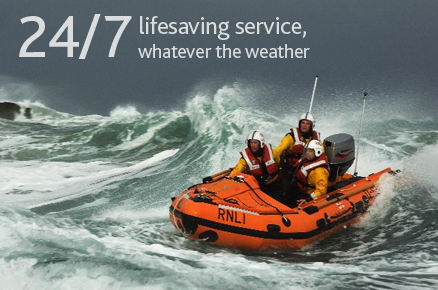
RNLI: 139,000 lives saved since 1824

Originally the “National Institution for the Preservation of Life from Shipwreck,” renamed in 1854, the Royal National Lifeboat Institution, RNLI, has been saving lives and promoting marine safety, for nigh on 190 years. 139,000 lives have been saved since 1824. This is 139,000 people who would otherwise have been lost at sea. The number of lives preserved by the promotion of marine safety is harder to calculate, but doubtless much larger.

It’s an all-volunteer outfit which saves lives at sea in the United Kingdom and the Republic of Ireland, without, as we understand it, any government money. To an American, it may seem odd that a country famous for its National Health Service would rely on an all-volunteer marine safety program. Whether or not it’s philosophically consistent, it seems to work. We’ll take effective life-saving in place of ideology any day.

See also Wikipedia entry Royal National Lifeboat Institution.

How to Deal With Iran: Sanctions? Bomb? Rescue?

USS Kidd & Iranian fishing vessel

While the editors of Popular Logistics understand that it is important to prepare for emergencies – and carry flashlights, per the 911 Commission, we also understand that it is important to avoid emergencies.

We also note that President Theodor Roosevelt once said “Speak softly but carry a big stick.”

ABC News reports the statements made by the candidates for President in regards to Iran’s nuclear ambitions. Most agree that Iran wants nuclear power and nuclear weapons.

ABC, Quoting Candidate Barack Obama, from 2008 as saying, “In confronting these threats, I will not take the military option off the table. But our first measure must be sustained, direct and aggressive diplomacy…. I will always keep the threat of military action on the table to defend our security and our ally, Israel.”  The article did not mention the Stuxnet attack on the Iranian Nuclear program, which has been reported to have slowed the development of nuclear technology in Iran. While the origin of the computer virus is unknown, it is reported to be American or American and Israeli.

Newt Gingrich supports regime change in Iran, and using military action if necessary “as a last recourse.” (ABC News).

Jon Huntsman: “Realistically, you’ve got to have all options on the table. You’ve got to be prepared to use all elements of national power.” (ABC News)

Ron Paul: “Why do we have to bomb so many countries? Why are we [having] 900 bases in 130 countries and we’re totally bankrupt? . . . We need a strong national defense . . . and we need to only go to war with a declaration of war.” Paul has called sanctions against Iran an “act of war” that could damage the global economy by impeding the flow of oil. “I think they solution is to do a lot less a lot sooner, and mind our own business, and we wouldn’t have this threat of another war.” (ABC News)

Mitt Romney: ‘Ultimately, regime change is what’s going to be necessary,” says Romney, who believes both “covert and overt” actions should be used to stop Iran from developing nuclear weapons. He said the U.S. should develop military plans, though he hoped they were never put into effect. “But the Iranians will understand that we have prepared credible military options, that they’ll know there is a consequence of becoming nuclear.” (ABC News)

Rick Santorum: “‘Yes, that’s the plan,’ said Santorum, when asked if he would order air strikes on Iran if they were going to obtain nuclear weapons. The conservative dark horse … is the most bellicose of the GOP contenders when it comes to Iran. In an interview with Glenn Beck, he said Iran’s regime was worse than al Qaeda, and that an attack on Iran would prevent war.” (ABC News).

As noted, President Theodore Roosevelt once said “Speak softly but carry a big stick.”  Huntsman and Obama are speaking softly. Paul is whining. Gingrich, Romney and Santorum are waving their sticks. Santorum went as far as to say “an attack would prevent war.” That is “War prevents war.”

Iran, like Syria, is unstable. The people want food and a healthier economy. They also want change. Gingrich, Romney, and Santorum are saying what the Ayatollahs and Ahmadinejad want to hear. Their bellicose statements unify the people behind the Ayatollahs and Ahmadinejad. But rescuing fishermen – this is the last thing the Ayatollahs and Ahmadinejad want us to do.  It shows that they cannot protect Iranians against Somali pirates. It unifies the people of Iran against the government of Iran. And it unifies the people of Iran behind the United States.

It also begs the question – “Why is piracy so common in Somalia?”

Shakespeare, Sorkin, and The American Presidency

Mallard, common to North AmericaMandarin duck

“If it looks like a duck, walks like a duck, smells like a duck, and quacks …  it’s a duck” – anonymous

“What’s in a name? A Rose by any other name would smell as sweet” – Shakespeare, “Romeo and Juliet.”

“Being President of this country is entirely about character.” – Aaron Sorkin “The American President” /screenplay  / YouTube.

Santorum, Gingrich & Lobbying

Since he lost his reelection campaign in 2006, the Honorable former Senator, Rick Santorum, has been consulting, primarily to companies which benefited from legislation he pushed as a Senator. He earned over $1.0 Million in 2010. Like the Honorable Mr. Gingrich, we know Mr. Santorum is not a “Lobbyist” because he has not REGISTERED as a “Lobbyist.” (NY Times article by Mike McIntire and Michael Luo here and Op-Ed by Maureen Dowd here.)

However, as reported (here) by ABC News, the non-profit “Citizens for Responsibility and Ethics in Washington” (CREW) filed a complaint with the U.S. attorney in D.C. and the FBI in which it claims Gingrich repeatedly met with or called members of Congress to pressure them to pass a contentious 2003 Medicare reform bill — legislation from which members of a Gingrich-founded group may have directly profited and Gingrich himself may have indirectly benefitted. (Press Release, here).

These men may try to sell us the Brooklyn Bridge. Or they may try to lease it to someone else, who will in turn erect toll booths and charge us to drive, bike, or walk across.

Continue reading

Infowar – BBC reports "Israel vows to retaliate after credit cards are hacked"

Israel has said it will respond to cyber-attacks in the same way it responds to violent “terrorist” acts after the credit card details of thousands of its citizens were published online. A hacker named OxOmar claiming to be Saudi said on Thursday he had leaked the private information. Credit card companies say at least 6,000 valid cards have been exposed. Reports say OxOmar may be a 19-year-old living in Mexico.

Israel vows to retaliate after credit cards are hacked  via BBC News.


Social Networks Reduce Disaster Risk

Ben Franklin is reputed to have said “we shall hang together, or we shall hang separately.” Long-time readers know that it is our firmly-held conviction that social networks matter more than any single type of preparation or cached equipment. Here is an excerpt from The Key To Disaster Survival? Pals, Neighbors broadcast on the July 4, 2011 edition of All Things Considered:

A researcher’s data suggest that ambulances, firetrucks and government aid aren’t the principal ways most people survive during and recover after a disaster. Instead, it’s the personal ties between members of a community that really matter.

If you want an easy template for doing this in your community, check out the 3 Steps Program.

Strait of Hormuz: oil supply chokepoint

Another example of the risk of petroleum supply interruption: the blocking of the Strait of Hormuz. While it’s hard to imagine that United States military forces wouldn’t prevail in a conflict with Iran, that confrontation might easily escalate.

Excerpted from Oil Price Would Skyrocket if Iran Closed the Strait of Hormuz by Clifford Krauss  at NYTimes.com:

HOUSTON — If Iran were to follow through with its threat to blockade the Strait of Hormuz, a vital transit route for almost one-fifth of the oil traded globally, the impact would be immediate: Energy analysts say the price of oil would start to soar and could rise 50 percent or more within days.

An Iranian blockade by means of mining, airstrikes or sabotage is logistically well within Tehran’s military capabilities. But despite rising tensions with the West, including a tentative ban on European imports of Iranian oil announced Wednesday, Iran is unlikely to take such hostile action, according tomost Middle East political experts.

United States officials say the Navy’s Fifth Fleet, based in nearby Bahrain, stands ready to defend the shipping route and, if necessary, retaliate militarily against Iran.

Iran’s own shaky economy relies on exporting at least two million barrels of oil a day through the strait, which is the only sea route from the Persian Gulf and “the world’s most important oil choke point,” according to Energy Department analyst

What does this mean? We think it’s most important in understanding how fragile our dependence on oil is – particularly because protecting requires us to ask our military personnel to put themselves in harm’s way. Petroleum dependence – energy policy – shouldn’t be a casus belli. We have other choices – conservation and renewable energy sources. If we reduce our dependence on oil, we win in many ways: reducing risk to our armed forces; cheaper energy, and better environmental and health outcomes.

Reducing the power of the current Iranian ruling elite is a bonus.