two attacks in Norway

Via the  BBC,  Twin terror attacks shock Norway

Norway has been hit by twin attacks – a massive bomb blast in the capital and a shooting attack on young people at a governing Labour Party youth camp

At least seven people were killed in the bombing, which inflicted huge damage on government buildings in Oslo city centre.   Four more died at the camp, on an island outside Oslo, local media said.  One witness later said he had seen more than 20 bodies on the island, but police have not confirmed this.   Prime Minister Jens Stoltenberg, whose Oslo offices were among those damaged by the bomb, described the situation as “very serious”.  Norwegian media reports said the shootings on the island were carried out by a man in police uniform.    Police said the suspected gunman had been arrested, and later said he was also linked with the bomb attack, reports said.

No group has said it carried out the attacks.

Hours after the bomb struck Oslo, officials said some people were still inside the damaged buildings, some of which were on fire.


Dutch apartments built from defunct water treatment plant

Tafline Laylin, writing at Inhabitat   – a brilliant blog whose work we should be bringing to our readers’ attention more often, describes how – instead of demolishing a water treatment plant’s structures to make space for housing – it was repurposed and made part of the  housing.  This is a multiple success – resources conserved in demolition, construction, a “dirty”  site made functional,  and  top all that, it’s beautiful. Here’s one image from Laylin’s piece, Defunct Dutch Sewage Plant Converted into Fresh Green Apartments:

Missile Warheads, stolen while under military guard, pose "no risk"

From the BBC, Missile warheads stolen from Romanian train

Romanian officials have reassured the public after the theft of more than 60 missile warheads from a train.

The warheads were taken from a railway car carrying military equipment to neighbouring Bulgaria on Saturday.

Officials said the stolen warheads could not be detonated because they were in component form without explosives.

Investigators say the missiles could have been stolen for their scrap metal value.

Romanian media said when the freight train stopped in Giurgiu, southern Romania, it was found that doors on the railway car had been forced and four boxes of 16 warheads stolen.

Officials are investigating how the theft could have happened while the consignment was being guarded by paramilitary police.

Bulgaria’s economy ministry said the warheads belonged to Grad missiles which are normally fired from multiple-rocket launchers.

In a statement it said the shipment was part of a transfer of “nonfunctional components and parts” for reprocessing at the VMZ factory – one of Bulgaria’s largest military factories – in Sopot.

Romanian officials close to the investigation told two daily newspapers that the warheads did not contain explosives.

Romanian police spokesman Florin Hulea also reassured the public, saying the warheads posed no risk.

via BBC News – Missile warheads stolen from Romanian train.

If the missiles posed no threat, why were they under heavy guard?

Do you Really Want a Balanced Budget Amendment?

Tweet Follow LJF97 on Twitter

Copyright (C) 2011, Dale A. Johnson. All Rights Reserved.

The rainbow in the grey skies is magical and alluring. But take a look at history before suggesting that the USA should operate under the limitations of a balanced budget. A good place to start is by searching on milestone wars that made or saved this country. Try a search such as “US Revolutionary War debt,” “US Civil War debt,” or “US WW2 debt.”

Then try to decide if the US Constitution had such an amendment from day one would we:

  • Be a British colony?
  • Have slaves?
  • Speak German?

Would we have climbed out of the Great Depression without Roosevelt applying Keynes’ ideas on government projects?

The idea of sending America’s youth into battle without proper equipment and financial support is powerful motivator for me. I was in the Air Force during a budget battle and we literally could not fly our fighters because Congress did not approve enough money for fuel while they argued about the overdue budget! Thankfully that was peace time.

Copyright (C) 2011, Dale A. Johnson. All Rights Reserved.

Let’s take a look at the financial meltdowns this country has encountered and the effects that a Balanced Budget amendment would have had. Take a look at just two, the Great Depression and the 2008 meltdown. The government did not do all the right things to prevent or solve these problems. The solutions (i.e. the recovery) required combination of forces including government spending, Wall Street and Main Street.

Search on “US Depression debt” and read current events to see the impact of such economic events on the deficit. Thank you Uncle Sam for pitching in to take away the pain and suffering that literally millions of Americans faced during these crashes. I am glad you had a credit card to use to save us!

The metaphorical Atlas – is he the government or the taxpayers? Ours is an experiment in government of the people, by the people, for the people.” Is there a difference?

I probably should stop here but …
Continue reading

Terrorism Training Casts Pall Over Muslim Employee : NPR

If terrorism can make Americans afraid of each other, they’ve advanced their agenda both by bring divisive, and also by diverting attention from real threats. From Dina Temple-Raston, NPR national security correspondent, on NPR’s Morning Edition. Audio available later today.  Excerpted from NPR’s Terrorism Training Casts Pall Over Muslim Employee

In the first of two stories on counterterrorism training, NPR reports on one training session that turned a state employee into a suspect.

The man at the center of this story is a 59-year-old Jordanian-American named Omar al-Omari. He looks very much like the college professor that he is — all tweed jacket, button-down shirt, thick round glasses, drinking coffee. We met at a coffee shop near downtown Columbus, Ohio, where he laid out a series of events that ended with him being accused of having links to terrorism.

“Actually I was out of town, out of state, attending a conference and on my way back to Columbus,” Omari said, “and I received a call from one of the attendees of this conference in which I was told my name was used repeatedly during the training. Apparently I was labeled as a suspect. They personalized the attacks. There was a promise to dig into my background and basically as an Arab-Muslim American — they thought I’m a suspect.”

via Terrorism Training Casts Pall Over Muslim Employee : NPR.

Unfortunately, there’s no happy ending. And Professor Omari had been a leading consultant to the Bureau and other law enforcement agencies in communicating with American Muslims.

Cryptome: declassified account of two CIA officers who spent 20 years imprisoned by Chinese

Cryptome has published a previously classified account of John T. Downey and Richard G. Fecteau, two CIA officers captured on a mission to exfiltrate a dissident from China in 1952.  From Two CIA Prisoners in China, 1952-73, itself derived from Two CIA Prisoners in China, 1952-73Extraordinary Fidelity, by Nicholas Dujmovic

This article draws extensively on operational files and other internal CIA records that of necessity remain classified. Because the true story of these two CIA officers is compelling and has been distorted in many public accounts, it is retold here in as much detail as possible, despite minimal source citations. Whenever possible, references to open sources are made in the footnotes.

Continue reading

Levinson now missing for over three years

We missed this when it appeared on the Christian Science Monitor website in March. From Former FBI Agent Robert Levinson still missing in Iran, dated 9 March 2010.

The US State Department marked the third anniversary of the disappearance of Robert Levinson, a former FBI agent turned private investigator, from Kish Island in Iran by appealing to the authorities in Tehran to cooperate with the efforts of the US and his wife, Christine, to locate him.

“In December 2007, Mrs. Levinson first met with Iranian officials who expressed a willingness to share information about their investigation into her husband’s disappearance with the family,” the State Department said in a press release. “We ask that Iran stand behind its commitment to provide full details about their authorities’ investigation.”

The State Department also marked the anniversary by calling on “Iran to resolve the cases of the five American citizens who are unjustly detained in Iran:Joshua Fattal, Shane Bauer, Sarah ShourdKian Tajbakhsh, and Reza Taghavi.”

Mr. Levinson, who served 27 years as an FBI agent and also worked for the Drug Enforcement Administration, disappeared from Kish Island, a free trade zone and smuggling center where Iran’s typically strict visa requirements are not enforced, while investigating a cigarette smuggling ring for a private client. He has seven children and two grandchildren.

The US has said in the past that despite promises of full cooperation from Iran that it believes the country has information about Levinson’s disappearance that it isn’t sharing.

“Over the past three years, my family has desperately has desperately reached out to you as much as possible,” his daughter, Sarah, wrote in an open letter to the US and Iranian governments on a website the family maintains about Levinson’s disappearance. “Unfortunately, none of our messages have brought us any closer to finding our father and bringing him home.”

The family in the past has said Levinson expected to spend only a day on Kish Island. Shortly after his disappearance, Iran’s state-run Press TV carried an article that said Levinson had been taken into Iranian custody on March 9, 2007, and predicted he would be freed within a “matter of days.”

In a statement on the family website this past December, Mrs. Levinson said she and her relatives “respectfully ask for clarification” about the Press TV article and called for Iranian government help in securing his return home as a “humanitarian gesture.”

In 2007, the Financial Times quoted Dawud Salahuddin – a man wanted by the FBI and connected to Press TV – as saying he’d shared a hotel room with Levinson on March 8. Mr. Salahuddin said he was detained by Iranian authorities himself that day and upon his release the next day Levinson was gone. “I don’t think he is missing, but don’t want to point my finger at anyone,” he said. “Some people know exactly where he is … he came only to see me.”

In September 2009, the Times of London reported that Salahuddin had worked for three years as a senior editor at Press TV under the alias Hassan Abdulrahman. The paper also said that he was an African-American who was originally called David Belfield before converting to Islam in 1969 and changing his name to Dawud Salahuddin.

Abdulrahman, as he’s now called, is wanted by the FBI for the murder of Ali Akbar Tabatabai, a former aide to the Shah who was murdered at his home in Maryland in 1980. The paper, which said it reached Abdulrahman by telephone at his home in Iran, said he admitted to the murder and showed no remorse. “I don’t regret that, no,” he said.


So What If We Default?

Tweet Follow LJF97 on Twitter   Be careful what you wish for. You just might get it.

Hong Lei, spokesman for foreign affairs of China

Chinese Spokesman for Foreign Affairs

If, on August 2, 2011, the United States defaults on various debt obligations, then historians may well consider that date as the date on which the United States of America ceases to occupy the position it has held since the end of World War II.  However, August 2, 2011, may be the end of the beginning. If so, it will mark a point of inflection in a curve that maps processes that has been in motion for a long time. The trends in personal debt, bankruptcy, home foreclosures, unemployment, and the disparity of income and assets between the wealthiest 10% of the population and the other 90% have developed over years.

July 14, 2011, Bastille Day in France, may be considered to mark the coming of age of the successor to the United States as the superpower of the 21st Century, and that would be China.  In “China Urges U.S. to Protect Creditors by Raising Debt,” Bettina Wassener in Hong Kong and Matthew Saltmarsh in Paris report in the New York Times, that “Hong Lei, a Chinese foreign affairs spokesman, urged the United States to protect the interests of foreign investors.” As one of the United States’s biggest creditors, China, which holds over $1.0 Trillion in US Treasury bills, “urged American policy makers on Thursday to act to protect investors’ interests, highlighting rising concerns around the globe about the protracted budget talks taking place in Washington.”

These mark gradual processes of waxing and waning of cultures and economies. These did not happen overnight. It did not happen with the election and inauguration of Barack Obama as 44th President of the United States, as spokespeople of the Tea-Republican Party, and News Corp (some of whom are in both) may assert. Nor did it happen in 2000 with the Presidential Election, the Supreme Court decision which decided the election, and the subsequent inauguration of George W. Bush as the 43rd President.

The development of the US as a superpower at the end of World War II was facilitated by the election of Franklin Delano Roosevelt to the office of President in 1932, and his reelections in ’36, ’40, and ’44.  However, it was less President Roosevelt himself than the progressive economic policies of the New Deal that he put in place.  Similarly the descent from superpower status and the crumbling of American infrastructure have been slow processes. Perhaps it began with the conflation of news and entertainment and the elimination of the Fairness Doctrine in 1987 under President Reagan.

In order, therefore, for the United States to continue to be a superpower, we need to return to the progressive economic policies that build infrastructure and finance infrastructure projects by taxes, rather than by mortgaging our children’s futures to potentially unfriendly foreign powers such as Communist China.

The wisest, but least easy course would be to allow the Bush tax cuts to expire and increase taxes. Everyone should pay their fair share.

Finally,

If we increase the debt ceiling, will China continue to buy U.S. Treasury Bills?

China holds over $1 trillion of US Treasury Bills, about 7.5% of our debt.  Is that in our national interest?

Karzai half-brother assassinated by confidant

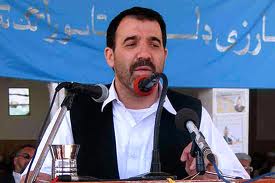
Ahmed Wali Karzai  Tweet Follow LJF97 on Twitter   As reported in The New York Times, Christian Science Monitor, and elsewhere, Ahmed Wali Karzi was killed by Sardar Mohammed. Mr. Mohammed, who is described as “an associate,” was a commander of security posts south of Kandahar. He was reported killed by Mr. Karzai’s bodyguards. The late Mr. Karzai had been linked to the drug trade and corrupt security companies.  The Christian Science Monitor sited Wikileaks here as quoting official US concern regarding Ahmad Karzi.

“AWK [Ahmad Wali Karzai] operates parallel to formal government structures, through a network of political clans that use state institutions to protect and enable licit and illicit enterprises,” wrote a US official in one of the leaked cables.

What will happen next? What other shoes will drop?

Given the relative opacity of the situation(s)  in Afghanistan, Pakistan, and the United States’ troubled relationships with both countries, the potential parallels to the plot of The Godfather and MacBeth are unsettling. Continue reading

"Three Meltdowns at Fukushima" – Washington Post

Tweet Follow LJF97 on Twitter   The earthquake and tsunami that occurred  in Japan has led to what the Washington Post now describes as three nuclear meltdowns (here).

“Japan has been bracing for major aftershocks since the 9.0-magnitude earthquake March 11 triggered a powerful tsunami, creating one of the largest disasters in this country’s history. The catastrophe left tens of thousands dead or missing, and scores more without homes or businesses. It also prompted the most serious nuclear crisis in a quarter century at the Fukushima plant, where three reactors sustained meltdowns.” Chico Harlan, July 9, 2011, “7.0 Aftershock Hits Japan Coast,” in the Washington Post, 7/9/11.

BBC: Poor countries outspend wealthy countries 10:1 on renewables

Mark Kinver, BBC News Environment Reporter, writes that a study commissioned by the United Nations reports that less-developed nations invested in renewable energy tenfold the amount spent by developed countries.  Viewed as an investment, assuming that the renewable energy infrastructure lasts long enough to pay for itself (a safe bet), the energy produced thereafter is essentially without cost. And the higher energy prices rise – and the faster they rise – the better the return on investment. The worst of the likely outcomes is that energy prices rise slowly – but the countries with the biggest investment in clean renewables will still have a direct economic advantage (lower energy costs), and such indirect advantages as lowered health and environmental costs. Taken to an extreme, this trend could reverse the standing of “less-developed” and “more-developed” countries within a generation or two.  From “Green Energy Investment Hits Record High“:

Global investment in renewable energy sources grew by 32% during 2010 to reach a record level of US$211bn £132bn, a UN study has reported.The main growth drivers were backing for wind farms in China and rooftop solar panels in Europe, it said.It also found that developing nations invested more in green power than rich nations for the first time last year.The Global Trends in Renewable Energy Investment 2011 report was prepared for the UN by Bloomberg New Energy Finance.”The continuing growth in this core segment of the green economy is not happening by chance,” said Achim Steiner, executive director of the UN Environment Programme.”The combination of government target-setting, policy support and stimulus funding is underpinning the renewable industry’s rise and bringing the much needed transformation of our global energy system within reach.”In 2010, developing economies spent more on “financial new investment”, pumping $72bn into renewable projects compared with the $70bn outlay by developed economies.

via BBC News – Green energy investment hits record global high.

xx

Dirtier Air and Higher Costs May Follow Indian Point Closing – NYTimes.com

The New York Times reports on some of the complexities associated with closing the Indian Point nuclear power plants.  But what is missing from the story?  Patrick McGeehan’s   Dirtier Air and Higher Costs May Follow Indian Point Closing:

Shutting down the Indian Point nuclear power plant would lead to significantly dirtier air and higher electric bills for New York City residents, according to a report commissioned by the city that is circulating among state officials in Albany.

To read a further excerpt – and a discussion of other possible responses to closing Indian Point – see the rest of this post after the jump.

Continue reading

Ask Obama – Internet Town Hall

What would I #AskObama (on Twitter or in person)?

1: #AskObama Economists think in terms of resources. How do we change the conversation to think in terms of processes, systems, interactions?

2: #AskObama Neoclassical Economics: Resources & Wastes. Ecological Economics: Systems: Stocks, Flows, Processes. Burn Coal: Fuel ergo Waste. Solar: No fuel ergo no waste.

3: #AskObama Ecological Economics: “Like neoclassical but a better understanding of time and costs.” Marlboro MBA Managing for Sustainability.

At 2pm EDT, July 6, 2011, President Obama will participate in the first Twitter town hall at the White House to discuss the economy and jobs with Americans across the country. The entire event will be streamed live at WhiteHouse.gov. Right now, thousands of people are talking about the event and asking questions on Twitter, using the #AskObama hashtag.  Take a moment to join the conversation and ask your own question.

Fires Near Los Alamos

NBC Nightly News, June 28, 2011. Lisa Myers reports,

Pete Stockton, former Department of Energy official, says “the public should be concerned but not alarmed as a wildfire inches closer to a  nuclear weapons facility in Los Alamos, New Mexico.”

New Mexico fire managers scrambled Tuesday to reinforce crews battling a third day against an out-of-control blaze at the edge of one of the top U.S. nuclear weapons production centers.

The fire’s leading edge burned to within a few miles of a dump site where some 20,000 barrels of plutonium-contaminated waste, including clothing and equipment, is stored at the Los Alamos National Laboratory, fire officials said.

The town of Los Alamos, home to about 12,000 people, was evacuated Monday afternoon as a precaution.

The wildfire — which has burned 60,000 acres, or 93 square miles, in just two days — was as close as 50 feet from the Los Alamos National Laboratory grounds on Tuesday afternoon.

On Monday, a spot fire at the lab was quickly contained, and lab officials said no contamination was released.

Lab officials and fire managers said they’re confident the flames won’t reach key buildings or areas where radioactive waste is stored in barrels above ground.

Social Networks Reduce Disaster Risk

Follow LJF97 on Twitter
Tweet
Long-time readers know that it is our firmly-held conviction that social networks matter more than any single type of preparation or cached equipment. Here is an excerpt from The Key To Disaster Survival? Pals, Neighbors broadcast on the July 4, 2011 edition of All Things Considered:

A researcher’s data suggest that ambulances, firetrucks and government aid aren’t the principal ways most people survive during and recover after a disaster. Instead, it’s the personal ties between members of a community that really matter.

If you want an easy template for doing this in your community, check out the 3 Steps Program.