Mitt Romney: "Corporations are People"

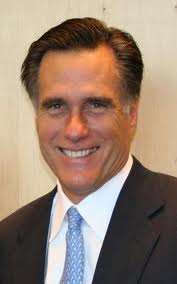
Mitt Romney  Follow LJF97 on Twitter Tweet On the campaign trail in Iowa, Mitt Romney said, “Corporations are people.” (NY Times, Washington Post)

An argument can be made that Mr. Romney meant that corporations are composed of people, that they magnify the abilities of individuals. However, Ayn Rand might suggest that the candidate made a collectivist statement. Mr. Romney could also have meant that corporate profits eventually wind up in the pockets of investors like himself and Warren Buffett, and their heirs, like his children and Paris Hilton. However, that may be a nuance that may be lost in the political debate.

It could also be that Mr. Romney meant exactly what he said.

But what is closer to the truth, I think, is that corporations are legal mechanisms by which people use to limit their liability and to develop and protect their wealth.

In my courses at the Marlboro MBA in Managing for Sustainability, we discuss corporations as a “nexus of contracts.” That’s not really a definition of a person that a flesh and blood person, a person whos DNA is DNA would use.

People, that is flesh-and-blood-based people, DNA-based people can own corporations. Corporations can own other corporations. But neither people nor corporations can own people.

In “The Divine Right of Capital,” Marjorie Kelly (Amazon, EcoBooks) clearly describes why corporations ought not be considered “persons.”

But that’s not the only issue I have with Mr. Romney’s statements in Iowa.

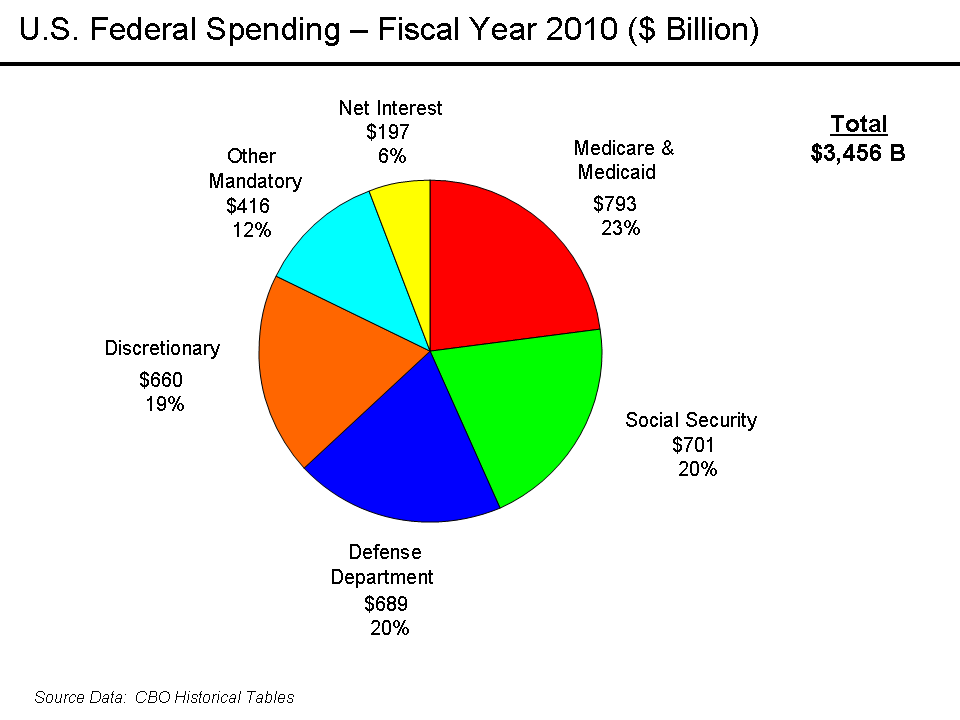
Mr. Romney also said, “Social Security, Medicare, and Medicaid account for about half of Federal Spending.” This seems to be factually incorrect. According to the Congressional Budget Office summarized on  Wikipedia, Social Security, Medicare, and Medicaid account for 43% of total federal spending, in fiscal year 2010. (Note that total defense spending is greater than the 20% reported in the figure because certain programs and agencies, such as the CIA, the NSA, and other defense and intelligence agencies are funded, in part, out of the “Discretionary” category.)

While $1.491 Trillion, 43%, is $350 Billion less than 50% of the budget of FY 2010, you could argue that Mr. Romney was exaggerating for effect, something politicians do. However, I imagine if we were to raise taxes to 50% on the wealthiest 1% of Americans, people with over, say, $50 Million, Mitt Romney has $284 Million, and say, “It’s only about 43%,” he would at the very least question our understanding of mathematics.

Mr. Romney also said, “You can raise taxes, that’s not the approach I would make.”

That is the approach I would take. As noted here, taxes are “The price we pay for civilization.” They are revenues raised by the people in governments to pay for the things they understand must be paid for; things like education, infrastructure, security. I would raise taxes on people making more than $250,000 per year. And raise them significantly on people, making more than $1,000,000 per year, whether they make their money as actively as salary, or passively as dividends, capital gains, or distributions from trust funds.

I make less.  A lot less. My expenses – my health insurance, the costs of food, fuel, etc., are going up.  My income, however, is going down. In “real” terms, as inflation is going up, and in actual numbers, as the bonus I used to be given have shrunk or been eliminated because of, it has been said, “the economic conditions faced by the firm.”

The government Lincoln defined as “Of the people, by the people, and for the people” needs money to pay its obligations. It needs money to build infrastructure. And as has been noted, Keynesian economic theory suggests that in an economic conditions such as we face only the government can be willing to act to create jobs. The government can only really raise money by borrowing it or by raising taxes. We should be developing government programs to shift the energy paradigm to clean, renewable, sustainable energy. It will create 2.4 Million jobs, directly cut unemployment from about 9.1% to about 7.3%, indirectly cut unemployment by another 1.0 to 2.0% and generally stimulate the economy in a terrific manner. (Click here).

As we have noted before, and will doubtless do again, Popular Logistics is a POLICY blog, not a POLITICS blog. However, we  do think about politics, at least occasionally.  And it appears to this blogger that Mr. Romney just lost the election. Whether he has lost to Mr. Obama or to one of the other Republicans remains to be seen.


Socialists v Stalinists

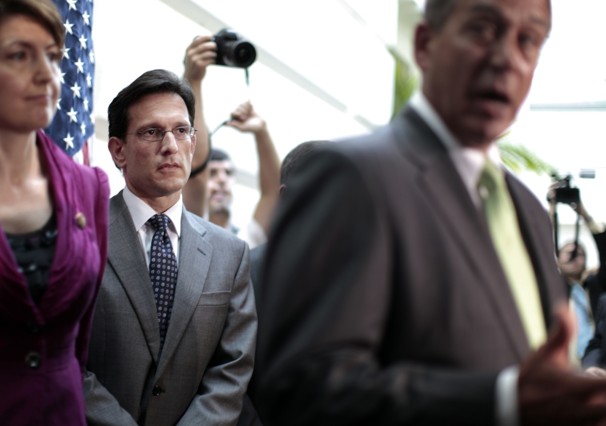
John Boehner, Eric Cantor, & a friend Follow LJF97 on Twitter Tweet The Washington Post reported, here, that John Boehner, Eric Cantor, Paul Ryan, and the “Young Guns,” their Republican comrades in the House of Representatives, PLANNED as far back as January, 2009 to use the debt ceiling to create a political crisis. It seems to have worked. The Republicans held fast, Obama and the Democrats blinked. The rating agency Standard & Poors, S&P, downgraded their rating of the credit-worthiness of the United States of America, President Obama’s core supporters seem to be abandoning him. And the stock markets are plummeting – the Dow Jones Industrial Average dropped 1000 points in 3 days.

Allowing US debt to be downgraded – forcing it to be downgraded – will cause a rise in interest rates, an increase in unemployment and bankruptcies. Altho a rise in interest rates will benefit bondholders. This is not the fiscal policy I expect from the party that claims to be fiscal conservatives. Altho, as noted, it does benefit bondholders.

The government should be creating jobs.  Our elected representatives should be guiding the ship of state to a prosperous and sustainable future, not selling it short.

The NY Times reports, here, that S&P’s downgrade will spur the Republicans to demand more cuts in government spending, which will put more people out of work, furthor erode the economy. The only hope for the country is for Obama to realize that there is nothing he can do to win the love and admiration of the right wing, to ignore them and look to the center and to his base, and do what is good for the country, regardless of what Bachmann, Boehner, Cantor,  Ryan and the Young Guns, and Grover Norquist want.

Continue reading

Taxes – The Price We Pay For Civilization

“Taxes are the price we pay for civilization.” – Oliver Wendell Holmes.

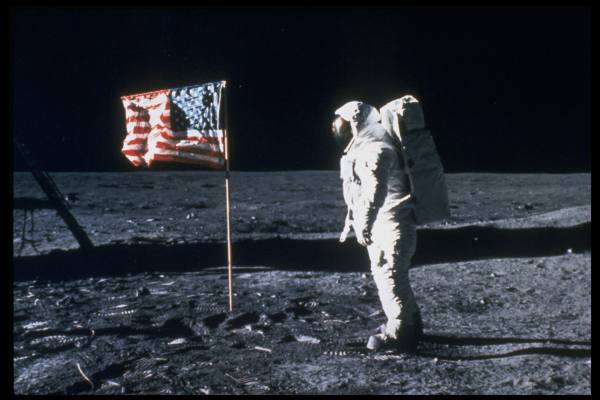
Neil Armstrong on the surface of the moon

Your Tax Dollars At Work, Courtesy NASA

Follow LJF97 on Twitter Tweet Taxes fund Medicare and Medicaid so the poor and the elderly can see a physician and get treatment when they are sick. Taxes fund education for our children and our neighbors children so they can grow up to be doctors, lawyers, engineers, architects,  accountants, teachers, plumbers, electricians, carpenters, builders, actors, etc., so we can buy things that work properly, travel safely, enjoy life, so we can, in a word, thrive.  Taxes fund police, fire-fighting, defense, judicial and other services so we can be secure in our homes and our persons, so the innocent do not go to prison, so the guilty pay their debts to society, and so we, when we do foolish things, can compensate those we accidentally harm. Continue reading

The Crash of 2011

US Capitol Follow LJF97 on Twitter  Tweet I thought the market would crash in the wake of the Earthquake / Tsunami / Nuclear Meltdowns at Fukushima. It didn’t. However, something much less serious may be bringing the market – and the economy – to it’s knees. Politics. The Voice of America reported here that Standard & Poors downgraded US debt from AAA to AA+. Click here for the S&P’s Special Report and here for the full report.

S&P’s analysts wrote:

The downgrade reflects our opinion that the fiscal consolidation plan that Congress and the Administration recently agreed to falls short of what, in our view, would be necessary to stabilize the government’s medium-term debt dynamics.

John BoehnerIt is clear that the emphasis on cutting government spending, eliminating government jobs, eliminating benefits to unemployed citizens, rather than raising revenues and developing infrastructure is not in the long term or short term interests of the United States. As the 512 point drop in the Dow Jones Average, and the downgrade of US debt indicate, Republicans and the Tea Party should be careful for what they wish for – they just might get it.


In the discussions over the debt ceiling, John Boehner said something to the effect that if a family or a business is borrowing too much it simply must tighten it’s belt. Continue reading

Why the TVA Wants Nuclear Power

Follow LJF97 on Twitter  Tweet

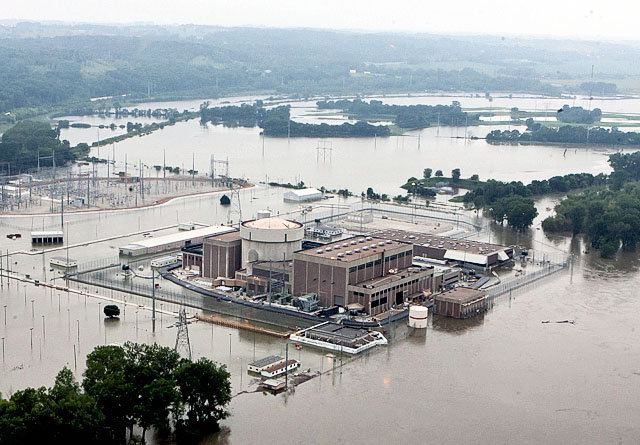
Fort Calhoun plant in the Missouri RiverIn “Why We Still Need Nuclear,” the “op-ed” piece written in the New York Times, July 30, 2011, Tom Kilgore, the President and CEO of the Tennessee Valley Authority, seems to have made up his mind to attempt to complete the Bellefonte 1 nuclear power plant, in Hollywood, Alabama. Mr. Kilgore is in good company: the President of Iran, Mahmoud Achmadinejad, also wants to build nuclear power plants.

The TVA began work on the Bellefonte nuclear plants in 1974. Construction was suspended in 1988, after the TVA spent about $4.1 Billion on the plant. The TVA wants to spend another $5 Billion over the next six to eight years to complete the plant. It would therefore cost a total of $9.1 Billion to construct a 1.26 gigawatt plant. That’s $7.22 Billion per gigawatt, plus interest, over a period that spans 34 years, with construction in three phases: 14 years of work from ’74 to ’88, 22 years of non-work, from ’88 to 2012, and another six to eight years of work. (Times Free Press, TVA News, TVA Environment).

This suggests the real reason why the TVA wants to complete the plant. Currently Bellefonte 1 a $4.1 billion liability on the TVA’s books. If the TVA adds another $5 Billion, this $4.1 hot white elephant will be magically transformed into a cool (but heat producing) 9.1 billion asset. Continue reading

Exxon Profits: $10,700,000,000 for the Quarter

Follow LJF97 on Twitter
Tweet

The Associated Press via the Sacramento Bee reported that “Exxon Mobil Corp. earned $10.7 billion … its highest quarterly profit since the third quarter of 2008…. However, Exxon officials noted that sluggish business investment, lower consumer spending and high debt would continue to weigh on the economy.”

Let’s do some math – Exxon earned $10.7 Billion this past quarter. Yet Exxon and other big oil companies receives $2 Billion to $3 Billion per year in tax subsidies. If divided equally, then Exxon would get $400 to $600 million per year, $100 to $150 Million per quarter. The subsidies amount to 0.93% to 1.4% of Exxon’s profits of $10.7 Billion this quarter, and 0.108% to 0.16$ of Exxon’s annual revenues of $370 Billion for the year ended 12/31/10 (Google Finance). This is equivalent to giving someone earning $50,000 per year a gift of $54 to $81.

A lot of people need help: American college students need help paying tuition, Americans on Medicare and Medicaid need help paying their medical bills, and Americans on Unemployment need help paying for food, people trying to design and build a renewable sustainable energy infrastructure. But we are helping oil companies.Why?

Let’s look again at the numbers. For the year ending Dec. 31, 2010, Exxon’s Gross Revenues were $383 Billion. Gross Profits were $107 Billion, and Income Before Taxes were $53 Billion. Profit was 27.9% of Gross Revenues.  Income before Taxes was 13.8% of Gross Revenues.

Exxon 12/31/10
Total Revenues $383 B
Gross Profit $107 B
Income before Taxes $53 B
Gross Profit / Revenues 27.94%
Income BT / Revenues 13.84%
Period  Income  Nominal Tax
 Year ending 12/31/2010  $53 Billion  $18.55 B
 Quarter ending 6/30/2011  10.7 Billion  $3.745 B

And according to Valeri Vasquez, at the Center for American Progress, here, Exxon’s tax rate is 17.6%. The nominal corporate rate is 35%.  With profits of $53 Billion last year, rather than receiving subsidies. Exxon should have paid $18.55 Billion in taxes last years. With profits of $10.7 Billion last quarter, Exxon should have paid $3.745 Billion.

Continue reading

U.S. settles with whistleblower Bunny Greenhouse

Follow LJF97 on Twitter
Tweet

 Below is an excerpt from Erik Eckholm’s piece in the Times, noting the settlement of litigation between Bunnatine “Bunny” Greenhouse and DOD for retaliatory action after her objections, in 2005, to the Halliburton/KBR no-bid contract for logistical support in Iraq. Greenhouse had been the Chief Contracting Officer for the Army Corps of Engineers. She’d previously had a perfect record of performance ratings.

More here

Her primary objections:

  • the study rationalizing the sole-source KBR contract was itself outsourced – to Halliburton/KBR, which recommended itself as the sole source;
  • Even if the contract’s premise was justified for the first few months on emergency grounds, it didn’t make sense for a multiyear, potentially indefinite contract.

Which raises the question of how much work KBR/Halliburton are doing now in Iraq, Afghanistan and elsewhere for DOD, CIA, et cet.  We note the it’s KBR’s former CEO, and later the United States Vice President, who made famous the phrase “undisclosed location.” (For readers from Brooklyn, “undisclosed location” roughly translates to “going to the mattresses.”) KBR is currently, publicly, one of two logistics contractors in Iraq – but classified contracts are, by definition, outside the scope of public review – and for practical purposes – outside the scope of Congressional review.

Continue reading

Debt, Catastrophe, and Foreign Entanglements

Follow LJF97 on Twitter
Tweet
A young father of our country. The battle raging today between Democrats and Republicans will not solve  the nation’s debt problems, nor avert a financial catastrophe in the future. The politicians do not appear to have a handle on a comprehensive solution to our financial woes. I’m not certain that I do, either, but I feel an obligation as a citizen and a stakeholder in our nation’s present and future to present my ideas and add to the debate.

The issues, as I see them, revolve around the debt ceiling, government obligations, the economy, consumer debt and what George Washington might consider foreign entanglements of the kind he warned us against in his farewell address. The solutions must benefit the American taxpayers today and in the future. Here are the issues and some ideas toward resolution. Continue reading

Iranian Scientist Rezai-Nejad Gunned Down at Home – NYTimes.com

Gunmen riding motorcycles fatally shot an Iranian scientist in front of his house in Tehran on Saturday, Iranian news agencies reported. It appeared to be the latest in a series of attacks that Iranian authorities have called an assassination campaign directed by Israeli, American and British intelligence agencies against the country’s nuclear program.

The scientist, Darioush Rezai-Nejad, 35, died, and his wife was wounded and taken to a hospital, the news reports said. They also gave varying descriptions of his expertise, with some describing him as an electronics specialist who worked with Iran’s Defense Ministry. It was uncertain what role, if any, he played in Iran’s nuclear program, which American experts believe is aimed at developing a weapons capacity. Iran denies that it is trying to build a nuclear bomb.

According to the semi-official ISNA news agency, Mr. Rezaeinejad was a doctoral student at Khajeh Nasroldeen Toosi University.

ISNA quoted Safarali Baratloo, political-security deputy for the Tehran’s governor’s office, as saying that whether Mr. Rezai-Nejad “is a nuclear scientist is currently under review and we are not certain.” In earlier reports, several Iranian news outlets identified him as being involved in Iran’s nuclear program but later hedged or backed away from that identification.

The shooting came amid Western concerns that Iran may be accelerating its production of nuclear materials to get closer to being able to make a weapon. The expanded effort is overseen by Fereydoon Abbasi, the nuclear physicist who runs the country’s Atomic Energy Organization.

On Nov. 29 Dr. Abbasi was driving to work when a motorcyclist approached and attached an explosive device to the door of his car. The physicist rushed away, pulling his wife with him, and they escaped with minor injuries.

But on the same day, Majid Shahriari, a colleague on the faculty of Tehran’s Shahid Beheshti University, was killed in a similar attack, and his wife and driver were injured. Iranian authorities said Professor Shahriari had managed a major nuclear project.

via Iranian Scientist Rezai-Nejad Gunned Down at Home – NYTimes.com.

Roughing It

Interior of Pilatus PC 12.  Follow LJF97 on Twitter  Tweet A s they struggle to pay their bills, forced to work, the wealthy cope as only they can. By sending their children to summer camp in private jets. In  “To Reach Simple Life of Summer Camp, Lining Up for Private Jets” Christine Haughney, in the New York Times,  July 24, 2011, wrote:

 “A turboprop Pilatus PC-12 carrying Melissa T., her daughter, her daughter’s friend and a pile of lacrosse equipment took off for their home in Connecticut, following the girls’ three-week stay at Camp All-Star in nearby Kents Hill, Me. Shortly after, a Cessna Citation Excel arrived, and a mother, a father and their 13-year-old daughter emerged carrying a pink sleeping bag and two large duffel bags, all headed to Camp Vega in Fayette. … as the economy limps along, more of the nation’s wealthier families are cutting out the car ride and chartering planes to fly to summer camps. One private jet broker, Todd Rome of Blue Star Jets, BlueStarJets.com, said his summer-camp business had jumped 30 percent over the last year.”

A quick check on the Camp All Star web site’s “Dates & Rates” page suggests that 3 weeks will cost about $4500.  Trips, horseback riding and hockey are extra. Getting there on a private jet, would add $6,318 to  $15,240 per party, $2,106 to $5,080 per camper for a camper, his or her mom, and a friend.  As I tell people, it’s the trip, not only the destination.

Tell me again, Mr. Boehner, why the wealthy can’t afford to pay taxes?

Beechcraft 350, exteriorI did some checking. Went to Blue Star‘s website, priced a charter for three (3) from Allaire Airport in Monmouth County, New Jersey to Augsta State in Maine. I was surprised at how affordable it is. Blue Star offered 5 alternatives, all turboprops:

  • A Ratheon Super King BE 350, a 9-passenger aircraft, $6,318, which is $2,106 per passenger,
  • The BE-C90, a 6 passenger turboprop, $11,270, or $3,757 per passenger,
  • The BE-100, an 8 passenger turboprop: $12,151 for the trip, $4,050 per passenger.
  • The BE 200, in a 9-passenger configuration, for $13,043, $4,348 per passenger, and
  • The BE-200 in an 8-passenger configuration: $15,240, $5,080 per passenger.

These data are summarized in the table below.

Plane Trip Per Passenger, 3 passengers Per Passenger If Full
Ratheon Super King BE 3509 Passenger Turboprop $6,318 $2,106 per person. $702 per person for 9.
BE-C90, 6 passenger Turboprop $11,270 $3,757 per person. $1,878 per person for 6.
BE-100, 8 passenger Turboprop $12,151 $4,050 per person. $1,519 per person for 8.
BE-200 9 Passenger Turboprop $13,043 $4,348 per person. $1,630 per person for 9.
BE-200 8 Passenger Turboprop $15,240 $5,080 per person. $1,905 per person for 8.

I don’t know if the airline serves food, drinks, or offers in-flight movies. But caviar is only $115 per oz (Russian Sevruga, Caviar Express, Glendale, CA).

Clean Energy, Good Jobs, and a Vibrant Economy … But


Earth from Space, courtesy NASA (our tax dollars at work)

courtesy NASA (our tax dollars at work)

Follow LJF97 on Twitter  Tweet  It sounds too good to be true:

*   100 gigawatts of offshore wind, $300 Billion,
*   100 gw of landbased wind, $200 Billion,
*   75 gw of solar, $300 Billion,
*   75 gw of geothermal, $200 Billion.
*   200 gigawatt equivalents of efficiency – $200 Billion.
*   100 & Clean, Renewable, Sustaianble Energy: 1.2 Trillion.
*   2.7 Million New Jobs and a Healthy Economy: Priceless!

This is happening, slowly, inexorably, by the “invisible hand of the market.” But it will happen faster if the “invisible mind of the community” acts. This means the government!

Continue reading

Boing Boing

City officials in Fukushima, Japan sowed sunflower seeds Wednesday at a plaza in the city as part of efforts to remove radioactive materials from the soil following leaks and meltdowns at a nearby nuclear plant, following the March 11 earthquake and tsunami. — Xeni • Comments: 24

via Boing Boing.

Power Line Policy Passed by Energy Regulatory Commission – NYTimes.com

Once again, Matt Wald of The Times explains what’s happening with our energy infrastructure:

WASHINGTON — Federal regulators laid down principles on Thursday for planning and paying for new power lines, part of a long-term policy effort to help the nation’s electricity grid grow enough to meet the demands of renewable energy and a competitive electricity market.

The rule, which has been in the works for several years, is intended to push the organizations that manage the grid into cooperating with one another, so that developers can build power lines across several states and multiple electrical jurisdictions.

Such cross-jurisdictional transmission lines are becoming more important as states seek to reach their goals of integrating large amounts of wind and solar power,  generally available in remote deserts and mountaintops, into the energy mix.

While generators of power, including renewable energy advocates, generally praised the rule, others were wary and said it could impose big costs on people who get no benefits.

But it has long been clear to grid experts that the existing transmission lines will not allow for a free market in electricity in which generators can compete across vast distances to supply customers, or for meeting state renewable energy goals. Existing rules make it very difficult for a company seeking to build new transmission lines to establish how it will recoup its costs.

The new rule, passed unanimously on Thursday by the Federal Energy Regulatory Commission, does not specify what the formula should be for allocating costs, or precisely how new lines should be planned. But it does lay out general guidelines, including the notion that the costs should be borne by those who benefit.

The commission also issued an implicit threat: if grid organizations do not enable the construction of badly needed new transmission lines, federal regulators will do it for them.

Jon Wellinghoff, the chairman of the commission, cited a prediction that until 2019, 60 percent of new generating capacity will be wind and sun, often distant from population centers.

via Power Line Policy Passed by Energy Regulatory Commission – NYTimes.com.

Link

As the BBC reports further details, the Norway attacks have taken on a particularly cold-blooded and calculated character. It appears that, after bombing the government center in Oslo, dressed as a police officer, the killer went to an island on which the Labour Party was holding a recreational event for teenagers. Posing as a police officer conducting an investigation, he asked a large number of children to gather in a crowd, and began to open fire. (Current counts seem to vary between 84 and 85 reported deaths among the teenagers on the island of  Utoeya.

From BBC: Norway youth camp attack kills 84

At least 85 people died when a gunman opened fire at an island youth camp in Norway, hours after a bombing in the capital Oslo killed seven, police say.

Police have charged a 32-year-old Norwegian man over both attacks.

The man dressed as a police officer was arrested on tiny Utoeya island after an hour-long shooting spree.

Prime Minister Jens Stoltenberg said many people were still looking for their children and had not so far been able to locate them.

He was speaking after meeting victims and relatives with Norway’s King Harald, Queen Sonja and Crown Prince Haakon in the town of Sundvollen near the island.


These images, via the BBC, may help to illustrate the sequence of events. Motive will be harder to discern; the suspect in custody is believed to have right-of-center politics.