Would Ayn Rand be Concerned about Climate Change? You Betcha!

TweetFollow LJF97 on Twitter On Ayn Rand, Objectivism, and Climate Change

Ayn  Rand would not “believe” in climate change.  She would try to objectively determine whether the theory correctly modeled the data. While it is legitimate to question both the conclusions of scientists and the methodologies by which data are gathered, denying objective validity of the data, which people who call themselves “Objectivists” are doing with respect to climate science, is well, in a word, anti-Objectivist, at least as described  by Ayn Rand in 1962.

“The essence of my philosophy” she said, is:

  1. Metaphysics Objective Reality
  2. Epistemology Reason
  3. Ethics Self-interest
  4. Politics Capitalism

“Translated into simple language, ” she continued, “it would read:

  1. “Nature, to be commanded, must be obeyed” or “Wishing won’t make it so.”
  2. “You can’t eat your cake and have it, too.”
  3. “Man is an end in himself.”
  4. “Give me liberty or give me death.” Continue reading

Keynes, Reluctance to hire, & 21ST Century Energy

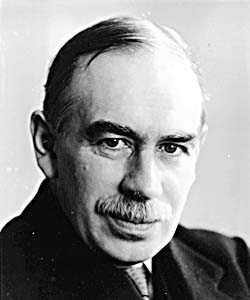
John Maynard Keynes, in black and white, because some ideas are.

in black and white, because some ideas are.

Tweet Follow LJF97 on Twitter   During the Great Depression the Classical Economists said “Unemployment is voluntary. Business owners will not voluntarily keep the means of production idle.”  While he had been a student of classical economics, John Maynard Keynes observed that the data didn’t fit the theory. And, he reasoned, if the observable data don’t fit the theory, the theory must be flawed.   “Business owners are risk averse,” he saw. “A employee needs to be productive, needs to make widgets. But if no one is buying widgets, then contrary to classical theory, factory owners will fire workers and keep capital idle rather than hire workers to create excess inventory. That’s just common sense.”

We see this today.

When unemployment was low, for example in the United States during the tech boom of the 1990’s, people acted on the premise that “There is so much work that we could hire and good people and train them.”  Today hiring managers seem to be acting on the premise that “There are so many people looking for work that they can wait for the perfect candidate.” Perfection being unattainable, jobs go unfilled. This is ok, in this context, because

  • “Budgets are tight.”
  • “The future is uncertain.”
  • “Money not spent on a new hire can be saved or used to pay down debt.”

Keynes also observed that the government is an employer that does not need to worry about going out of business. Building infrastructure is government employment that is investment for the future. These observations are as valid today as they were 80 years ago.

Continue reading

Engadget/Brian Heater – $1K drop on Chevy Volt Price

Brian Heater at Engadget reports (here) a $1,000 (USD) drop in the list price of the electric plug-in  Chevrolet Volt.  It’s roughly a two to three percent drop. What’s more likely to get Launch of Chevrolet Volt to begin in California, U.S.A.sales going, economies of scale working, and prices down are large private and government fleet orders – or sharp increases in petroleum prices, or accurate news and information. We, at Popular Logistics think higher gasoline prices are inevitable.

“Chevy wants to know what it can do to get you into one of its plug-in hybrids today. A $1,000 price drop? You got it. The carmaker announced this week that the 2012 Volt base price will come in a grand lower than its predecessor, thanks to the sorts of additional configurations that come with increased availability. Opel Ampera Being ChargedThe 2011 version was available in seven states and the District of Columbia and came in three configurations — 2012’s Volt is available nationwide in seven different packages, ranging from $39,995 to $46,265. And keep in mind that those prices don’t factor in potential tax credits. The latest version of the plug-in vehicle is available now for order and offers up features like MyLink media streaming, OnStar driving directions, and passive locking though the new base model does strip away a couple of features found in its predecessor. Also there’s the whole lessening your dependence on gasoline, if you’re into that sort of thing.”

via Engadget.

Apple v Microsoft, 2011.

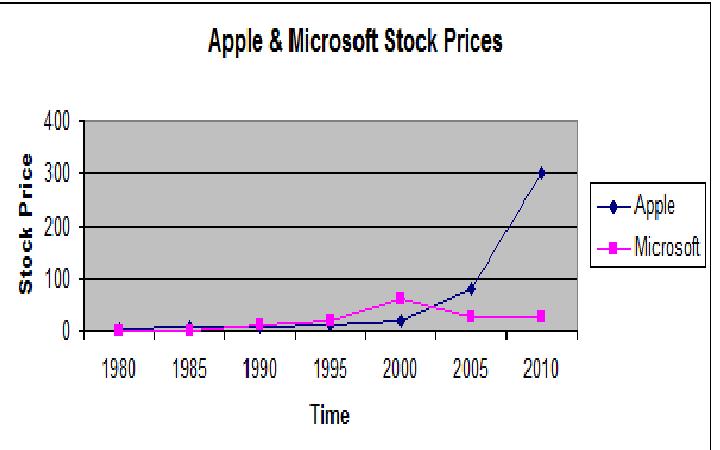
Graph of Apple and Microsoft, stock price, 1980 to 2010At a seminar on June 9, 2011, on securing the mobile worker, Apple‘s representative said  “We truly did not understand what we built.” That’s a direct quote. He went on to say “Here’s how they use it at GE, and Hyatt, and in the pharmaceutical industry.” A few minutes later he said “When users tell us what they can’t do, what they need to do, we listen, so tell us what you need.” At seminars on Microsoft‘s products, their consultants describe their software by saying “This is what we built, this is what it does, and here are our best practices – this is how you should use our software.”

This  is it. Apple’s “We truly did not understand what we built,” versus Microsoft’s “This is what we built, this is what it does, and here are our best practices – this is how you should use our software.” These statements define the corporate cultures.

Apple, at $325 per share, is a $300 billion company. With earnings of 21 per share, it has a price earnings  ratio of 15.8. It has no debt.  It is down slightly from it’s high of around $350 per share, reached a few weeks ago. There are 46,000 employees. Net income of 5.99 Billion on $24.67 Billion.  Microsoft, at $24 per share, is a $200 billion company. With earnings of $2.92 per share it has a P/E of 9.44. There are 89,000 employees, $16.4 billion revenue and $5.2 billion net income.

Microsoft’s income per dollar of revenue is higher – but they don’t make hardware. Revenue per employee at Microsoft is $184,000. Revenue per Employee at Apple is $536,000.  Income per Employee at Microsoft is $58,000. Income per Employee at Apple is $130,000.

These data are summarized below,

Employees Net Income Revenues Inc / Emp Rev / Emp
(Millions) (Millions)
Apple 46,000 $5,990 $24,670 $130,217 $536,304
Microsoft 89,000 $5,200 $16,400 $58,427 $184,270


When I last looked at Apple and Microsoft, October 30, 2010, here,  Apple was 305.24 per share, with an EPS, of $15.15 and a P/E of 20.147. It’s market capitalization was $279.59 Billion. Microsoft was $26.28, with an EPS of 2.11, P/E ratio of 12.48 and market capitalization of $227.42 Billion, $52 Billion less than that of Apple.  Today Apple’s market capitalization is up 25% to $300 billion and Microsoft’s market capitalization is down about 12% to $200 billion. Apple’s market capitalization is $100 billion higher than Microsoft’s.  Apple’s all time high stock price was a few weeks ago, and I expect it will bounce back and keep climbing as long as they keep selling hardware and software that shifts the paradigm. Microsoft’s was in 1999.  I don’t expect Microsoft to go out of business, but it’s days of shifting the paradigm and tremendous growth are gone.

The iPad (Apple site, here) is a paradigm shifting device.  It has a dual core A5 processor, 16, 32, or 64 GB of flash memory, and no moving parts (other than electrons, which are hard to keep still).  Treated properly, it should last for 10 or 20 years.  It adds a layer of durability and obsolescence resistance to personal electronics.  It puts us on the road from “disposable” consumer electronics back to durable, sustainable consumer electronics  (click here).

And it’s selling by the millions. Apple has sold 200 million iOS devices – iPhones, iPads, iPods Touch, that’s one for two out of three Americans. It’s sold 25 Million iPads, 14 million in 2010 and 11 million in the first half of 2011. The sales projections from Wall Street are tremendous, (Florin at UnWired, Schonfeld at Tech CrunchElmer-DeWitt at Fortune). People buy multiple devices, e.g., iPhone and iPad or iPod Touch and iPad.  These are driving sales of music, apps – by the billions –  and the Mac. Microsoft is buying SKYPE, which is a great company with a great product but it doesn’t know how to make money. Apple is going up, both in terms of market capitalization and earnings. Microsoft is going nowhere.

Continue reading

Renewable Energy & Efficiency Expo + Policy Forum

Taken from the web site:

The Sustainable Energy Coalition, in cooperation with Members of the U.S. House and Senate Renewable Energy & Energy Efficiency Caucuses, invites you to the 14th annual Congressional Renewable Energy & Energy Efficiency EXPO + Policy Forum. This year’s EXPO will bring together more than 50 businesses, sustainable energy industry trade associations, government agencies, and energy policy research organizations (see list below) to showcase the status and near-term potential of renewable energy and energy efficiency technologies. Members of the U.S. Congress, Obama administration, and exhibiting organizations will give presentations on the role sustainable energy technologies can play in stimulating the economy, strengthening national security, protecting the environment, and saving consumers money. Click here for video and other details from last year’s EXPO.

This event is free and open to the public. No RSVP required.

Agenda

More details:

Continue reading

2011 Invention Awards: From Waste To Water | Popular Science

Bjorn Carey, writing in Popular Science (print and on-line), describes a waste disposal system which relies in large part on existing boat engine heat to reduce human waste to water vapor and carbon dioxide.  From 2011 Invention Awards: From Waste To Water:

The exhaust of an idling engine is at least 550°F, which is hot enough to flash evaporate the waste and thermally oxidize the organic materials. Quite simply, the device can break down anything organic that’s put into it. The process eliminates all odors, Nassef says, and the main by-products are carbon dioxide and clean water vapor.How It Works: Zero Liquid Discharge: Waste flows from the boat’s toilet to an equalization tank, which breaks it into small pieces. The material next moves into the homogenizer, a container where it gets chopped into particles. The injector pump pressurizes the material and sprays it through a nozzle into the engine’s exhaust system, where the heat cleans it. Blanddesigns.co.ukNassef built a ZLD prototype in 2004 from washing-machine parts and a five-gallon paint bucket. The current version, his 11th update, uses only as much energy as ten 100-watt lightbulbs, sterilizes waste without any of the harsh chemicals of other portable toilet-waste-disposal systems, and can be scaled up or down. In 2007 it earned a certificate of approval from the U.S. Coast Guard for marine sanitation devices.Nassef is starting with boats, but the ZLD has the potential to work in just about any vehicle with hot-enough exhaust and a toilet. He’s drawn interest from RV manufacturers and the U.S. military, which often resorts to burning waste with jet fuel at a total cost of $400 per gallon at its forward operating bases. Another promising market is airlines, which could plug the ZLD into existing toilets, allowing some planes to shed up to 500 pounds of wastewater weight over the course of a flight.

via 2011 Invention Awards: From Waste To Water | Popular Science.

Not only is the development itself remarkable – but approval by the Coast Guard in three years seems pretty prompt.

British Secretary of Defence: UK faces 1K cyber attacks annually

Via the  Telegraph, their correspondent James Kirkup reports that Liam Fox, the UK’s Secretary of Defence (Defense, if you prefer), has sais that “The Ministry of Defence is facing “cyberwar” attacks on a daily basis.”

Warning that Britain is now in continuous combat with an “invisible enemy” in cyberspace, the Defence Secretary said that the MoD last year detected and blocked more than 1,000 “potentially serious” attempts to infiltrate or disrupt its computer systems.

Speaking to the London Chambers of Commerce defence industry dinner, Dr Fox said electronic attacks on Britain doubled from 2009 to 2010. “There is a continuous battle being waged against us, day in, day out,” he said. Dr Fox’s remarks are the latest Government warning about the scale and severity of electronic attacks on sensitive State computer networks. George Osborne, the Chancellor, last month said that Government computers are receiving more than 20,000 malicious email attacks every month. .

The MoD and its highly sensitive electronic networks are a prime target for people trying to steal secrets or damage critical systems.

“Our systems are targeted by criminals, foreign intelligence services and other malicious actors seeking to exploit our people, corrupt our systems and steal information,” Dr Fox said. “The risks to defence are real, and I take them very seriously.”


BBC – E. Coli outbreak waning

According to the BBC, the European E. Coli episode is winding down:

Germany’s health minister says new E. coli infections from a deadly outbreak are dropping significantly and the worst of the illness is over. Daniel Bahr said he was cautiously optimistic the outbreak had peaked, but warned that more deaths were expected as new cases emerged each day.

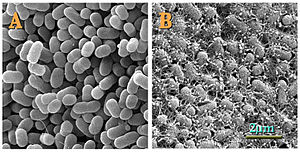
The outbreak has so far left 24 dead, infected 2,400 and left hundreds with a complication that attacks the kidneys.   Earlier, the EU proposed 150m euros (£134m) of compensation for farmers.But agriculture ministers said they wanted much more and that their producers of fruit and vegetables should be compensated for the full amount of their losses, estimated at up to 417m euros (£372m) a week.

The outbreak was wrongly blamed on Spanish cucumbers last week by the health authorities in northern Germany, the centre of the outbreak. Investigators are still trying to find the real origin of the new strain of enterohaemorrhagic E. coli (EHEC). New cases are still being reported every day, including 94 in Germany on Tuesday.

For further reference, see the World Health Organization’s Enterohaemorrhagic Escherichia coli (EHEC) Fact Sheet, and the relevant Wikipedia entry,Escherichia_coli_O157:H7.

NegaWatts Save MegaBucks

Tweet
Follow LJF97 on Twitter

The Newark Star Ledger reported (here and here) that Public Service Electric and Gas, PSE&G, a subsidiary of Public Service Enterprise Group, PSEG, is installing a  2,700-ton chiller the University of Medicine and Dentristy of New Jersey, UMDNJ. This an $11.4 million investment in negawatts. The Star Ledger reported that UMDNJ will save $1.3 million per year on energy costs.What’s the payback? An $11.4 million investment will save $1.3 million per year. That means the system will pay for itself within 9 years, assuming the price of energy remains constant.  I think it’s a much more reasonable to assume that the price of energy will go up, so the payback will be higher and the system will pay for itself sooner.

The system will work long after it is paid for. It will save $13 Million over the next 10 years and $26 Million over the next 20 years – assuming electricity costs are constant.  Assuming electricity costs increase an average of 5% per year, this will save $16.35 Million over the next 10 years, and $42.99 over the next 20 years.

  • Projected Savings of $11.4 Million investment.
  • After 1 Year: $1.3 Million, a return on investment of 11.4% in one year.
  • After 5 Years: Save $7.18 Million, for a total ROI of 63%, assuming a 5% annual increases in cost of energy.
  • After 10 Years:  Save $16.35 M; total ROI of 143.4%).
  • After 15 Years: Save $28.05 M; total ROI of (246%)
  • After 20 Years: Save $42.99 M; total ROI of 377%).

We have Governor Corzine to thank. as well as Governors Whitman, McGreevey, Codey, and Christie.

Continue reading

Risk Assessment of Energy Infrastructure: Renewables Lower Risk

Tweet

UN Panel: “Renewables could supply 80% of the world’s energy by 2050”

Energy Policy and Game Theory

The International Panel on Climate Change (IPCC) ((an organization staffed by two distinct United Nations organizations, the World Meteorological Organization and the World Heath Organization)), has issued a report estimating that 80% of the world’s energy needs could be met by renewable sources by 2050. Link to Report, including video (0:3:37) of Ottmar Ettenhafer, chair of the IPCC, regarding the report.

We believe that barriers are not ultimately economic or technical, but political, social, and attitudinal.  Since we’d prefer to think that most people don’t wish the ill effects of climate change on their grandchildren – or would take that bet with any bookmaker (what our British cousins call a “turf accountant”), putting the lives of those they know will outlive them at risk,  we prefer to think that it’s some form of social acquiescence – less politely, “groupthink,” rather than avarice, which leads to dismissal of concerns about global warming. Viz this excerpt from a post we found on the Peak Energy blog.  This is from a column by Paddy Manning, business columnist at the Sydney Morning Herald:

From Corporate leaders in a climate of disbelief

Scepticism hung heavy in the air. At a packed Australian Institute of Company Directors lunch on climate change, the institute’s former chief executive, Ian Dunlop – a petroleum engineer who was a Shell executive and now is the deputy convener of the Association for the Study of Peak Oil – rose to put a question to keynote speaker, David Mortimer, the chairman of Leighton Holdings, the world’s biggest contract coalminer.

In full, Dunlop’s question ran for three minutes: ”The temperature increase we’ve seen so far is about 0.8 degrees Celsius. We’ve already seen a clear trend in extreme weather events related to just that increase. We probably have locked in already a temperature increase of around 2.4 degrees. If we were to follow the path that you’re suggesting in terms of continued fossil fuel usage to 2030, the likely outcome will be a temperature increase somewhere between 4 and 6 degrees. That probably means world population drops to a carrying capacity of somewhere around a billion people (you can argue 1 to 2 billion).

We  recommend reading Manning’s excellent reporting on Dunlop’s presentation. But we’d like to put the question another way, strictly as a thought exercise in two parts.

Part 1: A Wager on Climate Change

  1. A 1% probability that serious consequences will be the result of continuing our current energy policies;
  2. If – on the 1% probability that the “alarmists” are right – in which case this isn’t something rapidly reversible ;
  3. Would you take a 1% bet – even if it paid 5,000 to 1 – if the loss meant the death or impoverishment of your grandchildren?
  4. How much does your moral calculus change if it someone else’s children -someone else you don’t know and will never know?

Part 2: Who Gets To Play?

  1. We’re all making this wager with our actions – but certain groups of us – people with the most to gain with the continued use of non-renewables
  2. If this is, in effect, a multiplayer version of the Prisoner’s Dilemma ((See Wikipedia’s excellent introduction to the Prisoner’s Dilemma, one of the fundamental problems in game theory)) we’re already making this bet – but we’re pooling the risk onto a set of most or all “children” or “grandchildren.”

What if we were to decide the risk was unacceptable, and apply the Precautionary Principle? Moving to a renewable-focused energy policy would inevitably have certain effects, some of them bad for small groups of people, no doubt – the others pretty good for most of us:

  1. Energy would be more expensive in the short run, while capital investment is made;
  2. The investment in new infrastructure will stimulate the economy, unemployment will decrease, wages and wealth will increase, GPI, Genuine Progress Indicator, will increase.
  3. Energy would become more efficient,  i.e. less energy for the same amount of economic activity. Except for energy producers, transporters and resellers, this is in effect a lowering of overhead costs without general deflation.
  4. The unquestioned risks of certain energy uses (air quality, water quality, the risks inherent in extracting, refining, transporting, and storing various energy types) and associated safety and health costs would be reduced.

This assessment gives most of us at least a short-term interest opposed to parties with economic interests in the current system. It also gives us a long term interest in investing in renewables. And it makes the current unsustainable paradigm a bet against future generations.

BBC News: Man attempts to hijack Alitalia flight wih nail clipper

From the BBC:

A man has been overpowered by cabin crew on an Alitalia flight from Paris to Rome, after he drew out a small knife and demanded the plane divert to the Libyan capital, Tripoli.

A female flight attendant was slightly injured as the man was subdued.

The suspect, from Kazakhstan, was handed over to police and arrested after flight AZ329 landed at Rome’s Fiumicino airport at 2005 GMT.

He was “clearly agitated”, according to a statement from Alitalia.

There were 131 people on board.

The man was overpowered by four crew and passengers, and given a sedative by a doctor who was travelling on the flight.

Italian police named the man as Valery Tolmachev, aged 48. He is reportedly a member of the Kazakh delegation at Unesco in Paris.

Italian media say the man brandished a nail-clipper in the assault. He had no previous criminal record, nor any links with militants, the reports said.

The motive for the attack is not yet clear.

via BBC News – Man attempts to hijack Alitalia Paris-Rome flight.

U.S. and Japanese troops cooperate on rescue effort

Tweet

Reports  from multiple sources indicate that United States military personnel are aiding Japanese military and civilian personnel in search-and-rescue efforts:

Thousands of Japanese and American military personnel joined together Friday in a final three-day sweep to search for those still missing from last month’s massive earthquake and tsunami.

The operation involves 120 aircraft and 65 ships and will cover the three prefectures hit hardest by the March 11 disaster.  More than 11,000 people are confirmed dead, with more than 16,500 still missing. But the search teams will stay out of a 30-kilometer zone around the radiation-leaking Fukushima nuclear plant.

Workers have been struggling since the quake to bring the damaged plant under control. Chief government spokesman Yukio Edano said Friday that current circumstances meant that it would be a “reasonably long” period of time before those evacuated from the nuclear-threat zone would be allowed back to their homes.

US, Japanese Forces Search for Missing Tsunami Victims (Voice of America)

A generation or two ago – depending on how one counts, we were engaged in mortal combat with the Japanese.  About one generation back, we sold them most of the nuclear reactors which recently ran aground. (We’ve got a bunch of the same reactors in operation in the United States, sold to the Japanese at a time when nuclear power’s risks were less apparent to the people of both countries). We do better, and will in future do better, as allies than as enemies. As sad, and frightening as events in Japan have been, we think it right and fitting that U.S. troops are assisting the Japanese. We wish them all good luck and freedom from mishap in these efforts, which are not without risk.


Earth Day, 2011, Where Are We?

Earth, from space, courtesy of the American taxpayer

Earth from Space, courtesy of the American taxpayer. Reto Stöckli, Nazmi El Saleous, and Marit Jentoft-Nilsen, NASA GSFC

Tweet
Follow LJF97 on Twitter
Earth Day, 2010, I looked to the future on Popular Logistics. In 2009, I wrote about water pollution and agricultural waste in the Chesapeake. Today I am looking at the present and recent past. While a comprehensive look at where we are can be found on the web pages of the World Watch Institute, the New York Times, and the World Factbook of the Central Intelligence Agency, I want to make a few points.

Our energy policy is “when you flip a switch, the juice gotta flow.” It ain’t magic. It’s engineering and classical physics, with an understanding of radioactive fission and decay and a profound lack of long term thinking. It ain’t magic, but it might as well be. But we really need to base our energy policy on an understanding of ecological economics and sustainability.

We’ve had a few problems with nuclear power and fossil fuel in the last few years. Yet, there’s some light on the horizon.

Continue reading

Telegraph Op-Ed urges Obama to build thorium reactors

TweetFollow LJF97 on Twitter An op-ed article in the Telegraph, UK, last year urged President  Obama “to marshal America’s vast scientific and strategic resources behind a new Manhattan Project” and by so doing we could “reasonably hope to reinvent the global energy landscape and sketch an end to our dependence on fossil fuels within three to five years.”  The article suggests we invent and commercialize nuclear reactors designed around radioactive decay of thorium.

The article concludes with the assertion that renewables can’t meet our needs. But that’s asserting a belief, not reporting scientifically observable data or a scientifically disprovable hypothesis. And the better question in that regard is not: “Can renewable and sustainable energy meet our needs?”

But: “How can renewable and sustainable energy meet our needs?”

Continue reading