Indonesian Terror Networks decentralize, vary methods of attack

Mail Bomb from collection of National Postal Museum, courtesy Wikipedia Entry "Letter Bomb"

Indonesian terrorists are decentraling networks, scaling down cells, and varying modes of attack. From the Jakarta Post:


The International Crisis Group (ICG) said in its latest report issued on Tuesday that Indonesian law enforcers’ aggressive clamping down on terrorism had driven terrorists to act in smaller groups independent of larger organizations.

“The suicide bombing inside a police station mosque on April 15, 2011, and a spate of letter bombs delivered in Jakarta in mid-March are emblematic of the shift,” the group said.

Dynno Chressbon, intelligence expert and director of the Study Center for Intelligence and National Security said Wednesday that the shift meant acts of terrorism would likely be harder to monitor.

“[These acts] will be harder to detect because the database the police have is limited to the old terrorist networks. New players from smaller groups will be difficult to detect until post-bombing,” he added.

Another terrorism expert, Noor Huda Ismail, told The Jakarta Post that smaller terror groups meant bomb attacks would be conducted on a minor scale with a smaller explosion impact but more sporadically.

“Terrorists today are ‘just-do-it’ terrorists,” he said.

Dynno said the change in terrorist movements in Indonesia started as early as 2008, and as terrorists shift to act in smaller groups, they cut the usual long chain of command.

“It was decided in a consolidation in 2008, followed by [the military-style] training of Jamaah Anshorut Tauhid [JAT] in Aceh, that there was no longer a need to have a long chain of command. Now small groups can act on their own to launch executions,” he said.

Their targets were clear: law enforcers and Muslims whose ideology differed from theirs, or in short, secular Muslims, Dynno added.

The ICG said while police still top the list of targets in attacks conducted by small-scale terror groups, it also pointed out there were other new targets in such attacks.

Terror groups get smaller, harder to detect (21 April, 2011, The Jakarta Post)

Cool Tools "Everyday Carry" (EDC) contest

Everyday Carry Contest on Kevin Kelly’s Cool Tools. This is what we might refer to as “”A” gear (always with you), even more critical than what you might keep in a “go-bag,” particularly if you don’t drive everywhere.

The tools you have with you are the ones that are going to get used, and so it is with great pleasure that we are announcing our newest contest seeking the best everyday carry (EDC) tools. The diversity of tools that people carry with them whether on keychains, in pockets and/or bags never ceases to astonish. From Moleskines to Leathermen, and flashlights to Buffs, the shear number of tools we have to choose from is overwhelming. That’s where you come in. Send us reviews of your everyday carry tools, and explain why they have made the cut. There is no limit to how many you can include, and feel free to submit EDC tools from specific situations like camping or biking. Just remember every tool should be reviewed with the following five parts in mind: 1) a succinct description of what the tool is, 2) how it changed your behavior, 3) why Cool Tools should run the item, 4) why it is superior to other things, and 5) why we should believe you. Submissions will be accepted until Tuesday, April 19th. As usual, the author of the most publishable review gets to select a prize from the Prize Pool and will be published the following week. So tell us all about the tools you have with you when it counts! via Cool Tools.

We note that “EDC” is a new term for us – we’re used to the U.S. military “A” gear (never left out of arm’s reach during operations), which “EDC” sounds close to – and of course the “go-bag,” A/K//A the Bug-Out Bag, the “Diddi Mau” bag (Vietnamese for, in effect, “leave without delay,”) and other synonyms.

President's Remarks on Fiscal Responsibilty

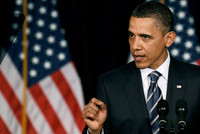
President Obama Follow LJF97 on Twitter President Obama’s speech on Fiscal Policy was summarized by Hans Nichols and Roger Runningen on Bloomberg.com here.”

“President Barack Obama vowed to cut $4 trillion in cumulative deficits within 12 years through a combination of spending cuts and tax increases, setting the stage for a fight with congressional Republicans over the nation’s priorities.

“In presenting his long-term plan for closing the federal budget shortfall, Obama set a target of reducing the annual U.S. deficit to 2.5 percent of gross domestic product by 2015, compared with 10.9 percent of GDP projected for this year. He reiterated his support for overhauling the tax code to lower rates while closing loopholes and ending some breaks to increase revenue.

“We have to live within our means, reduce our deficit, and get back on a path that will allow us to pay down our debt,” Obama said in a speech today at George Washington University in the capital. “And we have to do it in a way that protects the recovery.”

The full text can be found at Whitehouse.gov.

Extract of Remarks by the President on Fiscal Policy, George Washington University, April 13, 2011.

“One vision has been championed by Republicans in the House of Representatives and embraced by several of their party’s presidential candidates.  It’s a plan that aims to reduce our deficit by $4 trillion over the next ten years, and one that addresses the challenge of Medicare and Medicaid in the years after that.

“Those are both worthy goals for us to achieve.  But the way this plan achieves those goals would lead to a fundamentally different America than the one we’ve known throughout most of our history.

“A 70% cut to clean energy.  A 25% cut in education.  A 30% cut in transportation.  Cuts in college Pell Grants that will grow to more than $1,000 per year.  That’s what they’re proposing.  These aren’t the kind of cuts you make when you’re trying to get rid of some waste or find extra savings in the budget.  These aren’t the kind of cuts that Republicans and Democrats on the Fiscal Commission proposed.  These are the kind of cuts that tell us we can’t afford the America we believe in.  And they paint a vision of our future that’s deeply pessimistic.

“It’s a vision that says if our roads crumble and our bridges collapse, we can’t afford to fix them.  If there are bright young Americans who have the drive and the will but not the money to go to college, we can’t afford to send them.  Go to China and you’ll see businesses opening research labs and solar facilities.  South Korean children are outpacing our kids in math and science.  Brazil is investing billions in new infrastructure and can run half their cars not on high-priced gasoline, but biofuels.  And yet, we are presented with a vision that says the United States of America – the greatest nation on Earth – can’t afford any of this.

“This is a vision that says up to 50 million Americans have to lose their health insurance in order for us to reduce the deficit.  And who are those 50 million Americans?  Many are someone’s grandparents who wouldn’t be able afford nursing home care without Medicaid.  Many are poor children.  Some are middle-class families who have children with autism or Down’s syndrome.  Some are kids with disabilities so severe that they require 24-hour care.  These are the Americans we’d be telling to fend for themselves.

“Worst of all, this is a vision that says even though America can’t afford to invest in education or clean energy; even though we can’t afford to care for seniors and poor children, we can somehow afford more than $1 trillion in new tax breaks for the wealthy.  Think about it.  In the last decade, the average income of the bottom 90% of all working Americans actually declined.  The top 1% saw their income rise by an average of more than a quarter of a million dollars each.  And that’s who needs to pay less taxes?  They want to give people like me a two hundred thousand dollar tax cut that’s paid for by asking thirty three seniors to each pay six thousand dollars more in health costs?   That’s not right, and it’s not going to happen as long as I’m President.

“The fact is, their vision is less about reducing the deficit than it is about changing the basic social compact in America.  As Ronald Reagan’s own budget director said, there’s nothing “serious” or “courageous” about this plan.  There’s nothing serious about a plan that claims to reduce the deficit by spending a trillion dollars on tax cuts for millionaires and billionaires.  There’s nothing courageous about asking for sacrifice from those who can least afford it and don’t have any clout on Capitol Hill.  And this is not a vision of the America I know.”

FAA official forced to resign; nexus between his conduct and five incidents of air controllers falling asleep not readily apparent

Follow LJF97 on Twitter
But apparently a public humiliation and the end of a career is the vestige of older traditions incorporating human sacrifice.  The sleep-deprivation/asleep at work/understaffed air traffic control centers issue is serious. This ritual suggests that person or persons higher on the food chain believe the public sufficiently credulous, enraged, afraid or overwhelmed that this will derail any requests for an accounting of what happened and how to prevent it – whether or not it fits neatly into a “Blame [insert name here]” template. From FAA head of air traffic resigns, byAshley Halsey III at WaPo:

The head of the Air Traffic Organization at the Federal Aviation Administration resigned Thursday morning amid recent reports of several controllers sleeping on the job. Hank Krakowski submitted his resignation Thursday morning to FAA Administrator Randy Babbitt, who said he accepted it, federal officials said. Krawkoski joined the FAA in 2007. Prior to that he spent about 30 years at United Air Lines in senior management positions, including as vice president of flight operations. “Hank is a dedicated aviation professional and I thank him for his service,” Babbitt said in a statement. “Starting today, I have asked David Grizzle, FAA’s chief counsel, to assume the role of acting ATO chief operating officer while we conduct a nationwide search to permanently fill the position.” Babbitt said recent reports of “unprofessional conduct on the part of a few individuals have rightly caused the traveling public to question our ability to ensure their safety.” On Wednesday federal officials ended the practice of leaving one controller on duty in airport towers during overnight shifts. The FAA also revealed that a Nevada air traffic controller allegedly fell asleep Wednesday morning as a medical flight carrying a patient tried to land.The plane landed safely at Reno-Tahoe International Airport with the help of a radar controller based in California, the FAA said. The controller was suspended and the incident is under investigation. However, the incident Wednesday was the fifth time this year that a controller apparently slept while on duty, including at Reagan National Airport, where a controller supervisor was suspended last month after he admitted to napping in the tower . The FAA plans to conduct a “top to bottom review” of the nation’s air traffic control system, Babbitt said. Babbitt announced last month that he was revamping air traffic control guidelines. He ordered radar controllers who guide planes as they descend from cruising altitude to confirm that controllers in airport towers are prepared to handle incoming flights before handing them off. Babbitt also said he would instruct controllers to offer the pilots an option to land elsewhere if a control tower is unresponsive for any reason.

Let’s hope that some reasonable and substantive change comes out of this.

Pakistani diplomat shot in Nepal; earlier attack involved attempt to kill Pakistani diplomat with knives while on motorcycles

CNN via BBC, Pakistani diplomat shot in Nepal

Kathmandu, Nepal (CNN) — Two people on motorcycles shot and wounded a Pakistani diplomatic official in Kathmandu, Nepal, on Thursday morning, authorities said. Mehboob Asif, a visa assistant at the Pakistan embassy, was hit by eight to 10 bullets while he was riding a motorcycle to work, according to police. A Pakistan embassy official who did not want to be named said Asif was taken to the hospital and is now out of danger. He said authorities didn’t know a motive for the attack. “The Embassy of Pakistan is confident that the Government of Nepal would undertake investigations at appropriate levels to bring the criminals to justice,” Pakistan’s Embassy said in a statement. Although no arrests have been made, around 150 people have been rounded up for questioning, Kathmandu police chief Pushkar Karki said. The attack happened three days after a newly-appointed Minister for Energy Gokarna Bista was attacked with knives by two persons on motorcycles on Monday evening.

It’s hard to square “hit by  eight to ten bullets” with “out of danger,” but this might make more sense with more detail. The use of handguns on motorcycles is familiar; the two-assailant attack from motorcycles using knives seems rather amateurish.

Why Cape Wind Still Matters


Follow LJF97 on Twitter On May 25, 1961 President John Kennedy said, “I believe that this nation should commit itself to achieving the goal, before this decade is out, of landing a man on the moon and returning him safely to the earth.” (Kennedy library and NASA)

Ten years ago, before Sept. 11, Jim Gordon and his team set out to build a small wind farm on the waters on which the young President, his wife, brothers, sisters, nieces and nephews sailed. Size is relative. It’s small compared to a large coal or nuclear power complex. The wind farm will be composed of 130 turbines and produce up to 430 megawatts of power (here).
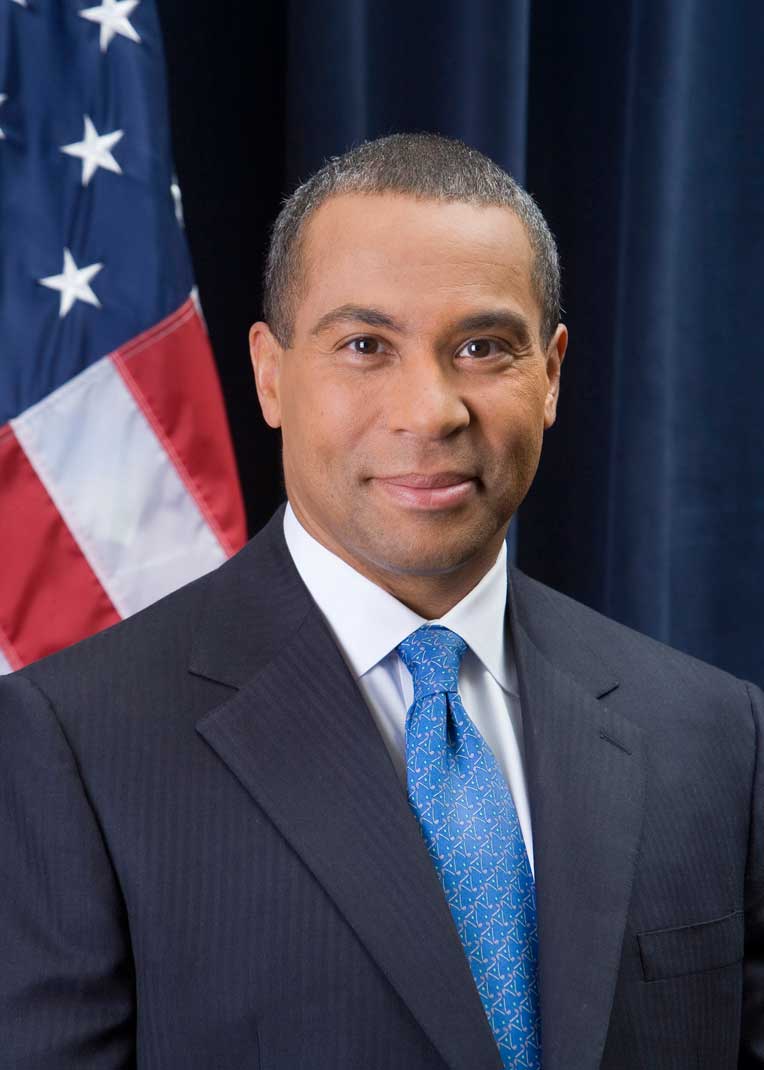
Former Mass. Gov. Deval PatrickIn 2010 Jim Gordon and Cape Wind, LLC, finally, got their permits to build the wind farm. For a variety of reasons it took longer for Cape Wind, LLC to get the permits to build the wind farm than it took this nation to land a man on the moon and bring him home safely.  Had the wind farm been built by the winter of 2004, Cape Wind would have provided power during the bitter January of ’04, the heat wave of ’05, and every day, especially the coldest days of winter and the hottest days of summer – when the winds are strongest and New Englander’s electricity needs are highest.
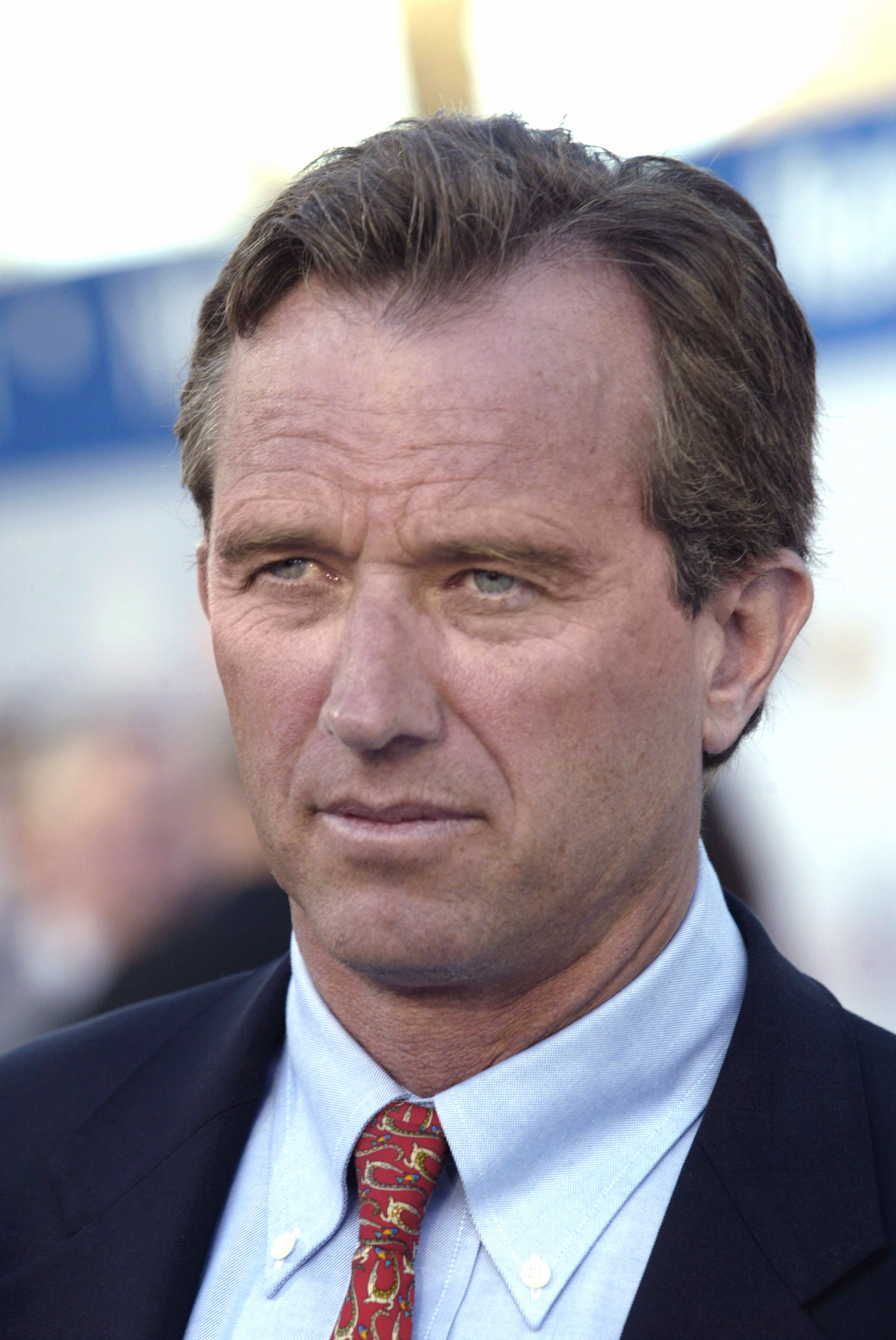
 

Robert F. Kennedy, Jr.

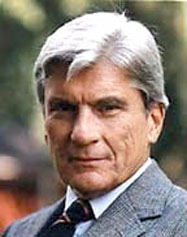
Virginia Senator John Warner

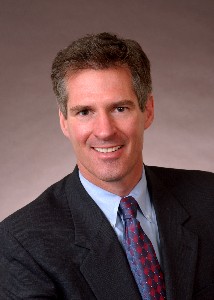
Mass. Senator Scott Brown

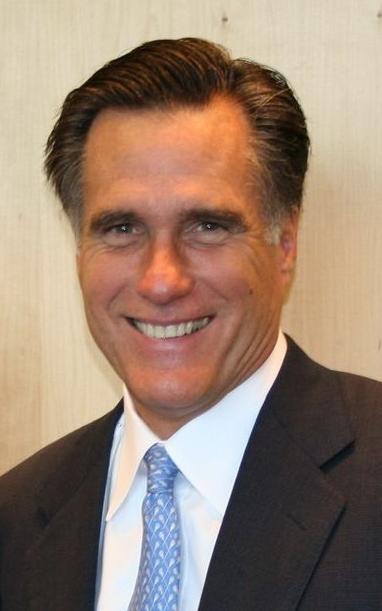
Former Mass. Gov. Willard Mitt Romney

It’s also clear, from reading Cape Wind, by Wendy Williams and Robert Whitcomb, that the alliance to “Save Our Sound,” created an anti-wind rogue’s gallery, a bipartisan coalition of moneyed special interests which led Senator Edward M. Kennedy, D-MA, Governor Willard Mitt Romney, R-MA, Senator Ted Stevens, R-AK, Representative Dan Young, R-AK, Sen. Trent Lott, R-MS, Sen. John Warner, R-VA, and very wealthy residents of Cape Cod, including Bill Koch, the late Richard Egan, Rachel “Bunny” Lambert Mellon (Sen. Warner’s ex-mother-in-law), professional environmentalist Robert F Kennedy, Jr. to obstruct the regulatory and the legislative processes and which slowed the development of Cape Wind and offshore wind farms off of the mid-Atlantic and elsewhere.

For them to oppose this project or say “I favor wind power, as long as it’s somewhere else,” was and remains cynical. Given that we have combat troops in Iraq, Afghanistan, and Libya, that Alan Greenspan, Chairman of the Federal Reserve from 1987 to 2006 described the mission in Iraq as a war for oil, was unpatriotic, perhaps traitorous.
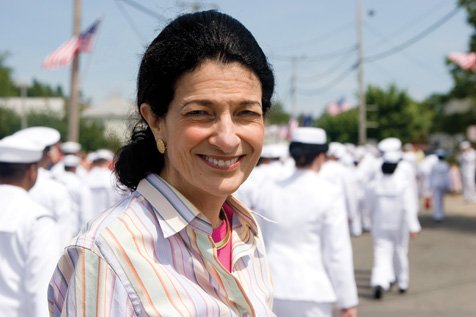
Senator Olympia Snowe

Senator DomeniciYet another bipartisan coalition rose up to challenge them and support Cape Wind: Ted Roosevelt, IV, who lives on the Cape, Rep. Jim Bass, R-NH, Sen. Olympia Snowe, R-ME, Sen. John McCain, R-AZ, Sen. Jeff Bingaman, D-NM, Sen. Pete Domenici, R-NM, Matt Patrick, Massachusetts, Gov. Deval Patrick,  Greenpeace, unions, Fox News’ Sean Hannity. What these politicians have in common is an understanding of the values of energy independence and renewable energy.

Popular Logistics is a policy blog, not a politics blog. However, it’s worth noting that several political campaigns were won in Massachusetts by Democrats who supported Cape Wind, including Matt Patrick, the 5-term Democratic Representative of the 3rd District of Barnstable, Cape Cod, and Deval Patrick who started his 2006 Gubenatorial campaign in front of the Hull, MA, wind turbine.

Mitt Romney, who signed Ted Kennedy’s health care plan into law in the Commonwealth of Massachusetts, (also known as Obamacare 1.0) appears to be running for President in 2012. He lost in the 2008 Primary to John McCain. Mr. Romney signed on to the Kennedy-Koch-Egan-Mellon anti-Cape Wind jihad. Americans favor wind power. Will they support Romney in 2012?

Scott “Mitt-Lite” Brown, said (here) “While I support the concept of wind power as an alternative source of energy, Nantucket Sound is a national treasure.”  Massachusetts voters favor Cape Wind 70 to 30. Will they support Brown in his re-election campaign in 2012?  The Statue of Liberty is a “National Treasure,” as is the Constitution.  I last visited Cape Cod when I was 7. Nantucket Sound is not a “National Treasure.” Getting America off coal, oil, natural gas, and nuclear power, moving to clean, renewable, sustainable energy means our children and grandchildren will enjoy our national treasures.

In their book Williams and Whitcomb suggest that Senator Kennedy may have realized that he had made a bad decision in opposing Cape Wind, but that for a variety of reasons he refused to back down. They may be right. While I think Kennedy was wrong, I can’t speak to whether he came to that understanding. As I noted on this blog, back in August, 2009, (here) President Obama said of Ted Kennedy,”His ideas and ideals are stamped on scores of laws and reflected in millions of lives: in seniors who know new dignity; in families who know new opportunity; in children who know education’s promise; and in all who can pursue their dream in an America that is more equal and more just, including myself.

Obama said “More equal and more just,” but he didn’t say “perfect.” America is not perfect. It is nation of men and women governed by the rule of law. The laws are not perfect, and neither are the men and women who make, enforce and interpret the laws.

Our energy policy is electricity flows when people flip a switch. Most of that electricity comes from burning fossil fuels and harnessing nuclear fission. We can pretend that the carbon we are pumping into the oceans and the atmosphere will have no effect, that we have unlimited supplies of fossil fuels, and uranium, that all the waste from coal mining, processing, transporting, and burning, and all the radiation leaks from nuclear plants (and radioactive waste from coal) are trivial or routine. Or we can get real. The choice is between coal, oil, methane, and nuclear, or wind, solar, tidal, and geothermal. I choose wind, solar, tidal and geothermal; for myself, for my backyard, not just for people who are my equal in the eyes of the law, whether they have more or less money than me.
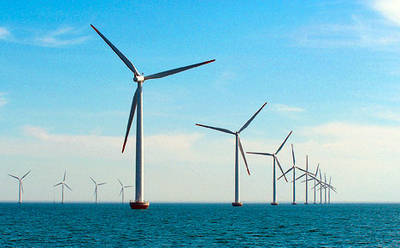
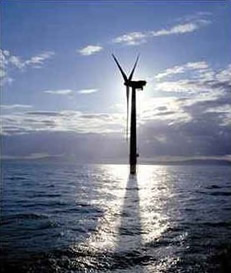
Offshore wind farm. monopoles are about 100 m.

Index to the series that explores Offshore Wind and Politics:

  1. Cape Wind, Leadership and Vision, here.
  2. Why Cape Wind Still Matters, here.
  3. Ted Roosevelt, IV, on Cape Wind (coming soon).

Pennsylvania approves natural gas drilling applications in record time: Michael Rubinkam/Associated Press


Follow PopLogistics on Twitter

Michael Rubinkam of the Associated Press reports that Pennsylvania is reviewing – and approving – natural gas drilling permits in 35 minutes. There are several ways to interpret this data; these come to mind:

  1. The Commonwealth of Pennsylvania has already done the requisite research on applicant(s) and location(s) in some other process not reflected in the 35-minute process;
  2. They’ve decided there’s no risk associated with natural gas drilling;
  3. Something is wrong with this process.

We believe the safe bet is the last of those three.

From Pennsylvania is approving gas drilling permits with scant review by Michael Rubinkam, in USA Today:

ALLENTOWN, Pa. — Pennsylvania environmental regulators say they spend as little as 35 minutes reviewing each of the thousands of applications for natural gas well permits they get each year from drillers who want to tap the state’s vast Marcellus Shale reserves.

And the regulators say they do not give any additional scrutiny to requests to drill near streams and rivers, even though the waterways are protected by state and federal law.

Staffers in the state Department of Environmental Protection testified behind closed doors last month as part of a lawsuit filed by residents and environmental groups over a permit that DEP issued for an exploratory gas well in northeastern Pennsylvania, less than a half-mile from the Delaware River and about 300 feet from a pristine stream.

Their statements, obtained by The Associated Press, call into question whether regulators are overburdened and merely rubber-stamping permit applications during the unprecedented drilling boom that has turned Pennsylvania into a major player in the natural gas market, while also raising fears about polluted water and air.

The agency has denied few requests to drill in the Marcellus Shale formation, the world’s second-largest gas field. Of the 7,019 applications DEP has processed since 2005, only 31 have been rejected — less than one-half of one percent.
Pennsylvania is approving gas drilling permits with scant review (USA Today, 13 April 2011)


Japan: aftershock leaves 3.6 million households without electricity

From Powerful Aftershock Complicates Japan’s Nuclear Efforts, by Hiroko Tabuchi and  Andrew Pollack in The New York Times.

TOKYO — The strongest aftershock to hit since the day of the March 11 earthquake and tsunami in Japan rocked a wide section of the country’s northeast on Thursday night, prompting a tsunami alert, raising fears of new strains on the crippled Fukushima Daiichi nuclear plant and knocking out external power at three other nuclear facilities.

The public broadcaster, NHK, said two people had died in Miyagi and Yamagata, including a 63-year-old woman whose ventilator stopped working in the blackout. Many more were injured. About 3.6 million households were still without power Friday morning.

No tsunami was detected, the Japan Meteorological Agency said. The aftershock had a magnitude of 7.1, according to the United States Geological Survey; last month’s quake, which devastated much of the northeastern coast, was measured at 9.0.

But the agency warned of more aftershocks going forward. Many coastal communities were ravaged last month, and some have become even more vulnerable to tsunami waves because sea walls were breached and land levels sank.

Early Friday, injuries were reported in Sendai City and across the region, and blackouts continued in some areas, according to NHK. Five coal-powered power plants also shut down, adding to concerns over energy shortages.

Workers at the Fukushima Daiichi plant were told to take cover until the tsunami warning was lifted, but Japanese officials said at a news conference that water was still able to be pumped into three damaged reactors and a spent-fuel pool at a fourth in the crucial effort to keep their nuclear fuel cool. The plant’s cooling systems were knocked out by last month’s quake and tsunami.

Nitrogen also continued to be piped into the No. 1 reactor, the company said, in an effort to prevent a possible explosion.

The Tokyo Electric Power Company, which runs the power station, said early Friday that it had found no new damage to the plant, and workers had resumed work to identify the source of leaks, found last week, of radioactive water into pipes and tunnels under the complex. Monitoring posts at the plant were not showing any immediate increase in radiation levels, the company said.

Cape Wind, Leadership and Vision

Jim Gordon


Follow LJF97 on Twitter

On Friday, March 25,2011, Cape Wind LLC‘s CEO Jim Gordon spoke at Columbia University about the long delayed project. When he started the project, back in 2001, the Europeans were 10 years ahead of us. Today the Europeans are 20 years ahead of us, and the Chinese too are years ahead of us.

Mr. Gordon quoted Theodore Roosevelt, IV, as saying, “I live on the Cape. If we don’t do this, in 50 years the Cape will be under water.” Cape Cod’s highest point is about 300 feet above sea level so Mr. Roosevelt was exaggerating.  His home may wind up under water, but at least some of the Cape will be one or more islands. Speaking of islands, Nantucket, which in 2006 had the highest median property values in Massachusetts, rises some 30 feet above sea level. If sea level rises 30 feet, Nantucket will get washed away.

Mr. Gordon said, “Cape Cod has the most polluted air in New England. When you harness the wind you get clean electricity: No arsenic, lead, mercury, thorium, uranium, or zinc or carbon dioxide like you get from burning coal. No barges of oil that can spill. No radioactive waste like you get from nuclear power. Last year we read about the coal mine disaster in West Virginia. Then the Deepwater Horizon. Now we’re reading about the disaster in Japan.  With wind there is no possibility of a disaster, Zero.”

And, he added, “Fossil fuels are a finite resource. New England has neither coal, oil, or natural gas – but there is a tremendous amount of wind. When you factor in the costs of storms and sea level rise – you would think it’s a no-brainer.” The question is not “Can wind power provide base line capacity?” But “How can wind power provide base line capacity.”

Mr. Gordon told how during a trade mission to China, one of his engineers was grilled about wind power, offshore wind, engineering, costs, and siting. After the end of the grilling his hosts said “we read Cape Wind, by Wendy Williams and Robert Whitcomb. We would never allow that here.” In 2009 China built a 100 mw wind farm off the coast of Shanghai – completed the project quickly. By the end of 2010 they had 41.8 gigawatts of nameplate capacity wind power – enough for about 45 million Americans (wikipedia). Continue reading

Cracks in the Fuselage

Southwest 812 on the ground after the emergency landing.

on the ground after an emergency landing 4/1/11.


Follow LJF97 on Twitter What Conservatives and the Tea Party get right, and what they miss.

Anyone who looks closely at “Business as Usual” inside the Beltway or at local government can find waste and corruption. So it’s easy for conservatives, members of the Tea Party, liberals and progressives to rail against and rally around fighting waste, corruption, and abuse of power.

While liberals and progressives tend to focus on government corruption and the abuse of power, conservatives and the Tea Party tend to focus on what they see as waste in government. They advocate a laissez faire model of government – that government is best which governs least. It is difficult to argue against this. The United States is founded on freedom of expression and free enterprise. American citizens, residents, and guests are free to do what they want, as long as those actions don’t infringe on the rights of others.

However, this lack of infringment on the rights of others is a reasonable and restrictive qualifier which opens the door to regulations and enforcement. Simply put, just as we are free to pursue happiness, we are justified in establishing police forces to protect us from others whos pursuit of happiness infringes on our rights. Self-regulation is ineffective: a fox guarding a henhouse is going to eat chicken. Similarly, regulation without enforcement is pointless. Enforcement consisting of a slap on the wrist, a wink, and a martini sets up a positive feedback loop that reinforces the action rather than a negative feedback mechanism that changes the behavior. Continue reading

21 Century Energy or Business As Usual?

NY Times Special (Business As Usual) Energy Section

Clifford Krauss’ “Can We Do Without the Mideast?”
sets the tone for the “Special Energy Section” in the NY Times, March 31, 2011. “The path to independence – or at least an end to dependence on the Mideast – could well be dirty, expensive and politically explosive.” Is this an April Fool’s Day joke? The path to sustainable energy requires vision and hard work. a solar array on every roof and insulation in every wall and every attic. It will be better for the economy, better for the environment, and better for ourselves, our children, and our grandchildren. Continue reading

Sustainable Investing

To paraphrase Warren Buffett and Charlie Munger, “Buying a good company at a good price is a good idea. Buying a great company at a bargain price is better.” But to note this in light of L’ Affaire Sokol – Lubrizol, “Buying a great company at a good price when a stick-picker on my staff just bought it for his account is a really stupid idea.  And making excuses is even stupider.” (See this article by Joe Nocera at the NYTimes.)

Buffett claims to practice “Value Investing” as defined by Ben Graham, Phil Fisher, Ken Fisher, Joel Greenblatt, Bruce Greenwald, and others. I see “Sustainable investing” as a subset of “Value Investing.” Value Investing seeks to find companies that are currently undervalued by “Mr. and Ms. Market” but that are really effective at delivering Shareholder value. Sustainable Investing would seek to find companies that are currently undervalued but that are really good at delivering Stakeholder value. Continue reading

Nuclear Power and Cocaine

Asking a nuclear engineering professor “Is radiation bad?” is like asking Charlie Sheen “Is cocaine bad?”

On “Morning Edition” today, 3/30/11, Renee Montagne did just that when she interviewed Professor Peter Caracappa, a member of the faculty of the nuclear engineering department of RPI (Interview / nuclear engineering at RPI). As is typically the case, what was left out of the conversation could have been more interesting than what was in the conversation. My questions for Professor Caracappa are below: Continue reading