'Suspicious' package closes half of Washington Dulles Airport terminal – Wikinews, the free news source

At approximately 1600 EST (2100 UTC) a suspicious package was found near the baggage claim at Washington Dulles International Airport in Virginia, United States, leading to the closure of around half of the terminal. Police later determined that the package was harmless and reopened the affected areas of the airport. Parts of the airport had been closed for two hours before being reopened.

Officials from the Metropolitan Washington Airports Authority said a canine unit was attracted to an unattended piece of baggage near the baggage claim. They did not disclose what the package contained, but an official said the package did not look similar to other suspicious packages sent to Maryland state government buildings earlier today.

Due to the package, four baggage claims and a United Airlines ticket counter were temporarily vacated. Flights continued to operate at the airport during the investigation

via ‘Suspicious’ package closes half of Washington Dulles Airport terminal – Wikinews, the free news source.

Safety issues with New York's most highly trained unit

NYPD Emergency Services Unit ESU patch

Safety issues with New York’s most highly trained unit, the Emergency Services Unit, which has the NYPD’s heavy-weapons, hostage-rescue, and counter-sniper functions, among others. Of course,  it’s also the most heavily armed, perhaps the only officers with regular access to long guns and automatic weapons.  Thus,  Gawker’s report,  Elite NYPD Unit Having Gun Safety Issues,  is particularly disturbing.

From Jeff Neumann’s piece in Gawker:

Just last week, an ESU officer shot and killed a Bronx man, Alberto Colon while they were searching for his son, an alleged drug dealer. The officer who shot him was trying to turn the flashlight on his weapon on. But that’s not the only big time screw up. According to a report in the the Daily News:

A member of the ESU sniper team safeguarding the tree-lighting center at the tourist magnet accidentally let loose a rifle round on Nov. 30. It happened about 90 minutes after the ceremony, as the sniper teams were pulling out. The round hit a building and was found a block and a half away.

Four days earlier, an ESU detective getting out of his vehicle to respond to a report of a barricaded gunman accidentally fired a shotgun in Harlem. The blast went through an apartment window on W. 136th St.

As in the Rockefeller Center incident, no one was injured.

This is – let’s be clear – not about  “bad cops.”  It’s about cops working too much overtime, and an appallingly low ratio of training time to field time. The police officers need more basic firearms handling and usage.  Less practice results in worse outcomes. It’s that simple. We appreciate Gawker’s coverage – excellent overall – but the remark about a cop being overweight is unfair. Consider the training that a U.S. infantry soldier receives – months or years – before being considered, say, for the Rangers – much less the Special Forces, SEALs or that more elite unit whose name we’re not to say aloud.

Continue reading

Draft: 50 Open Source Applications for Sci-Tech Education — Datamation.com

Put in PopLog/ also DSB – for scientificeidence

50 Open Source Applications for Sci-Tech Education

* Email Article

* Print Article

* Comment on this article

* Share Articles

o Digg

o del.icio.us

o Newsvine

o Facebook

o Google

o LinkedIn

o MySpace

o Reddit

o Slashdot

o StumbleUpon

o Technorati

o Twitter

o Windows Live

o YahooBuzz

o FriendFeed

January 25, 2011

By

Cynthia Harvey

* Submit Feedback »

* More by Author »

(Page 2 of 4)

Open Source: Chemistry

14. Kalzium

Kalzium describes itself as “your digital replacement for the periodic table on paper.” It displays information from the periodic table in a variety of ways, and it offers a molecular weight calculator, 3D molecule editor, an equation solver for stoichiometric problems and more. (Note that in order to use Kalzium on Windows, you’ll need KDE for Windows.) Operating System: Windows, Linux.

15. Jmol

Java-based Jmol gives you a 3D view of molecules with features for chemicals, crystals, materials and biomolecules. In addition to the downloadable version, it’s also available as a Web app or in a development tool kit. Operating System: OS Independent.

via 50 Open Source Applications for Sci-Tech Education — Datamation.com.

Lockergnome – AnyTV

But would it work, say for Egypt currently?

Online Television – anyTV v2.59

Watch local TV, world TV, live TV, satellite TV from countries all over the world in different languages on your PC with anyTV — not just at home, but at the office, work, or wireless. Watch 2630+ online TV, 6910+ video clips. Listen to 4750+ online radio.

Using anyTV means you can watch numerous of international […]

via Freeware | Windows Fanatics.

Cats, Mice, and Sustainable Energy

Tweet

Follow LJF97 on Twitter

“Join me in setting a new goal:  By 2035, 80 percent of America’s electricity will come from clean energy sources.”  – President Barack Obama, State of the Union, January 25, 2011.

When a mouse makes noise, only other mice and local cats take notice. When a lion roars, however, everyone notices; other lions, elephants, zebras, gazelles, smaller cats, mice ….

New Jersey is one of 27 states, which, like the District of Columbia, have a Renewable Portfolio Standard, or RPS, mandating that by a certain date, a specific target of a renewable energy capacity will be deployed. An additional five states have non-binding goals. (This are listed by the U. S. Dept. of Energy at Energy Efficiency and Renewable Energy.)

In New Jersey the RPS is 22.5%, about 1.6 gigawatts (GW), by 2021. New Jersey today, in January, 2011, has about 300 megawatts of renewable energy capacity.  I am confident that New Jersey will meet, and possibly exceed its RPS goal. We started with 9.0 kilowatts (KW) of photovoltaic solar in 2001. We were up to 211 megawatts (MW), by the end of September, 2010, and we added an additional 24 MW in December, 2010. Even when you factor in 30 MW of biomass, 8 mw of wind power, and 1.5 mw of fuel cells, this is less than 20% of the goal of 1.6 gw. (This is shown at the NJ Clean Energy Program Renewable Energy Technologies page.) However paradigm shifts are systems phenomena. They occur at exponential rates.  We went from 9.0 kw in 2001 to 211 mw in mid-2010, to 360 mw  by the end of 2010.  In December, 2010, we added an additional 10% – moving from 236 mw to 260 mw.  We are hitting the handle of the hockey stick.

California’s RPS is 33% by 2030. In Texas, the RPS calls for 5,880 MW by 2015. California , New Jersey and Texas are the roaring mice in domestic US clean energy policy. And a cat – the lion in the Oval Office – the President of the United States – has listened to the mice in California, New Jersey, and Texas. Last night he roared.
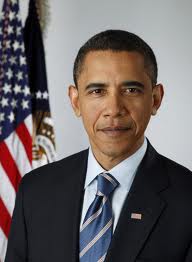
President Obama, Courtesy of the White House.

Courtesy of the White House.

In his “State of the Union” address, January 25, 2011, President Obama set a lofty goal: “80% clean electric generation by 2035.” While I think we can do better – 100% clean renewable sustainable energy by 2025 – Obama’s goal is specific, measurable, achievable, realistic, and time-bound. It’s SMART. It’s also wise.

As a President should, Obama is thinking, and thinking long term.  We at Popular Logistics wish him success because success for a President means a better future for the nation.

Two observations.

  1. There is no such thing as “Clean Coal.” Even if we capture and sequester all the carbon dioxide produced from burning coal, which is expensive, there are still impurities, such as arsenic, lead, mercury, uranium, zinc in coal. And mining and processing coal is a very dirty business.
  2. Nuclear is heavily regulated. We exercise tighter control over the wastes. In practice, nuclear power is arguably cleaner than coal. But in reality, things happen.

One question is “Can we achieve Obama’s Clean Electricity Goal?” But a better question is “How can we achieve this goal? ” My back of the envelope response is:

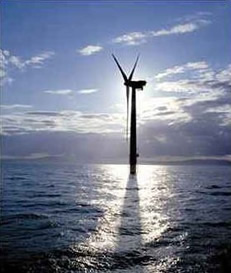
  • 100 gigawatts offshore wind,
  • 100 gigawatts land based wind,
  • 50 gigagwatts solar,
  • 75 gigawatts stored micro-hydro or biofuel, for when the sun isn’t shining and the wind isn’t blowing.

And as Amory Lovins, of the Rocky Mountain Institute, says, “The cheapest unit of energy is the ‘Negawatt’ – the energy you don’t have to buy.”  How much can we reduce our energy requirements? How much can we gain by conservation?

US District Judge Roll Died a Hero in Arizona Shooting

The videotape and law enforcement officers of the Pima County Sheriff’s Department said Judge John Roll saved Ron Barber’s life after both were shot in Tuscon, January 8, 2011. Judge Roll had been appointed by George H. W. Bush in 1991. Barber is an aide to Representative Giffords.

Chief Judge John Roll - image courtesy Wikipedia

Video Shows Chief US District Judge Roll Protecting Giffords Aide as Suspect Fired 32 Bullets, by Martha Neil of The ABA Journal (online edition).

Cameras rolled as suspect Jared Loughner allegedly fired all 31 bullets in the magazine of his Glock, plus another round that was already in the chamber, at a supermarket in Tucson, Ariz., on Jan. 8. The videotape indicates that Chief Arizona U.S. District Judge John Roll died a hero during the shootings, according to the New York Times and the Wall Street Journal. At the outset of the melee, unidentified sources who have seen the video told the Washington Post, Loughner walked straight up to congresswoman Gabrielle Giffords and shot her above the left eye from about two or three feet away. Within moments, Loughner also allegedly shot Roll, who had tried to take cover under a table. As Roll did so, he sought to protect the congresswoman’s aide, Ron Barber, pushing Barber to the ground and getting on top of him …  Continue reading

Solar Energy Saves Money, Could Provide Free Electricity and CASH to Municipalities & Schools in New Jersey

1.5 MW Solar Array, Rutgers University, Livingston Campus

1.5 MW Solar Array, Rutgers University, Livingston Campus

New Jersey taxpayers could net $36.9 million per year, $369 million over 10 years, with the installation of 152.5 megawatts (MW) of photovoltaic (PV) solar electricity systems on public schools, community colleges, and each of the public universities in the state.

The systems would pay for themselves within the first 8 years. At 2010 values of electricity and Solar Renewable Energy Certificates (SRECs), these systems would generate electricity worth approximately $300 Million and SRECs worth $1.2 Billion over the first 10 years, approximately $369 Million in excess of the cost of the systems, and provide virtually free electricity over the remainder of their 35 to 40 year lifespan.

Widespread deployment of solar energy increases the resilience of the electric grid, strengthens national security and can enhance local emergency response capabilities.

These are the conclusions of a feasibility study by Lawrence J. Furman, principal of Furman Consulting Group, LLC during the course of his studies for an MBA in Managing for Sustainability at Marlboro College Graduate School.

Continue reading

Tim Kane/The Atlantic – must-read on the depletion of U.S. Officer Corps

Tim Kane,  “a senior fellow in research and policy at the Ewing Marion Kauffman Foundation and a former Air Force intelligence officer,” writes Why Our Best Officers Are Leaving in the current issue of The Atlantic, also available online. This should be a concern, we think, regardless of what one thinks of particular military policies – the officer corps is, among other things, a bulwark against a military coup d’etat. Here’s an excerpt:

John Nagl still hesitates when he talks about his decision to leave the Army. A former Rhodes Scholar and tank-battalion operations officer in Iraq, Nagl helped General David Petraeus write the Army’s new counterinsurgency field manual, which is credited with bringing Iraq’s insurgency under control. But despite the considerable influence Nagl had in the Army, and despite his reputation as a skilled leader, he retired in 2008 having not yet reached the rank of full colonel. Today, Nagl still has the same short haircut he had 24 years ago when we met as cadets—me an Air Force Academy doolie (or freshman), him a visiting West Pointer—but now he presides over a Washington think tank. The funny thing is, even as a civilian, he can’t stop talking about the Army—“our Army”—as if he never left. He won’t say it outright, but it’s clear to me, and to many of his former colleagues, that the Army fumbled badly in letting him go. His sudden resignation has been haunting me, and it punctuates an exodus that has been publicly ignored for too long.

Wikinews reporter Paul Wace reports on effect of snowfall in Buckinghamshire (UK)

Wikinews reporter Paul Wace reports on effect of snowfall in Buckinghamshire (UK) (video link). WikiNews – part of the Wikimedia empire – has expanded into direct reporting. From Paul Wace’s coverage of the snows in England:

This month is set to be one of the coldest ever recorded in the United Kingdom, as snow leads to millions of people’s travel plans disrupted.

One person at London Heathrow Airport said the grounding of aircraft, and disruption to rail services, had created “the Christmas from hell.” On one of the busiest weekends for travellers of the year, Heathrow and Gatwick Airports closed their runways and roads countrywide became impassable.

One person has already died this weekend after the ambulance he was being treated in crashed in Eastbourne, East Sussex. Meterologists warn that the conditions are unlikely to recede soon, adding that this month is set to be one of the coldest on record. Britain is not alone in Europe; airports in Germany, Italy, France and the Netherlands are similarly affected.

Wikinews today reports from the village of Flackwell Heath, Buckinghamshire, England, where villagers were buying essentials from the local supermarket, and roads were covered in six inches of snow. Wikinews journalist Paul Wace reported that councillors pledged to grit major routes, but the main road through the village was covered in a slushy mix of snow and grit, making travel extremely difficult.

xxx

Oil pipeline explosion kills 27 in central Mexico – Wikinews, the free news source

The explosion of an oil pipeline in San Martín Texmelucan de Labastida in central Mexico has killed at least 27 individuals and injured 56 others. Twelve of the dead are children. Over 100 homes were damaged and at least 30 of them were destroyed. The explosion had an estimated blast radius of three miles.

Describing exploding gas tanks that flew through the air, Carlos Hipolito, who fled the scene with approximately 60 relatives, described the incident to Milenio Television as a “catastrophe”. Living ten blocks from where the explosion occurred, 58-year-old Jose Luis Chavez explained that he had heard a minimum of two loud explosions and witnessed flames rising over 10 meters (30 feet) into the air.

It is thought that at the Petróleos Mexicanos (Pemex) pumping station where the incident occurred, a gang of criminals were attempting to illegally tap crude oil from the pipeline when they punctured it. Valentin Meneses, Puebla state interior secretary, stated: “They lost control because of the high pressure with which the fuel exits the pipeline.”

Pemex has explained that the theft of oil from the pipelines causes them to lose hundreds of millions of dollars every year. Juan José Suárez Coppel, the head of the company, stated that the pipeline section near to the location of the blast was tapped illegally on 60 occasions. He also reported that across Mexico, 550 cases of illegal tapping had occurred.

Expressing his condolences to the families of those that had died because of this incident, Mexican president Felipe Calderon stated that the federal government is to launch an investigation to try to establish the identities of the offenders and apprehend them.

via Oil pipeline explosion kills 27 in central Mexico – Wikinews, the free news source.

Boat sinks off New Jersey coast, killing one – Wikinews, the free news source

Boat sinks off New Jersey coast, killing one

From Wikinews, the free news source you can write!

Jump to: navigation, search

Tuesday, December 28, 2010

United States

Other stories from United States

* 8 January 2011: Former CIA agent indicted after leaking classified information

* 7 January 2011: Homeless Columbus, Ohio man with ‘god-given gift of voice’ becomes YouTube sensation

* 7 January 2011: ‘Suspicious’ package closes half of Washington Dulles Airport terminal

* 3 January 2011: Fifteen killed by US drone strikes in Northern Waziristan

* 3 January 2011: Obama signs healthcare bill for 9/11 emergency workers

…More articles here

Location of United States

A map showing the location of United States

To write, edit, start or view other articles on United States, see the United States Portal

Wikinews-United States-logo.svg

Flag of the United States.svg

A MH-65 rescue helicopter similar to this one was used by the US Coast Guard to rescue the men.

A Florida man was killed and another man hospitalized after their boat sank off Cape May, New Jersey, US.

The Sea Wolf sent a distress signal via emergency satellite beacon at about 1:35 AM on Thursday, seven miles off Cape May. A member of the State Police informed the Coast Guard who sent out a MH-65 rescue helicopter and two rescue launches.

The helicopter managed to save Steve Hopkins of the District of Columbia but was unable to do the same for Gregory Arlotta of Florida. The 62 year old disappeared among the debris in eight-foot waves.

Arlotta had recently bought the vessel in New York; its previous owner was in his seventies and had decided to sell the ship. The Sea Wolf had been operating for a couple of decades prior to the sinking, and was described by one local as unfit for the voyage it was undertaking to New Orleans. A 1963 Gilligan, it was designed for use within ten miles of shore for fishing.

via Boat sinks off New Jersey coast, killing one – Wikinews, the free news source.

BP report into Gulf of Mexico disaster lays blame on other contractors – Wikinews, the free news source

BP report into Gulf of Mexico disaster lays blame on other contractors – Wikinews, the free news source.

Friday, September 10, 2010

In their report on the disaster, BP shifts a large proportion of the blame to other contractors, including Transocean and Halliburton. The report was likely written with the company’s legal liability for the disaster in a prominent position. The executive summary is four and a half pages long—and the first page is made up entirely of legal disclaimers—if BP was found to be negligent in their operations of the rig, they could be fined a good deal more.

BP released their report into the causes of the Deepwater Horizon disaster earlier this year on Wednesday, and shifted much of the blame for the explosion and subsequent oil spill in the Gulf of Mexico, the largest accidental marine oil spill in the history of the petroleum industry, onto Transocean, the company managing the rig. The report concludes by stating that decisions made by “multiple companies and work teams” contributed to the accident which it says arose from “a complex and interlinked series of mechanical failures, human judgments, engineering design, operational implementation and team interfaces.” The report, the product of a four-month investigation conducted by BP’s Head of Safety Operations, Mark Bly, criticizes the oil rig’s fire prevention systems, the crew of the rig for failing to realize and act upon evidence that oil was leaking from the surface of the ocean, and describes how BP and Transocean “incorrectly accepted” negative pressure test results. The document goes on to note that the blow-out preventer failed to operate, likely because critical components were not operational.

Bob Dudley, who will become chief executive of BP, described the accident as “tragic”. He said, “we have said from the beginning that the explosion on the Deepwater Horizon was a shared responsibility among many entities. This report makes that conclusion even clearer, presenting a detailed analysis of the facts and recommendations for improvement both for BP and the other parties involved. We have accepted all the recommendations and are examining how best to implement them across our drilling operations worldwide.” The report included 25 recommendations, according to a press release, “designed to prevent a recurrence of such an accident.” The oil company has previously blamed Transocean and Halliburton, the well contractor, for the disaster and BP executives feel they have been unfairly blamed by US politicians for the disaster, and the report continues this view.

Tony Hayward, who was fired from the position of BP’s chief executive following multiple public relations issues, squarley places the blame for the disaster on Halliburton. “To put it simply, there was a bad cement job,” he said in a statement, also claiming that BP should not be the only company to take the blame for the explosion. “It would appear unlikely that the well design contributed to the incident,” he argues. The report blames the type of cement used by Halliburton, designed to prevent harmful hydrocarbons from reaching the seabed, as well as criticizing the crew of Deepwater Horizon, for failing to realize for forty minutes that oil had started to leak from the well, and once it was realized, the crew “vented” the hydrocarbons “directly onto the rig”.

Describing how the explosion, which killed eleven rig personnel, occurred, the report states that “the heating, ventilation and air conditioning system probably transferred a gas-rich mixture into the engine rooms,” where the hydrocarbons ignited and a fireball engulfed the rig. But, the report states, the blowout preventer, the ultimate failsafe on the Deepwater Horizon failed, likely due to the fire on the rig. An automated system was not operational because the batteries powering it, located in a control pod, had gone flat, and another control pod contained a faulty solenoid valve.

The report was likely, however, written with the company’s legal liability for the disaster in a prominent position, since they are facing hundreds of lawsuits and criminal charges as a result of the spill. The executive summary is four and a half pages long and the first page is made up entirely of legal disclaimers saying if BP was found to be negligent in their operations of the rig, they could be fined a good deal more.

Questions have also been raised as to why BP has chosen to release their report before authorities examine the blowout preventer. The energy editor of The Guardian, Terry Macalister, wrote that the “catalougue of errors – both human and mechanical” in the report “demolish” the oil industry’s “much quoted mantra” of safety first. “It may come first in the board room but it does not down at the wellhead where the real dangers are faced,” he wrote. “It is worth remembering that BP, its rig operator Transocean and the main well contractor Halliburton are the blue chip companies in the wider oil and gas sector. If the shoddy work practices highlighted here are what the best-in-class do, then what is happening in the lower reaches of this industry?”

HAVE YOUR SAY
Wikinews commentary.svg
What do you think of Transocean’s claim that BP made “a series of cost-saving decisions that increased risk”?

Transocean described the report as a “self-serving” attempt to “conceal the critical factor that set the stage for the Macondo incident: BP’s fatally flawed well design. In both its design and construction, BP made a series of cost-saving decisions that increased risk – in some cases, severely.” In a statement, the company listed five issues they felt had contributed to the disaster that were no fault but BP’s. “Transocean’s investigation is ongoing, and will be concluded when all of the evidence is in, including the critical information the company has requested of BP but has yet to receive.” Members of Congress, who are also carrying out a review into the disaster, also dismissed the report. Ed Markey, the Massachusetts democrat who has been investigating the spill in Congress, said that he felt the report was simply a lengthy defense of the oil company’s handling of the spill. “BP is happy to slice up blame, as long as they get the smallest piece,” he said.

Bly acknowledged during a press conference in Washington that the report did not detail the charges raised against the company in Congress and that BP permitted a culture of recklessness to flourish. He did, however, reject suggestions that cost-cutting had put lives at risk and the rig was a disaster waiting to happen. “What we see instead is, where there were errors made they were based on poor decision-making process or using wrong information,” he said. The Guardian reported that “the report is narrowly focused on the final days before the explosion rather than on earlier decisions about well design and safety procedures. It is also closely focused on the rig itself. No BP officials have been sacked for their role in the explosion, and Bly said there was no indication of any blame beyond the well-site managers.”

The Associated Press reported that Bly “said at a briefing in Washington that the internal report was a reconstruction of what happened on the rig based on the company’s data and interviews with mostly BP employees and was not meant to focus on assigning blame. The six-person investigating panel only had access to a few workers from other companies, and samples of the actual cement used in the well were not released.” The report continued, “Steve Yerrid, special counsel on the oil spill for Florida Gov. Charlie Crist, said the report clearly shows the company is attempting to spread blame for the well disaster, foreshadowing what will be a likely legal effort to force Halliburton and Transocean, and perhaps others, to share costs such as paying claims and government penalties.”

Heavily oiled Brown Pelicans wait to be cleaned of crude oil in Louisiana. Jim Footner of Greenpeace said that “the real problem is our addiction to oil, which is pushing companies like BP to put lives and the environment at risk … The time has come to move beyond oil and invest in clean energy.”

Head of Greenpeace‘s energy campaign, Jim Footner, said that it was “highly likely that a truly independent report would be even more damning for BP.” However, he said, “the real problem is our addiction to oil, which is pushing companies like BP to put lives and the environment at risk. The age of oil is coming to an end and companies like BP will be left behind unless they begin to adapt now. The time has come to move beyond oil and invest in clean energy.” Alfred R Sunsen, whose oyster company operating in the Gulf of Mexico is facing the prospect of going out of business after 134 years, reacted angrily the the report. “The report does not address the people, businesses, animals, or natural resources that have been impacted by the disaster and will be dealing with the consequences of their inadequate and slow response to the disaster,” he said. The New York Times said that the report is “unlikely to carry much weight in influencing the Department of Justice, which is considering criminal and civil charges related to the spill,” and described it as “a public relations exercise” and a “probable legal strategy as it prepares to defend itself against possible federal charges, penalties and hundreds of pending lawsuits.”

Wayne Pennington, head of the geological engineering department at Michigan Technical University, also alleged that BP was wrong to blame other parties involved with the disaster. “The blowout and subsequent explosion and spillage appear to the result of an overall attitude that encouraged unwarranted optimism in the quality of each component of the job, allowing the omission of standard testing procedures, and the misinterpretation of other tests in the most-favorable light.” He continued: “Instead, skepticism should reign on any drilling job, and testing and evaluation at each stage of the drilling and completion would then be routine; instead of questioning the need for such things as the cement bond log, the companies involved should insist on checking and double-checking quality at each step of the process. This was clearly not done, repeatedly, in the case of the Macondo well, and disaster resulted.”

4.9 million barrels of crude oil leaked into the Gulf of Mexico, causing damage to marine and wildlife habitats as well as the Gulf’s fishing and tourism industries. Extensive measures were used to prevent the oil from reaching the coastline of Louisiana, including skimmer ships, floating containment booms, anchored barriers, and sand-filled barricades. Scientists have also reported immense underwater plumes of dissolved oil not visible at the surface. The U.S. Government has named BP as the responsible party, and officials have committed to holding the company accountable for all cleanup costs and other damage.

Dudley went on to say that BP “deeply regret” the disaster. “We have sought throughout to step up to our responsibilities. We are determined to learn the lessons for the future and we will be undertaking a broad-scale review to further improve the safety of our operations. We will invest whatever it takes to achieve that. It will be incumbent on everyone at BP to embrace and implement the changes necessary to ensure that a tragedy like this can never happen again.”