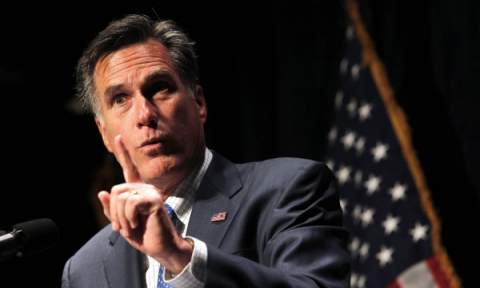
It’s not just Obama v Romney – it’s Hope v Nope.
As Andrew Frank, of Baltimore, MD, put it, here,
It’s not Romney’s Blunders, It’s His Message.

It’s not just Obama v Romney – it’s Hope v Nope.
As Andrew Frank, of Baltimore, MD, put it, here,
It’s not Romney’s Blunders, It’s His Message.
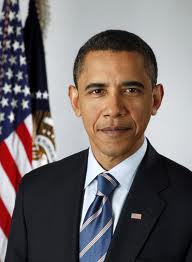 The Obama Administration issued final rules Tuesday 8/28/12 requiring joint mileage and carbon emissions rules for model years 2017 through 2025 that will eventually force automakers to meet a standard equivalent to 54.5 miles per gallon (news / White House / Announcement).
Back on July 7, 2009, when President Obama raised the CAFE standards from 27.5 mpg to 35.5 mpg, I wrote “CAFE Standards, Not Meaningless but Trivial,” I wrote, here,
Pres Obama has raised the CAFE standards from 27.5 mpg to 35.5 mpg, by 2016. Raising the CAFE standards to 35.5 mpg in 7 (or 26) years is not the change we need. It is very little, and very late. The standard for cars has been 27.5 mpg since 1990 (DieselNet). However, at least we are starting to move forward.
The standard of 54.5 MPG is Meaningful, Significant, and Terrific!
We also need a clean energy goals for the Efficient Use of Solar, Wind, Geothermal, Wave Power. 20% by 2020, and 100% by 2035!
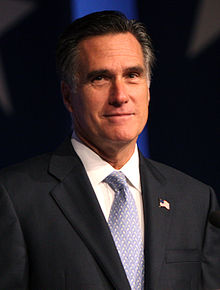
We learned this week, thanks to Mother Jones, that Mitt Romney, speaking at a fundraising event on May 17, 2012, said,
But who are these 47%?
If you don’t invest in infrastructure, it fails. Remember New Orleans and Katrina? These pictures were not taken in New Orleans, Baghdad, Iraq, Falujah, Iraq, Hama, Syria or Afghanistan.
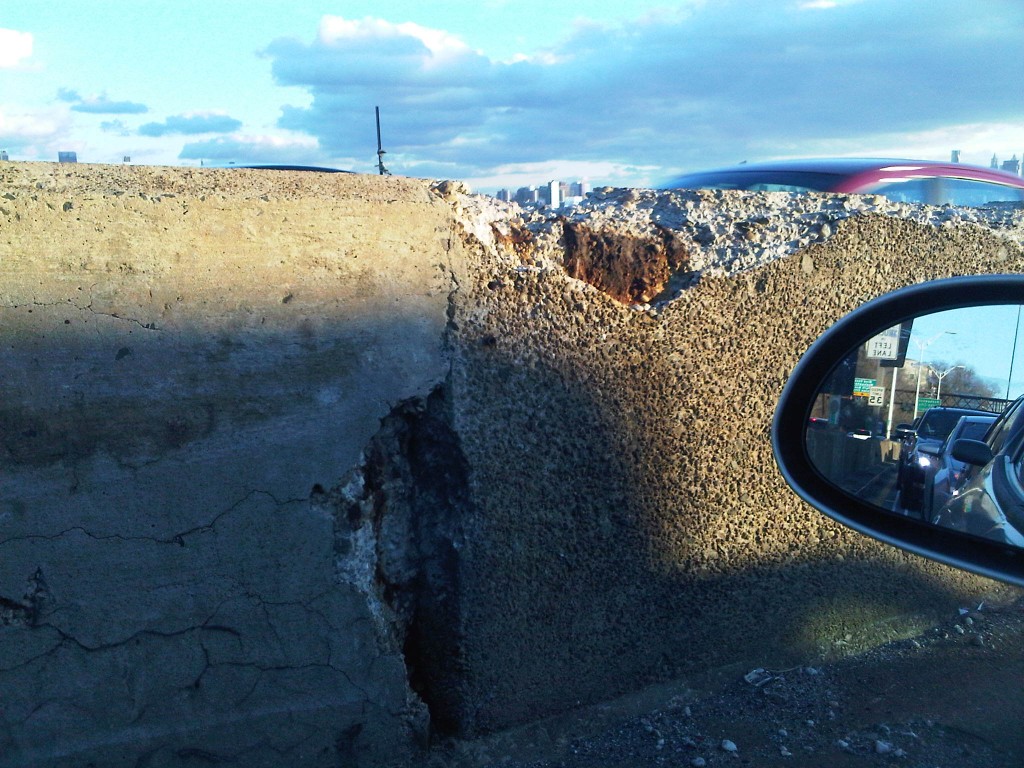
Image Copyright (C) L. Furman, 2011. Used with Permission
They were not taken in Gaza, Sudan, recently, Sarajevo in the 1990s, or Dresden, London Hiroshima, or Nagasaki, after WW II.
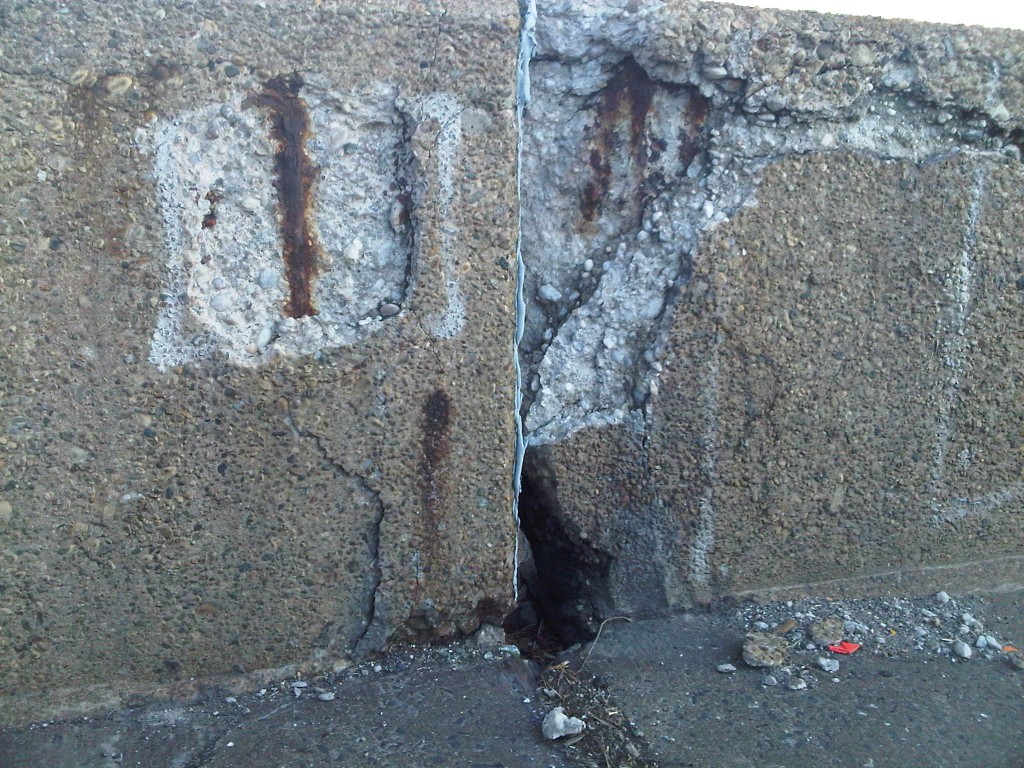
Copyright (C) 2011, L. J. Furman, All Rights Reserved
They were taken in New Jersey on the entrance to the Lincoln Tunnel on Nov. 23, 2011.
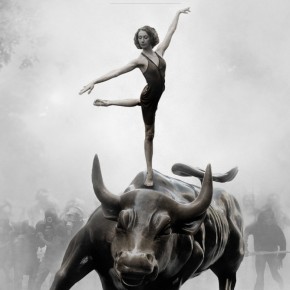
Monday, Sept. 17, was the First Anniversary of the “Occupy Wall Street” protests.
The protesters at Occupy are/were demonstrating against the current economic system and to make “Fracking” illegal. (See “Stop Spectra: Resist Fracking in NYC” or “City Limits, Occupy Wall Street, Opposes Fracking“) Energy Policy and Economics … the intersection of energy and economics in the bio-humanosphere – the memes we knit together at Popular Logistics.
My coverage of Occupy Wall Street started on Sept. 22, 2011, with “Protesting Marked Cards and a Stacked Deck.” Quoting Mr. Buffett’s op-ed in the NY Times, “Stop Coddling the Super-Rich,” and citing President Obama’s statement about the American Jobs Act, explained on White House . gov and Talking Points Memo, which Senate Republicans subsequently filibustered, I called for repeal of the “Bush Tax Cuts” on the wealthy, and for passage of Obama’s American Jobs, the so-called Buffett Rule.
I concluded,
Tax policy must be linked to fiscal policy. What we are doing today, Obama, Buffett, and the protesters would say, is using tax policy to make rich people more rich…. we should use tax policy to develop infrastructure… to build a 40 kilowatt photovoltaic solar array on each of the 92,000 public schools in the United States…. This would use tax revenues to pay for infrastructure upgrade – and tax revenues pay public schools electric bills. PV Solar systems provide energy without pollution, without toxic wastes, without greenhouse gases. And in the event of an emergency, if disconnected from the grid, we would have a network of 92,000 local emergency shelters with power during the day, when the sun is shining.
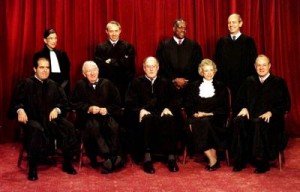
In the Election of 2000, Al Gore won the “Popular Vote” 50,999,897 to 50,456,002, 48.38% to 47.87%, by a margin of 543,895, or 0.51% of the vote. However, he lost Florida by 547 votes. Consequently Florida’s 25 Electoral College votes were awarded to Bush and Gore lost the election in the Electoral College 271 to 266 – by five votes. Had he won Florida votes he would also have won the Electoral College Vote, but the Supreme Court intervened, ruled that there was no time for a recount, (see wikipedia entry, here) therefore George W. Bush had won in Florida, and that Mr. Bush, therefore, was elected President by the Electoral College. But what if Gore had won a decisive majority in the Electoral College? What if our elections were determined by the popular vote? What if the election of 2000 had been called for Gore? (Source: Federal Election Commission, FEC, Presidential Election, 2000, Official Results.
What kind of jurists would a President Gore have appointed to the Supreme Court?
Presidents tend to appoint justices who agree with them on political philosophy. Notable exceptions were Warren Burger, appointed by President Eisenhower, and David Souter, appointed by President G. H. W. Bush.
George W Bush appointed Samuel Alito and John Roberts, to the Supreme Court. These men typically join with Anthony Kennedy, Antonin Scalia, and Clarence Thomas, and they typically find in favor of corporations and the government rather than individual citizens.
Bill Clinton appointed Ruth Bader Ginsburg and Stephen Breyer. They typically find in favor over individuals rather than corporations or the government. Barack Obama appointed Elena Kagan and Sonia Sotomayor, who typically agree with Breyer and Ginsburg. Ginsburg, Breyer, Kagan and Sotomayor have occasionally forged majorities with Kennedy and Roberts.
As President, Al Gore would have probably have appointed jurists like Kagan and Sotomayor who tend to find in agreement with Ginsburg and Breyer. He might have appointed Bill Clinton to the Supreme Court. He probably would have appointed justices with a comprehensive understanding of environmental law and the reasons why we need tough protections on the environment.
We saw these patterns in the decisions on Citizens United and Florence v Burlington, described by me as “Landmark Mistakes of the Supreme Court” (here). These were decided by Chief Justice Roberts, and Associate Justices Alito, Kennedy, Scalia and Thomas in the majority and Associate Justices Breyer, Ginsburg, Kagan and Sotomayor in the minority. The decision on the Affordable Care Act, aka “Obamacare,” was made by Chief Justice Roberts, with Breyer, Ginsburg, Kagan, and Sotomayor.
Justices appointed by a President Gore would probably have found in favor of Albert Florence, in Florence v Burlington, that the Fourth Amendment should be understood to bar strip-searches of people arrested for minor offenses not involving drugs or violence, unless officials had a reasonable suspicion that they were carrying contraband. In Citizens United, they probably would have found that citizens and groups may not spend unlimited amounts of money to influence the outcome of elections.
The practical implications those rulings – that police, after reading an apprehended suspect his or her rights in accord with the Miranda decision, can strip-search him or her, and that anyone and corporations can spend unlimited amounts to influence the outcome of elections, suggest that the (human) Citizens of the Republic would be better served with one or two more Justices who would tend to rule in favor of the rights and liberties of (human) citizens rather than the powers of corporations and the state.
In the recent decision on the Affordable Care Act, aka, “ObamaCare” judges appointed by a President Gore might have found, like Chief Justice Roberts, the law Constitutional under the taxing provision of the Constitution. On the other hand, they might have ruled that the laws establishing Medicare for Seniors, Medicaid for the poor, and the Veterans Health Administration must be expanded, because they are discriminatory against non-veterans who do not qualify for Medicare and Medicaid, and that these programs must be combined to create a “Citizens Health Administration” or “Medicare for All,” which would guarantee all Americans access to basic medical care.
–
Neither Presidents Clinton, Bush, or Obama, or any of the Justices of the U.S. Supreme Court were reached in the preparation of this post. Observations by current or former Presidents, Justices of the Supreme Court or justices in other courts would be welcome.
–
As an analyst with Popular Logistics, I am available for research and analysis on a per project or a per diem basis. I can be reached at ‘L Furman 97” @ G Mail . com.
–
In the XB Cold Fingers song, “Sunbathing In Siberia,” (Listen / Try or Buy / Lyrics ) 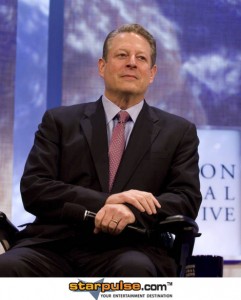 I wrote,
“If Gore had been awarded the White House
he’d chain us to Kyoto, don’t ya see.
There’d be solar panels on the rooftops,
wind power, clean power, almost free.”
While the song is a tongue-in-cheek look at energy, climate change, and the election of 2000; what if Gore had been the 43rd President?
In this series of posts, I’ll explore this scenario in terms of what it would have meant for the Supreme Court, foreign policy and defense.
This next post in the series looks at the Supreme Court. Stay tuned.
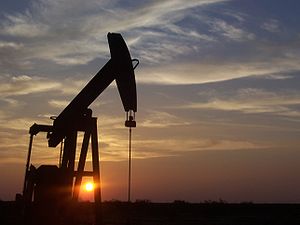 At the 6th Annual Babson Energy Conference, “Energy, Environment, & Entrepreneurship: Challenging Assumptions, Changing Perceptions”, here, held March 30, 2012, Cimbria Badenhausen, (LinkedIn), an alum of the Marlboro College MBA in Managing for Sustainability, asked Tahmid Mizan, Senior Planning Advisor of Exxon Mobil, “Are you an ENERGY company or a PETROLEUM company?”
Mr. Mizan, of Exxon, didn’t answer the question.
Henry Ford, when asked why he doesn’t use focus groups, is believed to have said, “If I asked people what they wanted, they’d tell me faster horses.” (HBR) Continue reading
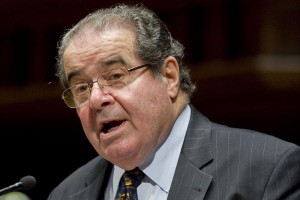 Justice Antonin Scalia, interviewed on Fox News, talking about the July 20, 2012, massacre Aurora, Colorado, said,
Obviously the amendment does not apply to arms that cannot be hand carried. It’s to ‘keep and bear’ so it doesn’t apply to cannons but I suppose there are hand-held rocket launchers that can bring down airplanes that will have to be decided…. My starting point and probably my ending point will be what limitations are within the understood limitations that society had at the time.
The segment can be watched here, on YouTube. Continue reading
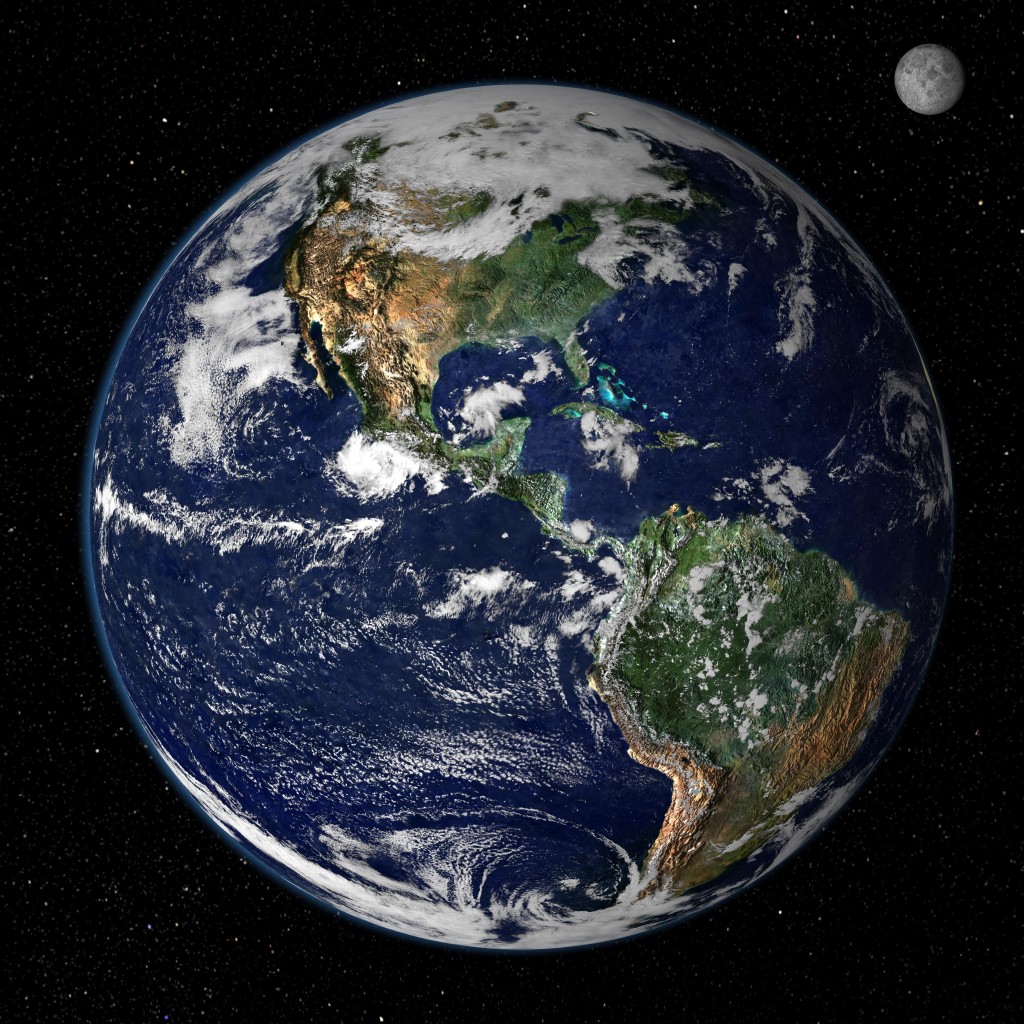
Investing for Sustainable Value – changing the paradigm – is critical – because we only have one earth.
This post suggests that investing in Cree, the Ford Motor Company, GT Advanced Technologies, Lighting Sciences, and Solazyme, are investments in companies that are shifting the paradigm toward sustainability. Investments in Cree, Lighting Sciences and Solazyme appear speculative at this time. Investments in Ford and GT Advanced Technologies appear to be “value” investments with significant margins of safety.
“Sustainable development is that which meets the needs of the present generation without compromising the abilities of future generations to meet their needs.” This canonical definition was offered in “Our Common Future,” a report to the United Nations by the Brundland Commission in 1987. Report here, see also wikipedia. “Sustainable Investing,” according to Krosinsky and Robins, is “an approach to investing driven by the long-term economic, environmental and social risks and opportunities facing the global economy.” Continue reading
What does the Second Amendment mean in the context of the Aurora Massacre? Columbine? Virginia Tech? Rep. Giffords Town Meeting? The assassination attempt on President Reagan? The assassination attempts on President Ford? The assassinations of President John Kennedy, Robert Kennedy and Martin Luther King Jr? And conditions in other countries, Syria? Iraq? Iran?
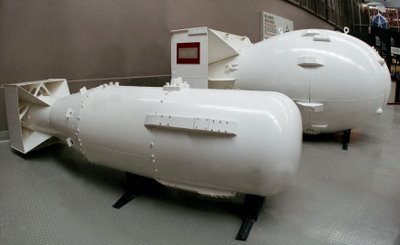 “A well-regulated Militia, being necessary to the security of a free State, the right of the people to keep and bear Arms shall not be infringed.”
US Constitution, Bill of Rights, Amendment 2.
Does this give each of us the right to our own nuclear warheads and other weapons of mass destruction? If not, what right does it convey? Continue reading
 Back in 1999, I was walking down a hall to the data center of a US Navy base in Virginia, when I noticed a sign that said “Cell Phones Prohibited. Deadly Force Is Authorized in this Area.” Fortunately my cellphone didn’t ring.
One of my colleagues had an Apple Newton. Just as the Osborne and Kaypro led to the Compaq and the laptops, PDAs running the Newton operating system and PDAs from Go Computers led to the Palm Pilot, and ultimately to the iPod, iPhone, and iPad, but that’s another story.
Research In Motion had just introduced the Blackberry 850 handheld. My colleagues in the financial industry had them. I understood the potential and wanted one. That too is another story.
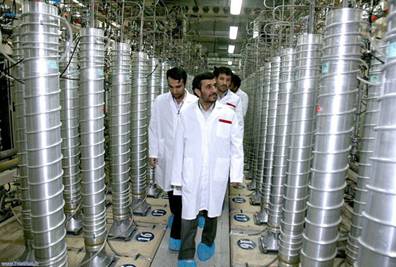
Iranian Pres. Achmadinejad at Natanz.
Focusing on “Operation Olympic Games,” the US efforts behind the Flame and Stuxnet cyber attacks, Mischa Glenny, in “A Weapon We Can’t Control,” an op-ed in the NY Times, 6/24/12, says the U.S. has “fired the starting gun in a new arms race … cyberweaponry.” However, Mr. Glenny ignores efforts by hackers in China and from the former Soviet Union.
“Not for profit, not for charity, but for service.”
– Credit Union motto
“The National Bank at a profit sells road maps for the soul to the old folks home and the college.”
– Bob Dylan, “Tombstone Blues”
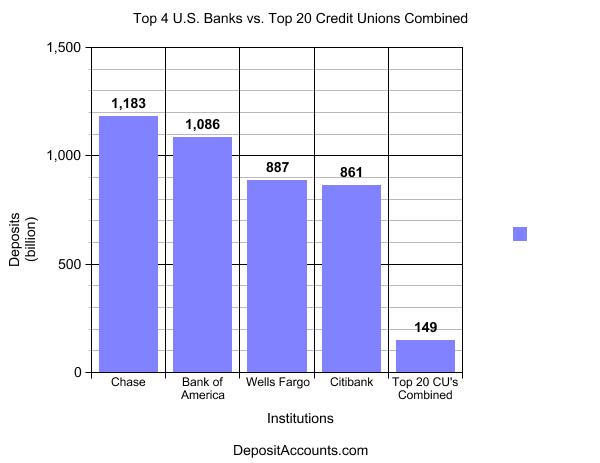
Back in 2010, over 9,000 credit unions in the United States had over $500 Billion in deposits. In November, 2011, the top 20 credit unions had $149 Billion in deposits, while Chase, Bank of America, Wells Fargo, and Citibank, the four largest U.S. banks, had over $4.0 trillion. However, as of the end of the first quarter, 2012, credit unions had over $1.0 trillion in deposits – their deposits doubled since 2010. What happened?
When they think of cooperatives, Americans may think of hippies and brown rice, granola, and food co-ops like the Brattleboro Food Co-op, in Vermont, and the Flatbush Food Coop, in Brooklyn, New York. Israelis tend to think first of Kibbutzim and Moshavim, the collective farms of the early days of the Yishuv and the State of Israel that have evolved into corporations. Eastern Europeans may think of the Kolhoz, the collective farms of the failed Soviet state.