Author Archives: L J Furman, MBA

About L J Furman, MBA

Analyst here and Director of Information Technology with an MBA in Managing for Sustainability.

Six Sigma & The Law of The Hammer

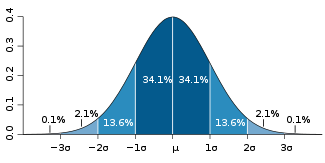
The Bell Curve showing 3 standard deviations

Bell Curve showing Mean, μ & Standard Deviation, σ.

“The child who receives a hammer for Christmas will discover that everything needs pounding.”

One of my friends asked about “Six Sigma,” famously used by General Electric and Motorola to enhance the quality on their production lines, and famously used by Home Depot and 3M for short term gain and long term failure, (see “Six Sigma, So Yesterday,” on Business Week OnLine, here).

“I understand that Six Sigma means a very high quality system – with only 3.4 errors per million units,” my friend said. “What I don’t understand,” he added, “is the definition in terms of Standard Deviation and Normal Distribution. 99.99966% of the values will fall within 6 Standard Deviations of the Mean, compared to 99.73% of the values falling within 3 Standard Deviations of the Mean. What’s a standard deviation? And what’s a normal distribution?” Continue reading

Cleaning Up In Hospitals

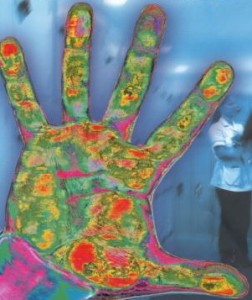
Germs on the hand

Germs on the Hand. Courtesy Talk is Cheap

5% of hospital patients develop an infection. And the majority of those infections are acquired from the hands of Health Care Providers.

Medicare pays 40% of the nation’s hospital bills. (This, in and of itself, is an argument for a single payer system – one single payer already pays 40% of hospital bills. And it’s the Government.) However, Medicare does not reimburse hospitals for their mistakes. It shouldn’t. If I borrow your car, and run out of gas, it’s my fault, not yours. Note that this is an example of the government doing something right.

Because of this policy decision, medical accidents went from being a source of hospital revenue to a massive financial drain. Medical institutions were forced into the business of disease prevention, at least once people were in their care.

According to the Committee to Reduce Infection Deaths statistics, (PDF) hospital acquired infections kill more people in America than AIDS, Breast Cancer and Auto Accidents combined. What is worse is that 5% of the patients in hospitals acquire infections in the hospital, and the vast majority of the patients that acquire such infections in hospitals get them from the hands of health care providers.

More details after the click.

Continue reading

Eating Any Time Soon? Brooklyn Food Conference, Sat. May 12.

An Urban Garden in Brooklyn, NY

An urban garden in Brooklyn, NY

The Brooklyn Food Coalition presents the Brooklyn Food Conference, May 12, 2012, from 9:00 AM to 6:00 PM. It will be a day of Workshops, Expo, Youth Summit Policy Roundtable, Demos, Music, Art, Meetups – and good HEALTHY food.

Where? Brooklyn Tech, 29 Fort Greene Place, Brooklyn, NY 11217. Admission is free. Continue reading

Troubling situation at Entergy-run Nuclear Plan in Michigan

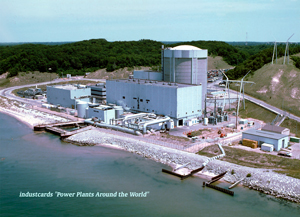
Palisades Nuclear Plant

Palisades Nuclear Plant, Lake Michegan

In A Return To ‘Safety First’ For Michigan Nuclear Plant, NPR correspondent Lindsey Smith reports,

The Palisades nuclear power plant in Michigan had five unplanned shutdowns last year. It’s one of the area’s biggest employers, and its safety record is one of the worst in the country. Now it’s trying to prove to federal regulators that it can meet their standards.

On the shores of Lake Michigan, the Palisades Power Plant is tucked in between tall sand dunes in Covert Township, Mich., at the southern edge of Van Buren State Park. Kathy Wagaman, who heads the chamber of commerce in South Haven, 7 miles north of Palisades … said  “They’ve been a very good neighbor” … “and I just feel confident that they’re taking good care of this.”

The title, however, says it all. “A RETURN to ‘Safety-First.’ Clearly, based on their record, safety has not been Entergy’s number one priority at Palisades.  Marcy, at Empty Wheel, presents a first hand report on the tritium leak of Sept, 2011, here.

Continue reading

Earth Day, 2012 or Eaarth Day, 2012

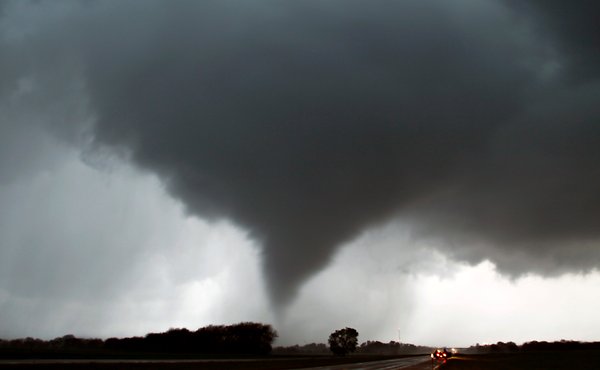
One of over 100 Tornadoes that hit Kansas and Oklahoma

One of over 100 Tornadoes that hit Kansas, Iowa and Oklahoma on 4/14/12

Kansas, Oklahoma, Earth Day, 2012, or Eaarth Day, cognizant of Bill McKibben’s observation that the planet on which we live is qualitatively different from the planet on which we were born.

Do you see your cup as half-full, or half-empty? Is it on a table, or a pile of rubble? And is it filled with clean water or a toxic soup?

Status: Over 100 Tornadoes hit the mid-west, mostly Kansas and Oklahoma on Saturday, April 14, 2011 (NY Times). The summer of 2011 was one of the hottest, with 90 days of over 100 degrees in Austin, Texas ( National Oceanographic and Atmospheric Administration, NOAA: Data, Analysis). The winter of 2011-2012 was also one of the warmest, with records set and broken across the United States.  A thorough analysis of climate science is beyond the scope of this post, but is covered in The Rough Guide to Climate Change, The Symptoms, The Science, The Solutions, by Robert Henson, ISBN 978-1-84836-579-7, Climate Change, A Multidisciplinary Approach, by William Burroughs, ISBN978-0-521-69033-1, The Climate Fix, by Roger Pielke, Jr, ISBN 978-0-465-02519-0, and An Inconvenient Truth, by Al Gore, ISBN 1-59486-567-1, Eaarth: Making Life on a Tough New Planet, by Bill McKibben, ISBN 978-080509056-7. These are available at your local bookstore, if you have one. Many Americans now understand that our weather and climate are effected by the amount of carbon we have pumped into our atmosphere in the last 200 years (NY Times). If you don’t want to understand the analysis, tune the tv to your local climate denier station, buy a gun, some ammo, and lots of food and water.

Continue reading

Do We Need Nuclear Power? Part 3

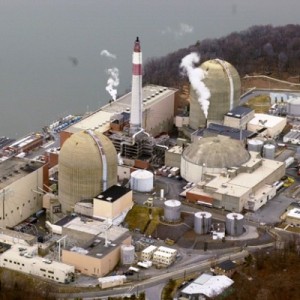
Aerial photo of Indian Point, courtesy Columbia University Earth Institute

Indian Point, Aerial view, courtesy Earth Institute

Indian Point’s two reactors, operating since 1974 and 1976, generate up to 30 percent of New York City and Westchester’s power. Yet the plant remains controversial.

March 1, 2012, Michael Gerrard, director of the Center for Climate Change Law, moderated  the Forum on the Future of Indian Point held at Columbia Law School. The forum asked whether Indian Point was “Safe, Secure and Vital or an Unacceptable Risk?”   Renee Cho covered it on the Columbia Earth Institute blog, here.

I was not there. However, have some thoughts …

Continue reading

Do We Need Nuclear Power? Part 2

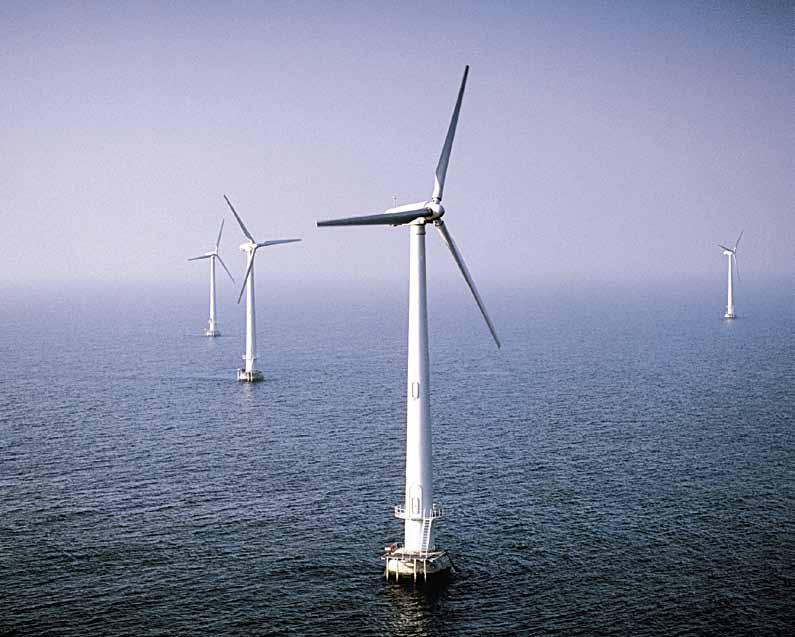
Wind Turbines at Vindeby

Turbines at Windeby

Rather than “Can we get away from Nuclear Power?” The real questions we need to ask ourselves are:

  1. How quickly can we phase out nuclear power?
  2. What will it cost?
  3. Given that a definition of insanity is doing the same behavior but expecting different results, Continue reading

Do We Need Nuclear Power? Part 1

Did the Japanese (and the rest of the world) NEED Fukushima?

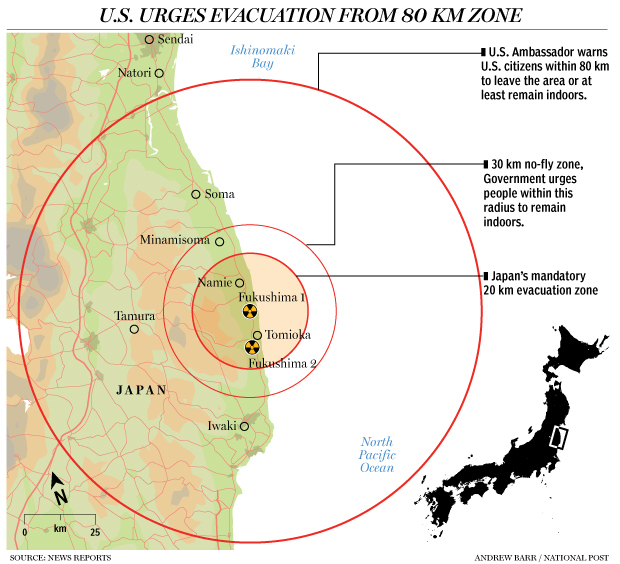
US Recommended evacuation zone


Happy Earth Day.  Think for the Future.

  • Do We Need Nuclear Power, Part 1, L. Furman, 4/20/12, here.
  • Do We Need Nuclear Power, Part 2, L. Furman, 4/20/12, here.
  • Do We Need Nuclear Power, Part 3, L. Furman, 4/21/12, here.


US Recommended evacuation zone of 80 km radius around Fukushima

Is Ford Motor Co Sustainable? And is Ford a Value Investment?

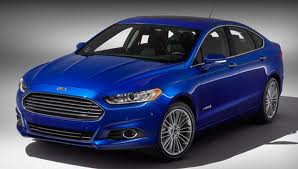
Ford Fusion

Ford Fusion, available as a hybrid

Back in October, 2007, I wrote about the Toyota Prius and the GM Hummer in Prius v Hummer, the Battle for the Streets and the Prius v Hummer, the Battle for the Brains. (Spoiler alert – the Prius won). Now I’m thinking about Ford Motor Company. A few years back their tag line was “Ford Has A Better Idea.” That may not be the current tag line, but I think it is the case. I will go further and say that Ford is on the road to being  Sustainable car company, and is a Value Investment.

While Toyota deserves credit for developing the hybrid- the Prius was introduced in 2000 – Ford has an extensive lineup of hybrids and is putting the EcoDrive – which boosts mileage by 20% – on vehicles, from small cars to the F150 truck. And 40% of the F150′s sold today are sold with the EcoDrive engine. Continue reading

Landmark Mistakes of the Supreme Court, Part 3

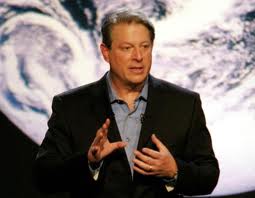
Al Gore

Al Gore

The decision in Bush v Gore is widely regarded as a landmark mistake, both because the Supreme Court acted politically and because of President Bush’s accomplishments and legacy.

While it is too recent for a historical consensus, and too political to be without controversy, virtually all liberals and progressives view the results of Bush v Gore, 2000, (Cornell Law School / Wikipedia) as disastrous based on the Bush Administration’s environmental, economic, and foreign policies, i.e., the Bush tax cuts, ignoring intelligence regarding Osama bin Laden on 6, August, 2011 (here), not killing bin Laden when we allegedly had him cornered in Tora Bora in 2001 (here), the War in Iraq, appointments of John Roberts and Samuel Alito to the Supreme Court, etc.

Landmark Mistakes of the Supreme Court, Part 2

Fred Korematsu as a young man

If Dred Scott, Citizen’s United, and Florence v Burlington are the three worst decisions by the United States Supreme Court, (post here) then Korematsu v United States, Dec. 18, 1944, Plessy v Ferguson, May 18, 1896 are next in line.

In Korematsu v United States, decided Dec. 18, 1944, the Supreme Court upheld Executive Order 9066, authorizing the internment of all Americans of Japanese ancestry. Mr. Korematsu is biographed here.

Plessy v Ferguson, decided on May 18, 1896, enabled segregation. This was overruled by Brown v Bd. of Education, May 17, 1954, with the now famous observation that “separate but equal is inherently unequal.”

Landmark Mistakes by the US Supreme Court

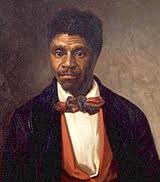
Dred Scott

Dred Scott

Worst Three Decisions by the US Supreme Court: Dred Scott, Citizen’s United, and Florence v Burlington.  Dred Scott reinforced slavery – and led to the Civil War. Citizen’s United puts really, really big money in politics – think Mr. Gingrich’s sugar daddy with his $10 million in PAC-Gingrich, and leads to what we have today. Florence allows the police to strip search anyone they arrest.

The good news and is that these decisions force us to recognize that the Justices of the Supreme Court are fallible men and women who sometimes make decisions emotionally and or based on their perceived financial interest, as the five members of the Taney court whos families owned slaves and who voted for slavery.  This is also the bad news. The really bad news is that two out of three of these landmark mistakes occurred since January, 2010.

Looking with a long term perspective, the Dred Scott decision was overturned by the 14th Amendment.  Roger B. Taney and the other six justices who voted for slavery and against freedom are history. Their names are generally not remembered.  Similarly, Citizen’s United and Florence can, should, and someday will be overturned. Roberts, Alito, Kennedy, Scalia, and Thomas will someday join Roger B. Taney in the history books.

I am not a lawyer. But the Constitution is written for the citizens, not the citizens who are also lawyers.

Continue reading

Gingrich: I’ve a ‘Secret Plan’ for $2.50 Gas

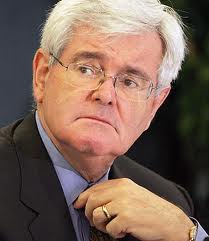
Newt GingrichNewt Gingrich says, “I have a plan to set gasoline prices at $2.50 per gallon.  We have 1.4 trillion barrels of potentially recoverable oil in the United States. Join us to make it happen.” on YouTube, here.

At a rally in Dalton, Georgia, reported here on CNN, he said, “Just tell all your friends we’re setting it up so you can go online at newt.org and you can give one Newt-gallon which is $2.50, or you can give 10 Newt gallons which is $25, or 100 Newt gallons which is $250 or a thousand Newt gallons which is $2500.”

I wonder who’s picture he wants on those “Newt Dollars.”

Bernard MadoffThe Jane Dough blog describes “Today in Improbable Campaign Promises: Gingrich Bus Advertises $2.50/Gallon Gas,” here.

Talking Points Memo, here, says “Newt Gingrich Running On Bitterness and $2.50 Gas.”

Newt doesn’t offer the details, which brings to mind the so-called “investment strategies” of Bernard Madoff and R. Allen Stanford, recently convicted of the largest Ponzi schemes in history. Both consistently refused to explain how they made money; R Allen Stanford“It’s complicated,” they said, “You wouldn’t understand. But I guarantee that I will make you money. And look at these pictures of me with important people”

In “How to Smell A Rat,” Ken Fisher, of Ken Fisher Investments, with co-author Lara Hoffmans, says, “If a so-called ‘Investment Strategy’ is ‘too complicated to explain’ it’s probably a scam.”

The Chairman of the Communist Party in China can set the value of the currency and price of any commodities in China – because China has a command economy not free markets. The President of the United States, who’s authority, responsibilities, and limits are described in the Constitution, has a lot of power. As Commander In Chief, the President can wage war. But the President can not set the price of commodities traded on free markets.

I don’t believe that Mr. Gingrich has a realistic plan to set the price of gas to $2.50 per gallon.  However, I can think of several ways to appear to cut the price of gasoline from $3.73 to $2.50 per gallon:

  1. Devalue the dollar by about 1/3, so that $2.50 “new dollars,” or “Newt Dollars,” as Mr. Gingrich calls them, buys $3.73 worth of gasoline, or other stuff.
  2. Use tax subsidies to pay people the difference between $2.50 and the price at the pump. Then, of course, you would have to raise taxes by $1.23 per gallon.
  3. Drill Baby Drill.
  4. Ration gasoline to artificially cut the demand.

The first two are smoke and mirrors. The third requires massive amounts of clean water and would create massive amounts of toxic by-products. The fourth would work in time of war or disaster. All require what might be termed “Big Government.” All would pour tons of carbon dioxide into the atmosphere, contributing to mile winters such as the winter of 2012, climate change, storms like Hurricanes Katrina and Irene, and acidification of the oceans.

There’s one other thing we could try:

Develop fuels derived from sustainably grown plants to legitimately cut demand on fossil fuels.

While this would require “Big Government” to fund research this seems to me to make sense. It is also the mid-term to long term plan of Continental / United, Virgin, Alaska Air, Horizon Air, other carriers, and Boeing (click here for Gizmag or here for Bio-JetFuel Blog). Solazyme (SZYM) and General Electric (GE) are working on the technology.  The US Navy is also working with Solazyme for fuels derived from algae (Business Wire). However, based on Mr. Gingrich’s statement that “We have 1.4 trillion barrels of potentially recoverable oil in the United States,” I suspect that he is playing fast and loose with facts and ginning up support for “Drill, Baby, Drill.”


Jobs, the Economy, Employment and UnEmployment

Gingrich, Romney, Santorum, & Paul: The Four Horsemen of the Apocalypse

Gingrich, Romney, Santorum & Paul: The Four Horsemen of the Apocalypse

According to the Bureau of Labor Statistics, here,

“Nonfarm payroll employment rose by 227,000 in February, and the unemployment rate was unchanged at 8.3 percent, the U.S. Bureau of Labor Statistics reported today. Employment rose in professional and businesses services, health care and social assistance, leisure and hospitality, manufacturing, and mining.”

If nonfarm payroll rises by 227,000 (an annual rate of 2.7 million) why is the unemployment rate unchanged? Again, according to the BLS,

“Both the labor force and employment rose in February. The civilian labor force participation rate, at 63.9 percent, and the employment-population ratio, at 58.6 percent, edged up over the month. (See table A-1.)”

The reasons are simple:

  1. Obama brought troops 100,000 soldiers home from Iraq – who need jobs.
  2. The economy seems to be improving, prompting people to re-enter the job market.
  3. The “Public Sector” lost 22,000 jobs per month in 2011, for a total of 264,000.

These are summarized here, on Think Progress.org. We also lost 14,000 construction jobs last month because the Republicans refuse to rebuild the infrastructure of America.

What happens next? Again, according to ThinkProgress, here,

Mitt Romney,as president, would fire even more government workers. “We just have too many” public sector employees, Romney said, “and they’re paid too much.” Rick Santorum’s plan to cut $5 trillion in federal spending would undoubtedly lead to significantly higher government job losses.

Gingrich shut down the government once before. Altho he does want to build a lunar colony. Ron Paul wants to abolish every agency that exists, and basically return to the days immediately following the American Revolution, when the USA was 13 confederated states – before the Constitution was ratified. (Today I guess it would be 50 – or maybe 47, plus Alaska and Texas (but not including Hawaii). Governors Christie of NJ, Daniels of Indiana, Perry of Texas, and Walker of Wisconsin are reading from the same playbook as Romney and Paul.

ThinkProgress concludes:

It’s clear that even as the economic recovery continues, it will fall short of its full potential so long as governments continue to shed thousands of jobs. President Obama has proposed to address this problem by creating public sector jobs to repair our nation’s crumbling infrastructure. The Republican presidential candidates have proposed to address this problem by exacerbating it.

It is as if, now that the “Cold War” is over, the Republican Party is waging war against the United States of America.

Fukushima. Accidents Anywhere Are Accidents EVERYWHERE

View of plume from the meltdowns at Fukushima

Plume from the meltdowns at Fukushima. Image courtesy Reuters.

Mycle Schneider, describing the Worldwatch Report he wrote on nuclear power last year (Press Release / Report) said:

“The industry was arguably on life support before Fukushima. When the history of this industry is written, Fukushima is likely to introduce its final chapter.”

Amory Lovins, of the Rocky Mountain Institute, in the foreword to the report, wrote,

“An accident can swiftly transform a mult-billion dollar generating asset into a larger cleanup liability.  The Fukushima accident has just vaporized the balance sheet of the world’s #4 power company, TEPCO. A 2007 earthquake had cost the company perhaps $20 billion; this one could cost $100-plus billion. TEPCO is now broke and is becoming, in whaterver form, a ward of the state.  And with such an unforgiving technology, accidents anywhere are accidents everywhere.”

Schneider’s report looks at the big picture. It is not directly focused on the impact that Fukushima has had, is having and will continue to have on the people of Japan.

As I wrote (here),

  1. The nuclear industry in the USA is just like the nuclear industry in Japan – and that’s bad, really bad.
  2. In a market economy there can be to too much pressure to increase shareholder value to invest enough on safety. In a command economy, such as existed in the Soviet Union and exists in China, North Korea, and perhaps, Iran, it is illegal to criticize the government and therefore likely that necessary investments in safety will not be made.

I spoke with people from Fukushima Prefecture at the “No More Fukushimas” event in Lincroft, NJ, on March 5, 2011, and expect to be at the event in Zuccotti Park at 9:00 AM on Thursday, March 8, 2012. Because radioactive particles are not easily identified – you need a Geiger Counter – the people I spoke with and many in Japan are worried that the vegetables they eat come from the Fukushima area. Even if the vegetables are labled from prefectures in the north, south and west, they are worried that the vegetables are actually from Fukushima but packaged in northern, southern or western prefectures. They have lost confidence in their government. (My question, as an American, is “How different is our government from the Japanese government, when it comes to managing the safety of nuclear power plants?”)

The Japanese also acknowledge that it could have been worse, much worse.  In the days after the Earthquake / Tsunami / Triple Meltdown the winds blew from west to east – and blew much of the air borne radioactive particles into the skies above the Pacific, toward Hawaii, the United States, Canada, Chile. Japan was saved from what could have been a worse fate. The good news, I suppose, is that some of those particles will fall into the “Great Pacific Garbage Patch” and trigger mutations which will sooner or later develop into metabolic pathways by which bacteria, algae, or plankton will be able to eat the currently non-biodegradable plastics.

While some will say: there were meltdowns in Three out of the Six power plants at Fukushima Dai’ichi, and those melt-downs were caused by the failure of the cooling system, all we need to do is engineer better cooling systems. However, they are missing the point. We can build pretty good ones, but we can’t build a perfect nuclear power plant.

And building them well means they are very expensive. As David Lochbaum, of the Union of Concerned Scientists, told me last year,

“The NRC permits ALL nuclear plants to emit tritium.  It is simply too expensive to capture ALL the tritium.”

Here’s the paradox: My light bulbs, computers, television and other appliances can’t distinguish between electricity from a coal plant, a nuclear plant, a wind turbine, or a solar module. In a competitive environment the owners of nuclear power plants need to manage costs. In a non-competitive environment, such as Iran, China, North Korea, or the Soviet Union, they don’t worry about costs, but they also don’t worry about what others (dissidents) say. So while we can build them safer, and we can maintain them at a higher level of safety, we don’t because it’s too expensive. People in command economies, who don’t concern themselves with money, don’t build them safely because they don’t worry about safety.