Gordon Rayner and Duncan Gardham report in the Telegraph.co.uk that UK intelligence agencies are complaining that their officers are being diverted from intelligence work to prepare for lawsuits alleging human rights violations. One’s view of this may depend on attitudes towards the alleged violations – and an assessment of the specific claims being litigated.
The purpose of this study is to examine if acupuncture improves Post-Traumatic Stress Disorder symptoms among veterans who participated in Operations Enduring Freedom and Iraqi Freedom. This study will also examine the degree of veteran acceptance for acupuncture.
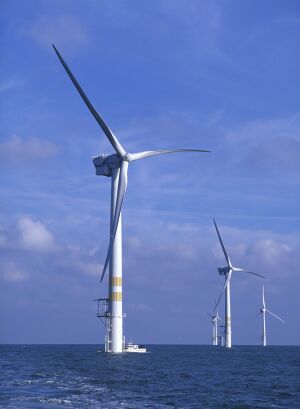
NREL, the National Renewable Energy Laboratory, a branch of the Department of Energy, released the findings of the “Eastern Wind Integration and Transmission Study, (Summary) that said:
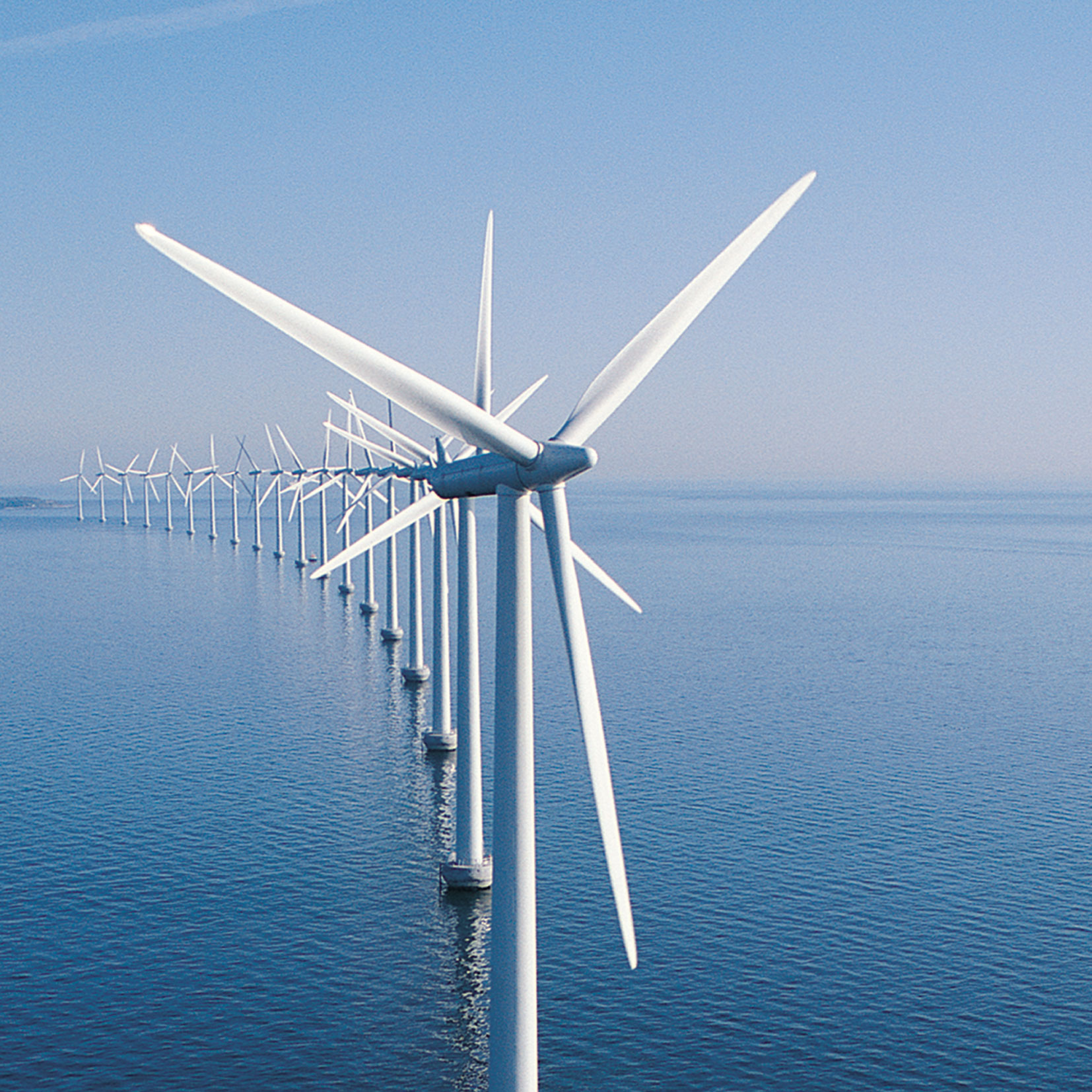
“wind energy could provide 20 to 30 percent of the eastern half of the country’s energy needs by 2024: here’s how … “
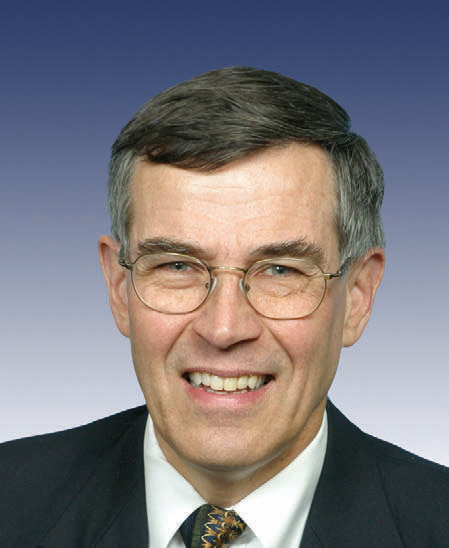
Rush Holt, the Democrat who represents the 12th Congressional District of New Jersey, described the study in an e-mail to his constituents. Holt wrote:
“Achieving this goal would require a substantial investment both onshore and offshore. The production of wind energy is increasing rapidly. According to the American Wind Energy Association, last year energy production increased by more than 9,000 megawatts, bringing America’s total wind power generating capacity to 35,000 megawatts, enough to power 2.4 million homes. Little of this wind energy, however, is being produced in the Northeast.”
Rush Holt, D, NJ-12
“If we are to take advantage of wind power – particularly offshore wind – then we would need to begin to install turbines in windy places in the East and begin to develop rapidly our capacity to manufacture turbines in the United States. Just miles off New Jersey’s shore, the ocean breeze blows reliably at up to 20 miles an hour, the same rate as in the Great Plains. Last year the Department of the Interior conducted a survey of the resources that could be recovered from the Outer Continental Shelf. It found that responsibly developing offshore wind could provide 1,000 gigawatts of electricity, enough to power the electricity use of 60 percent of cities on the East Coast and replace 3,000 medium-sized coal powered power plants. New Jersey has been at the forefront of this effort, as I discussed with the Secretary of the Interior last year in New Jersey. One private venture has committed to build a $1 billion, 345 megawatt wind farm in the ocean off Atlantic City, and two other projects have been approved by the Department of the Interior. Congress should encourage more investment to ensure we take advantage of this resource and help fuel the transition to a sustainable energy future.”
At Popular Logistics we believe that we can achieve 100% clean energy by 2020. However, we will be happy to see 30% wind power for the eastern half of the country, coupled with 30% wind power for the western half of the country, 30% solar, and the balance from hydro, geothermal, and conservation, by 2024.
Holt, a PhD physicist, was Assistant Director of the Princeton Plasma Physics Laboratory before running for Congress. He understands energy. We hope his colleagues in the Congress, and the White House, listen.
Iran is experiencing surprising setbacks in its efforts to enrich uranium, according to new assessments that suggest that equipment failures and other difficulties could undermine that nation’s plans for dramatically scaling up its nuclear program.
Former U.S. officials and independent nuclear experts say continued technical problems could also delay — though probably not halt — Iran’s march toward achieving nuclear-weapons capability, giving the United States and its allies more time to press for a diplomatic solution. In recent months, Israeli officials have been less vocal in their demands that Western nations curtail Iran’s nuclear program.
Indications of Iran’s diminished capacity to enrich uranium arise just as the Obama administration begins to take sterner action to compel Iran to abandon enrichment. On Wednesday, the Treasury Department announced new U.S. sanctions against companies it says are affiliated with Iran’s Revolutionary Guard Corps, a key player in the country’s nuclear and missile programs.
Beneath this rhetoric, U.N. reports over the last year have shown a drop in production at Iran’s main uranium enrichment plant, near the city of Natanz. Now a new assessment, based on three years of internal data from U.N. nuclear inspections, suggests that Iran’s mechanical woes are deeper than previously known. At least through the end of 2009, the Natanz plant appears to have performed so poorly that sabotage cannot be ruled out as an explanation, according to a draft study by David Albright, president of the Institute for Science and International Security (ISIS). A copy of the report was provided to The Washington Post.
The ISIS study showed that more than half of the Natanz plant’s 8,700 uranium-enriching machines, called centrifuges, were idle at the end of last year and that the number of working machines had steadily dropped — from 5,000 in May to just over 3,900 in November. Moreover, output from the nominally functioning machines was about half of what was expected, said the report, drawing from data gathered by the International Atomic Energy Agency, the U.N. nuclear watchdog.
A separate, forthcoming analysis by the Federation of American Scientists also describes Iran’s flagging performance and suggests that continued failures may increase Iran’s appetite for a deal with the West. Ivan Oelrich, vice president of the federation’s Strategic Security Program, said Iranian leaders appear to have raced into large-scale uranium production for political reasons.
“They are really struggling to reproduce what is literally half-century-old European technology and doing a really bad job of it,” Oelrich said.
The findings are in line with assessments by numerous former U.S. and European officials and weapons analysts who say that Iran’s centrifuges appear to be breaking down at a faster rate than expected, even after factoring in the notoriously unreliable, 1970s-vintage model the Iranians are using. According to several of the officials, the problems have prompted new thinking about the urgency of the Iranian nuclear threat, although the country has demonstrated a growing technical prowess, such as its expanding missile program.
“Whether Iran has deliberately slowed down or been forced to, either way that stretches out the time,” said Patrick Clawson, deputy director for research at the Washington Institute for Near East Policy, a nonpartisan think tank.
But analysts also warned that Iran remains capable of making enough enriched uranium for a small arsenal of nuclear weapons, if it decides to do so. Iran has announced plans to build 10 new uranium plants, and on Monday the government said it would begin increasing the enrichment level of some of its uranium, from a current maximum of 3.5 percent to 20 percent. Enrichment of 90 percent is considered weapons-grade.
“Whenever we encounter blocks in our services we try to resolve them as quickly as possible because we strongly believe that people everywhere should have the ability to communicate freely online,” Google said in its statement about Iran. “Sadly, sometimes it is not within our control.”
According to Cecilia Kang of the Washington Post’s Tech Blog, Ryan Flinn of Bloomberg in Business Week, and in the LA Times, Google has reported that e-mail traffic is down in Iran, after an Iranian government announcement that it would suspend Google and force citizens to use a government e-mail service.
Google said it has seen a sharp drop in traffic among Iranian users of Gmail, and confirmed that users there say they are having trouble accessing their e-mail accounts.
The company’s statement comes after a report by Christopher Rhoads, Chip Cummins, and Jessica Vascellaro in The Wall Street Journal that the Iranian government said it put a “permanent suspension of Google’s email services.”
The nation’s telecommunications agency said that instead, it would soon roll out its own e-mail service for Iranian citizens, accoridng to the Journal. Iranian leaders have issued stern warnings to citizens against participating in protests Thursday, the day marking the establishment of the Islamic Republic there.
Google drew international attention earlier this year when it announced that it may withdraw from China because of that nation’s censorship practices. The State Department has supported the company’s move and Secretary of State Hillary Rodham Clinton included the firm’s experiences in China among the reasons to push for Internet freedom as part of the U.S. government’s diplomatic agenda.
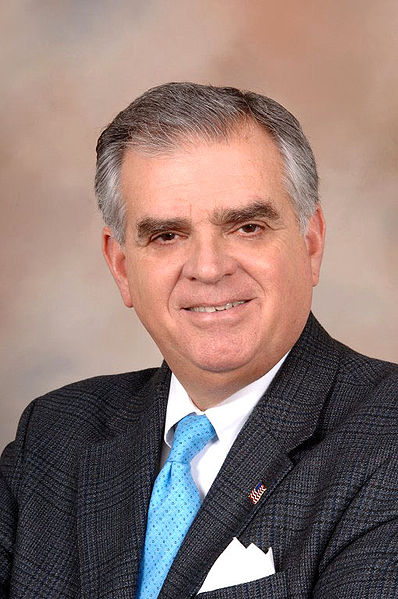
“Safety is our No. 1 priority when it comes to planes, trains and automobiles,” said Dept. of Transportation Secretary, Ray LaHood, in his interview with George Stephanopoulos on ABC News 2/10/10. Secretary LaHood also said,
“I’ve been in this job a little over a year. On my watch, we have not been asleep at the switch when it comes to Toyota.
“There are three recalls going on right now, two of them as a result of our people either going to Japan or me on the telephone with the president of Toyota holding their feet to the fire on this.”
Stephanopoulos also rolled tape of Joan Claybrook, who served as head of the National Highway Traffic Safety Administration under President Carter, alleging that some of the problems at Toyota were known before 2007. While Secretary LaHood did not openly criticize the DoT under the Bush Administration, he made it clear that the DoT in the Obama Administration is focused on safety.
“We feel a strong obligation to the driving public … to make sure that every car is safe. … We are holding Toyota’s feet to the fire to make sure that every car is safe.”
Ethiopian-born Binyam Mohamed says UK authorities knew he was tortured at the behest of US authorities during seven years of captivity.
Mr Miliband had said releasing the material would harm national security.
But judges ruled the documents, which say his treatment was “cruel, inhuman and degrading”, should be released.
The Lord Chief Justice, Lord Judge, said the court would now publish a summary of what the CIA had told British intelligence officials about Mr Mohamed’s treatment in 2002.
Mr Mohamed was secretly flown to Morocco in 2002 having been arrested in Pakistan over a visa irregularity and handed to US officials.
There, he says, he was tortured while interrogators asked him questions about his life in London that could only have come from British intelligence officers.
Since acquiring the Danish wind turbine company Bonus Energy in 2004, the German industrial giant Siemens AG, has become one of the larger players in the wind power game with roughly 7 percent of the market.
Still, with rivals like GE Energy and Vestas controlling roughly 18 percent and 19 percent of the market, respectively, Siemens suggested at a financial presentation in Copenhagen on Monday that it’s looking to climb the rankings — and that it sees the fledgling American wind power market as a way to do that.
“We want to be one of the leading companies on the American market,” Andreas Nauen, the chief executive of Siemens Wind Power, told Green Inc. on Monday. “We are on our way, and would like to play an important role. The U.S. market is, and will be in the future, an important market to us.”
According to Siemens, over the next 20 years, the percentage of global power generation arising from renewable sources will grow from less than 5 percent now to about 17 percent by 2030. About half of that, the company said, will come from wind power.
Just 15 years from now, the company expects the global wind energy market to be worth nearly $300 billion, compared to a little over $40 billion today.
Much of that growth, the company is betting, will be in North America, the company estimated. “We have recieved big orders in both the United States and Canada,” Mr. Nauen said.
Of course, just how much the United States will benefit economically from any wind power expansion by foreign companies entering the market — particularly as it relates to the creation of manufacturing jobs — is a matter of some debate.
We’re tempted to follow the editorial lead of others who’ve covered this story – emphasizing that Alexander Kendrick is 16 years old and won a science fair prize for his new low-frequency radio system. We agree that it’s more remarkable that he’s only 16 – but think this would be a remarkable achievement if he were 61.
It’s our impression, based on Brad Horn’s excellent coverage, that this system is lightweight, portable, easily assembled, and relies on relatively inexpensive components. Check out Brad Horn’s piece on NPR, Texting Underground Can Save Lives And Caves.
Caves are some of the last places on the planet left to explore. Though caving is relatively safe, if something goes wrong deep inside the Earth, a rescue can take days — in part because cell phones and walkie-talkies don’t work underground. But a remarkable teenager in New Mexico has invented a device that may significantly speed that process with the ability to text from underground caves. The young man’s invention may have other applications, as well.
We hope to have an update with images and more information in the near future.
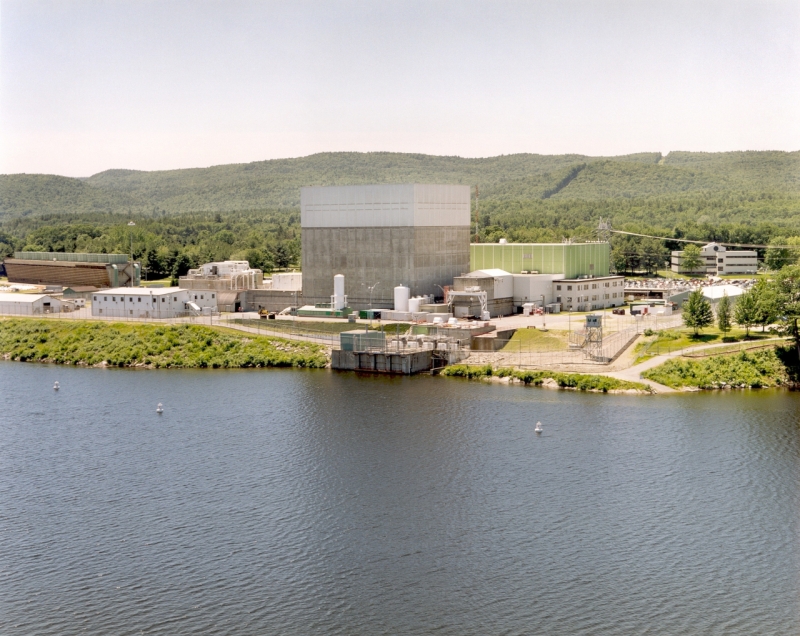
There’s no question that nuclear power will be part of our energy supply mix for the foreseeable future. The United States has 104 nuclear power plants in operation at present, according to Matthew Wald on the Green Inc. blog of The New York Times, relying on NRC data. Incidents like this – in which a corporate official makes a false statement with serious health and safety implications – give us pause.
Which is worse – that the official was mistaken, and not aware that Vermont Yankee had water pipes which could leak – or that he knew and lied?
Incompetence or dishonesty, it would seem. Nuclear power can’t be a safe part of our energy future on those terms. Entergy is responsible for knowing everything there is to know about the plants it operates. A material and incorrect statement – under oath, no less – seems explainable only by three hypotheses: (1) the official lied; (2) the official failed to make himself aware of the plant, in which case the question shouldn’t have been answered; (3) the official was misinformed by subordinates.
If the first explanation is correct, perjury charges are, of course, in order. If the second or the third – Entergy hasn’t met its obligations to mind the store.
A top official at the Vermont Yankee nuclear plant was permanently relieved of his duties and placed on leave, the plant owner’s CEO said Tuesday, less than a week after Gov. Jim Douglas demanded management changes over misstatements made to state officials.
Entergy Nuclear chief executive J. Wayne Leonard did not identify the official by name. But he described the executive relieved of his duties in a way that could only apply to Vice President Jay Thayer.
Douglas’ urging for management shake-up followed revelations that plant officials misled state regulators and lawmakers by saying last year the plant did not have the sort of underground pipes that could carry radioactive tritium.
“In May 2009, an Entergy executive testified in a hearing on the state’s report that he didn’t think we had any such pipes, but he would get back to them,” Leonard said. “He did not get back to them. He has issued a public apology and made clear that he failed to provide full and complete information, either on the witness stand or by failing to get back to them.
The Brothers Brick is a LEGO blog for adult fans of LEGO. Though we started out back in 2005 featuring mainly minifigs, today we highlight the best LEGO creations of every type from builders around the world, including ever-popular LEGO Star Wars, steampunk, and mecha creations. You can also find the latest LEGO news, opinions, and reviews right here on The Brothers Brick.
When is a “Plate, Modified 1 x 1 with Clip Vertical” just a “clippy bit”?
With shared resources like Bricklink and Peeron, LEGO fans active on the Web today use fairly standard terminology for referring to individual LEGO elements. Whether you’re describing a building technique or drafting, shared language is a key to communication.
An interesting article by Giles Turnbull has been making the rounds among LEGO fans on the ‘net this past week. The article surveys four families who play with LEGO and how they talk about LEGO. In the absence of externally driven standards, it’s interesting to see how these families have developed their own LEGO language.
If your car is accelerating out of control, whether it’s a Toyota, a BMW, or any car,
Put your foot on the brake – and press the brake with a steady pressure.
Put the car in Neutral. (Just like manual tranmissions, automatic transmissions have a “Neutral” setting. You shouldn’t drive if you don’t know this.)
Turn on the Hazard lights.
Pull over.
and Above All,Don’t Panic.
Putting the car in “Neutral” disengages the transmission from the accelerator, assuming there isn’t a transmission problem. Don’t turn off the engine: you will lose the ability to brake and steer. Don’t put the car in “Park.” It will slam to a halt, throw you and your passengers against the steering wheel or the windshield, damage the engine, and you will be rear-ended by the jackass tailgating you.
It also works regardless of what is causing the problem – and it might not be because of sticky accelerators. Writing in the LA Times, Jan 30, Ralph Vartabedian and Ken Benslinger, note that:
The pedal maker denies that its products are at fault. Some independent safety experts also are skeptical of Toyota’s explations. ‘We know this recall is a red herring,’ one says.
Federal vehicle safety records reviewed by The /LA/ Times also cast doubt on Toyota’s claims that sticky gas pedals were a significant factor in the growing reports of runaway vehicles. Of more than 2,000 motorist complaints of sudden acceleration in Toyota and Lexus vehicles over the last decade, just 5% blamed a sticking gas pedal, the analysis found.
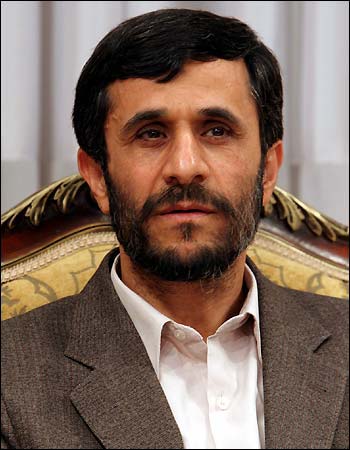
In what was being reported as a potentially significant shift, Iran’s Mahmoud Ahmadinejad told Iranian State Television today that Iran is ready to send its uranium abroad.
“We have no problem sending our enriched uranium abroad,” Ahmadinejad told state television, according to Reuters.
“We say: we will give you our 3.5 percent enriched uranium and will get the fuel. It may take 4 to 5 months until we get the fuel,” he said. “If we send our enriched uranium abroad and then they do not give us the 20 percent enriched fuel for our reactor, we are capable of producing it inside Iran.”
The U.S. reacted cautiously to the interview, saying it was willing to listen if Iran has genuinely changed its position on the fuel swap deal, while indicating it was continuing preparations with key allies on sanctions for further pressuring Iran. Iran has previously publicly said it was willing to send its low enriched uranium abroad, but it had balked at sending it out all in one batch, as a proposal worked out by the UN atomic energy agency last fall had stipulated. U.S. officials said it remained to be seen if Iran had changed its position on that.