FEMA Worker Sentenced To Five Years For Identity Theft

Or – How Many Fraud Convictions Does It Take To Prevent Being hired at FEMA?

By Washington Post Staff Writer Del Quentin Wilber, dated 12/6/08:

Judge Imposes 5-Year Term for ‘Lowdown’ Scam,

A former employee of the Federal Emergency Management Agency was sentenced yesterday to more than five years in federal prison for stealing the identities of 200 people, some of them disaster victims.

In April, Robert W. Davis, 44, of Southeast Washington pleaded guilty in U.S. District Court in Washington to charges of wire fraud and aggravated identity theft in a four-year scheme that ended in November 2007. Prosecutors said Davis used the identities to purchase items ranging from diamond watches and other jewelry to steaks and lobsters.

Davis stole identities while working at mortgage companies and as a human resource specialist at FEMA, authorities said. About 30 stolen identities belonged to people trying to get disaster assistance, federal prosecutors said.

– snip –

[Judge] Walton said that while he understood Davis had a difficult childhood, he noted that he had been convicted four previous times of theft and fraud. He also pointed out that Davis wasn’t using the lines of credit just to finance a drug habit. “That wasn’t about drugs,” Walton said. “That was about living good.”

Thanks to Sonya Geiger at the Disaster Accountability Project for spotting this one.

Reblog this post [with Zemanta]

Statement at Marlboro Green Awareness

In Monmouth County, NJ, the Marlboro Republican Club, and the Manalapan Republican Club, are hosting  a Green Awareness Event, “An Event to Educate and Benefit our Environment” Tuesday, December 9, 2008 @ 7:00 PM, Marlboro Recreation Building – 1996 Recreation Way, Marlboro Township.  This is the statement I planned on making. I did not get a chance to speak.

However, I did get a chance to Listen.

  • Freeholder Barbara McMorrow, Monmouth County Board of Chosen Freeholders, who told us what the Freeholders will be doing for Monmouth County.
  • Mayor Fred R. Profeta, Jr, Deputy Mayor for Environment, Maplewood, NJ, who told us what people are doing in Maplewood.
  • Madea Villere, NJ Sustainable State Institute, Rutgers University, who offered a clear, succinct definition of “Sustainability” – meeting the needs of the present without compromising the needs of the future – and told us what we can do in our communities.

I’d like to thank the Manalapan Republicans and the Marlboro Republicans for holding this event.

I’d am available to talk about Nuclear Power and Coal and then Solar and Wind.

Continue reading

Alternative fuels safer, and the law

In April of 2007, the Supreme Court ruled the federal Environmental Protection Agency must regulate carbon emissions unless it presents scientific proof that greenhouse gases do not contribute to global climate change. On Nov. 13, the EPA’s Environmental Appeals Board ruled it would do so. We need alternatives to fossil fuels and nuclear power, if for no other reason than to obey the law.

Traditional hydroelectric plants harness the energy in waterfalls. New designs harness the energy in tides, waves and ocean currents. Wind farms harness wind energy. Solar energy systems harness sunlight. Geothermal systems use heat from within the earth.

The sun will shine and the wind will blow regardless of the presence of solar panels and wind turbines. By harnessing a process rather than consuming a resource, solar, wind, hydro, geothermal and other clean, renewable, sustainable technologies generate power without fuels, and without greenhouse gases, mercury, radioactive wastes, other pollutants and without the cost of fuel.

Saving the shore from global warming will help the economy. And it’s the law.

This was published as a letter to the editor in the Asbury Park Press, Friday, 12/5/2008.

Unplggd/Apartment Therapy: 5 flashlights

Unplggd has a flashlight roundup

– several are plugin-constant standby – one solar powered, one hand-cranked. All worth a look. However, I’m not giving away my Safe-Light anytime soon , and in fact have been considering purchasing them in bulk. Have done some stupid things – like drive long distances without a flashlight or jumper cables – but I change batteries about once a year.

They’ve got a number of variations on the same idea – if you’re going to carry one, though, I’d recommend The Safe-Light Super Bright With Coloured LED- in red – as the best way to see and

maintain your night vision in an emergency.

Reblog this post [with Zemanta]

EPA Goes After Biological Methane

The EPA is planning on licensing fees aimed at livestock operations with more than 100 tons of carbon emissions per year,  according to Nick Butterfield, speaking for the EPA, quoted by Bob Johnson, AP, published in the Washington Post. The farmers are against this. Ken Hamilton, of the Wyoming Farm Bureau Federation says it will cost owners of a modest sized cattle ranch $30,000 to $40,000 per year.  This seems correct – if you do the math, the fee is $30,000 for 172 dairy cows, which seems high.

The fee structure seems, to this non-farmer, high and skewed against dairy farmers. It reaches $30,000 per year with only 172 dairy cows, 343 head of beef cattle, and 1,500 hogs. But, by generating popular support against carbon emission regulations, this seems really designed to support the coal industry.

The fee structure:

  • Dairy Cows:     $175 per head, with 25 or more.
  • Beef Cattle:      $87.50 per head, with 50 or more.
  • Hogs:               $20 per head, with 200 or more.

Head of livestock for $30,000 annual fee:

  • Dairy Cows:     172
  • Beef Cattle:      343
  • Hogs:            1,500

While Popular Logistics understands that too much of American agriculture is non-sustainable, and while we are in favor of regulating carbon emissions, we would start with Coal, Nuclear, and factory farms, and increasing the CAFE standards and auto mileage requirements,  not by taxing modest ranches of 25 or 50 head of cattle. Popular Logistics also recognizes a distinction between carbon emissions from burning fossil fuels, the nuclear fuel cycle, and the environmental effects of mining, and carbon emissions from cattle ranching and hog farming, especially from organic farming.  We would therefore suggest that the EPA create a carbon offset program that would allow ranchers and hog farmers to offset the carbon emissions of their livestock with trees, wind turbines, and photovolotaic solar installations.

Deadline and Helipad: Two light, outstanding WebApps

The British firm Helicoid

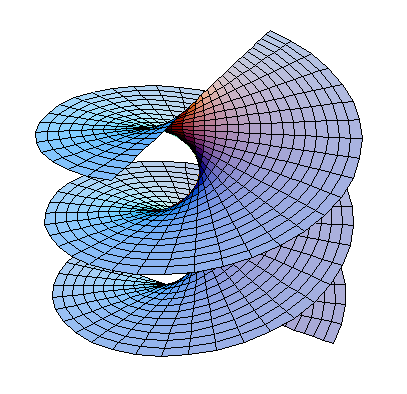
– which incldes the developer Alex Young – has come up with a number of fascinating applications: I’ve looked at two in the last two days – both excellent – I’m reluctant to put them in categories so I’ll just describe them: DeadLine and Helipad. Please note that at first I was thinking of the image of a helipad (helicopter pad); but the firm is named for a helicoid, a geometric shape which resembles Archimedes’ screw, but extends infinitely outwards (and thus is not appropriate for small apartments, although they’re otherwise fairly easy to care for).

Helipad is a note-taking application which, on first use, makes it much easier to categorize and organize information than Google Notebook – which, with index cards, Notebook++ for code, my Olympus digital recorder and Dragon v10, are my primary note-taking tools ((the latter are recent additions, resulting from a canine invasion of workspace while using a circular saw, attempts to separate aforementioned canine from the path of falling wood, and the ensuing hand surgery. But they may stay in the tool box, as I’m getting used to them.))

Deadline is an easy to use deadline manager – and will alert you via email, mobile phone, and, now Google Calendar. It features a clean, simple interface. I don’t know yet if it can be used to  notify multiple users – although I believe it would work if a Google Group had a Deadline account.

Both are free and have very shallow learning curves. In other words, you can be using them in minutes. Since it’s my wife who can’t remember our anniversary, and not me, maybe I’ll get her a Deadline account next.

Carbon Sequestration – Unavailable Today, Costly Tomorrow

In Carbon Sequestration R&D Overview The US DoE says:

Using present technology, estimates of carbon sequestration costs are in the range of $100 to $300 per ton of carbon emissions avoided. The goal of the program is to reduce the cost of carbon sequestration to $10 or less per net ton of carbon emissions avoided by 2015.

McKinsey and Company says the DoE is, well, let’s say optimistic.  In their study, Carbon Capture & Storage: Assessing the Economics,  McKinsey & Company says that by 2030 carbon capture and storage (CCS) costs should come down to around $43 to $65 per tonne of CO2 abated. According to the report, CCS demonstration projects will have a significantly higher cost of $86 to $135 per tonne. Early full commercial-scale CCS projects—potentially to be built soon after 2020—are estimated to cost $43 to $65/tonne CO2 abated.

Of course it’s expensive. It has to be. The basic idea of fossil fuel is we take hydrocarbons out of the ground, and burn them, releasing energy. The problem, which we have just recently noticed, inconvenient as it is, is that the second law of thermodynamics applies. “There ain’t no such thing as a free lunch.” While we are burning coal, oil, and gas, and using some of the energy, we are creating carbon monoxide, carbon dioxide, water, and other stuff. Every pound of carbon in every gallon of gasoline and every lump of coal, becomes a pound of carbon in the atmosphere.  There’s also mercury in coal.  Nuclear power produces no carbon during the power generation phase, but when you factor in the fuel and waste management cycles, the environmental footprints are enormous.

We can have power with ZERO Carbon Emissions: “The answer,” as Bob Dylan once said, “is blowin’ in the wind.”  With solar, wind, geothermal, and hydro, with clean, sustainable energy systems, we HARNESS APROCESS rather  than CONSUME A RESOURCE. With conservation, “Negawatts,” we use less energy, on an ongoing basis. The carbon emissions avoided cost is $ZERO. There is no carbon released into the atmosphere. No Fuel. No Fire. No Smoke. No Radioactive Wastes. No Mercury.

Four outstanding sources for finding free/inexpensive and excellent applications

Four sources of excellent applications – the main criteria being that each of them pointed me to outstanding software I’d never heard of:

ReadWriteWeb appears to publish annual lists of applications for students. Check out Web 2.0 Backpack: Web Apps for Students and Back to School: 10 Great Web Apps for College Students

. They’re not all web apps, so if you have intermittent net access, these lists are still very much

worth checking out. They may not do this every day – that’s my impression – but these compilations are outstanding. We learned about them from AcademHack.

AcademHack

– a resource for academics trying to navigate the world of computing and technology” – is another excellent resource. They don’t do as much “compiling” – but things are well organized by subject.

The Digital Research Tools (DiRT) wiki is similarly outstanding, with a taxonomy that seems carefully designed to make sure that overlapping function descriptions won’t stop you from finding what you need.

Finally – LifeHacker

. Usually my first stop for tech problems of many sorts – from inside the OS – to outside the box, especially cable clutter. In other words, they’re living in the same tripping-on-cables and-what-about-the-damned DC-converters world we are.

Aggregate these four sites – share them, master what you need – and you and your friends will be dangerous info-ninjas.

Thanks to Kristarella – who led me to Academhack

, and the Thesis Theme community – which which led me to Kristarella. Watch this space for a transition to Chris Pearson’s Thesis Theme

, currently in testing mode.

DiRT Wiki – (Digital Resource Tools)

Via Wide Aperture, we learn of the Digital Research Tools wiki. While the focus is for academics – the fact is that – apart from footnote style – everything else is has application outside academia.

Part of our mission is to develop/identify a “best practices” tool set for disaster planning – particularly community-based groups. So usability, interoperability, and price are critical variables. the DiRT Wiki is exceptionally well organized, and looks like a good place to look.

Thanks to Encyclopedia Braun for the link.

CORP. RESPONSIBILITY & SUSTAINABILITY

The Institute for Sustainable Enterprise (ISE)

and the

Sustainable Business Incubator (SBI)

are pleased to invite you to Net Impact’s special holiday event, where

Dr. Jeana Wirtenberg,

Director, ISE External Relations and Services

will be moderating a panel on career paths in sustainability…..

Corporate Responsbility / Environmental Sustainability Panel Discussion & Networking in Hoboken, NJ, on Wednesday.

The event will take place at Carpe Diem, 1405 Grand Street, Hoboken, NJ 07030 (under the Viaduct). A short walk from the Hoboken PATH train. Wednesday, December 10th  @ 6:30pm – Panel Discussion Event begins at 7pm.

http://view.fdu.edu/default.aspx?id=2354

New Jersey Emergency Planning Advances, Incrementally

We’ll take incremental change over no change any time. And, to be fair, we don’t monitor state-level efforts consistently enough to track progress on a regular basis. Still, a “shout out” to the New Jersey Office of Emergency Management which has posted pdf maps for each county of local roads which lead to state roads which will be the principal routes for vehiclular evacuation. And which also points out that, at least in some communities, 911 can be reversed and used as an auto-dialer to phone and notify citizens. We don’t know how many calls it can make simultaneously – but since it’s digital – it’s likely to be scalable.

New Yorkers like to make fun of people “from Jersey” – but the fact is, our smaller neighbor is often an earlier innovator than the Empire State.

Access to "scholarly" articles without subscription

Via Academhack, a way around the “subscription walls” which sometimes appear to limit access to scholarly journals. GoogleSystem link here. We’re not talking about breaching the subscription wall – but copies of the same articles which have been placed in the public domain. We note that often these walls prevent the public from reading the results of research which has been supported or subsidized by public funds.

Academhacks is an outstanding site for software and information tools for students and educators – with a clear preference for low-cost/no-cost solutions. They’re probably radicals who believe in free public education.

MindMapping.org: mindmapping and other visual information tools

MindMapping.org tracks free, paid, online and desktop, mindmapping and information visualization tools (that, just about any visual representation other than GIS – geographic information systems). (SeeVisualComplexity for great examples of information visualization). Here’s their directory of available software, which I found extraordinarily easy to use.

We haven’t yet had a chance to test any of these, but we’ll certainly start at MindMapping.

CommunityPlanning.Net: promoting local involvement in environmental planning and management

Community Planning.net is an organization which promotes community planning not only for, but by communities. From their “about” page.

All over the world there is increasing demand from all sides for more local involvement in the planning and management of the environment. It is widely recognised that this is the only way that people will get the surroundings they want. And it is now seen as the best way of ensuring that communities become safer, stronger, wealthier and more sustainable.

But how should it be done? How can local people – wherever they live – best involve themselves in the complexities of architecture, planning and urban design? How can professionals best build on local knowledge and resources?

Over the past few decades, a wide range of methods has been pioneered in different countries. They include new ways of people interacting, new types of event, new types of organisation, new services and new support frameworks.

This website provides an overview of these new methods of community planning. It is aimed at everyone concerned with the built environment. Jargon is avoided and material is presented in a universally applicable, how-to-do-it style. Whether you are a resident wanting to improve the place where you live, a policy maker interested in improving general practice, or a development professional working on a specific project, you should quickly be able to find what you need.

We don’t know yet whether they view, as we do, environmental planning as the flip side of disaster risk reduction and mitigation, or how far outside of Europe they plan to operate. But they certainly seem to be an excellent resource.