There really is no such thing as “Clean Coal.” Mining coal destroys mountains, and often kills the miners. Burning coal releases tons of carbon into the atmosphere and the oceans, and even if you could sequester the carbon, burning coal releases other pollutants, including mercury into the biosphere. The mercury makes its way into fish. This is why people, especially children and pregnant women, should not eat a lot of tuna or swordfish. Wind, solar, geothermal, ocean current, and “negawatts,” on the other hand, really are clean energy. Offshore wind turbines don’t release pollution. On the contrary, they create artificial reefs, which enhance fish habitat. This is also good for fishermen, the economy, etc.
TALK MAY BE CHEAP, BUT
when the markets are falling, prices are rising, and credit is tightening, it’s a uniquely affordable indulgence. – Walter Kirn, What’s a Depression, Daddy?New York Times Magazine, Nov 9, 2008
Coal – Going the Way of Nuclear Power
What killed nuclear power was not Three Mile Island or Chernobyl, or the demonstrations of public opposition such as at Seabrook, NH in the late 1970’s or the Musicians United for Safe Energy concerts in New York, Sept. 19-23, 1979, (both of which I attended).
What killed nuclear power was the realization by the bankers on Wall St. that after an event like Three Mile Island their multi-billion investment very quickly became a multi-billion pile of junk with virtually zero salvage value and a tremendously negative return on investment.
And coal today?
According to the National Energy Technology Laboratory “Historically, actual capacity has been seen to be significantly less than proposed capacity. For example, the 2002 report /of the National Energy Technology Lab, NETL, of the Department of Energy, DOE/ listed 36,161 MW of proposed /coal/ capacity by the year 2007 when actually only 4,478 MW (12%) were constructed.” Tracking New Coal-Fired Power Plants, NETL, Office of Systems Analyses and Planning, by Erik Shuster, Feb. 18, 2008, pg, 4, 5.
Housley Carr, writing in McGraw Hill’s Engineering News-Record, reported on the impending demise of “King Coal” Uncertainty Over Carbon has Coal Plants Stymied
with public, regulatory and lender concern growing, many proposed plants are being cancelled. Permits issued for others require offsets for their carbon emissions, while the ones that remain in permitting are being intensely challenged. The U. S. Envrionmental Protection Agency must regulate carbon-dioxide emissions under the Clean Air Act, the Supreme Court ruled last year, but Congress has failed to give EPA guidelines for a national policy. Three investment banks last month announced guidelines they would use to assess the risks of investment in coal-fired generation in the absense of a national policy. Further, the largest electric utility in Kansas, citing “seismic shifts in the assumptions shaping our industry,” issued a strategic plan that knocks the crown from King Coal’s head.”
Popular Logistics' Recommendations for Surgeon General, Secretary of Homeland Security, and FEMA Chief
Popular Logistics recommends that President Obama appoint Dr. Irwin Redlener as Surgeon  General, William Bratton as Secretary of the Department of Homeland Security, and Paul Maniscalco as the Administrator of the Federal Emergency Management Agency. We know all three to be men of intelligence and integrity. All three have strong records of leadership and delivering excellent service. Dr. Redlener and Chiefs Maniscalco and Bratton set a standard against which any nominee could be measured.
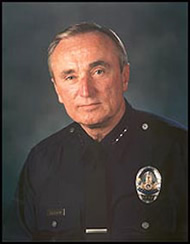
We urge that in regard to positions with national responsibility for disaster preparedness, comparison with the outgoing administration’s appointees – some with no experience at all – is useless. We’ve identified three experts with decades of experience taking responsibility for creating services where none existed, making dysfunctional systems  work, and leading adequate organizations to excellence. We have no reservation entrusting our safety and welfare to any of them; indeed, we’re confident that, if appointed, America’s disaster and health prospects will be substantially improved.
Daniel Bauen. "Instructables" – and the symbiosis of art and engineering
Given our cultural separations – “artists” in one place – “engineers” another – many of us – I’m guilty of this frequently – we forget how intertwined, and sometimes indistinguishable they are. Rather than make the general argument, check out Daniel Bauen, a young Atlanta-based maker and designer of things. You can look at his resume – and some brilliant pieces of work. If anyone thinks they can draw bright lines between the art and the engineering, we might have an interesting discussion. What’s beyond question is that he’s doing marvelous work. Beautiful, practical – and some so fun that I’m tempted to say that he’s a toymaker – who, in order to make what he makes – became an engineerand an artist in the process.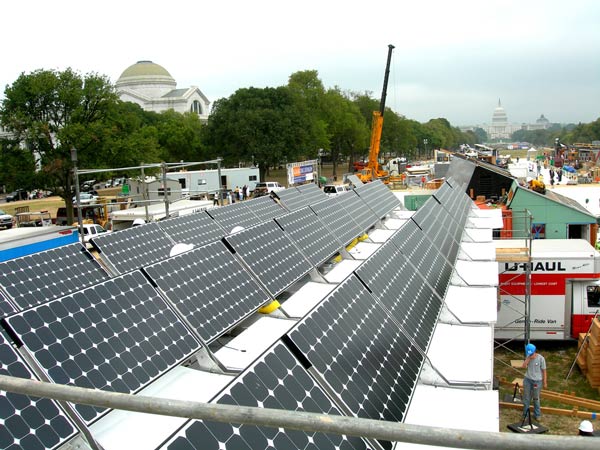
A motorized moving shade system for buildings – that is, roof-mounted solar panels move automatically in order to maximize shade and solar collection: (pictured left); A solar rock spinner – solar-powered when none one feels like pushing it around;
Bauen also – as a student – participated in the design of two bood-drawing devices one for pediatric and one for diabetics, designed to alleviate, if not eliminate the pain of blood drawing.
There’s more at Daniel Bauen’a personal site and even more at his other site- Engineerable. Continue reading
SIERRA CLUB KILLS KING COAL (mini)
The EPA has ruled ( full text PDF ) that new and proposed coal plants must address their carbon dioxide emissions – essentially killing off the construction of new coal-fired power plants in the foreseeable future. The EPA says “You may burn coal, but you must do it cleanly.” ( Sierra Club Press Release / Full Post )
FOCUSED SOLAR MELTING STEEL?
Coolstuff and MetaCafe have videos which show the power of a focused solar array melting steel. (Click here for CoolStuff – Here for MetaCafe) It’s basic college mechanics – and also pretty amazing.
Q-Blox and VibrantHomeTown.com
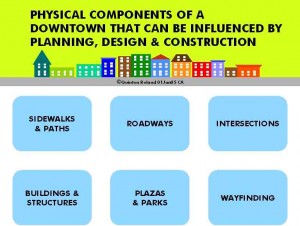
In looking for simple community-usable planning tools -we’ve come across an impressive consultancy called Vibrant Hometown, and a 3-D modeling tool they’ve developed called Q-Blox. It’s not yet clear if their urban planning
consultancy takes into account Popular Logistics’ concerns about disaster risk mitigaton and response – or whether the Q-Blox are available without engaging their services. In any case – Vibrant Hometown
is certainly worth a look.
![Reblog this post [with Zemanta]](http://img.zemanta.com/reblog_e.png?x-id=a612326f-9deb-48ac-97e8-b40a1c84bee5)
FastRadios.com
We’ve been casting about for two-way radio vendors – and sophisticated advice. And found, for our purposes, an amazing oufit in FastRadios.com – based in Naples, Florida – but they sell at very competitive prices and on very competitive terms (extended warranties, for instance, on batteries as well as radios). After a long conversation with Manzie Lawfer (purportedly their sales manager, but it seems that his function is more about finding configuration solutions). Lawfer was able to propose simple, elegant and inexpensive solutions to certain problems we’ve been having in designing a model comms system for community-based disaster response organizations. Being a natural-born cynic, and having spent most of my career cross-examining and interviewing all manner of fabricators and prevaricators – and being concerned about budget – I dropped several opportunities for him to propose more expensive solutions. Straight arrows, it seems, these guys. Look for several posts about solutions they’ve devised for clients – including using existing UPS systems in power failures and solar power in emergencies to keep comms up. Readers may want to start with their “Little Green Radio Book” (free).
CONGRATULATIONS, BARACK OBAMA AND AMERICA!
President-Elect Obama’s campaign was focused, disciplined, and effective. He has shown himself to be bright, calm, and decisive. He listens, and he has good judgment. We at Popular Logistics wish him and the country well. And we know this: If President Obama governs the way President-Elect Obama campaigned, the country will do well. Very well.
SMASHING APPS: PROJECT MANAGEMENT TOOLS
has collected a number of project management tools – most if not all free. For community groups – disaster response
-related or other – there’s probably something useful for all but the most tech-savvy (or best-funded) groups.
![Reblog this post [with Zemanta]](http://img.zemanta.com/reblog_e.png?x-id=3c89f027-cb54-4171-a3cf-84b5d28fd18a)
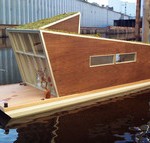
Das Schwimmhaus
Via Design-Milk and Monoscope , Das Schwimmhaus Boot
:
For our usual purposes – principally housing/work platforms which can be used in floods – this design might not be as as stable as we’d like. Nonetheless – it’s a reminder of how beautiful things can be made with sustainable material.




Artist creates solar/wind powered "emergency respond
(Via Inhabitat) Which may, in fact, exceed FEMA’s exertions – despite the fact that, as Paul Villinski, a 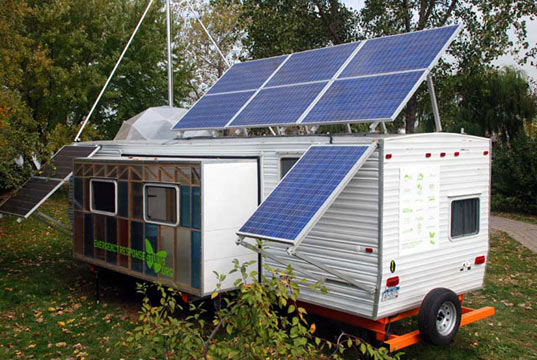 New York-based artist has demonstrated, it’s entirely possible to construct livable/usable emergency structures which rely on solar and wind power. From Bridget Steffen at Inhabitat, Solar Powered Mobile Emergency Response Studio:
Better yet, make sure you read the whole piece and see the images – the one above the jump, taken alone, doesn’t do it justice.NB: as of this writing – October 30th – Villinski’s bandwidth limit had been exceeded. Waiting and checking back later will, we think, be worth it.
![Reblog this post [with Zemanta]](http://img.zemanta.com/reblog_e.png?x-id=9c47403b-7f98-4869-9913-eef22436d4a1)
HOW TO SAVE $120 TO $200 BILLION A YEAR
- End the war in Iraq.
- Build a sustainable energy infrastructure.
Obama, McCain on Energy – Solar, and Wind, Oil and Nuclear
John McCain and Barack Obama both talk about energy independence. Both also talk about the need to drill for oil offshore. Obama says oil companies should use their leases, or lose them. McCain once put the Alaska National Wildlife Refuge, ANWR, off-limits, “for now.” But that was before he picked Sarah “Drill Baby Drill” Palin for V. P., Now he calls her an “Energy Expert” and says “Sarah Palin knows more about energy than anyone else in America.”
Palin wants to drill in ANWR. She also doesn’t understand the science that has been used to study global warming, preferring to believe that it doesn’t exist.
Obama reminds us that drilling won’t help much and won’t help at all in the near future. Obama and McCain also talk about solar and wind – but Obama talks about about building a new energy economy. And McCain has a history of voting against solar and wind because he’s against subsidies. He’s for nuclear power, even tho the nuclear industry relies on subsidies. Maybe I’m wrong, but I get the feeling that Obama knows what he’s talking about.
McCain says nuclear power is safe, nuclear submarines are safe. He wants to build 45 new nuclear power plants by 2035, and another 55 after that. He wants to plan and build a total of 100 new nuclear plants. Continue reading